"Should I buy an electric vehicle now, or wait a little longer?"
This is the most frequent question I hear when talking to car communities or acquaintances recently. Just a few years ago, EVs were the exclusive domain of early adopters and symbols of the future, but the atmosphere in 2026 is quite different. Subsidies are shrinking, charging stations don't seem to be increasing noticeably, and above all, a massive psychological resistance has formed around the high cost of the vehicles.
The phrase that the EV market has entered a "Chasm" (a temporary stagnation in demand) is no longer just a news headline; it has become a reality that we all feel firsthand. In this uncertain flow, what choice should we make? Today, based on 2026 automotive market data, I want to talk deeply about why the simple price war has lost its meaning and what kind of cars will be chosen by consumers in the future.
Why hesitate to buy an EV? : The Three Walls We Face

The factors complicating our minds before hitting the "buy" button for an EV cannot be defined simply by the word "expensive." As of 2026, there are three massive walls weighing down the market.
The first wall is the unexpected rise in costs. Inflation and supply chain instability have driven up automotive manufacturing costs. Additionally, tariff policies resulting from the strengthening of protectionism in the United States are shaking the global automotive supply chain. In particular, high tariff policies in the US market have increased the prices of imported cars, causing global manufacturers to take a defensive stance rather than lowering prices. Consequently, the "perceived price" felt by consumers is rising faster than the pace of technological advancement.
The second wall is distrust in infrastructure and the gap in experience. According to surveys, the biggest inconvenience cited by EV users is undoubtedly the "hassle of charging." Even in 2026, many consumers worry about the lack of charging environments within residential areas and the shortage of fast-charging infrastructure. The sentiment of "the car is good, but I don't want to waste my time charging it" is becoming a powerful psychological hurdle preventing purchases.
The third wall is doubt regarding value preservation. Recently, consumers have begun to focus not just on the purchase price, but on the Total Cost of Ownership (TCO)—asking, "How much can I sell this car for in five years?" As technology changes so rapidly, anxiety is growing that the EV bought today might quickly become an obsolete model, leading to a crash in used car prices.
The End of the Price War, the Era of 'Differentiated Experience'
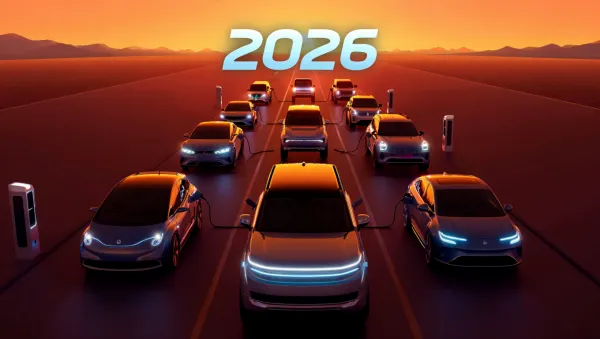
If the past EV market was a "price war" arena fighting over "who can make it cheaper," the 2026 market has completely shifted to a 'differentiation strategy.' Manufacturers have realized that they can no longer compete simply by increasing battery capacity.
One interesting movement here is the possibility of Tesla's design transformation. Looking at the angular large SUV renderings of Tesla that have recently heated up online communities, the design departs from the existing smooth, curved lines to take on a rugged and practical "traditional SUV" look, similar to a military vehicle. This appears to be a strategic choice to break the prejudice that "EVs are only pretty" and to expand the target customer base by securing off-road performance and third-row seating space.
In short, the market is now splitting into the following directions:
- Purpose-built specialized models: Like the Tesla example, vehicles with strong personalities tailored to specific lifestyles, such as off-road exclusives or large family SUVs, are taking the lead.
- Focus on economic practicality: Rather than simply having a low vehicle price, models that propose "smart economy"—considering maintenance costs and used car residual value—are surviving.
- Targeting third markets: To avoid the high tariff barriers of the US market, customized lineups targeting emerging markets like Southeast Asia, the Middle East, and Latin America are being strengthened.
Who is Your Target? : The Shift in Consumer Dominance
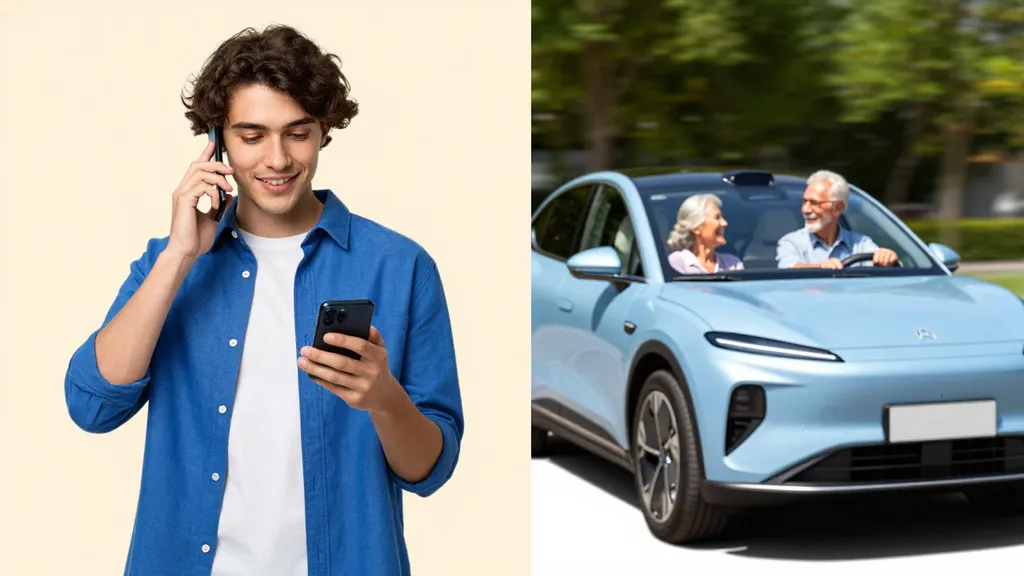
The most surprising change we must note is that the answer to the question "Who is buying the cars?" is changing. The formula we often assume—that "EVs are the exclusive domain of the 2030 generation"—has now been completely broken.
Looking at the data, a very interesting phenomenon is discovered. As of 2026, the actual purchasing power in the automotive market is shifting toward middle-aged adults (35–54 years old) and active seniors (55 years or older).
The group to watch particularly is the senior demographic. New car registrations for those in their 60s have surged by 129% compared to ten years ago. Surprisingly, these seniors show a very high preference for electric and hybrid vehicles. Contrary to existing prejudices, they prioritize charging convenience and practicality, and due to their residential environments centered around apartments, they feel the barrier to adopting EVs is relatively low.
On the other hand, the younger generation's intention to purchase new cars has dropped sharply due to high interest rates and the burden of living expenses. Instead of "owning" a car, they are moving toward "using" mobility through Mobility as a Service (MaaS). Therefore, manufacturers now face the challenge of simultaneously executing emotional premium brand strategies for the youth and practical, stable EV strategies for the senior demographic.
A 3-Step Guide for a Wise Choice
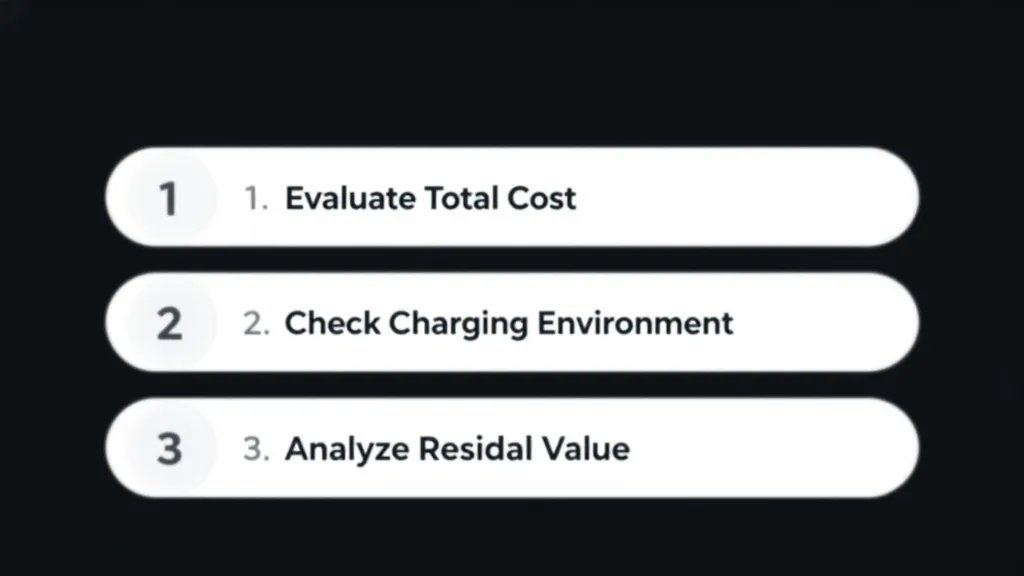
How, then, should we act in this volatile market? Rather than simply following trends, I suggest a 3-step strategy to find the 'optimal mobility' that fits you.
Step 1: Calculate 'Total Cost of Ownership (TCO)', not just 'Vehicle Price'
You should no longer look only at the Manufacturer's Suggested Retail Price (MSRP). You must calculate including electricity costs, insurance, and above all, the Residual Value of the used car after 5 years. Recently, consumers have been responding more sensitively to 'economic stability' than to pure technology. Before purchasing, it is necessary to make it a habit to check the depreciation data for that model.
Step 2: Coolly analyze your 'residential environment' and 'charging habits'
The success or failure of an EV purchase depends on whether there is a charger in your home parking lot. Even in 2026, charging infrastructure remains a crucial variable. If it is difficult to install a slow charger at your home or workplace, you must carefully consider how well the fast-charging network is established and whether your driving pattern is structured in a way that necessitates reliance on fast charging.
Step 3: Prioritize 'lifestyle suitability' over 'brand image'
Just as Tesla's angular design is driving enthusiasm, cars are no longer just a means of transportation but a tool to express one's lifestyle. Depending on whether you enjoy camping, whether your primary purpose is urban commuting, or whether you move frequently as a family, the type of car you choose will be entirely different. Rather than the brand name, you should prioritize what kind of experience you will actually have while driving this car.
Conclusion: Beyond the Era of Technology, into the Era of Choice
The automotive market of 2026 is no longer an arena for displaying technology to compete over "who has more advanced tech." It is now a strategic arena to compete over "who best understands the changed lifestyles and economic concerns of consumers."
The price war is over. An era has opened that goes beyond price to value, beyond charging to convenience, and beyond brand image to practicality. Now, as market dominance shifts to the senior demographic and consumer standards move from 'specs' to 'economic stability,' it is time for us to engage in the most cool-headed and wise consumption.
By what criteria are you looking at automobiles now? Are you simply looking for a cheap car, or are you looking for a partner that will perfectly support your lifestyle?
What criteria do you think are most important for your next car? Please feel free to share your opinions in the comments!
References
- 2026년 글로벌 자동차 시장 전망: 변화의 소용돌이 속으로 · auto.danawa.com
- [이슈&논란] 테슬라 대형 SUV 나오면 이런 느낌? 군용차 분위기 '열광 ... · newsspace.kr
- 글로벌 자동차, 미국 관세 피해 제3시장 경쟁 치열 - 한국무역협회 · kita.net
- 미국 자동차 고관세 부과 이후 자동차산업 영향 및 시사점 · kiet.re.kr
- 어느 세대가 자동차를 사는가⋯전기차 선호하는 시니어층 - 월간 통상 · tongsangnews.kr
- 전기차 구매결정 영향 '가격'ㆍ'충전 환경' - 에너지플랫폼뉴스 · e-platform.net
- 전기차 시장의 캐즘과 소비자 선호 구조 변화: 선택실험법을 활용한 ... · akes.or.kr
- 누가 자동차를 사는가 | Deloitte Korea · deloitte.com