Nvidia proposed an inlet temperature of 45°C this year for the liquid used in its components. On November 26, tech publication The Register reported that this figure could change how data centers are designed for cooling. Systems that cool chips with liquid have generally operated at around 30–35°C. If they can accept warmer coolant, they may be able to rely less on large chillers—machines that cool water. 1
The implications extend beyond the equipment room. Data centers have to keep removing the heat generated by computers, and that process also uses electricity and water. But 45°C does not mean that chillers will immediately disappear from every facility, or that a fixed amount of resources will be saved. 1
45°C changes the starting temperature of the coolant
Liquid cooling works by circulating liquid close to servers to carry away heat. As high-density equipment used for AI workloads becomes more common, air alone can be insufficient to remove the heat. Designs are being used in which liquid absorbs heat from chips or server racks and then carries it away from the facility. 2
Here, 45°C refers to the temperature of the coolant entering the server. It does not mean the temperature of the liquid leaving the server or of the chip itself. Compared with the previous 30–35°C range, the change means components can be cooled with warmer incoming liquid. The Register said this could make it possible for many data centers that currently need chillers to cool without them. 1
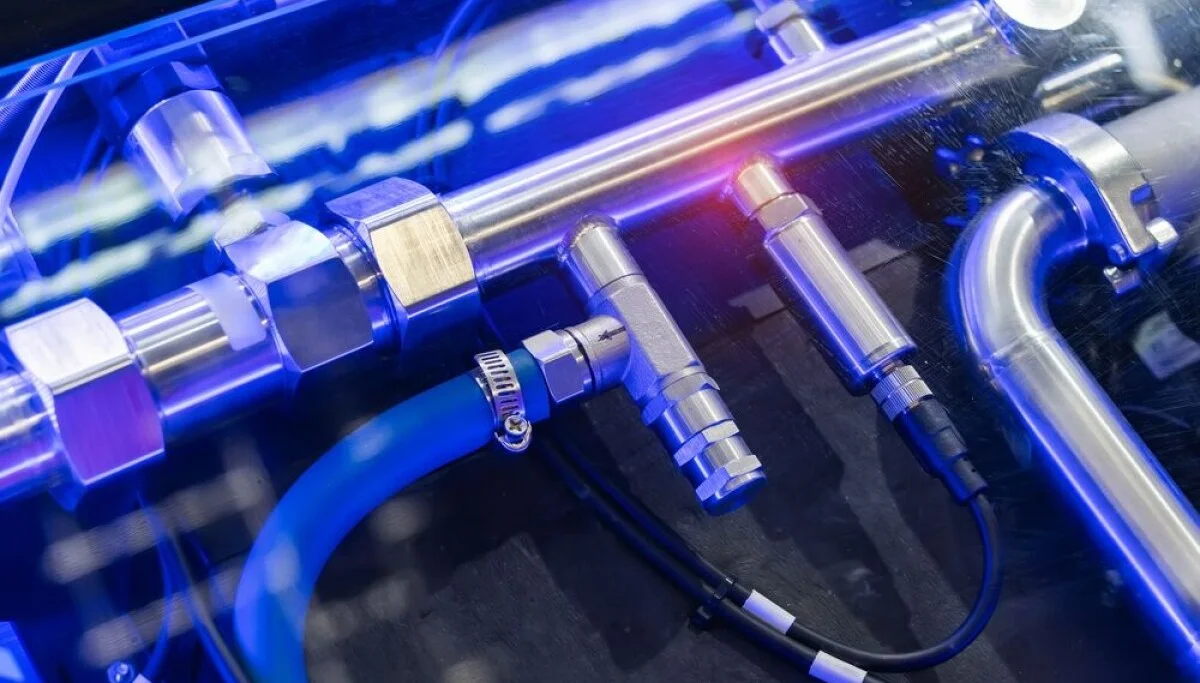
Image source · www.theregister.com
The key is the temperature difference between outdoor air and the coolant. If the returning liquid only needs to be cooled below 45°C, rather than to around 30°C, there is more opportunity to use outdoor air. The “free cooling” described in the article is a way of using these outdoor conditions to reduce reliance on mechanical cooling. 1
How does the heat from servers get to the roof?
The design described by The Register has two separate circulation loops. Liquid in the first loop absorbs heat from the server equipment and transfers it to the second loop. The second loop carries that heat to the roof, where it is cooled before circulating back. The liquid flowing through the servers is not simply discharged outside. 1
The equipment that releases heat on the roof is called a dry cooler. Think of it as a device that uses outdoor air to cool the liquid flowing inside it. In existing designs, a chiller can cool the water further—like a large refrigerator—after it has been cooled once this way. The article explains that a higher allowable inlet temperature means more facilities may not need this additional cooling stage. 1
There is also a supplementary method for unusually hot periods. The article describes running water over mesh around the dry cooler to help with cooling. According to the article, this supplementary method lowers the effective temperature by an additional 10–20%. The design it envisages uses almost no external water under normal conditions, wetting the mesh only during the hottest periods. 1
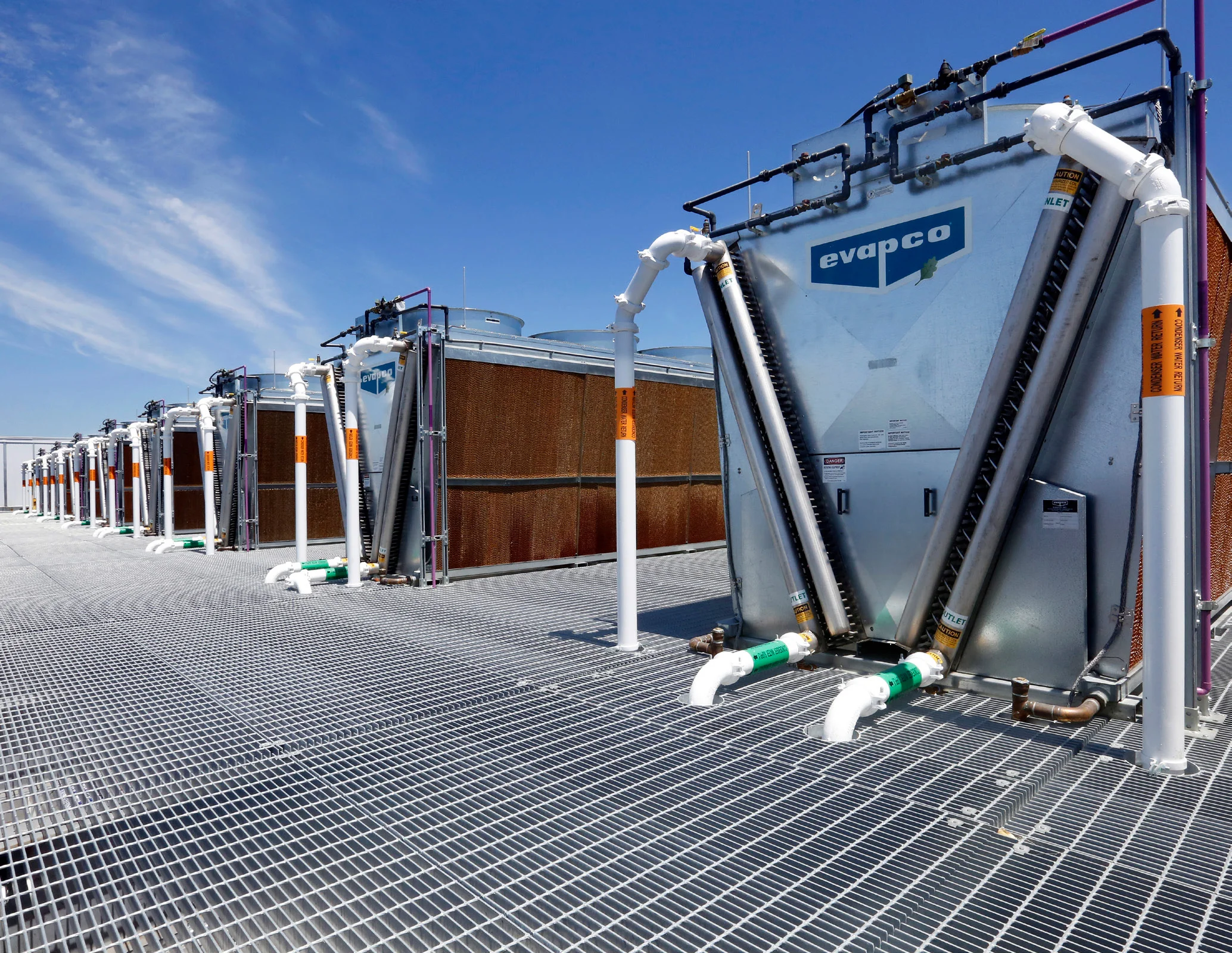
This approach means chillers may not be needed; it does not mean all cooling equipment disappears. The two circulation loops, pumps, and rooftop dry coolers still have to be designed. Avoiding chiller installation also avoids the costs of installing, maintaining, and replacing large chillers, but the equipment required varies by facility. 1
What are the savings figures being compared with?
The Register explains that in conventional designs relying on chillers and open evaporative cooling towers, cooling commonly accounts for 20–40% of a facility’s total energy use. Cooling towers release heat through water evaporation. This share of cooling energy includes not only the chillers’ compressors but also the electricity used by pumps and cooling-tower fans. 1
The figures for high-temperature liquid cooling cited in the article are based on published estimates and supplier modeling. The comparison is with facilities using conventional chillers and cooling towers together; the figures below are not presented as before-and-after results measured at a specific data center. 1
| Comparison | Change cited in the article | Conditions |
|---|---|---|
| Energy used for cooling | 50–70% reduction | Estimated for high-temperature liquid cooling compared with conventional chiller-and-cooling-tower systems |
| Total data center electricity use | 10–20% reduction | Varies depending on existing power efficiency and climate |
| Annual water use | 80–95% reduction | When dry coolers are used in most climates, with water as a supplement only during hot periods |
The 50–70% reduction in cooling energy and the 10–20% reduction in total electricity use have different denominators. The first is the percentage reduction in energy used by cooling equipment; the second is the percentage reduction in the data center’s total electricity use, including servers. Even if server electricity use stays the same, reducing the share needed for cooling can lower total consumption. The overall savings also depend on how much electricity cooling used in the first place. 1
Existing evaporative cooling towers can consume millions of gallons of water a year at a medium-sized facility, while the dry coolers envisaged in the article use almost no external water during normal operation. 1
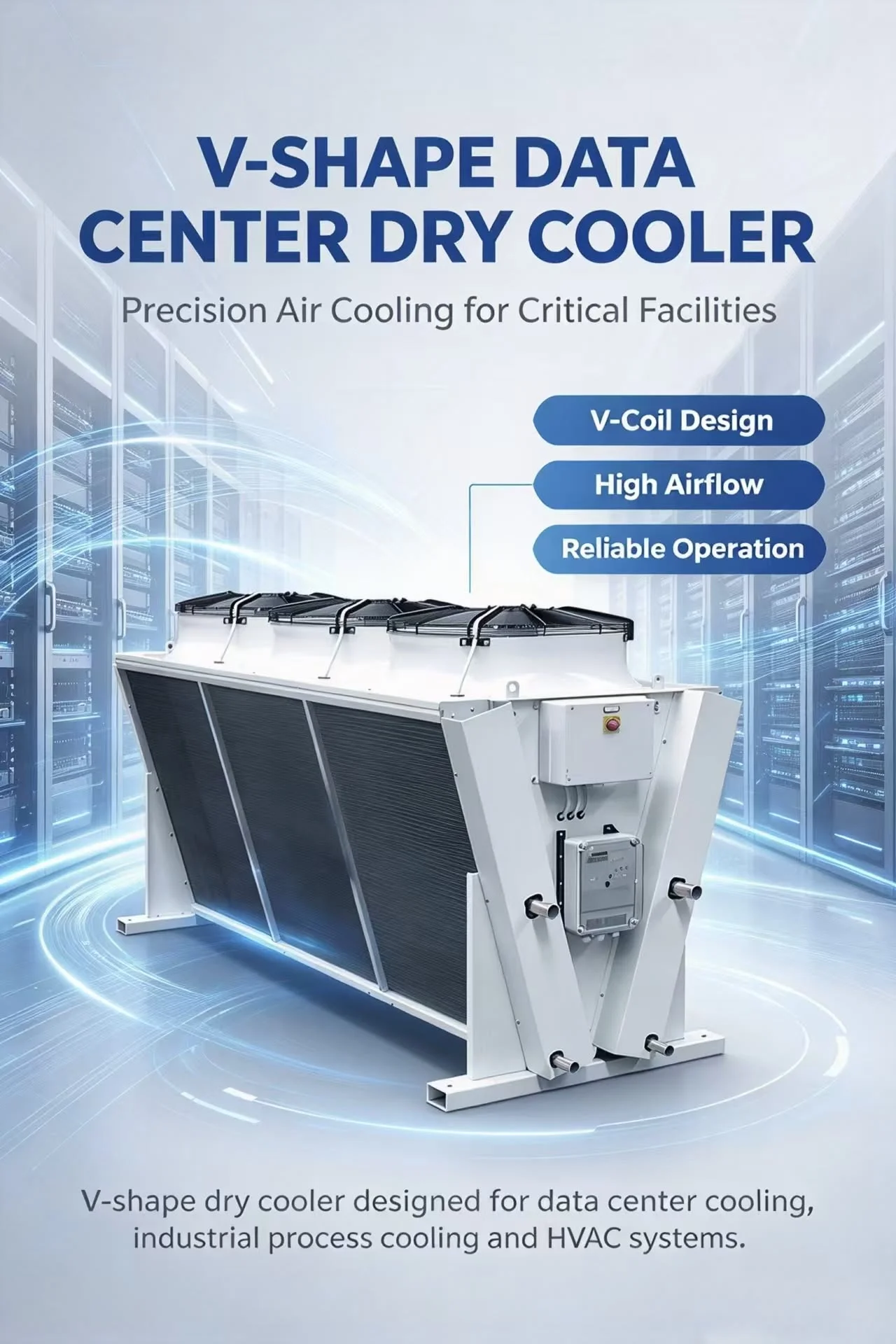
Image source · www.custom-heatexchanger.com
Can existing facilities just raise the temperature?
A new facility can be designed from the outset with circulation loops and dry-cooler capacity suited to higher inlet temperatures. Existing buildings are a different matter. Their pipes, pumps, and heat exchangers may have been selected for air cooling or for liquid cooling at lower temperatures. A heat exchanger transfers heat without mixing the two liquids. 1
Operators looking to raise the inlet temperature first need to check how much coolant is flowing and how much pressure is lost as it moves through the pipes. Measurement-equipment company Endress+Hauser explains that insufficient flow can cause some chips to overheat, while excessive flow increases pump power consumption and operating costs. Even if the chips allow warmer liquid, the facility as a whole must still be able to transfer the required heat reliably. 1, 2
Temperature also needs to be considered both as the liquid enters and as it returns. Endress+Hauser explains that measuring temperatures at supply and return points, as well as at heat exchangers, makes it possible to monitor temperature differences and adjust cooling capacity more precisely. Rather than keeping everything as cold as possible, it is important to cool only as much as needed while maintaining a safety margin to protect the equipment. 2
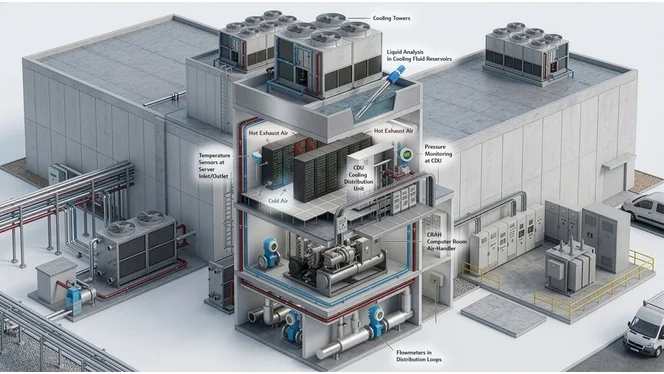
Image source · www.endress.com
People The Register spoke with at SC26 said that 45°C is already used as a design benchmark in some cases, but that a margin of safety is needed. At the time the article was written, no public information was available on whether AMD, Intel, or Arm would support the same inlet temperature. 1
In closing
A data center that currently uses evaporative cooling towers could greatly reduce its usual external water use by switching to dry coolers. Water may still be needed to supplement cooling during hot periods, but this could be an option for reducing pressure on local water resources. 1
If a data center were to open in your area, what would you most want to know about its electricity and water use?
References
- 45°C inlets just killed the chiller. Most people haven't noticed yet · theregister.com↩
- ↩