The Verge reported on November 24, 2026, that The New York Times had told freelance photographers taking assignment photos not to use Photoshop 2027. The concern was that AI features might be used without the photographer noticing, potentially leaving AI-related information in the photo. Trust in news photography depends on showing real events, so even a single indication of how a photo was made can be sensitive. 1
So, does simply updating the program add an AI label to a photo? The account The Verge published on November 24, 2026, points to a narrower concern: AI-related metadata might be added as a result of using some features in the new version. At the time of the report, it had not been made clear which features would leave a record, or under what conditions. 1
The newspaper barred an entire version, not just a particular tool
In an email reviewed by The Verge, Megan Lullum and Josh Haner, who lead The New York Times’s photography department, said the new Photoshop could use AI in ways that are not clearly apparent to users. They were concerned that using such features could result in metadata identifying a photo as AI-generated. Metadata is information stored with an image file that describes attributes of the photo or its editing history. 1
The newspaper’s instruction was clear: contributing photographers working on assignments for The New York Times must not use Photoshop version 28.0.0 or any later updates. Times spokesperson Graham James also confirmed the instruction to The Verge. This does not mean that everyone is being told to stop using Photoshop; it is a restriction applying to photographers working on assignments for The New York Times. 1
Image source · www.theverge.com
The measure reflects the newspaper’s editorial standards for news photography. The New York Times treats photographs as accurate depictions of real events and does not allow people or objects to be added, removed, or moved. Cropping must also be done carefully to ensure important details are not left out. The paper says color adjustments are permitted only to the extent needed to accurately reproduce the scene. 2, 1
So the question is not just whether photographers can make an image look good. What kinds of edits are acceptable in a photo meant to show an actual scene—and how that work is presented to readers—also matter.
Could automatic selection be recorded as AI editing?
Photoshop 2027’s November update included “AI Assisted Editor,” which brings AI features together in one toolbar. It also added AI assistance that guides users through editing step by step, a feature that changes images based on written instructions, and tools that use AI to increase resolution or reframe an image to fit the canvas. It is relatively easy to notice when written instructions are used to generate new content. 1
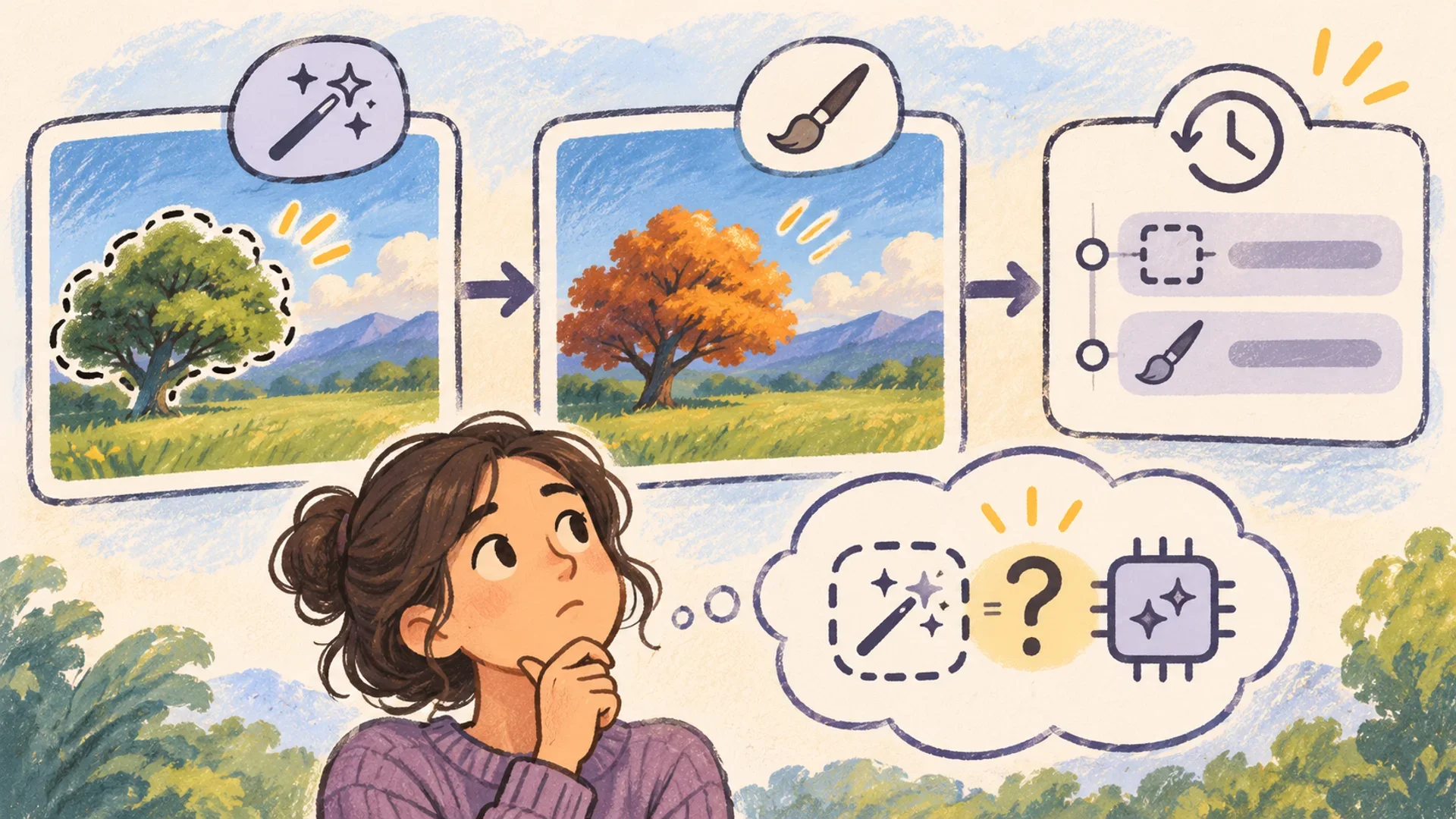
The less clear area is familiar tools. The Verge reported that some long-standing tools for automatically selecting parts of a photo may now be included among the AI tools. Selection tools are used to designate areas of an image for editing. However, the report did not provide a list or test results showing which automatic selection tools actually add what kind of record. 1, 3
Photography publication PetaPixel, reporting the same day, interpreted the newspaper’s main concern as the possibility that photographers might unknowingly use features that rely on generative AI. Generative AI is technology that creates new image content and other material in response to instructions. The publication reported that New York Times staff and contributing photographers are not allowed to use generative AI in assignment photos. 2
Records in a file and labels on screen are different things
Adobe began introducing support for C2PA metadata in its apps in August 2026. C2PA is a system for recording information about an image’s origin and editing history; those records can indicate whether an image was generated by AI or edited with AI features. The New York Times was concerned that such an indication might appear on a photo unintentionally. 1, 2
The presence of a record and the wording readers see are not the same thing. A photographer in the Adobe Community wrote that Instagram had added a “Made with AI” label to photos where they had used Generative Fill to extend a background or remove an unwanted object. The poster worried that clients might think the entire photo had been made by AI. 4

In this example, information about AI use stored in the file and the label shown on screen serve different purposes. A community moderator said that Meta, not Photoshop, was responsible for adding the label. The original poster later clarified that Photoshop had put information indicating AI use in the file, and Instagram had generated the label. However, this is an undated user account, not a test of any specific automatic selection feature in Photoshop 2027. 4
This distinction matters because the broad phrase “edited with AI” does not fully explain the nature of the work. Using generative tools to alter part of a photo and generating an entire image may suggest very different processes to readers. The Verge also noted that AI-editing metadata gives only a rough account of what actually happened during post-production. 1, 4
Conclusion
As in the Instagram example, even if generative AI was used only to extend a photo’s background, a client who sees a “Made with AI” label might assume the whole photo was generated. A short label alone may not make clear how much of the image was actually edited. 4
Have you ever wondered how much of a photo was actually edited after seeing an AI label?
References
- ↩
- New York Times Prohibits Photographers From Using Photoshop 2027 · petapixel.com↩
- Photoshop Desktop Help · helpx.adobe.com↩
- Meta tags images as "Made with AI" if You Use Gen Fill | Community · community.adobe.com↩