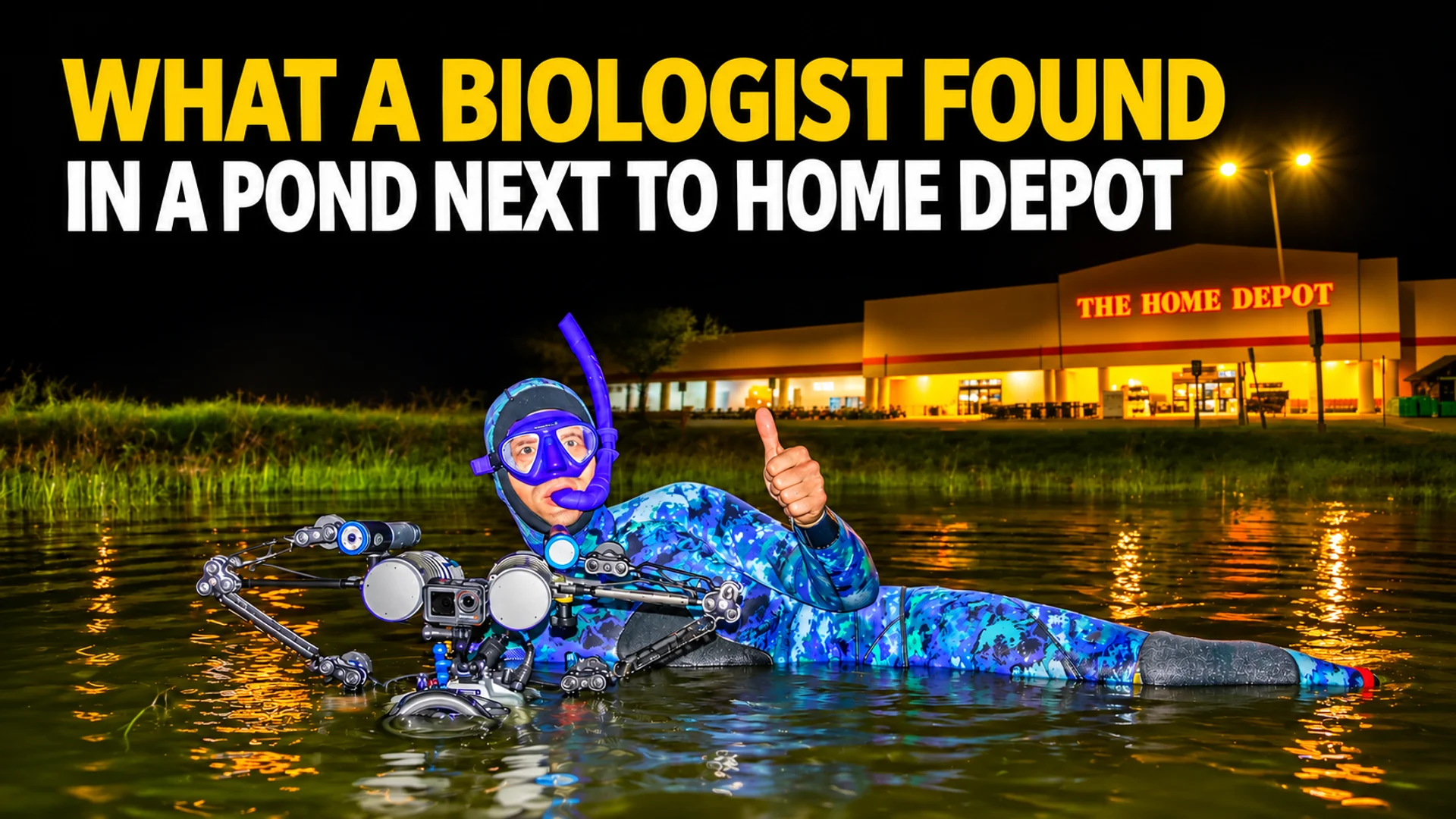
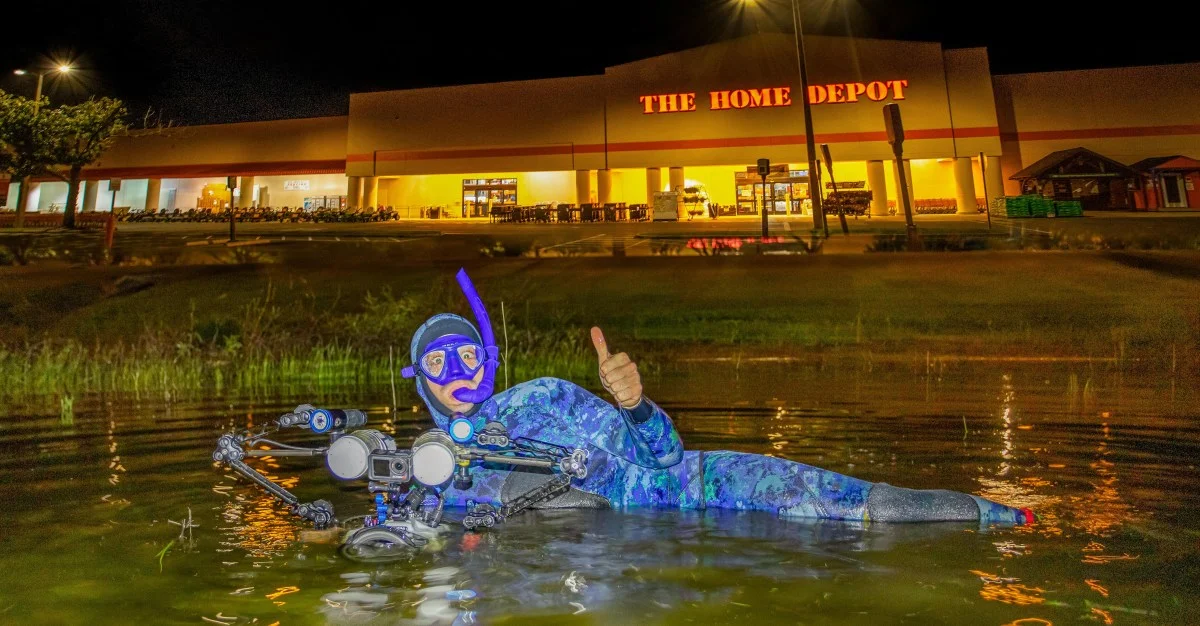
One night this fall, Florida biologist Joseph Ricketts went snorkeling in a retention pond next to a Home Depot. From the surface, it looked like stagnant water with old beer cans floating in it. Underwater, though, he found a bulging-bellied water snake, tadpoles, and tiny crustaceans crawling along the bottom. A video Ricketts posted on October 30 had been viewed more than 2 million times by the time Vox reported on it on November 25. 1, 2
Why was there a pond next to a parking lot? Retention ponds are designed to hold rainwater. Ricketts’s exploration showed that they can be both places that collect water and places where living things make their homes. 1
A curiosity sparked by watching birders
Ricketts, a biologist who studies crocodiles and alligators, had been keeping an eye on the pond for several years. He said he became curious about whether he could explore underwater after seeing people watching birds there with binoculars and telephoto lenses. But a prolonged drought kept him from going for a while. He finally went after it rained. The pond was about 3 miles, or 4.8 km, from his home. 1
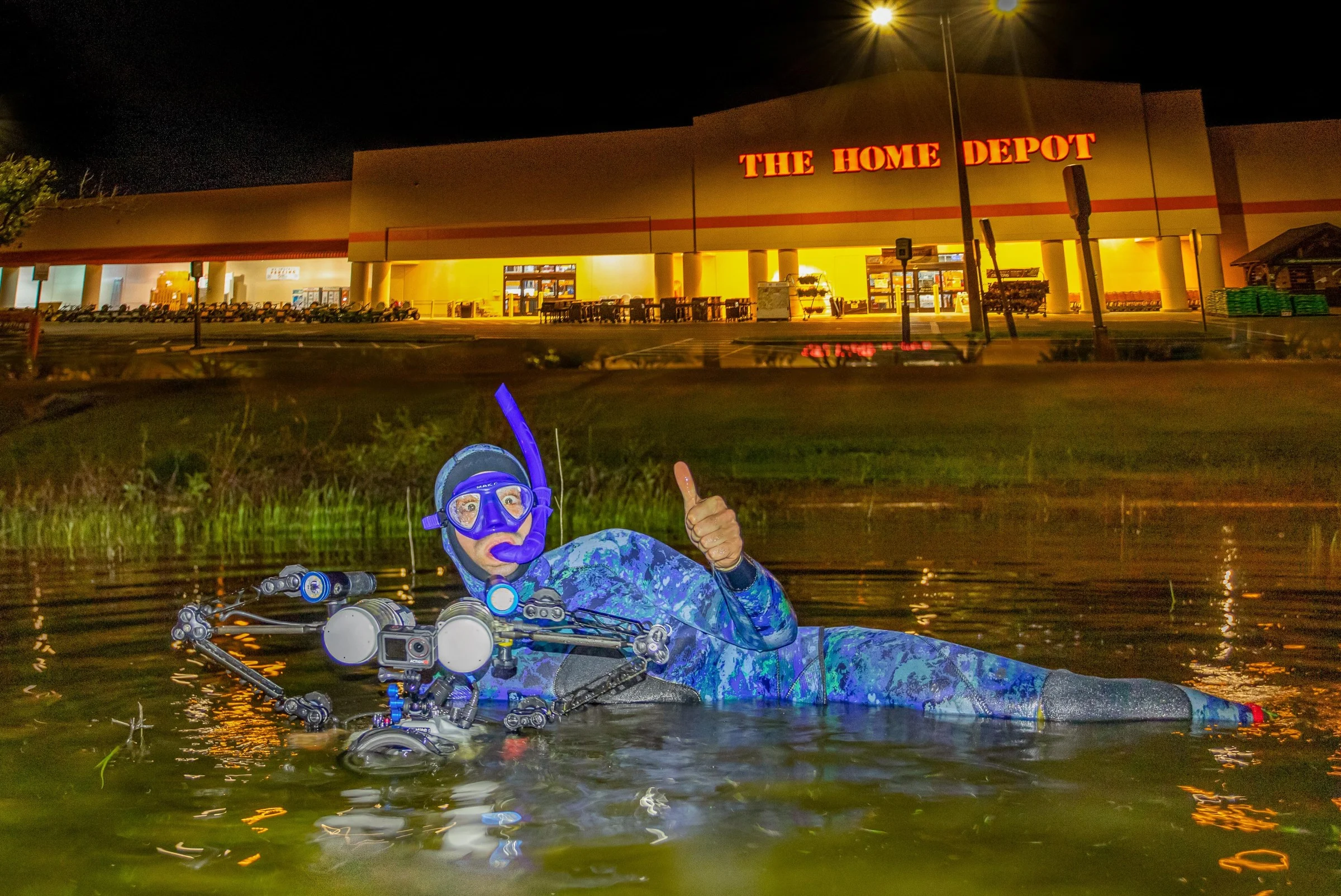
One thing Ricketts likes about snorkeling is how accessible it is. He said he uses waterproof camera gear and a wetsuit, too, but all you really need is a mask and snorkel. The moment you put your face in the water, it feels like entering another world. In fact, though, you’re seeing a world that was there all along but that you couldn’t see before. 1
He also had a question for himself going into the exploration: Could he find something beautiful in a retention pond? And could he show it to others through his camera, so they might feel some of that beauty, even briefly? In an interview with Vox, Ricketts said things had turned out as he hoped. 1
Strange creatures among the water snakes and tadpoles
Ricketts didn’t see just one kind of animal underwater. A water snake, its belly bulging as if it had eaten something, slithered past, while tadpoles darted around. Some were in the process of turning into frogs. On the muddy bottom, tiny crustaceans he had never seen before crawled about. 1
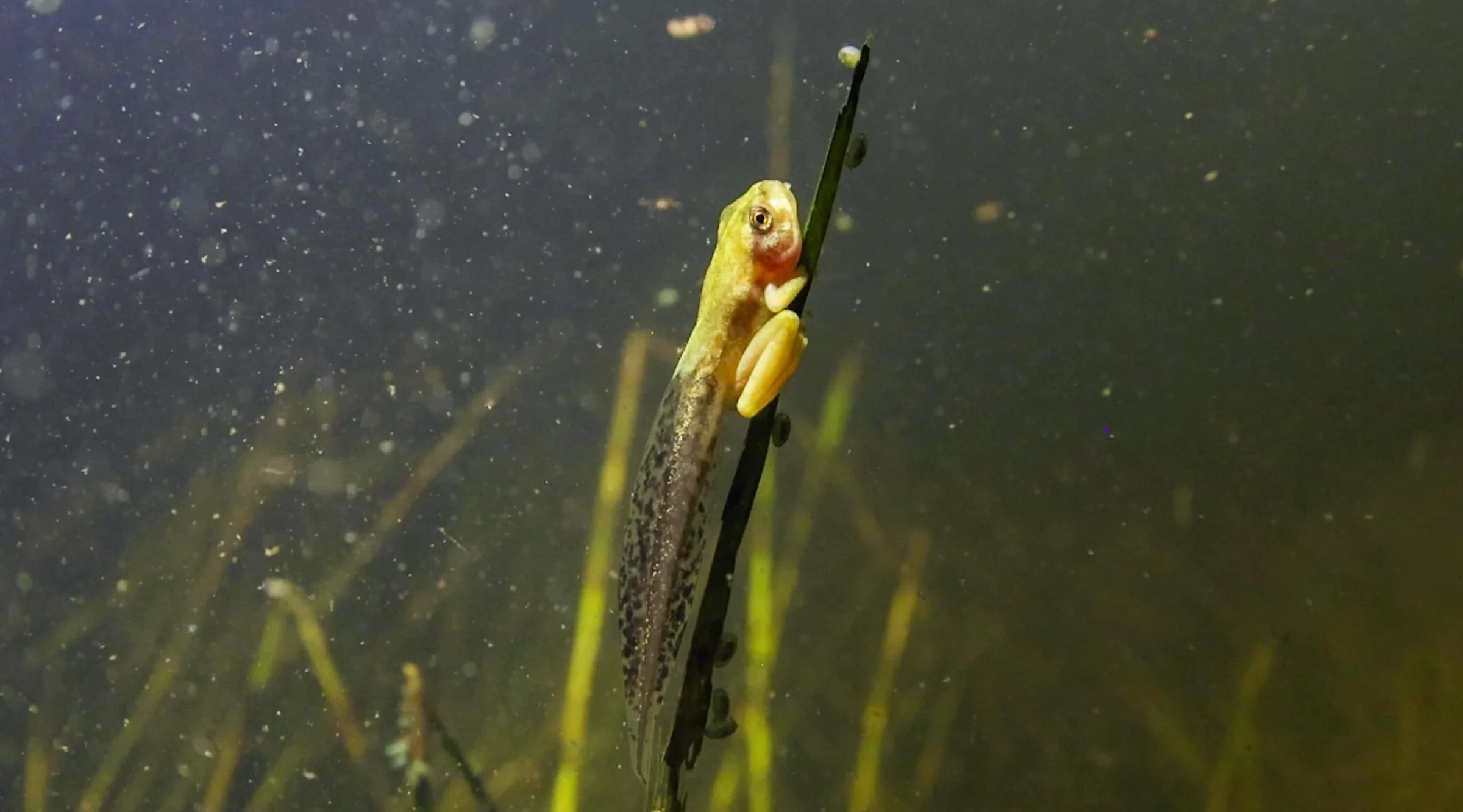
What especially surprised Ricketts was a freshwater crustacean called a tadpole shrimp. He couldn’t identify it underwater, and asking colleagues didn’t get him an answer. Only after looking it up online did he find out what it was. He said that being an alligator expert doesn’t mean you know every wild animal, and that it’s important to acknowledge what you don’t know and keep learning. 1
Tadpole shrimp can thrive in places where water appears temporarily and then dries up. Ricketts explained that they lay eggs in the soil; when rain comes, the eggs hatch quickly, and the shrimp feed, grow, and reproduce. According to a Central Michigan University resource on tadpole shrimp, their eggs can sink to the bottom and remain dormant in dry conditions for a long time, then hatch when they encounter water again. 1, 3
How did the other animals get there? Ricketts said many frogs have adapted to urban environments and seek out places with water. He suggested that animals once found in forests and wetlands may have adapted to the limited habitats that remain today. 1
How a stormwater facility becomes a place for wildlife
As Ricketts explained, a retention pond’s first purpose is to provide space to hold rainwater. Florida has many naturally low-lying, wet areas, but when shopping centers, residential neighborhoods, and roads are built and the land is covered with asphalt, the natural wetlands’ capacity to absorb large amounts of rainwater is reduced. Without somewhere for the water to collect, parking lots, shops, and homes can flood. 1
Retention ponds therefore give rainwater a place to collect on developed land. Ricketts explained that in some areas, developers must install a retention pond before they can build. At the new residential development near the Home Depot he described, a walking path for residents had also been built around the required pond. It had become a place used by some wildlife and people, as well as a water-management facility. 1
Image source · www.youtube.com
That doesn’t mean it’s known what kind of wetland originally existed on the Home Depot site. Ricketts said he didn’t know the area’s exact history, though he guessed that some kind of wetland had once been there. Even if life can survive in a retention pond, the original ecosystem doesn’t survive intact. 1
That’s why, he said, we need to think both about appreciating life in retention ponds and about protecting large, undisturbed habitats. Finding water snakes and frogs in a small pond is welcome, but it doesn’t mean we can conclude that it’s okay to destroy natural wetlands. 1
Another way to see the nature close to home
Ricketts values retention ponds for more than their role as habitats. Not everyone has the chance to visit a national park or a large state park. For some people, he said, a retention pond in the middle of a city may be almost the only place they can encounter nature. The idea is that it matters for children to have opportunities to safely experience nature, even in small places nearby. 1
That doesn’t mean Ricketts recommends that other people snorkel in retention ponds. He said some ponds may contain harmful substances, and acknowledged that his own exploration was partly an attempt to attract attention. Instead, he asked why we take it for granted that the water near us in everyday life is dirty or polluted, and argued that clean water should be the norm. 1
Ricketts himself didn’t know the pond held so much life—or what many of those creatures were—when he first got in the water. The experience deepened his relationship with the familiar Home Depot and neighborhood in an unexpected way. It showed that exploration doesn’t have to mean traveling far: observation can begin by asking questions about places we pass every day. 1
Closing
For Ricketts, the retention pond next to the Home Depot offered a new way to connect with a familiar neighborhood. For people who have trouble getting to a distant park, a nearby body of water can also offer a chance to encounter nature. 1
Have you ever discovered birds or other creatures living by a body of water you used to pass without a second thought?
References
- ↩
- Night Snorkel In a Home Depot Retention Pond · youtube.com↩
- Zooplankton of the Great Lakes · people.se.cmich.edu↩