On November 23, a user in an AI community posted that they had repeatedly run into hard-to-understand errors while using an uncensored DeepSeek model. The trouble went away when they gave the same task to the original model. That was the starting point. The user later looked at other uncensored variants too, and advised people not to assume that reducing refusals also improves performance. 1
Uncensored models are generally variants that reduce or remove behavior built into existing AI models to make them refuse some requests. They may appeal to people who want to avoid refusals even for legitimate requests. But answering more often and doing a job more accurately are separate things. 2, 3
Switching back to the original model
The first model the poster tried was mrfakename’s “abliterated” variant, based on DeepSeek-V4.1-Flash-1017. Its creator says they identified a direction associated with the original model’s refusal behavior and changed some of the model’s internal values. These values, or weights, affect how a model processes input and produces answers. 1, 2
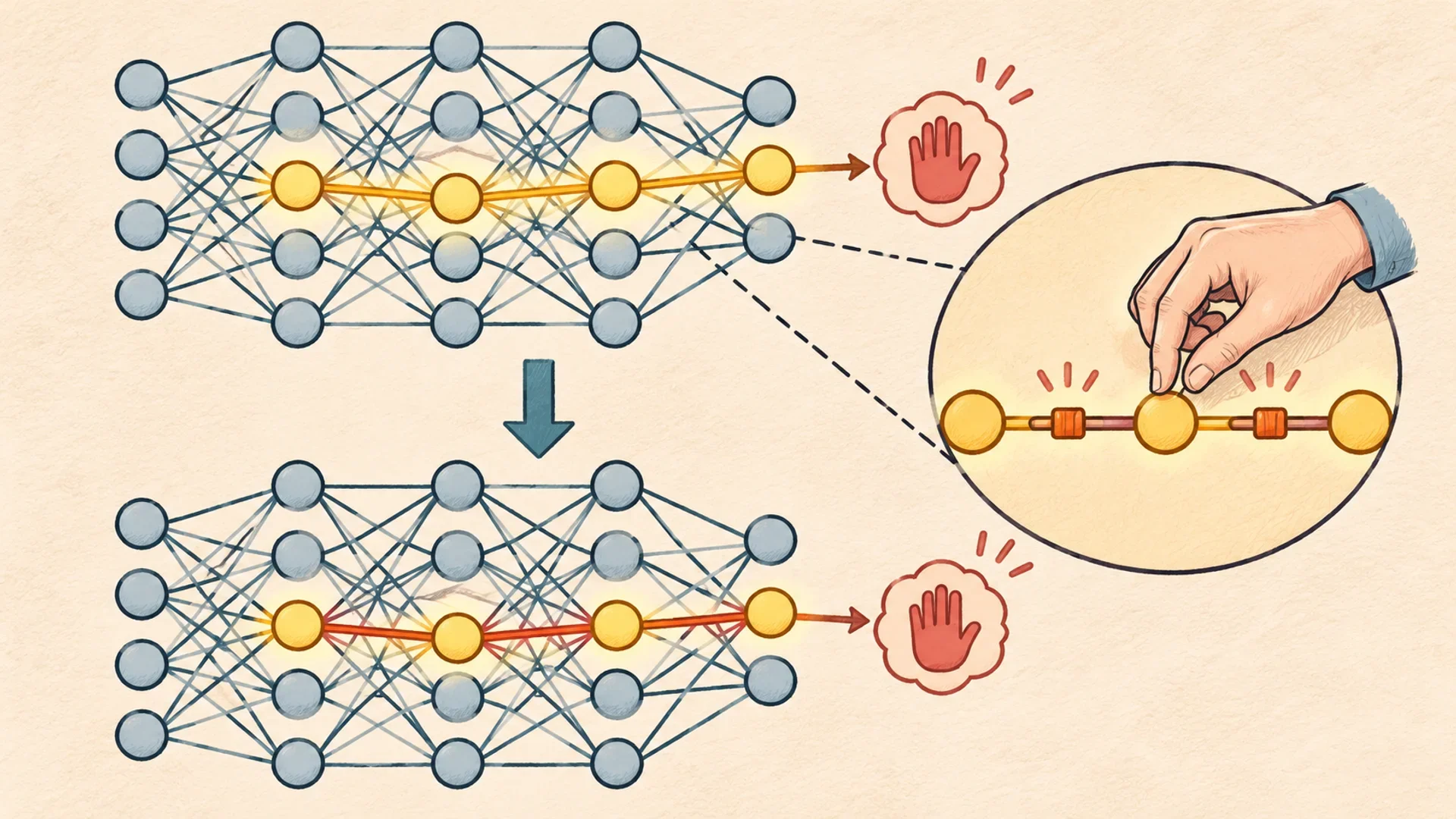
The variant wasn’t useless from the start. The poster says they kept using it after testing agent tasks—in which the AI performs multiple steps—because its success rate was almost the same as the standard model’s. But they often found that it misunderstood instructions. One day, after it gave an answer they found hard to accept on a particular task, they switched back to the original and gave it the same task. According to the poster, the problem went away. 1
The interesting point is that the success rate they had seen earlier didn’t capture all the problems they encountered in use. However, the post doesn’t include the specific instructions or answers for that task, the number of test runs, or the success-rate figures. So readers can’t reproduce the error themselves or quantify the difference between the two models. 1
Variants labeled “uncensored” also differed
The poster also tried other variants. MoonMath’s variant had received more than 170 likes—the recommendation marker on the model-sharing site Hugging Face—and had published results from several benchmarks. A benchmark is a test that compares models by having them solve a set of questions. But the poster wrote that they encountered the same problem with this model as with the variant they had been using. 1, 3
The poster judged jcartu’s WARMIND variant to be an improvement over MoonMath’s, but said that it mixed several languages in its reasoning process. By contrast, pqhaz’s Heretic variant produced results that were unexpectedly closest to the original. The poster said that this variant had also made comparatively limited changes to the model’s internals. 1
Even if scores improve, check the comparison conditions
How did MoonMath’s variant—the one the poster said gave them the same problem—perform on public tests? MoonMath published a comparison of the original and its variant in its model card, using the same questions and evaluation tools for both. The variant scored lower on some tests and higher on others. Here are the accuracy figures listed in the model card. “Reasoning” refers to a mode in which the model works through a problem before answering. The number of questions and execution conditions vary by test. 1, 3
| Test and conditions | Original | MoonMath variant |
|---|---|---|
| MMLU, all 14,042 questions | 88.22% | 87.91% |
| MMLU-Pro, 4,000 questions | 69.90% | 69.42% |
| GPQA-Diamond, 198 questions, reasoning mode | 81.3% | 84.8% |
| GSM8K, step-by-step solving, maximum-probability selection | 93.5% | 96.0% |
At a glance, the variant leads on GPQA-Diamond, a test of difficult science questions. But the creator’s explanation adds that both models used up the permitted output length of 24,000 tokens on some questions without finishing their reasoning. A token is a unit AI uses to process and generate text. The original failed to finish 24 questions; the variant failed to finish 15. 3
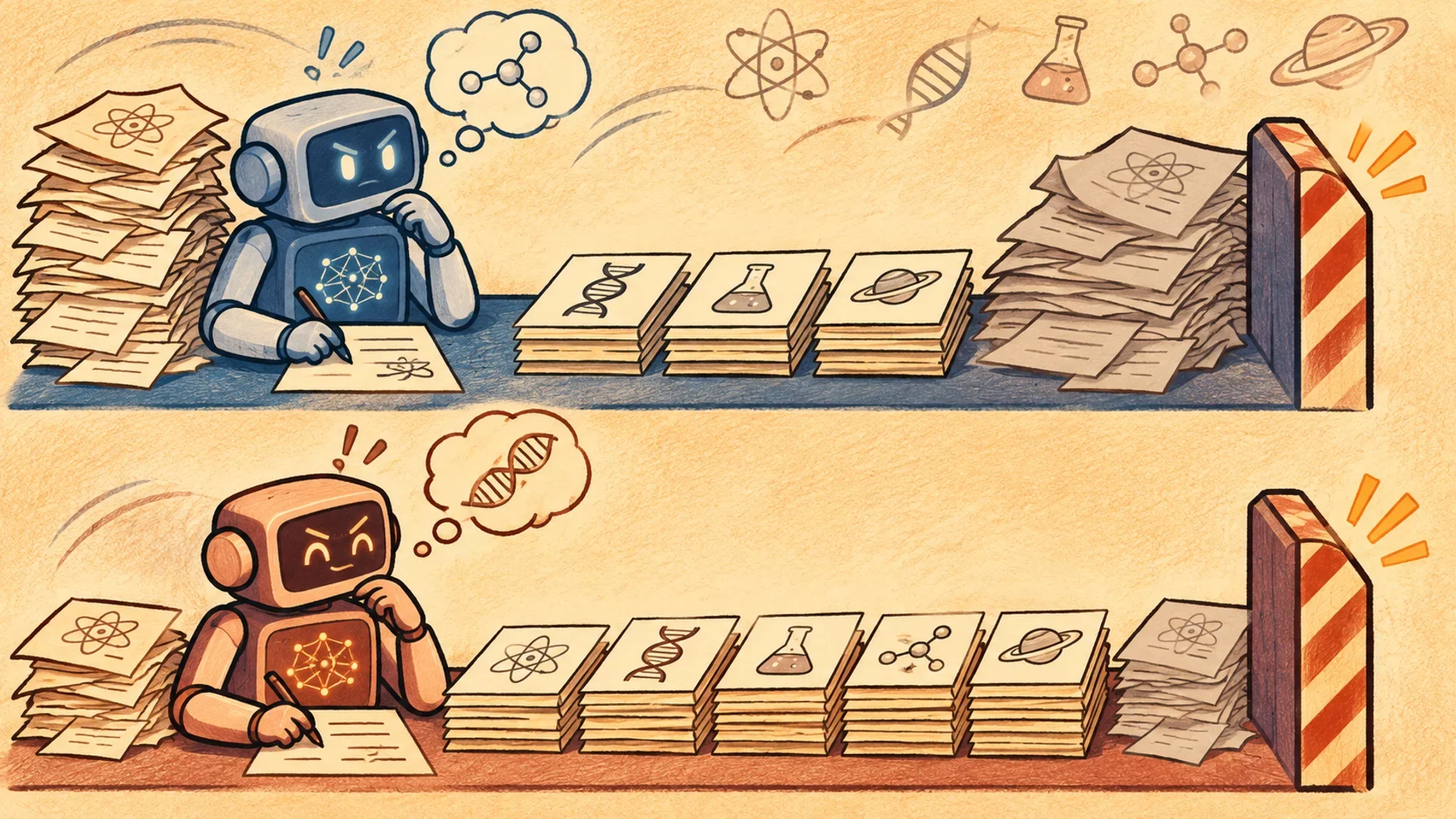
Scoring only the answers they completed, the original scored 92.5% and the variant 91.8%. On the 174 questions both models completed, each got 161 right. 3
Check refusal rates separately from task ability
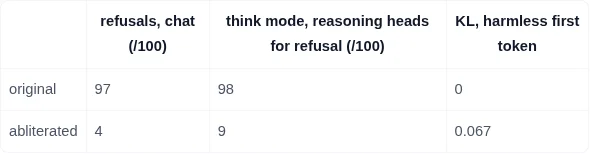
There are also measurements that focus on reducing refusals. When mrfakename released the variant the poster had used, they reported results from giving the original and the variant 100 harmful requests that had not been used in training. In chat mode, the original refused 97 requests, while the variant refused 4. That shows a reduction in refusal behavior on that test; it is not a score showing that the model is better at writing documents or coding. 2
In reasoning mode, the figures were 98 and 9 respectively. But the creator said that reasoning usually wasn’t finished by the time the model had generated 384 tokens per request, so they assessed the reasoning itself rather than the final answer. They also warned that the variant may comply with harmful requests. 2
The poster’s suggested way to choose a model is simple: if a variant repeatedly produces hard-to-accept results on a particular task, give the same task to the original and compare. If the original handles it properly, you can look for another variant that produces answers closer to the original’s. For a useful comparison, keep conditions as similar as possible—including the instructions, input materials, reasoning mode, and output length—and check not only whether the answer is correct, but also whether it followed instructions and was completed in full. 1, 3
In closing
MoonMath’s variant scored higher overall on the science-question test, but both models got the same number right among the questions they both finished. Choosing a model based on a single score can obscure the difference between its ability to finish an answer and the accuracy of the answers it completes. 3
Have you had an experience where switching AI models noticeably changed the answer to the same task?
References
- 일반 각종 무검열 모델 선택 시 참고하면 좋은 팁 · arca.live↩
- mrfakename/DeepSeek-V4.1-Flash-1017-abliterated · Hugging Face · huggingface.co↩
- MoonMath-ai/DeepSeek-V4.1-Flash-1017-uncensored · Hugging Face · huggingface.co↩