An app developer received no inspection results for four months after delivering the app. During that time, the client requested additional features. The developer said the app had already been delivered, but still had to do the extra work for free. The contract had no deadline for reviewing the deliverables. This is a case Redline, a contract review service, shared in May 2026. 1
To prevent situations like this, there are services that let you show a contract to AI, which then identifies missing terms and even drafts language to send to the other party. But should you send the AI-written wording as is? To find the answer, first consider what obligations the wording creates for each party and whether it matches how the work will actually be done. 2
An App Delivery With No Inspection Deadline
Inspection is the process of checking whether the deliverables were completed as promised. In the case of developer B mentioned above, the inspection was still not finished after the app was sent, and additional requests kept coming in during that time. The delivery date and the date inspection is completed can differ, but the two parties had not agreed on a deadline for the review. 1
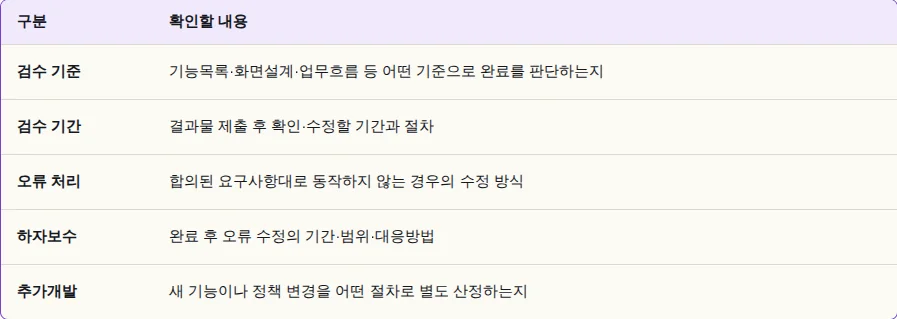
Image source · blog.handsmate.co.kr
As a negotiation example for situations like this, Redline suggests wording that requires the client to notify the developer of the inspection results in writing within 14 business days of receiving notice of delivery, and states that the deliverables will be deemed accepted if no notice is given by the deadline. It also adds that failures to implement existing requirements or malfunctions will be fixed free of charge, while additional features not agreed on initially will be quoted separately. 1
The 14-day period is an example proposed in that article, not a universal answer for every contract. For the client, the question is whether it allows enough time for someone to actually review the work; for the developer, it is whether they can wait that long for the remaining payment. It is also important to clarify what happens if there is no response and how defects should be reported, so the wording is clear. 1, 3
Rather than sending a finished clause as though it were a final offer from the outset, you could ask, “How long after receiving the deliverables should we have to review them, and how should we share our feedback?” You could follow up with, “How should we handle delays in responding, and when should the final payment be made?” This also makes clear that the deadline and payment are connected. 1, 3
What If You Receive a Fifth Revision Request?
An example on the contract negotiation service Narani’s introductory page describes a design commission where the designer thought two rounds of revisions would be enough, but received a fifth request. This scenario invites a first question: Is it enough to simply write “two rounds of revisions”? 2

Handsmate, which has published guidance on freelance development, advises against lumping all changes together under the word “revision.” Fixing an error that prevents an originally agreed feature from working properly, clarifying an existing requirement, and adding an entirely new feature may need to be handled differently. It also outlines a process for considering how a change request affects the scope, schedule, and cost, then agreeing on whether to proceed and on what terms. 3
You can break down the questions to discuss for design work, too: What kinds of changes count toward the revision limit? How will you handle correcting work that differs from the initial brief? Would requesting a new design draft change the cost or schedule? The goal is to check whether what one party means by “two rounds” is the same as what the other party means. 2, 3
Money and scheduling also need to be considered together. Handsmate lists payment terms for the deposit, progress payment, and final payment; deliverables to review along the way; and the effect on the schedule if materials or feedback are late as items to check. If you agree on when the deposit is due and what the final payment depends on, you can also discuss how to handle payment if revisions and inspections take longer than expected. 3
Before Sending Wording Prepared by AI
Narani says that when you upload a contract, its AI can point out omissions or unfavorable terms from the user’s perspective. For each item, you can choose to “change the wording,” “ask the other party,” or “leave it as is.” If there is no contract yet, you can also use a conversation to organize the terms you have in mind. 2
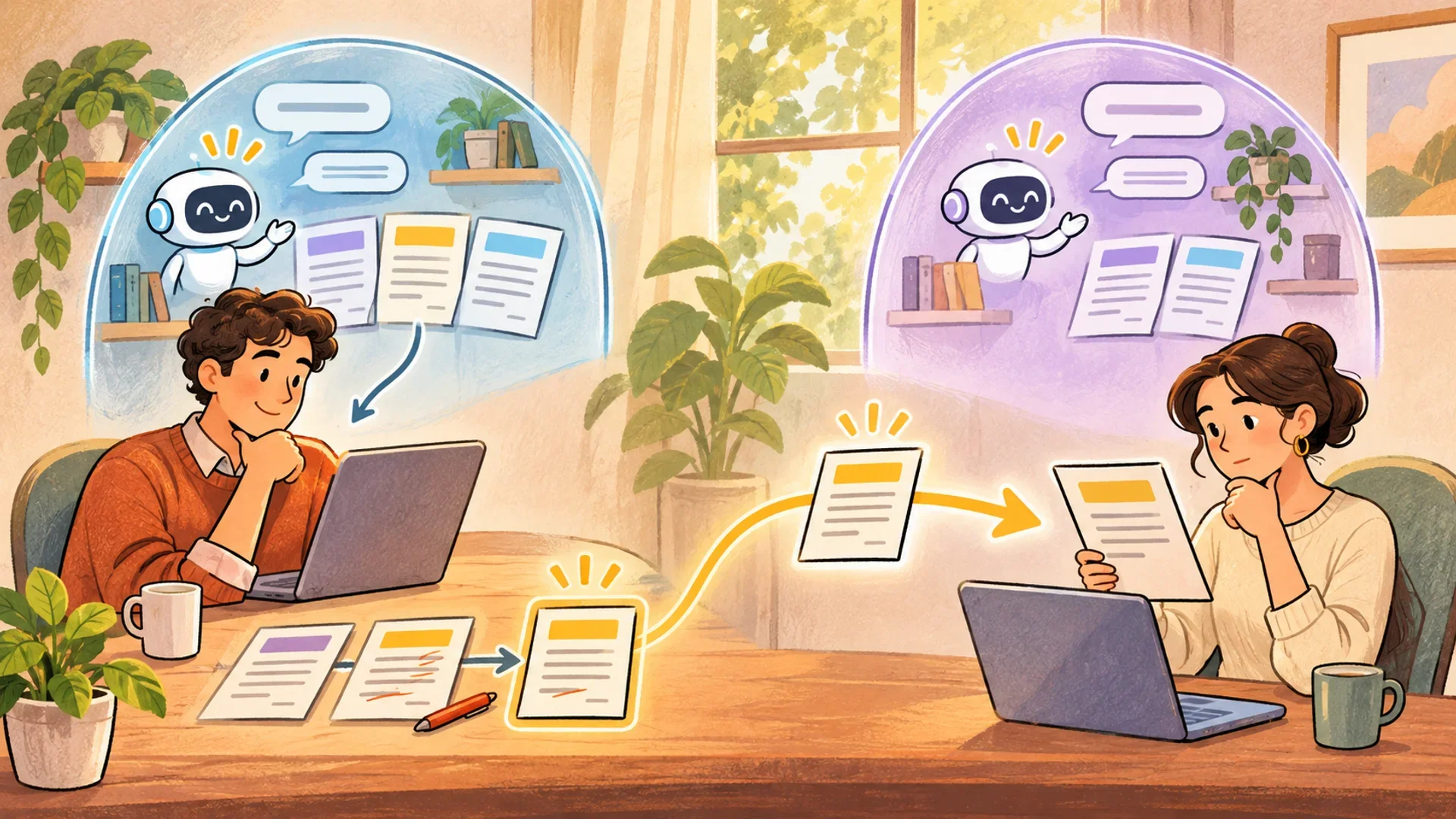
For example, if you are told that the inspection deadline is missing, you can first review the date and notification method proposed by the AI. If the wording includes a condition such as treating the other party’s silence as acceptance, make sure you understand its effect before sending it. Narani says that after preparing revised wording and a message, the user reviews what will be shown to the other party, and only what the user sends is posted in the shared chatroom. 2, 1
The other party can also join through an invitation link, organize terms in an AI conversation visible only to them, respond to proposals they receive, or suggest new terms. Participation itself does not mean agreeing to the terms or signing. The service says private conversations are not visible to the other party; only proposals confirmed for sharing and versions of the contract are sent. 2
Cost is another thing to check before choosing. According to Narani’s guidance, 10 AI conversation turns before the other party joins and five turns shared by both parties after they join are free. For additional conversations or signature requests, the party who started the contract applies a pass, while the invited person pays nothing. The service also says AI is a tool to help users understand and organize contracts, not a source of legal advice. 2
When the Agreed Wording Differs From the Final Contract
In an example of a final document from Narani, two of the three agreed clauses appear in the contract as written, while the third is marked as not found. The example finds a clause stating that a 30% deposit is payable before work begins and another stating that two rounds of draft revisions are included, but does not find the clause requiring delivery of the final files by a specific date. 2
This comparison works by first looking for an exact match in the wording. If the expressions differ, a person needs to check whether they actually mean the same thing. You can optionally ask the AI to compare the meaning as well, but the service says that it does not prevent signing based solely on issues flagged by AI. By contrast, if an objection from the other party remains unresolved or a term is still marked “needs discussion,” requests for signatures or preparation of the final document are restricted. 2
The final review should cover more than the inspection clause alone. Handsmate advises checking whether documents specifying what is to be built, such as a feature list or screen design specification, are the basis for the contract, as well as the period and scope for fixing errors after completion. Other items to agree on separately include the source code and operating accounts for the development work, and how to handle deliverables and payments if the contract ends early. 3
Conclusion
Returning to the developer who waited four months for an inspection, what matters is not the “14 days” generated by AI in itself, but an agreement both parties understand about when and what will be reviewed, and how disagreements and payments will be handled. Use the proposed wording to start that conversation, then check that the final contract reflects what you agreed on. For important legal judgments, you can consult a professional if needed. 1, 3, 2
When hiring or taking on freelance work, how have you defined the scope of revisions and the inspection deadline?
References
- 개발 용역 계약서 분쟁 — 실제 사례로 보는 5가지 빨간줄 · redliner.co.kr↩
- 나라니 — 서로를 이해하고, 함께 정하는 계약 · narani.app↩
- MVP·시제품 외주개발 계약서, 반드시 확인할 8가지 | HandsMate · blog.handsmate.co.kr↩