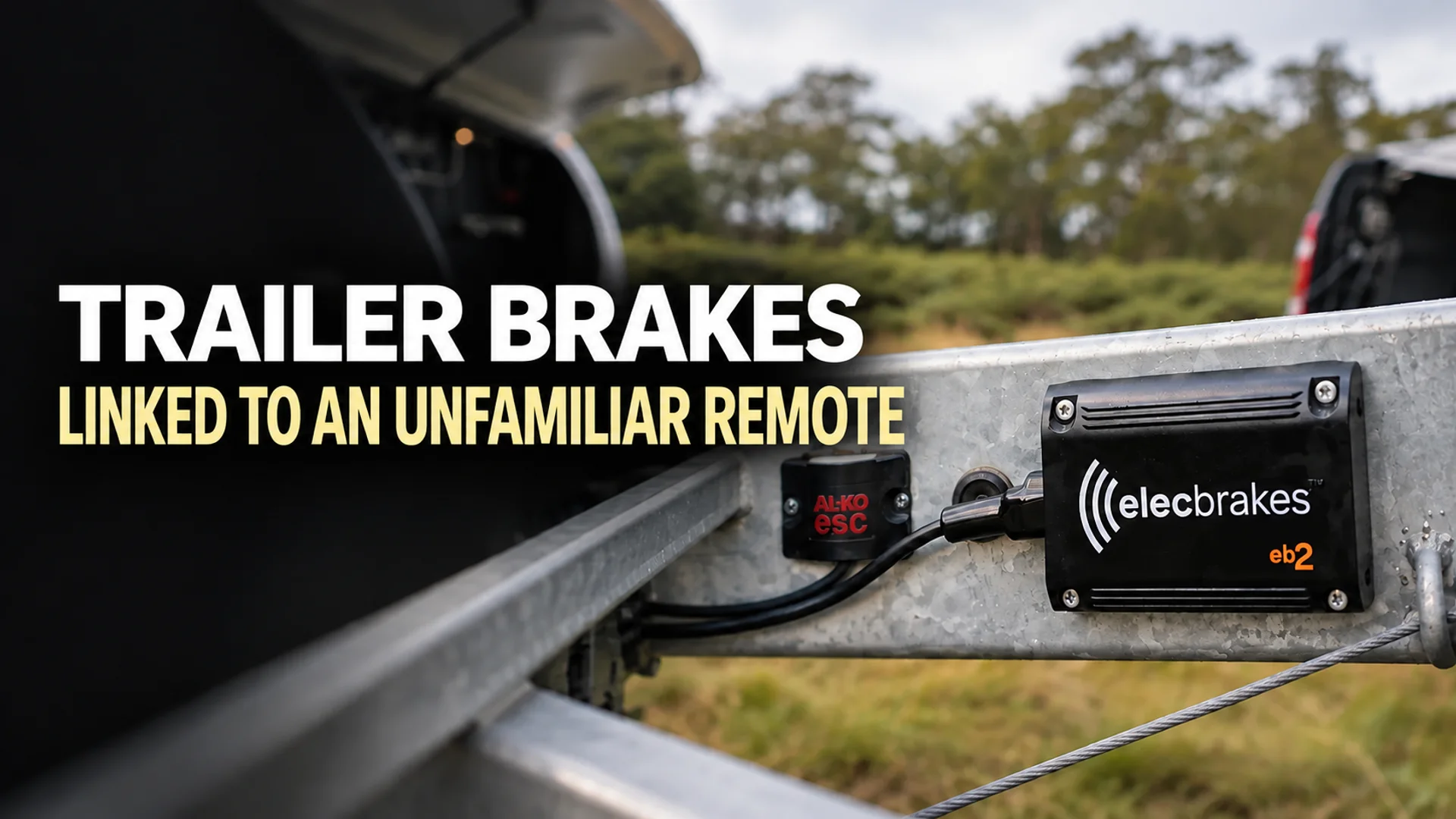
While driving on the highway, Patrick Fok noticed that the remote control switched on in his car had connected to an unfamiliar trailer. He wasn’t towing his own trailer, but the remote had connected to another driver’s braking system. There was no pairing process to register the devices with each other and no screen asking for permission to connect. 1
Fok works at security research firm Element Digital. He and his colleague Jeremy McCarthy took this accidental connection as a starting point and looked into whether other devices within Bluetooth range could also send commands to a trailer’s brakes. The answer was yes, and the manufacturer later released updates for some models. 1
A remote connected to someone else’s trailer
The device in question is an electronic brake controller made by Australian company Elecbrakes. When a vehicle is towing a trailer, the controller adjusts the trailer’s braking to match the towing vehicle’s deceleration. Drivers can adjust braking settings through an app or remote control. The EB2 is mounted on the trailer, while the VM1 is installed in the towing vehicle. 2
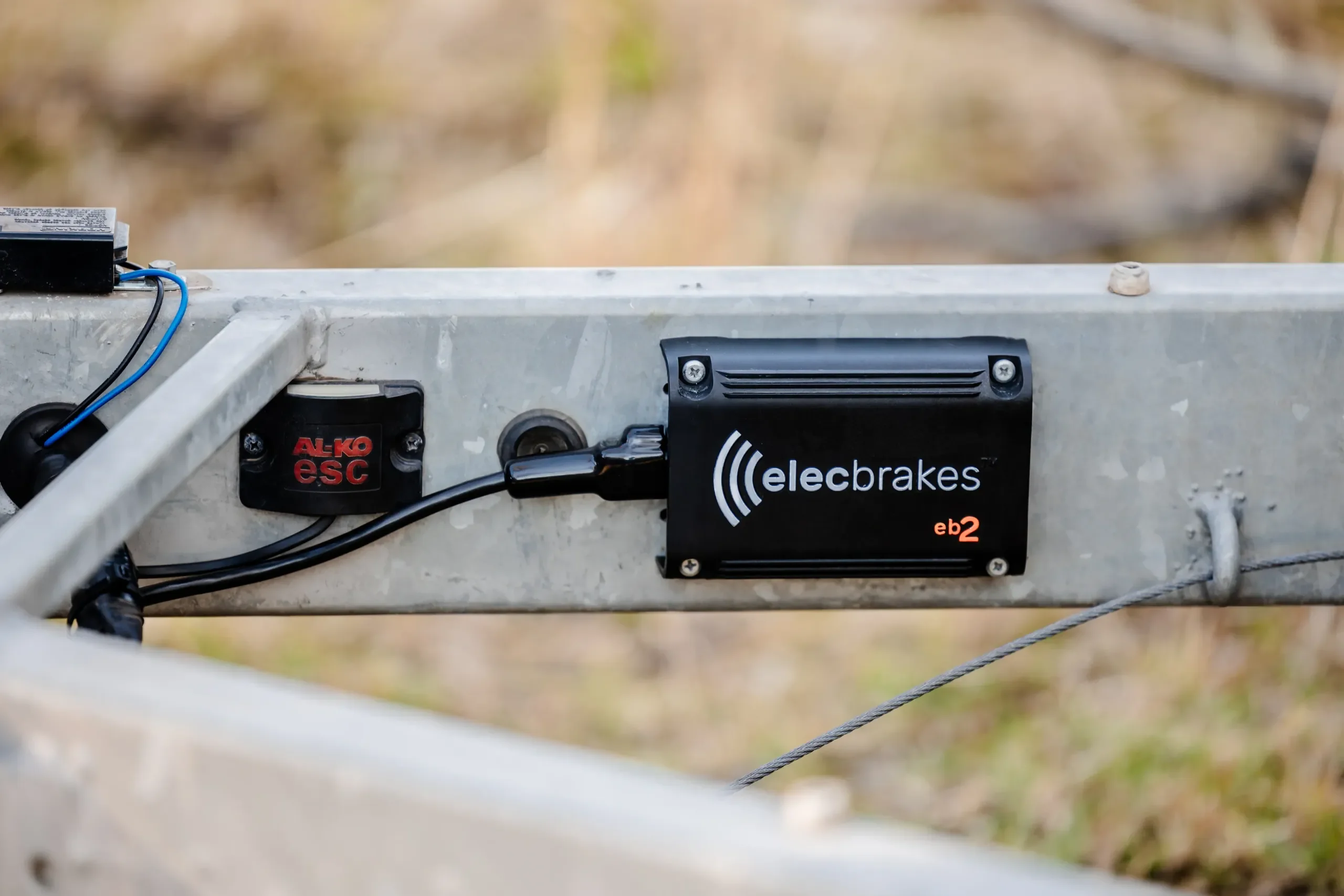
Image source · www.elecbrakes.com
While driving, Fok’s remote automatically connected to someone else’s controller. Fok said this happened frequently around trailers operated for the Tasmanian government. 1
The two researchers said they did not tamper with anyone else’s vehicle. They conducted subsequent tests using equipment they owned, on private property or in controlled environments. 1
Brakes sounded during a test on private property
The researchers first analyzed the Elecbrakes Android app. They used AI to examine the commands the app exchanged with the device and said they found no authentication code verifying the user in the brake-control pathway. They then built a research tool to inspect the controller in a browser on a Bluetooth-enabled laptop. 1
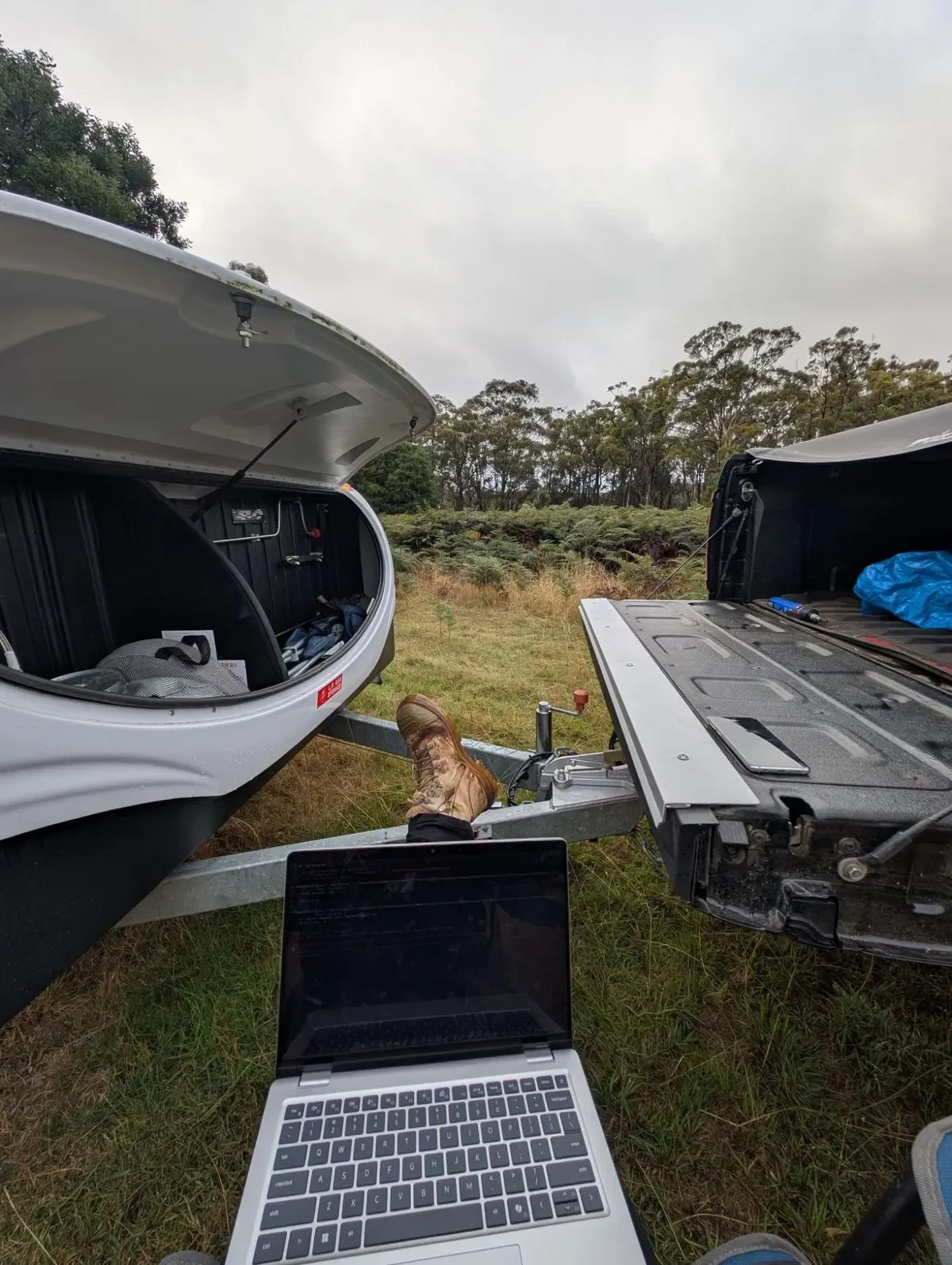
Image source · elementdigital.com.au
In testing, the controller required pairing to access some functions. But it allowed brake control and status checks without pairing. When the researchers sent a short command to their own device, they heard the brake drum’s electromagnet activate, and the device returned a status indicating that the brakes had been applied. 1
They also checked whether the commands made a real difference to braking force, on a closed road on the same private property. According to the researchers, at the same speed, maximum braking produced much stronger deceleration than minimum braking. 1
The U.S. Cybersecurity and Infrastructure Security Agency (CISA) said that a device within Bluetooth range could send control commands and affect braking without authentication or pairing. The researchers said unexpected hard braking could cause a trailer to jackknife against the towing vehicle or lead the driver to lose control. 3, 4
Fixes are available, but users must install them
The researchers notified the manufacturer on May 18, 2026. About seven weeks later, on July 6, Elecbrakes released updated firmware for the EB2 and VM1. Firmware is software that runs inside a device. The research and CISA advisory were published later, on November 19. 1, 3
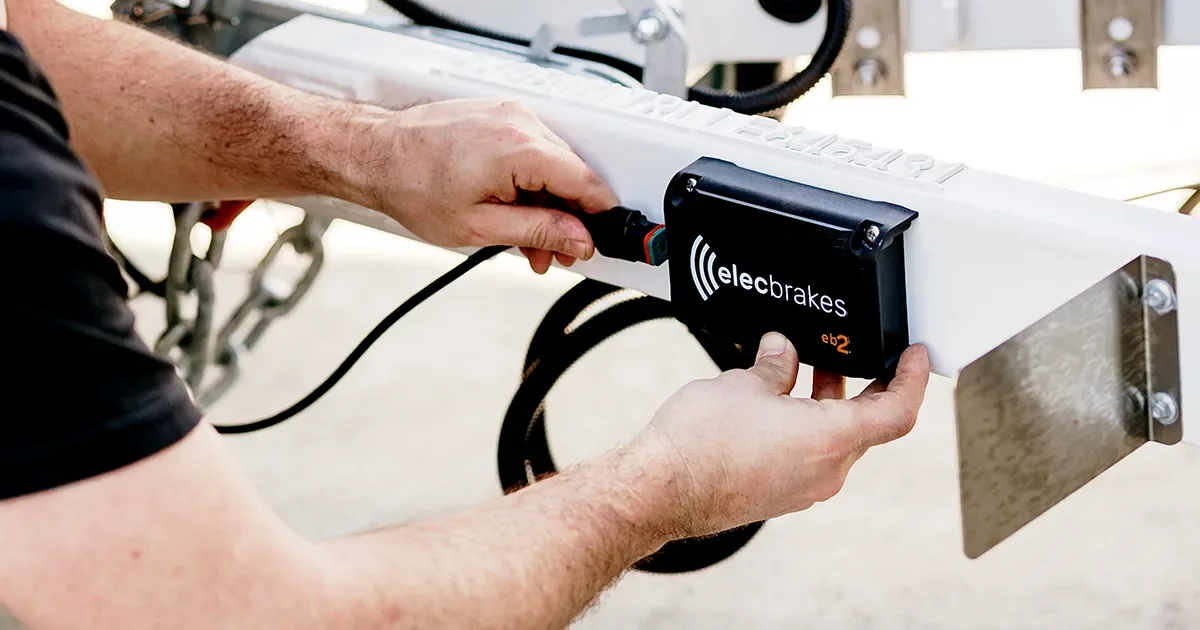
Image source · www.elecbrakes.com
For people using these models, the key point is that the update does not install automatically. Users must open the Elecbrakes app and start the firmware update themselves. The researchers identified the fixed versions as EB2 3.0.4.4.3 or later and VM1 1.3.4.2.1 or later. Users should check their model and installed version, then update through the app. 1, 3
CISA described three vulnerabilities. In addition to the issue that allows brake commands without authentication, the list includes a lack of protection against intercepting and replaying legitimate commands, and an unprotected firmware update pathway. CISA said exploitation could allow attackers to control the brakes, change the firmware, or disable the brake lights, among other things. 3
Elecbrakes co-founder Craig Drion said in a news report that 60–70% of controllers connecting each day were running the latest firmware, and that an update takes one to two minutes. This figure is the manufacturer’s estimate for devices that connect, not the share of all units sold that have been updated. 4
An unresolved gap for the older ELBC 2000
Another model came up during the research. After Fok found an older ELBC 2000 on a nearby trailer, Elecbrakes confirmed in late October that the model had the same vulnerability. The product was discontinued years ago, but some units may still be in use on trailers. 4, 1
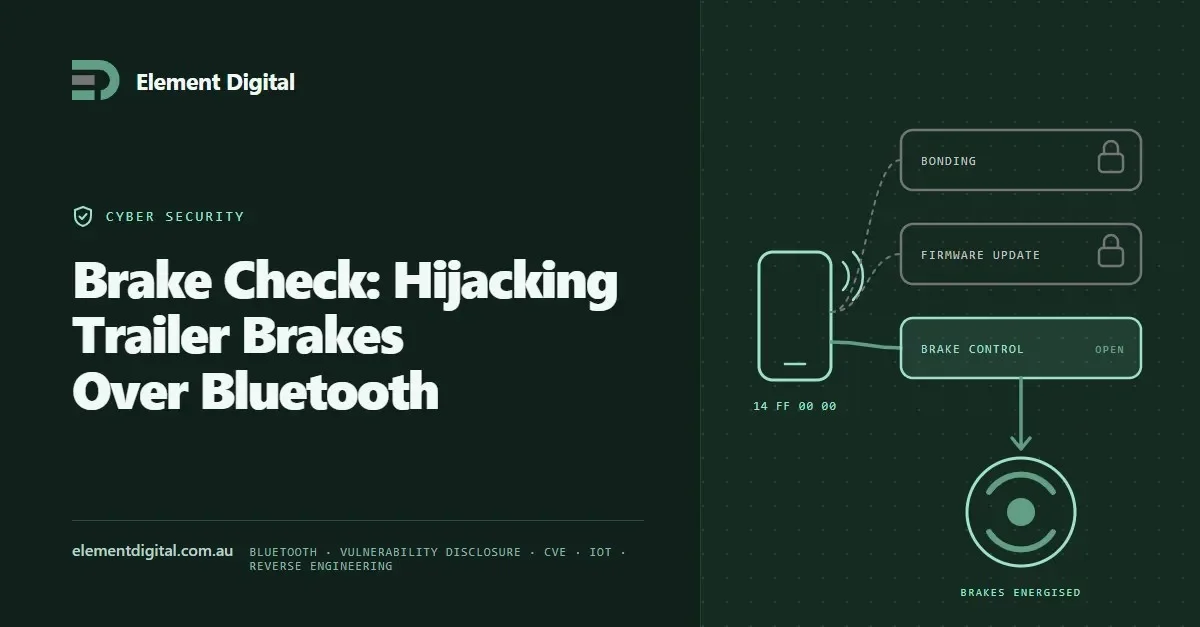
Image source · elementdigital.com.au
In its November 19 advisory, CISA listed all versions of the ELBC 2000 as affected and said no fix was available. The manufacturer said it was considering how to address this controller separately. 3
Drion said that in the meantime, the risk described in the research is mitigated if users actively connect a smartphone or Elecbrakes remote to the device, as described in the product instructions. 4
Elecbrakes told the researchers it was not aware of reports of damage or injury resulting from the vulnerability. CISA also said that, as of its November 19 advisory, there were no publicly reported cases of the vulnerability being exploited. 1, 3
In closing
The incident in which Fok’s remote connected to an unfamiliar trailer is a reason to check the security of your own equipment. If you use an EB2 or VM1, you can start the firmware update yourself in the app. The older ELBC 2000 does not yet have a fix, so users should watch for further action from the manufacturer. 1, 3
References
- Brake Check: Hijacking Trailer Brakes Over Bluetooth | Element Digital · elementdigital.com.au↩
- Electric Brake Controller FAQs | Help Centre | Elecbrakes · elecbrakes.com↩
- Elecbrakes EB2, VM1, ELBC2000 | CISA · cisa.gov↩
- ↩