
South Korea is now rising as a protagonist in the "Deep Space Exploration Era," moving beyond being a simple space power to conquering the Moon and even eyeing Mars. As of 2026, building upon the successful mission of Danuri, we are preparing for a massive leap toward Danuri 2, the next-generation lunar orbiter. Space is no longer just an object to gaze at; it is becoming a "new territory" where we can set foot and extract resources ourselves.
The Path Paved by Danuri, and the Emergence of Danuri 2

The reason we can feel this incredible change right now is thanks to Danuri (KPLO), created by our own hands. In 2022, South Korea surprised the world by becoming the 7th nation to succeed in lunar exploration. Settling into a 100km orbit above the Moon with a 678kg body, Danuri proved a value far beyond simply "going and coming back."
Danuri meticulously investigated the Moon's geology, resources, magnetic field, and radiation environment. In particular, the imaging of permanently shadowed regions conducted in cooperation with NASA's Artemis program provided decisive data that will indicate the most ideal locations for building future lunar bases.
Now, based on that data, we are drawing up next-generation exploration scenarios and Danuri 2, which represents an evolutionary step forward. While Danuri was an observer telling us "what the Moon is like," future missions will focus on "how to utilize the Moon and stay there." This is not mere technological display, but an essential process in preparing for the practical era of the space economy.
2026, the Space Scenario We Will Face: From Lunar Bases to Mars
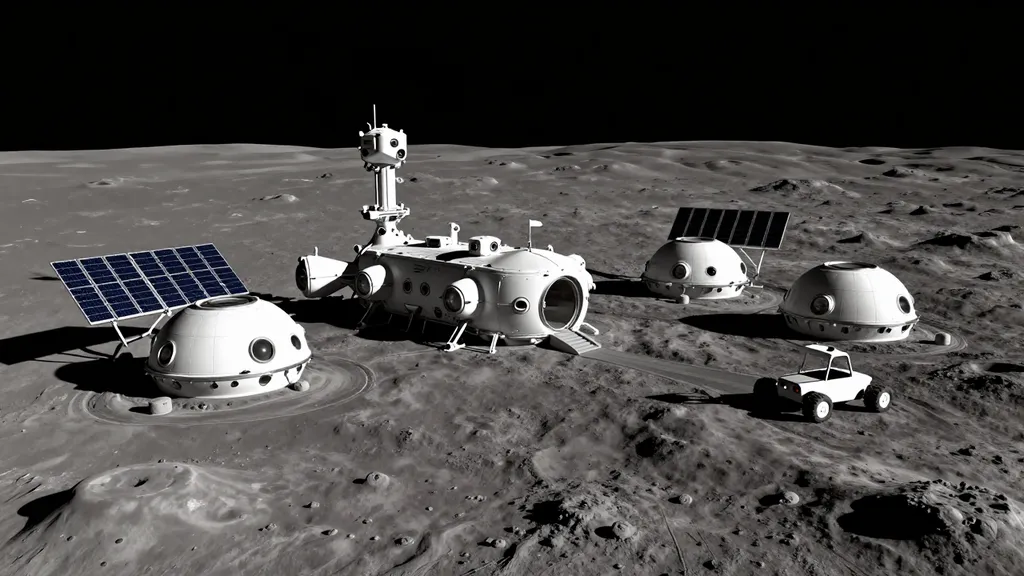
So, what are the future plans? As of 2026, the roadmap for South Korea's space development is moving like a well-crafted precision watch. Moving beyond the stage of simply launching satellites, specific step-by-step strategies for the manned space era have been established.
The first stage is building infrastructure for lunar settlement. We are actively participating in the 'Lunar Gateway' project, an international lunar orbital station. This is a collaborative effort to create a "space station" to use the Moon as a base for venturing into deeper space.
The second is securing independent landing technology. The launch of the Korean lunar lander scheduled for the early 2030s and the test launch of the KSLV-III (next-generation launch vehicle) are key gateways for us to set foot directly on the lunar surface. The high-resolution video data captured by Danuri is being used to find the "runways" where these landers can land safely.
The final dream stage is Mars exploration. From a Mars orbiter in 2035, to a Mars lander in 2045, and finally the development of a manned transport vehicle in 2050. Our gaze is already directed beyond the Moon toward the Red Planet, Mars.
Of course, this process will not be easy. There are immense costs, technical hurdles, and variables like the unpredictable space environment. However, we have already proven our independent launch capability through the success of Nuri. Now, we have entered the stage of filling in the "software"—precise control and scientific mission execution capabilities—beyond mere hardware manufacturing.
The Korea-US Space Alliance, Becoming a Core Player in the Global Space Ecosystem

Space development has now become a "team sport" that is impossible for a single nation to achieve alone. South Korea is moving strategically to ensure it is not excluded from this game. This is through global cooperation centered around KASA (Korea AeroSpace Administration).
In 2024, KASA and NASA adopted a historic joint statement in Washington. This was not merely a promise to be friendly. It was the declaration of a "space alliance" to divide practical roles in lunar and deep space exploration, centered on the Artemis program. In particular, cooperation at L4 (Lagrange Point 4), the gravitational equilibrium point between the Earth and the Sun, is an expression of South Korea's strong will to demonstrate technical prowess even in strategic strategic locations of space exploration.
Furthermore, the rapidly increasing number of satellite launches and the issue of space debris are both new threats and opportunities. Korea is focusing on securing standard technologies to create "space order," such as space traffic management systems. While others build the roads, we aim to build the systems that manage those roads, positioning ourselves as rule-makers in the global space market.
This international cooperation is the decisive key to raising our country's space industry market share (currently about 0.8%). Beyond semiconductors and automobiles, the space industry is a core national strategic industry that South Korea must nurture as a next-generation growth engine.
Creating the Future of Space with Our Technology: What Should We Prepare?
We are now at an inflection point where we must transition from a 'Fast Follower' to a 'First Mover.' The success of Danuri is just the beginning.
There are three main areas we must focus on moving forward:
- Maximizing Convergence Technologies: As demonstrated during the development of Danuri, we must further advance advanced technologies that combine IT, NT (Network Technology), and BT (Biotechnology). Unmanned exploration technology integrated with AI and robotics will be the core of future lunar base operations.
- Private-led Space Economy (New Space): Beyond government-led development, we must create an ecosystem where private companies can actively jump into the space industry. Various business models, such as launch vehicle services, satellite data utilization, and space tourism, must be created.
- Talent Cultivation and Social Consensus: Space exploration is a long-term project involving astronomical budgets. It is more important than ever to maintain public interest through events like selecting the second astronaut and to create an environment where the future generation, our youth, can dream of becoming space scientists.
Of course, critical views exist. Questions like, "There are so many problems on Earth, why spend vast amounts of money in space?" arise. However, space technology is a treasure trove of technologies directly linked to our daily lives, such as communication, weather observation, and disaster management. Investment in space ultimately returns as a technological leap that makes life on Earth safer and more abundant.
South Korea's Space Era Has Just Begun
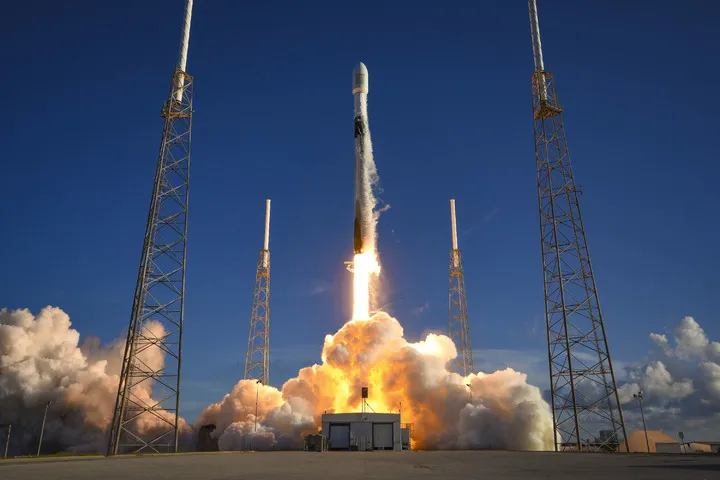
So far, we have looked at how South Korea is drawing a massive roadmap to go beyond the Moon and toward Mars following the success of Danuri.
To summarize, Danuri proved the possibility that we can go to the Moon, and Danuri 2 along with next-generation launch vehicles will be the tools that turn that possibility into reality. Furthermore, international cooperation through KASA will allow us to stand proudly as a member of the global space powers.
South Korea's space territory is now expanding beyond Earth's gravity toward the distant Moon and Mars. What we are launching is not just a rocket, but the future and new opportunities for the Republic of Korea.
What are your thoughts? Have you ever imagined a future where our children live directly on a lunar base?
What kind of future space life do you dream of? Please share your thoughts freely in the comments!
References
- 우주, 과학 : 네이버 블로그 - Naver Blog · blog.naver.com
- 다누리 - 나무위키:대문 · namu.wiki
- 제4차 우주개발진흥기본계획 · cms.spacesecurityportal.org
- 한국의 Artemis 국제공동 유인달탐사 참여를 중심으로 우리나라 심 ... · jstna.org
- 달탐사 - 다누리 개발 - 한국항공우주연구원 · kari.re.kr
- 240922 KASA, 한미 우주동맹의 새로운 시대를 열며 글로벌 협력 확대 ... · kasa.go.kr