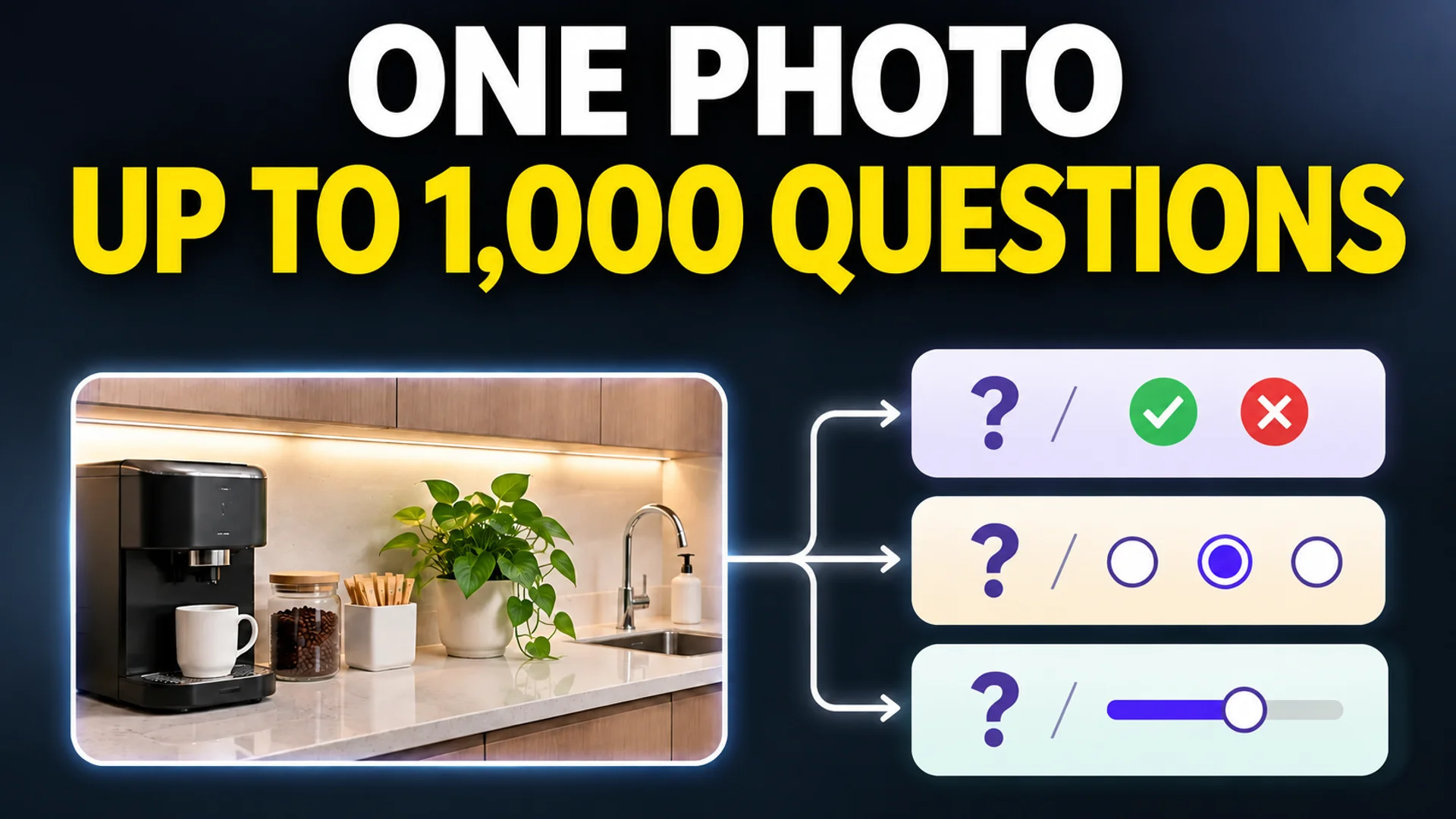
If a single photo needs to be checked against several criteria, you can group multiple evaluation items into one input instead of sending the image separately for each question. As an example of the Gemini Decisions API, Google showed how to provide a photo of a break-room counter together with an inspection note, then ask separately whether there are liquid spills, what cleanup action is needed, and how severe the condition is. 1
Share One Input Across Multiple Evaluations
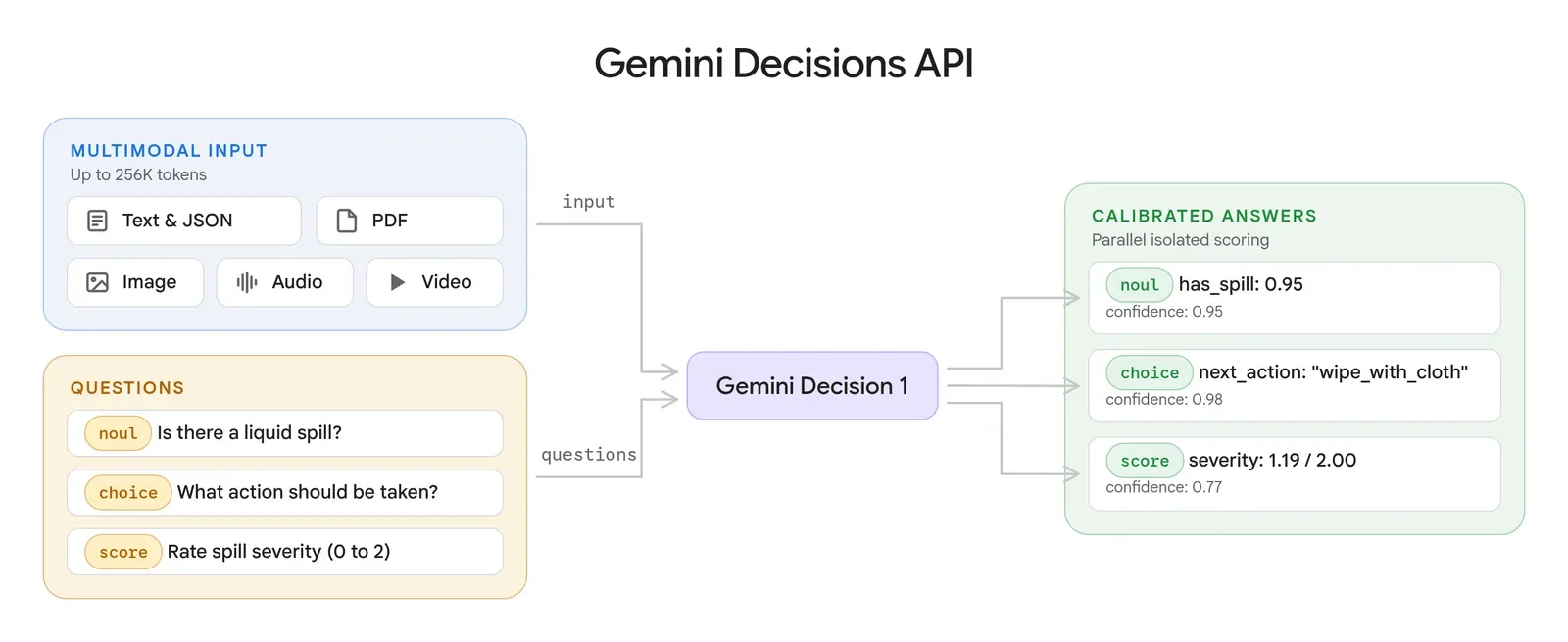
Google DeepMind Product Manager Min Choi and Principal Scientist Felix Yu explain that the Gemini Decisions API uses the Gemini Decision 1 model to attach up to 1,000 independent questions to a single input, which can be text, an image, audio, video, or a PDF. Question types include yes-or-no judgments, multiple-choice selections, and ratings based on predefined criteria. 1
Each answer is returned not as a long sentence, but as probabilities for each candidate and a confidence score. This format is designed for evaluating predefined items rather than generating free-form explanations. 1
Three Questions for a Counter Photo
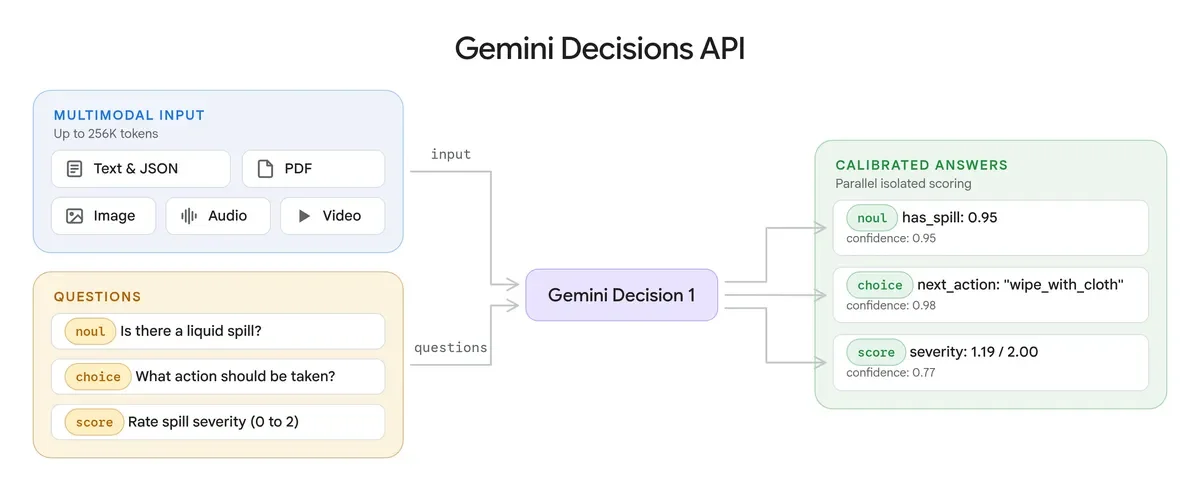
Google’s code example provides a counter photo alongside the note “Inspect the counter before the 9 a.m. customer meeting.” It then asks three separate questions about that input. 1
The first is a yes-or-no question about whether there are any unwiped liquid spills. The second is a multiple-choice question asking which action is appropriate: wipe it with a cloth, call the cleaning staff, or mark the counter as ready for the meeting. The third is a rating question that evaluates the counter’s condition against predefined criteria, ranging from clean to a major spill or safety hazard.
The photo and note are shared as the common input, but each question uses different evaluation criteria. This code illustrates how to construct a request; it does not report actual evaluation results for a particular photo. 1
1,000 Is the Maximum Number of Questions
“Up to 1,000” does not mean processing 1,000 photos. It means that a single request can contain up to 1,000 independent questions that share one input. The counter example shows how three questions can be grouped to examine one scene using different criteria. 1
Google explains that the shared input is computed once per request, while each question adds its own instructions and tokens for the criteria set for that question. 1
Conclusion
In the Gemini Decisions API, applying up to 1,000 questions to a single photo means using one image as the shared input for multiple yes-or-no, multiple-choice, or rating evaluations. For tasks like the counter example that require predefined judgments rather than long explanations, several inspection items can be grouped into one request. 1