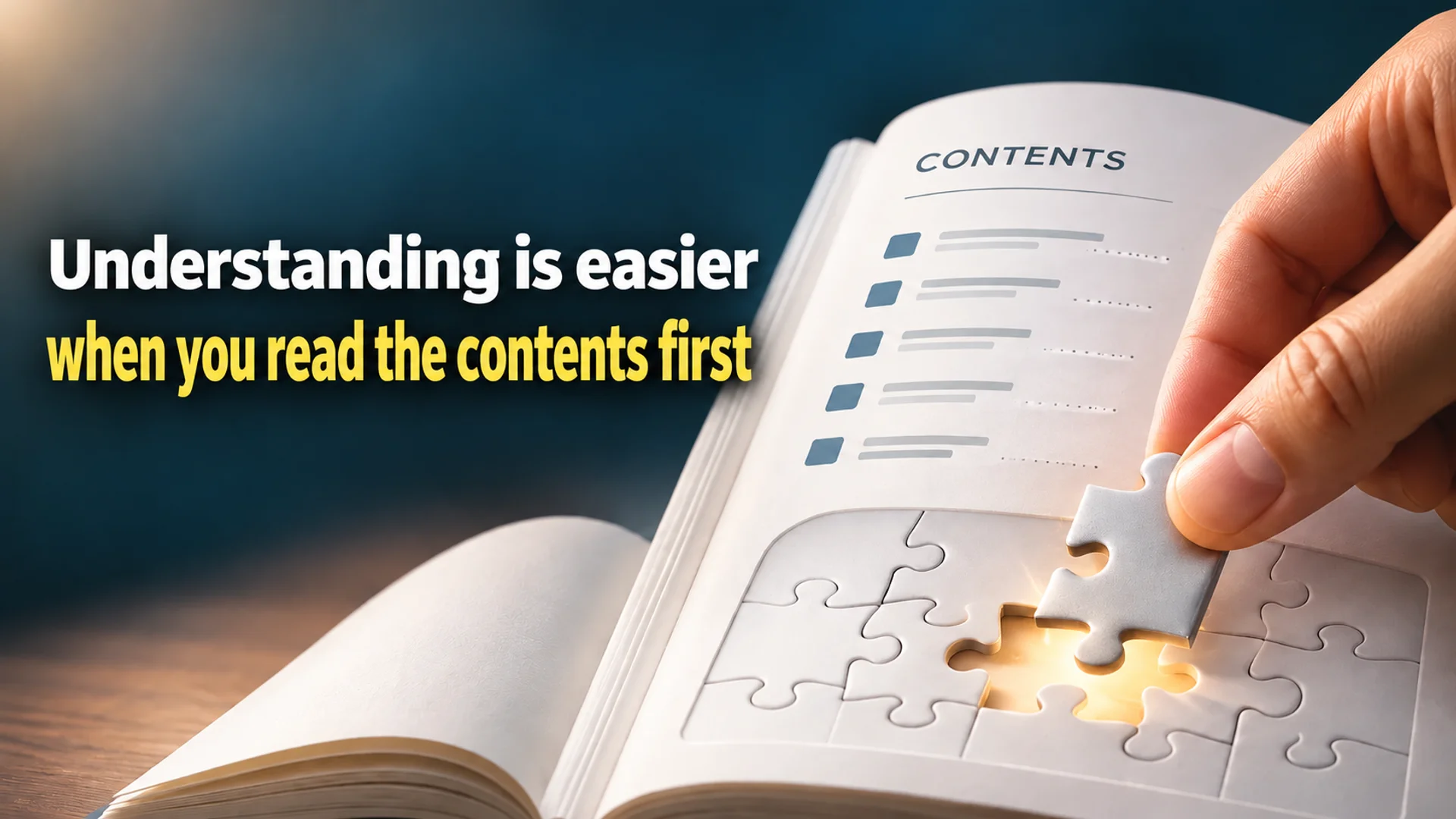
You may have experienced pausing while reading the first page of a difficult book, thinking, “What am I even reading right now?” This is likely not a lack of concentration, but rather a problem caused by an empty “vessel”—an internal representation needed to receive information. Understanding and Teaching Reading Comprehension (2014) by Jane Oakhill and other authors includes an experiment that clearly illustrates this phenomenon.
Participants were asked to read a short passage without a title. The sentences were as follows:
“This process is easy and fun. It can take anywhere from about an hour to an entire day. The time required varies depending on the complexity of the final result. This process requires only one substance. However, that substance must be sufficient in quantity and possess the appropriate state. The substance works best when fresh, and its lifespan varies depending on the location. If you wait too long, it may disappear. The easiest way to manage this is to compress the substance more firmly than its original state. Through this process, structure is created from an amorphous substance.” 1
You might guess what is being made, yet the comprehension does not come smoothly. At this point, if the experimenter reveals, “The title of this passage is Building a Snowman,” the situation changes. You realize that “This process requires only one substance” refers to snow, “If you wait too long, it may disappear” refers to melting, and “structure is created from an amorphous substance” refers to assembling the mass. Oakhill and colleagues call this the “comprehension click,” explaining that you did not reinterpret the sentences but rather that the previously read sentences fell into a single framework. 1
To conclude, scanning structural frameworks such as the table of contents or introduction before reading a difficult book is not merely a habit but a strategy supported by experimental evidence. However, this framework must be encountered “before” the main text.
Those Who Saw the Title in Advance Read Faster and Remembered More
Oakhill and colleagues cite research by Smith and Swinney (1992) and Bransford and Johnson (1972). These two experiments confirmed a common finding. Even with the same difficult text, participants who were presented with the title “before” the text identified meaning faster and performed better on recall tests than those who read without a title. 1
The key condition is “before.” The authors explicitly state that showing the title after reading the text provides only minimal help, but showing it before reading makes the text much easier to understand and more memorable. 1 In other words, the key to effectiveness is not knowing the structure itself, but knowing it “when.” It is much easier for the brain to set up a framework in advance and fit sentences into it than to piece together scattered fragments after reading them.
The Brain Tries to “Fit” Information, Not Just Stack It

This difference is explained by the concept of a “mental model.” Readers must create a “gist representation” that weaves together the meanings of words and sentences into a coherent whole. The internal representation used for this purpose is called a mental model. 1 With an appropriate framework, text information is successfully integrated into that framework, and comprehension “clicks” into place. In the snowman passage, the moment the vague “substance” is determined to be “snow” is an example of this. 1
Conversely, without a framework, the brain slows down as it processes each piece of information separately, and less information is retained. The table of contents and introduction serve this role for an entire book. The table of contents previews the topics of each chapter, and the introduction previews the author’s thesis, thereby providing readers with a framework in advance.
Extending to the Introductory Paragraph Works Under the Same Conditions
This principle applies not only to a single title line but also to longer introductory sections. An experiment by Ausubel (1960), cited in a paper by Tsubaki and Nakayama, is representative. In this study, two groups of university students read a 2,500-word text on the metallurgical properties of carbon steel. The experimental group first received the introductory paragraph of the text as an “advance organizer,” while the control group received background knowledge materials that did not serve as an advance organizer. 2
An advance organizer is material designed to be presented before new learning content to aid subsequent learning and memory. 2 As a result, in a test administered three days later, the group that received the advance organizer recorded significantly higher scores. 2
The results were identical when the unit was changed from a title to a larger unit, the introductory paragraph. The core variable was not the amount of material, but whether it was “presented before reading.” However, the paper by Tsubaki and Nakayama applies this principle to listening to English lectures, and specific numerical results are not specified due to gaps in the original text. Therefore, the established facts we can cite here are up to Ausubel’s introductory paragraph experiment. 2
A Practical Sequence for Opening a Difficult Book

Applying this principle to general reading, the advice to “look at the table of contents and introduction first for difficult books” converges on a single condition: “set up the structure in advance.” Specifically, you can try the following sequence.
First, skim the book title and chapter titles (table of contents) in one to two minutes before reading the first sentence in detail. Try to predict what each chapter will cover, even if only in one word. Second, select a chapter of interest and read only its introduction. The introduction previews the research purpose or thesis, and academic writing guides also recommend this sequence. 3 Third, enter the main body while keeping this constructed framework in mind. Materials on expository reading strategies also cite predicting the development direction through titles and subheadings as a core strategy. 4
One Small Supplement to Maximize Effectiveness
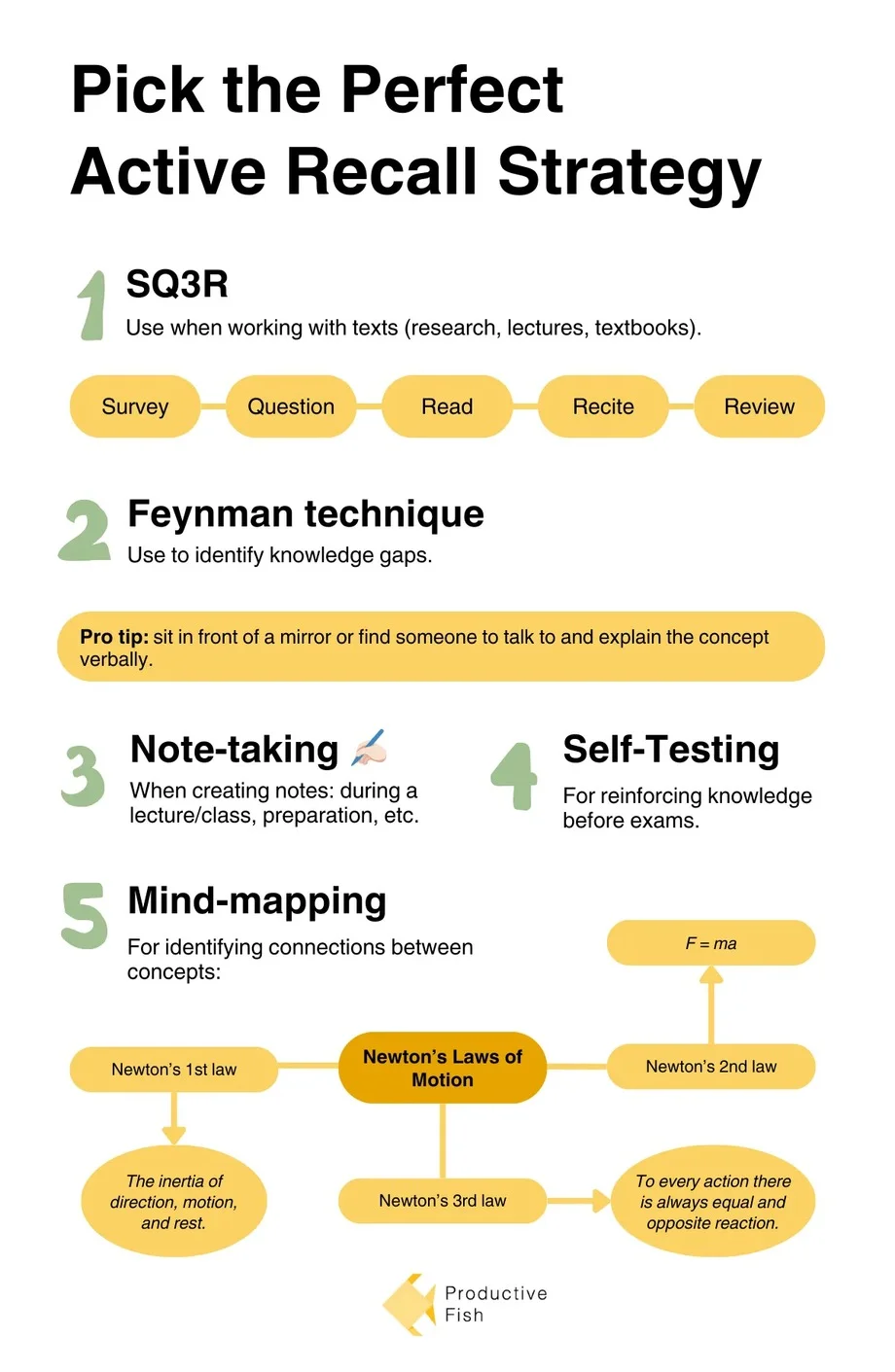
After setting up a framework with the table of contents and introduction, you need to practice retrieving information while reading to actually use that framework. Research by Dunlosky et al. (2013) classifies commonly used highlighting and re-reading as low-efficacy learning methods, rating self-recall and distributed learning in the highest tier. 5
These two strategies do not conflict but follow one another. The framework set up by the table of contents and introduction becomes the vessel for holding information, and recalling the content by closing the book at the end of each chapter becomes the training for using that vessel. The YouTube channel “ㅂㅂ책방” (BB Bookstore) cites this research and suggests deciding “who to teach this content to” before reading and “trying to recall it yourself” at the end of the chapter. This method is a cognitive strategy applicable regardless of whether it is a printed book or an e-book. 5
Quickly skimming the title and table of contents to establish a framework of “what this text is about” before reading the first line of a difficult book in detail is an easy first step supported by experimental evidence. As experiments by Smith and Swinney, and Bransford and Johnson, have shown, the same text is understood more quickly and retained longer when the framework is presented first. The help was minimal even if the framework was shown after reading. 1 The direct evidence for this conclusion comes from controlled experiments at the level of titles and introductory paragraphs, so it does not guarantee an effect of the same magnitude for all thick books. However, it suggests that when facing text that feels like a cipher, the problem may start not with a lack of concentration but with an empty vessel, and the table of contents and introduction are the fastest way to fill that vessel.
References
- 📖 [PDF] Understanding and Teaching Reading Comprehension by Jane Oakhill | 9780415698306, 9781317628989 · perlego.com↩
- The Effect of Using Outlines as an Advance Organizer on EFL Students’ Listening Comprehension of a Lecture · tuj.ac.jp↩
- 목차 구성작성법 졸업논문 소논문 대학원 과제레포트의 서론 이론적배경 연구방법 결과 논의결론 · m.blog.naver.com↩
- 문해력 향상 전략 독서법을 통하여 설명문의 구조 파악하는 방법은 무엇인가 - 문해력 향상 전략법을 연구하고 공유하다 · creator-blog.com↩
- 뇌과학자들이 말하는 책 읽고 다 까먹던 사람도 기억에 남는 독서법 | 밑줄보다 효과 좋은 3가지 · youtube.com↩