"I thought I got a great deal on a used EV... but what if the battery is dead?"
For those contemplating buying a used electric vehicle (EV), this is likely the one concern that keeps them up at night. While you can gauge the condition of an internal combustion engine (ICE) car just by looking at the engine, EVs are different. This is because 80% of the vehicle's value is determined by the invisible state of the battery inside.
If you unknowingly purchase a car with poor battery health, you could face a "battery replacement bomb"—a cost reaching tens of thousands of dollars—immediately after purchase. Today, from a veteran's perspective, we will dive deep into a detailed battery diagnosis method to ensure you don't get "cheated with your eyes wide open" when buying a used EV.
1. Why does a used EV require "Forensic Investigation"?
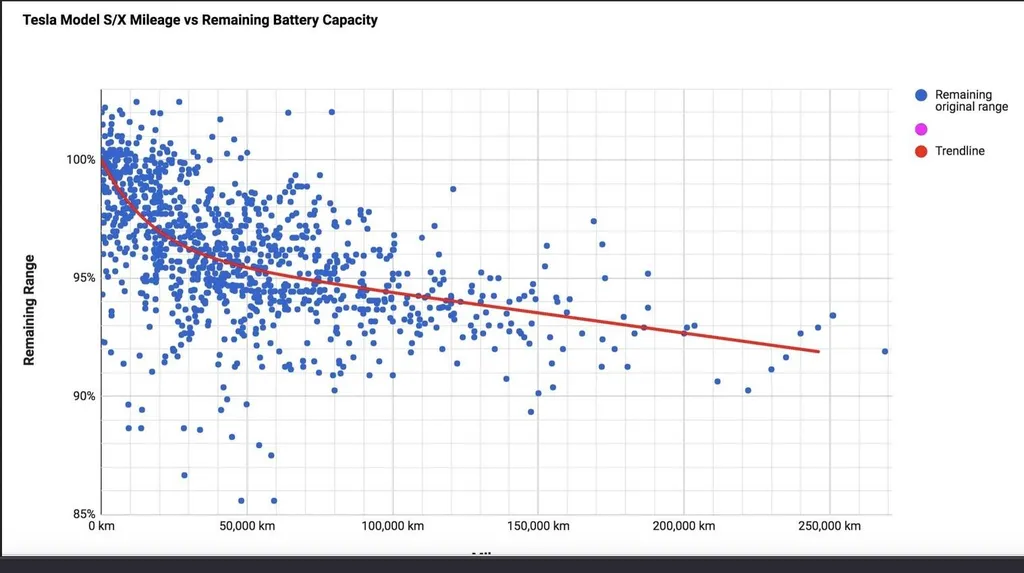
The used EV market operates under a completely different set of rules than the general used car market. If the engine is the heart of an ICE car, the high-voltage battery is the heart of an EV. However, this battery is a consumable. It is a law of nature that capacity decreases the more it is used.
The problem is that the "rate of decrease" varies wildly from car to car. While some vehicles maintain performance like a new car even after five years, others may already be suffering from "chronic illnesses" due to the previous owner's aggressive driving or improper charging habits.
The exterior might look shiny, and the mileage might seem low. But if the internal cells have lost their balance or if the interior is damaged due to an obsession with fast charging, the car is nothing more than an empty shell. Therefore, buying a used EV should not be about simply looking at the exterior, but a process of "forensic investigation" to verify the battery's health through proven data.
2. Four Key Checklists for a Failure-Free Purchase
Now, let me reveal the actual investigative methods. Do not trust a seller's claim that "the condition is excellent." You must trust only data and records.
First: Check the SOH (State of Health) value
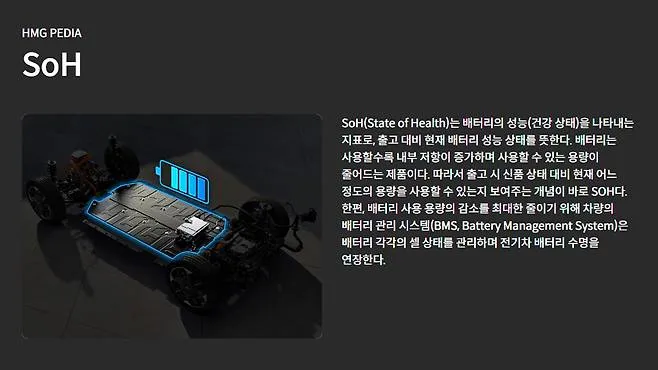
The first question you must ask is, "What is the SOH?" SOH stands for State of Health, an index that represents the current health of the battery as a percentage relative to a brand-new battery.
- 90% or higher: New car condition. You can consider purchasing without hesitation.
- 80% range: A typical level. However, this is the range where there is room for price negotiation, and you must consider future depreciation.
- 79% or lower: A red flag. This is the range where battery efficiency begins to drop sharply, so it is best to avoid it unless the price is truly extremely low.
This value should not be taken at the seller's word; it must be verified through an official report extracted via a manufacturer's service center or professional diagnostic equipment.
Second: Trace charging history and patterns
Batteries also have "eating habits." Just as health changes depending on what you eat, an EV's lifespan is determined by which charging method was primarily used.
In particular, caution is required for vehicles with an excessively high proportion of fast charging. While fast charging is convenient, it can accelerate physical damage by inducing lithium plating inside the battery. Of course, with recent technological improvements, fast charging isn't inherently bad, but there is a clear difference compared to vehicles that mixed in appropriate slow charging to maintain battery cell balance.
Third: Check the status of the Thermal Management System (BTMS)
Batteries are extremely sensitive to temperature. They cannot be too hot, nor too cold. Vehicles are equipped with a Battery Thermal Management System (BTMS) to keep the battery temperature constant. If this system is faulty, even if the car looks fine on the outside, the temperature of specific cells may spike, eating away at the lifespan of the entire battery.
You can never detect this issue with the naked eye. You must have an expert verify through professional diagnostic equipment whether the voltage of each cell is being maintained evenly—in other words, whether cell balancing is being performed correctly.
Fourth: Warranty period and physical underbody damage
Finally, you must check your "insurance." Most manufacturers provide a battery warranty of about 8 years or 160,000 km. When buying a used car, knowing how much of this warranty remains is the most reliable safety net to save you tens of thousands of dollars.
Additionally, you must lift the car to check the underbody. Since the battery pack is installed at the bottom of the vehicle, if the underbody is scraped or dented due to an accident, it can have a fatal impact on battery safety.
3. The Secret of 'Residual Value' by Brand and Model
"Which car should I buy so I don't lose money when I sell it later?" This question cannot be overlooked. Value in the used car market is divided by technological prowess and brand power.
An interesting point is the trajectory of Tesla. Thanks to its powerful brand presence and proprietary Supercharger network, Tesla's depreciation rate at the 3-year mark is very low, at around 30–35%. This makes it advantageous even when reselling after use.
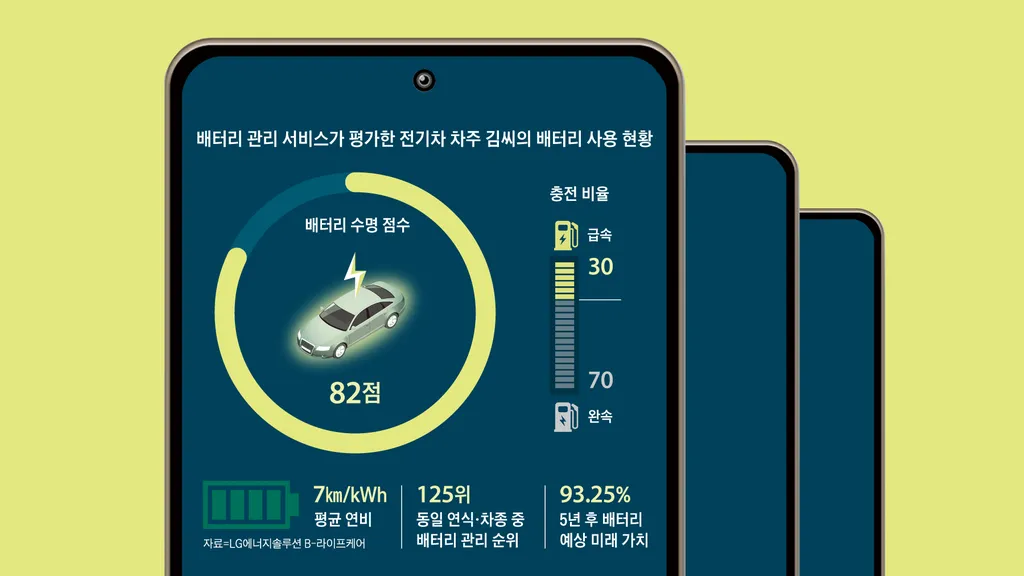
Among domestic (Korean) cars, Kia's EV6 and Niro EV stand out. According to recent data, Kia's models have shown excellent battery durability, with the SOH values of the EV6 and Niro EV maintaining an overwhelming quality, averaging above 95%. Hyundai's Ioniq series also forms stable used values due to technological advantages like the 800V charging system.
On the other hand, European premium brands can see depreciation rates soar to 45–50% due to high new car prices and concerns regarding maintenance costs. In other words, if you prioritize "cost-effectiveness," a strategy of choosing Tesla or domestic models is required; if you prioritize "brand," you may choose a premium model even while accepting higher depreciation.
4. Can we extend battery life ourselves?
Just as important as choosing a good used car is 'knowing how to manage it well.' Extending battery life is not as difficult as you might think. By adopting a few habits, the battery lifespan can be dramatically increased.
First, remember the 20-80 Rule. Completely discharging the battery to 0% (over-discharge) or keeping it continuously filled at 100% (overcharge) puts immense stress on the battery. If you get into the habit of keeping the charge between 20% and 80%, you can theoretically increase the number of charge/discharge cycles by thousands.
Also, temperature management is key. It is recommended to park in the shade or indoors rather than under direct sunlight in the summer, and in the winter, it is good to use the pre-conditioning function before driving to raise the battery temperature to an appropriate level.
Finally, do not neglect software updates. Manufacturers periodically update software to increase the efficiency of the Battery Management System (BMS). Simply performing these updates on time can strengthen battery protection logic, which greatly helps in extending lifespan.
Conclusion: Data does not lie
Buying a used EV is no longer a gamble left to "luck." A data-driven approach is required: checking the SOH value, verifying the warranty period, and analyzing charging patterns.
To summarize, the keys to a failure-free purchase are selecting a vehicle with an SOH of 80% or higher, ensuring that the manufacturer's warranty remains, and inspecting the cell status with a dedicated diagnostic tool.
An EV is clearly a smart means of transportation running toward the future. If you are thoroughly prepared, a used EV will be a much more economical and satisfying choice than an internal combustion engine car.
If you were to choose a used EV, what is the first thing you would want to check? Please share your thoughts in the comments!
References
- “이거 모르고 샀다간 큰일 납니다”.. 중고 전기차, 반드시 확인해야 할 ... · v.daum.net
- 중고전기차 구매시 배터리상태는 어떻게확인하나요 - 클리앙 · clien.net
- 중고 전기차 배터리 상태 확인 방법, 실수 없이 구매하자 · knownow.tistory.com
- 전기차 중고 감가율 완벽 분석: 브랜드별 비교와 재판매 가치 높이는 법 · web.getcha.kr
- 중고 전기차 배터리 '걱정 뚝' 기아 EV6 95%로 1위... 최고의 내구성 과시 · mauto.danawa.com
- [ 채비TALK] 배터리 전문가가 알려주는 진짜 전기차 지식 ... - Instagram · instagram.com
- 테슬라 모델 3, 모델 Y 평균 배터리 성능 저하, 20만 마일 주행 후에도 ... · reddit.com
- 전기차 배터리 수명, 어떻게 늘리나요? - 킥스사이다 - Kixx 엔진오일 · kixxman.com