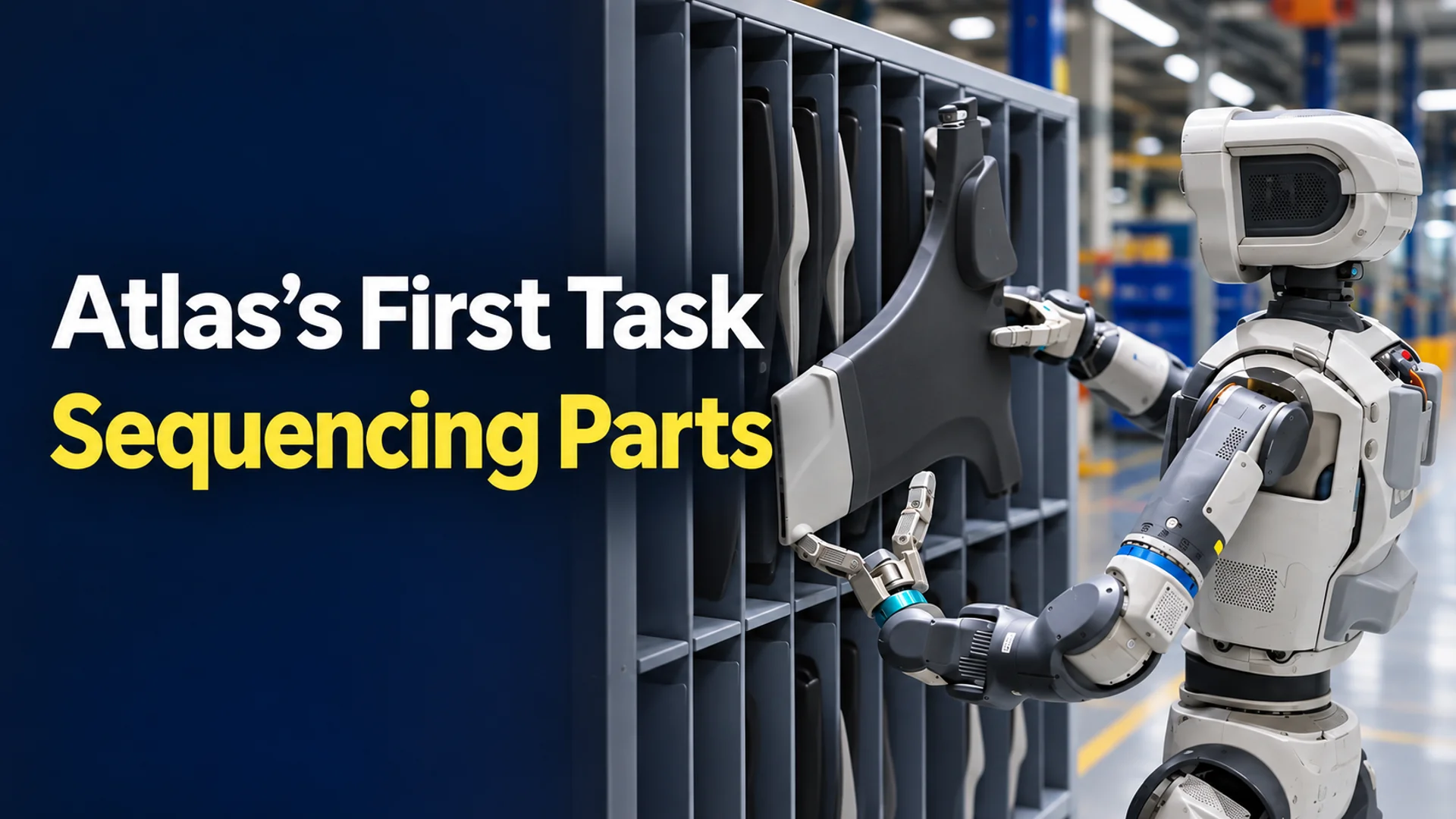
In the past, when headquarters sought to introduce robots, local plants often resisted. However, this time, the local plants themselves were observed being the first to request pilot operations.
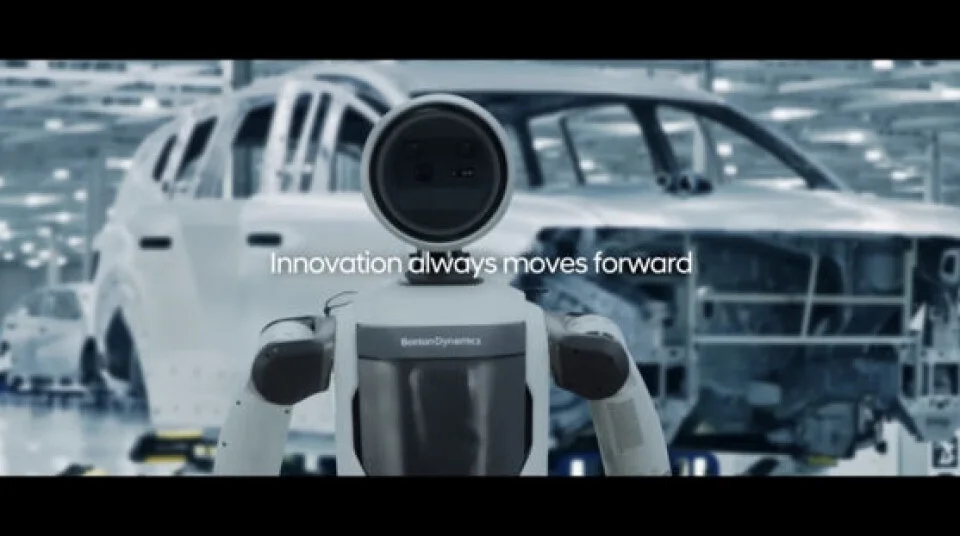
Behind this rush by plants to adopt robots lies a validation result from a specific process known as "part sequencing." The first mission for 'Atlas,' the humanoid robot Hyundai Motor Group plans to deploy at its Georgia plant in the United States in 2028, is not precision body assembly. Part sequencing is a preparatory task that involves pre-arranging components that vary by vehicle specifications in the correct order for entry onto the assembly line. Hyundai Motor Group selected this process, which involves significant repetitive physical strain, to confirm safety and quality benefits, with plans to expand to parts assembly by 2030 and subsequently broaden the scope to repetitive and heavy-lift tasks. This article examines why part sequencing, rather than assembly, was chosen as the robot's first stage and what this shift signifies for the manufacturing floor and consumers.
What Is 'Part Sequencing' Required Before Assembly?
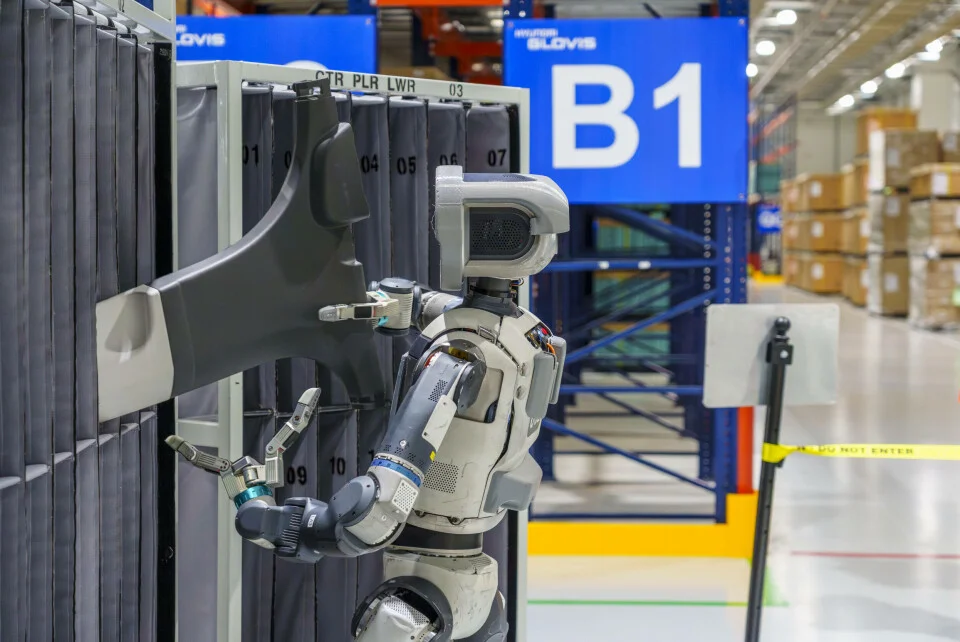
Sophisticated preparation is necessary for an automotive assembly line to run without interruption. Even within the same model, the components installed in a vehicle vary by dozens depending on color, trim, and customer-selected options. Components must be pre-arranged in advance according to the vehicle sequence so that workers can immediately pick and use the parts they need as each vehicle body enters the assembly line. This process is called part sequencing.
'Assembly,' the act of actually attaching parts to the vehicle body, and 'part sequencing,' the act of aligning parts before the line begins, are entirely different stages. In videos released by Boston Dynamics, Atlas demonstrated the capabilities required for part sequencing. The actions involved independently recognizing engine cover parts on a conveyor, moving them to storage bins, and sorting various types of parts into designated compartments. Boston Dynamics emphasized that all motions relied solely on the robot's own perception, decision-making, and control systems, with "no teleoperation or pre-defined paths" 1. This is the manufacturer's explanation of the robot's autonomous cognitive capabilities.
A Stage for Validating Safety and Quality Using Existing Facilities
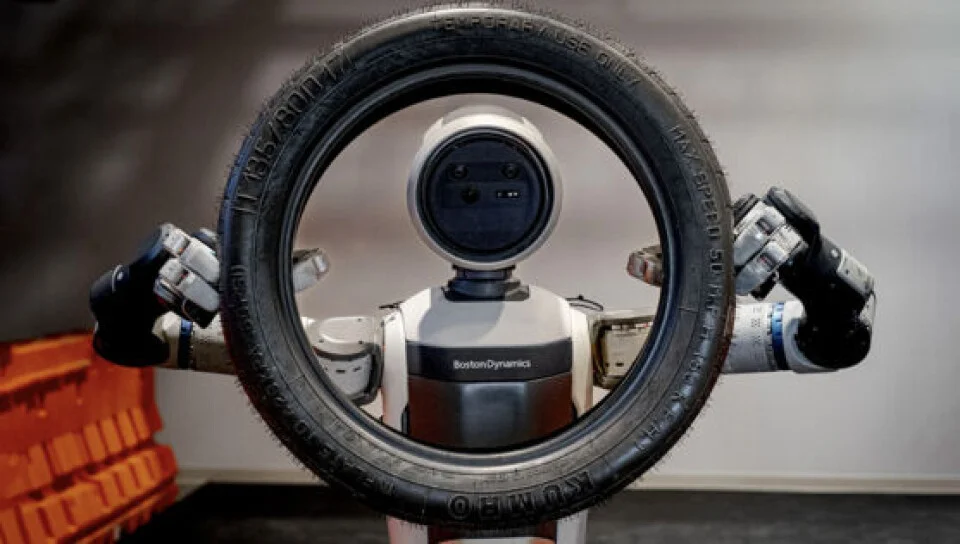
The reason Hyundai Motor Group designated part sequencing as its first validation stage is clear. In its CES 2026 press release, the Group stated that it would deploy Atlas starting with processes "that offer verified safety and quality benefits" 2. Part sequencing is a representative process in which human workers suffer strain on their shoulders and backs by repeatedly carrying and flipping heavy parts.
At the same time, this process allows robots to be deployed without the extensive facility renovations required on assembly lines. It is suitable as a first validation stage because it allows for immediate measurement of whether workers' physical burden is reduced and whether quality errors from incorrectly sequenced parts are decreasing. It is the easiest stage in which to verify a robot's safety and autonomy from a position previously occupied by humans handling dangerous and arduous tasks.
Once validation is complete, the scope of application expands. Hyundai Motor Group's roadmap is phased. The plan is to validate the part sequencing process at the Metaplant America in Georgia (HMGMA) in 2028, expand applications to parts assembly in 2030, and subsequently extend to complex tasks such as repetitive motions and heavy-lift handling 2.
Atlas's technical specifications also support this phased approach. The commercial model unveiled at CES 2026 features 56 degrees of freedom (the number of directions in which joints can move), a maximum instantaneous load of 50 kg, and a battery replacement time of approximately three minutes 23. It also incorporates fenceless guarding, a safety feature that detects humans without the need for a cage 3. This enables humans to work in the same space as the robot, a decisive difference from the stationary robotic arms that have traditionally worked on automotive lines. Allowing the robot to collaborate on the same floor as humans, rather than being confined to a separate space, is a prerequisite for actual deployment on the manufacturing floor.
Such validation does not end with a simple demonstration. In a JPMorgan investor session, Hyundai Motor Group disclosed plans to produce 30,000 units annually by 2028, with more than 25,000 of them to be deployed in Hyundai and Kia plants 3. The first on-site trial at HMGMA in October 2025 was characterized as an initial proof of concept, with industry reports suggesting that positive results could lead to expansion to plants such as Ulsan and the Kia Gwangmyeong EVO Plant 1. The validation of part sequencing becomes the starting point for mass deployment on a scale of tens of thousands of units.
The Competitive Logic Behind Plants Requesting Robots First
Behind the Czech plant manager's urgent request lies a larger calculation. Mr. Mihnik, the head of the division, defined Atlas not as a machine that replaces people but as new production equipment that enhances productivity and quality 4. Hyundai Motor Group's global plants are in a competitive relationship with one another within the Group, vying for new vehicle models and volume allocations.
EngineerTV analyzed the context of Mr. Mihnik's remarks, interpreting that plants with lower productivity might not be allocated the next vehicle models and that plants unable to introduce robots first could lose competitiveness 4. Mr. Mihnik's direct statements and the video creator's interpretation are on separate levels. Mr. Mihnik mentioned that the Czech plant had already experienced the benefits of adopting industrial robots, but figures included in the video's narration, such as the operation of 566 industrial robots and the redeployment of 200 employees, have not been confirmed by separate official sources 4.
In other words, beyond the fear that "robots threaten jobs," a competitive awareness that "the plant that uses robots first survives" has begun to take root among field executives. Following deployment in the United States, production hubs such as Indonesia, India, Turkey, and Brazil are mentioned as candidates for adoption 4. However, Mr. Mihnik himself noted that the specific timing of adoption is undetermined, and administrative procedures such as export control reviews and local safety certifications remain for deployment outside the United States 4.
Other Automakers' Choices: Teleoperation and Human Assistance
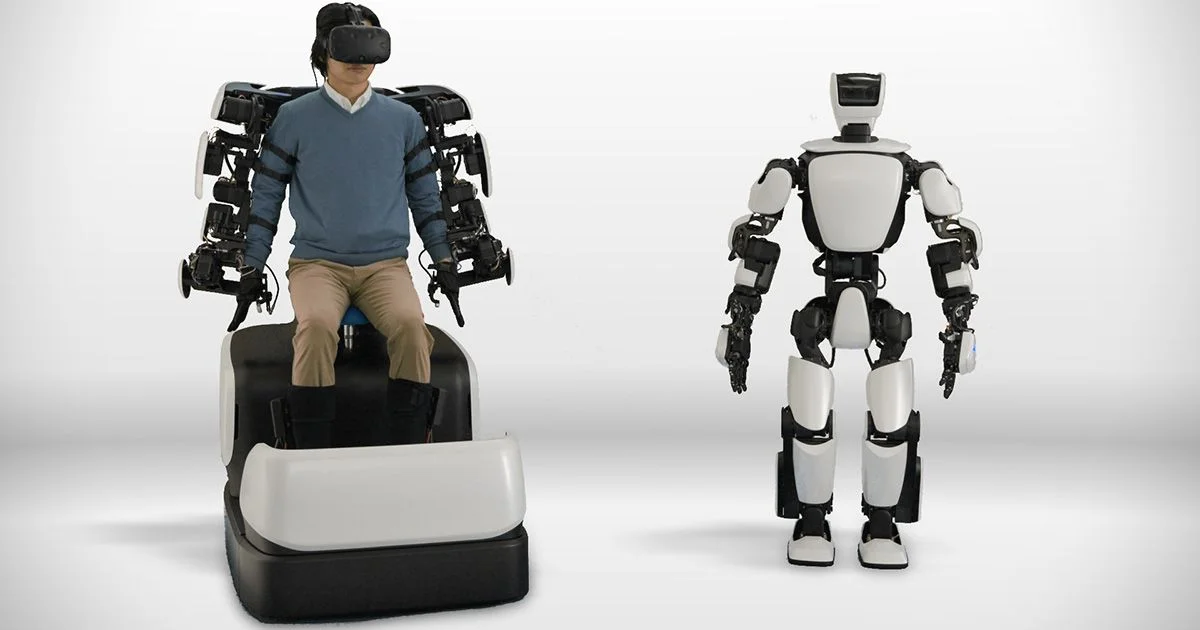
Even within the same automotive industry, the direction of looking at humanoids is not necessarily the same. On November 21, 2017, Toyota Motor Corporation unveiled its third-generation humanoid, the T-HR3, developed by its Partner Robotics Division 5. This robot emphasized 'force feedback' technology, which transmits a human's hand, arm, and foot movements 1:1 through a wearable control device and returns the force exerted when the robot collides with the environment to the operator 5.
Toyota explained that the T-HR3 is focused on environments where it can safely 'assist' humans in settings such as homes, medical facilities, and construction sites, rather than autonomously performing tasks like assembly 5. It also stated that this technology builds upon its experience in developing industrial robots for production processes since the 1980s 5.
The T-HR3 unveiled by Toyota is a teleoperation-based human assistance platform, whereas Hyundai Motor Group's Atlas is an autonomous working humanoid deployed directly onto the manufacturing floor. The axis of application itself is different. Since Toyota's plans for deploying humanoids in factories are not included in currently confirmed materials, the scope of field application for the two companies cannot be uniformly concluded.
Where It Reaches Consumers: Safety and Quality Consistency
The direct impact of robot deployment on consumers is still under validation. However, Hyundai Motor Group explains that it pursues 'human-centric automation,' wherein robots handle dangerous and repetitive tasks to reduce the physical burden on workers and ensure workplace safety 2. If a structure takes root in which humans handle training and supervision while robots take on arduous tasks, opportunities arise for improved process safety and quality consistency. The process of part sequencing validation expanding to assembly is an indirect link that could reach consumers.
On the economic side, market and media estimates suggest that while the initial unit cost of Atlas is approximately USD 130,000 to 140,000, this could drop to USD 30,000 when cumulative production exceeds 50,000 units, with an estimated payback period of about two years 3. However, these are estimates not verified by actual field operation data 3. As plants rush to adopt robots based on such calculations, there are also outlooks suggesting that the speed of robot adoption could become a new benchmark for competitiveness between plants 4.
The reason Atlas chose part sequencing, rather than assembly, as its first mission is clear. It allows for the verification of the robot's autonomous perception and decision-making capabilities within a defined parts scope while enabling the measurement of safety and quality benefits using existing line facilities as they are 12. Hyundai Motor Group plans to complete this validation at HMGMA in 2028 and then expand the scope to parts assembly in 2030, and subsequently to repetitive and heavy-lift tasks 2. Unlike Toyota, which chose a different axis of teleoperation-based human assistance, Hyundai Motor Group's path toward deploying autonomous humanoids on the manufacturing floor is being concretely confirmed, from field trials in 2025 to production deployment in 2028 12. With the Czech plant manager having requested adoption first, the video creator interpreted that this robot could emerge as a competitive factor determining the allocation of vehicle models and production volumes at automotive plants in the future 4.
References
- Exclusive: Hyundai's Georgia plant to use Boston Dynamics' Atlas humanoid robot from October · koreajoongangdaily.com↩
- Hyundai Motor Group Announces AI Robotics Strategy to Lead Human-Centered Robotics Era at CES 2026 · hyundai.news↩
- ↩
- ↩
- Toyota Unveils Third Generation Humanoid Robot T-HR3 | Toyota Motor Corporation Official Global Website · global.toyota↩