"Teacher, ChatGPT did this homework for me. Can I count it as my own work?"
This question, increasingly heard in classrooms lately, is no longer a scene from a movie. When AlphaGo shook the world of Go in 2016, we experienced the shock of technology, but today's generative AI is asking a much more fundamental and direct question about the "reason for the existence of education."
Many people ask: In an era where artificial intelligence delivers knowledge, grades assignments, and even assigns customized tasks, will there still be a place for teachers? Today, I want to talk about the true face of education that we will encounter amidst this massive wave of change.
Change Described by Data: The Classroom is Already Turning Digital
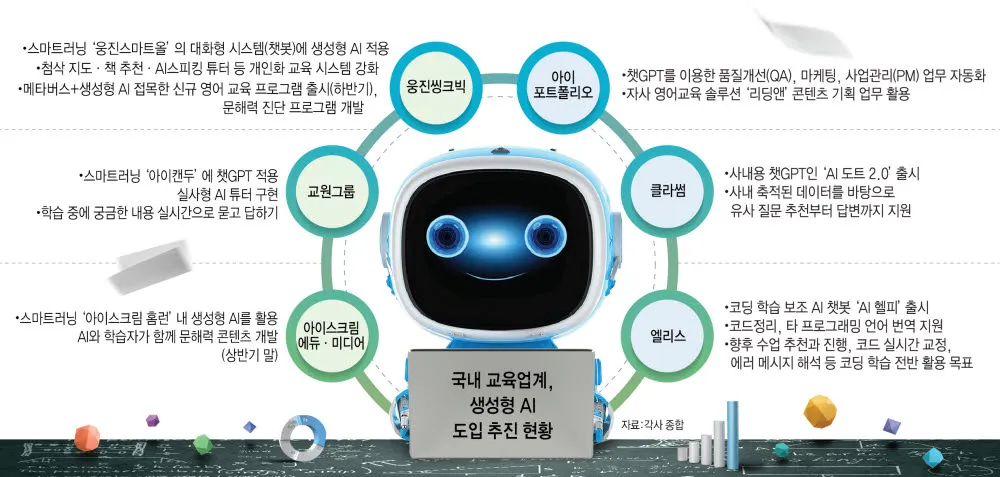
We must face the numbers unfolding before our eyes, rather than relying on vague imaginations. According to the Ministry of Education, the digital infrastructure establishment rate for students in the 3rd grade of elementary school and above has reached a staggering 79.1%. This is not the end. Starting in 2025, the plan is to complete 100% distribution of one device per student for 3rd and 4th graders in elementary school, 1st graders in middle school, and 1st graders in high school.
It's not just about the increase in devices. The introduction of AI Digital Textbooks is completely shifting the educational paradigm from "the same speed for everyone" to "speed tailored to each individual student." AI analyzes a student's learning pace and proficiency in real-time, providing feedback on areas needing improvement, much like a private tutor.
This is not a victory for technology, but rather closer to the democratization of education. This is because technology can assist in addressing individual learning gaps that a single teacher, caring for dozens of students, would inevitably miss. However, the crucial point here is that the introduction of these powerful tools does not mean the role of the teacher will disappear.
From Knowledge Deliverer to 'High-Touch' Expert

Then, what should teachers do in an era where AI pours out knowledge? The answer lies in "High-Touch."
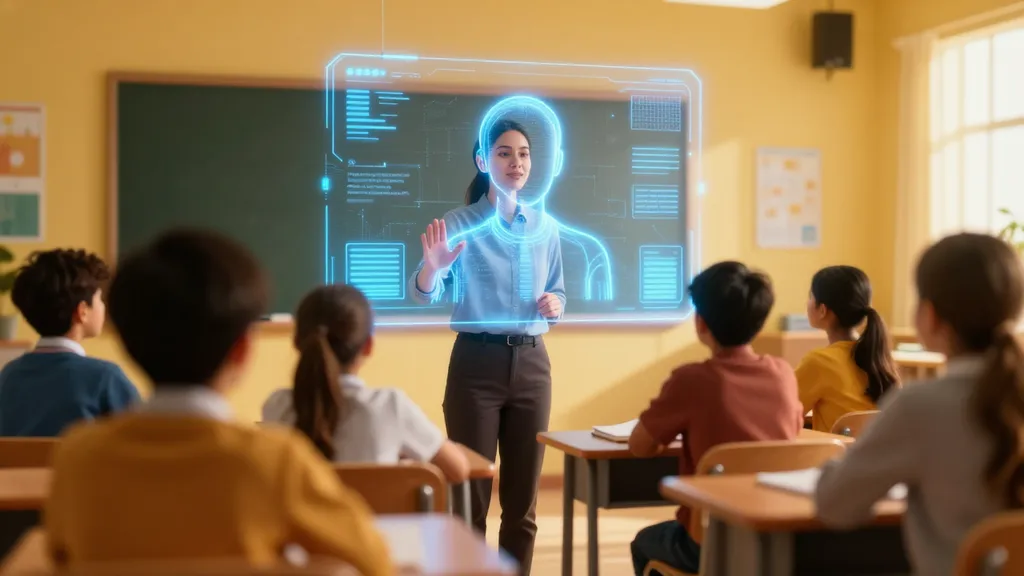
If past teachers were "Knowledge Deliverers (High-Tech)," future teachers must become "Human Facilitators" responsible for emotional connection and social interaction with students. While AI can search and summarize vast amounts of data in an instant, it lacks the ability to empathize with why a student is struggling or to guide them as they grow with certain values.
The direction the Ministry of Education aims for is also clear: technology should be used as a tool to increase the efficiency of classes, while teachers should use the time secured through this to focus on discussion, project-based learning, and emotional communication with students. In other words, it is a structure where human connection (High-Touch) is finally completed when technology (High-Tech) supports it.
The role of professors is the same. In university education, professors must now evolve beyond being simple providers of information to become "Guides of Critical Thinking" who help students verify the reliability and critically analyze information generated by AI. Teaching how to judge whether a text written by AI is correct or ethically right will become the core of future education.
Realistic Concerns: Workload and Ethical Guidelines

Of course, it is not all a rosy future. Listening to voices from the field, concerns mixed with anxiety are becoming a reality.
First is the increase in workload. The process of learning and managing new digital tools can become another burden for teachers. To resolve this, the Ministry of Education is preparing measures to reduce administrative tasks by training "Digital Tutors."
Second is the digital divide and ethical issues. Debates remain heated regarding whether all students have an environment to use high-performance AI, and to what extent submitting homework using generative AI should be permitted. According to recent guidelines released by the Ministry of Education, submitting results made by AI as they are is considered close to "cheating," but the process of using AI to expand and supplement one's own thoughts is trending toward being recognized as "learning."
Ultimately, assessment in the AI era is shifting from simply "did they get the right answer?" to measuring "how critically and creatively they utilized AI (AI Literacy)" and "what process they went through to reach a conclusion."
Conclusion: Technology Does Not Replace Teachers, It 'Invites' Them
In the end, we must change the direction of our questions. Instead of "Will AI replace teachers?", we should ask, "How can teachers provide more human-centric education through AI?"
To summarize what we have looked at today:
- AI maximizes educational efficiency by handling knowledge delivery and personalized learning (High-Tech).
- Based on this, teachers evolve into roles that lead emotional connection and critical thinking (High-Touch).
- The core of future education lies in the harmony between technical utilization skills (AI Literacy) and human values.
AI is not an intruder coming to take the teacher's place. Rather, it is the "most capable assistant" that has come to help teachers break free from repetitive tasks so they can make eye contact with their children one more time and draw out their potential.
No matter how much technology advances, the existence of a 'mentor' who sincerely cheers for someone's growth and contemplates their life direction together cannot be replaced. We are now standing at the starting point of an amazing journey to return to 'people'—the essence of education—through technology.
What are your thoughts? If AI enters the classroom, what kind of 'human teacher' will be most needed for our children? Please share your opinions in the comments!
References
- “AI, 교사 역할 대체할 수 없어…교사·학생 간 정서적 소통 강화한 하이터치 ... · eduplusnews.com
- AI 시대, 교수의 역할은 어떻게 변화해야 하는가? · kyosu.net
- 미래의 교육: AI가 교사를 대체할 수 있을까? 심층 탐구 · reddit.com
- 한국 교육의 디지털 전환 과정에서의 리더십 · unesdoc.unesco.org
- 교사의 AI․디지털 활용 현황 및 요구에 기반한 지원 방향 탐색 · kci.go.kr
- 2026 인천 AI 교육 추진계획 · ice.go.kr
- 교육부 챗GPT 교실 가이드라인 분석: 생성형 AI 숙제 및 평가 ... · blog.naver.com
- 생성형 AI 시대, 교육의 변화와 교육평가의 향방 · kci.go.kr