In November 2026, two scenes unfolded simultaneously at the opening ceremony of Roboworld. The government declared that it would step in as the 'first buyer' of AI robots, committing 340 billion KRW in budget for next year. On the same day, Ryu Jae-wan, CEO of domestic company SBB Tech, received the Industrial Medal for his contributions to the development of the robot industry 1. This marked the parallel announcement of policy recognition for the achievements of domestic robot components and a massive market injection plan.
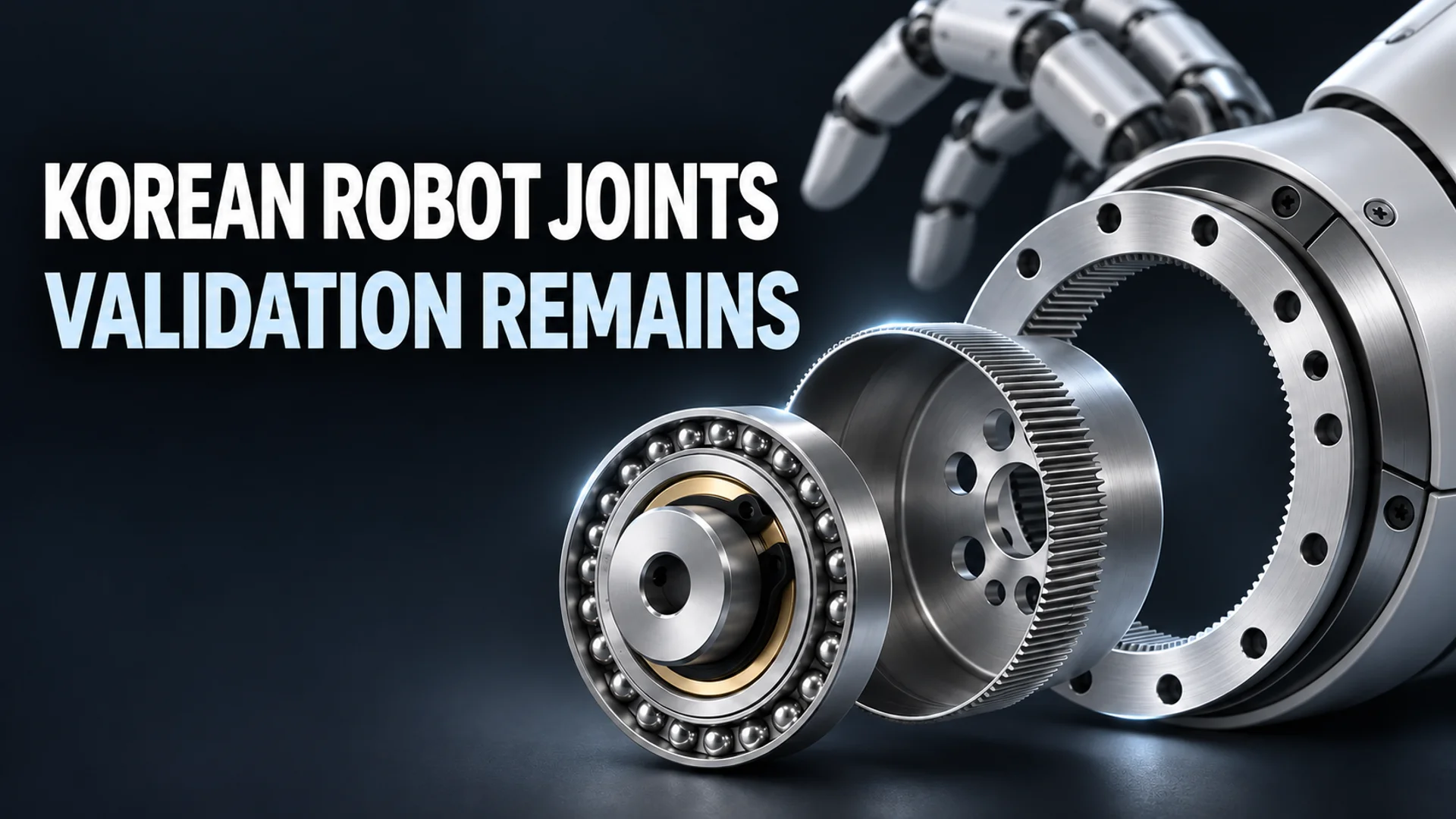
Behind these prominent announcements, an unresolved challenge remains. According to K-Insight, an industrial structure analysis resource, 40–60% of the cost of a single humanoid robot stems from core components that move the joints, and 60–80% of these are still imported from Harmonic Drive in Japan 2. Even as domestic robot companies grow, they continue to rely on overseas suppliers for the core components that enable movement—the 'joints.' This coexistence of reward and dependency clearly illustrates the practical challenges facing the Korean robot industry and the current state of localization.
Half of a robot's cost is determined by 'joints,' not the brain
We tend to seek value in a robot's artificial intelligence (AI) or software. However, it is the 'joint' components that move the body that actually dictate the price and performance of a robot. According to K-Insight analysis, 40–60% of the cost of a humanoid robot consists of joint components such as reducers and motors 2. The most critical of these components is the 'reducer.'
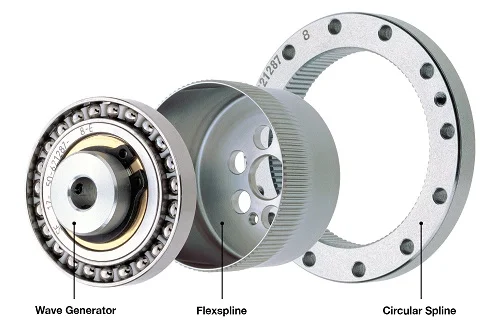
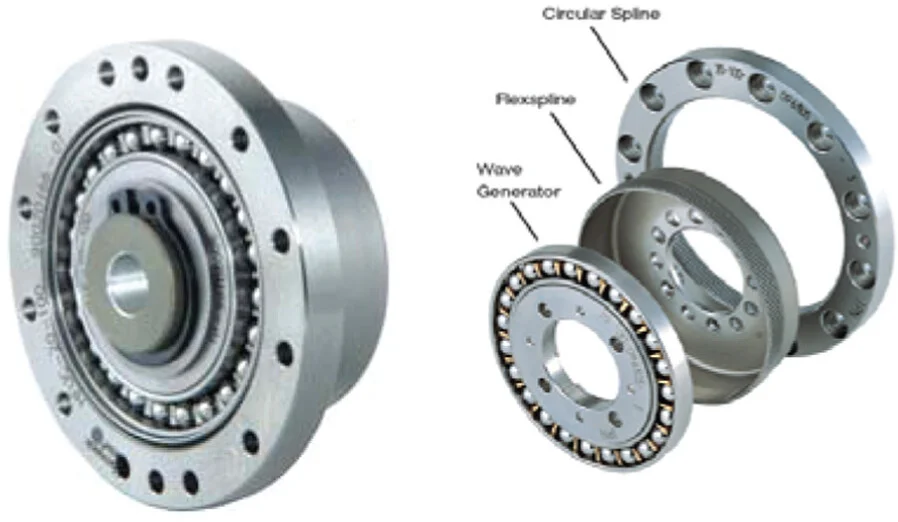
A reducer performs a role similar to a car's transmission. Just as a car engine rotates too fast to be directly transmitted to the wheels, a robot's motor rotates too quickly to effectively lift heavy loads. A reducer converts this rapid rotation into motion that is 'slower, stronger, and more precise.' In particular, to grip an egg without breaking it like a human finger does, or to ensure no injury occurs upon collision with a person, even minute errors must be controlled, making the 'harmonic reducer' essential.
The principle involves an internal elliptical device that expands and contracts an outer thin flexible metal cup, engaging teeth to transmit precise power. This component is often called the 'semiconductor of robots' because over 20–30 units are required per robot. Since a single humanoid robot requires 20–40 or more servo motors (motors that generate precise rotational force), one for each joint, to move its arms, legs, and hands, demand for reducers and motors is rapidly rising alongside the humanoid boom 2.
A barrier built by 60 years of know-how, Japan's oligopolistic structure
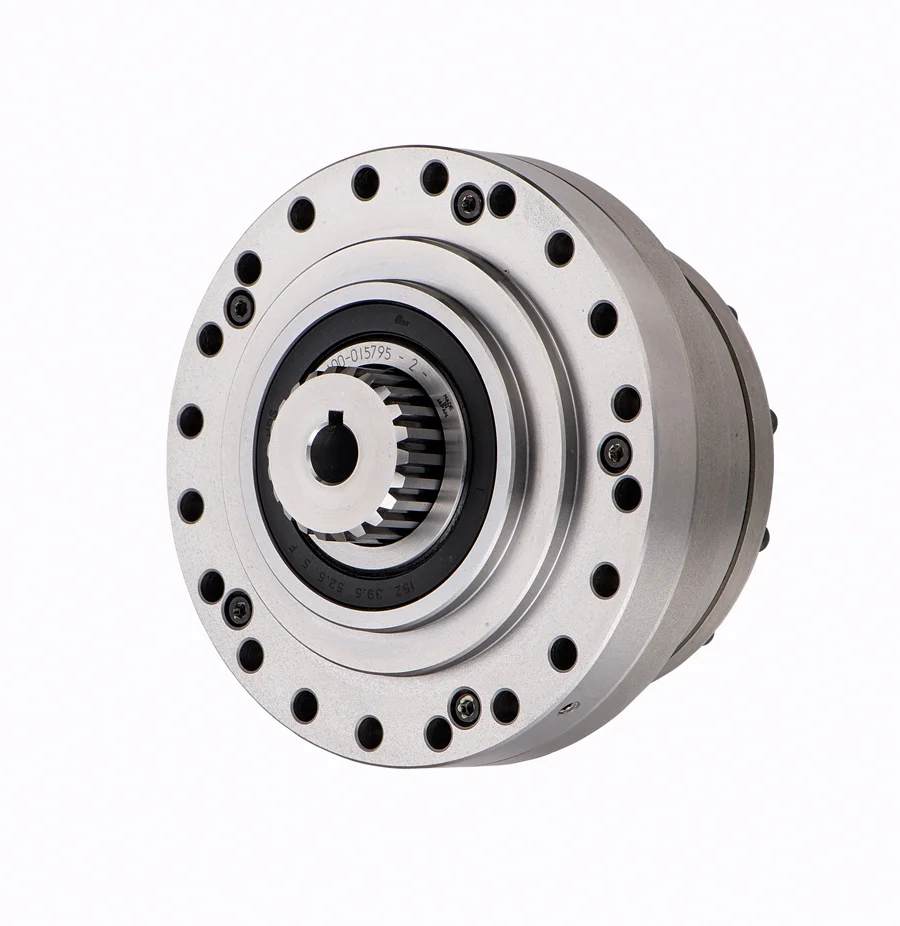
Harmonic Drive in Japan holds a monopoly on over 70% of the harmonic reducer market, and Nabtesco in Japan is a key supplier of RV reducers for large industrial robots 2. The reason it is difficult for Korean companies to enter this market lies in a single component called the 'Flexspline.'
This thin metal cup inside the reducer must withstand millions of cycles of flattening and expanding during rotation without cracking. Simultaneously, the gap between the teeth (backlash) must be maintained at 0.5 arc-minutes or less to ensure the robot joint operates without shaking and is precisely controlled. The know-how for heat treatment and precision machining of extremely thin metal is a domain Japanese companies have accumulated over 60 years, acting as a formidable barrier to entry for latecomers 2. In fields where high-precision harmonic reducers are essential, such as collaborative robots or humanoid robots, it is difficult to avoid a high-cost structure due to this barrier.
The only domestic mass-production company, components that have passed verification stages
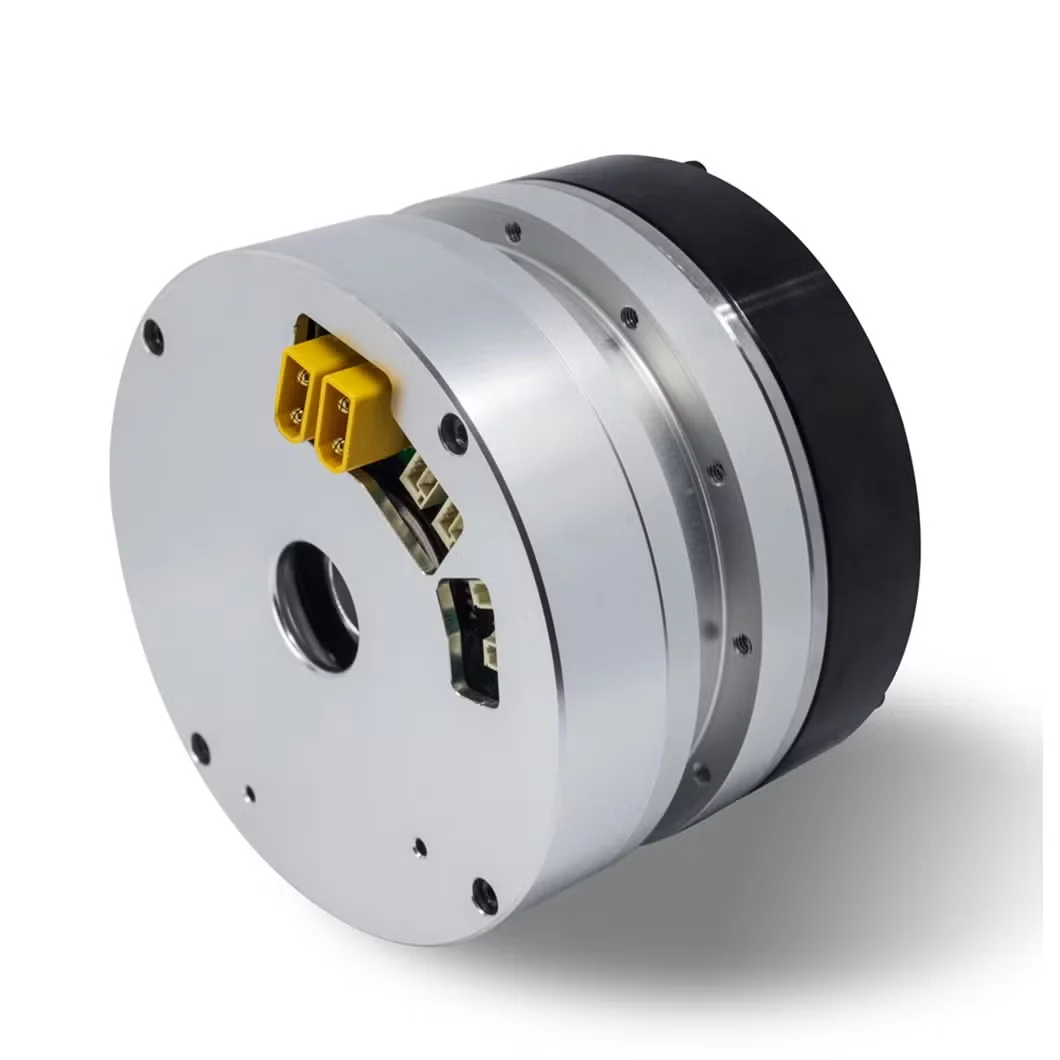
In Korea, SBB Tech is evaluated as the only company mass-producing harmonic reducers. The company began technology development in the early 2010s and succeeded in mass-producing harmonic reducers for collaborative robots in about a decade 2. Currently, these domestic reducers are actually being supplied to major domestic robot companies such as Doosan Robotics and Hyundai Robotics. CEO Ryu Jae-wan's receipt of the Industrial Medal is interpreted as policy recognition of the achievement of domestic components entering the actual market supply chain 1, 2.
However, SBB Tech's products are currently limited to levels applicable to collaborative robots. High-precision products for humanoid robots, which require more stringent durability and ultra-high precision, remain in the 'verification stage' 2. While collaborative robots are used for tasks repeating fixed trajectories, humanoid robots must implement complex human movements in unpredictable environments, requiring proof of higher reliability.
Beyond the self-sufficiency of standalone components, attempts at localization at the module level are underway. Companies are venturing into the development of 'integrated actuators,' which combine reducers and servo motors. Haizhen R&M began shipping integrated samples in 2024, and LS Mecha Pioneer is developing humanoid-class actuators based on its leading domestic technology in industrial servo motors 2. Movements are emerging to manufacture and supply entire joints as a whole, rather than just localizing individual components.
Patent strategies and national policies to protect technological rights
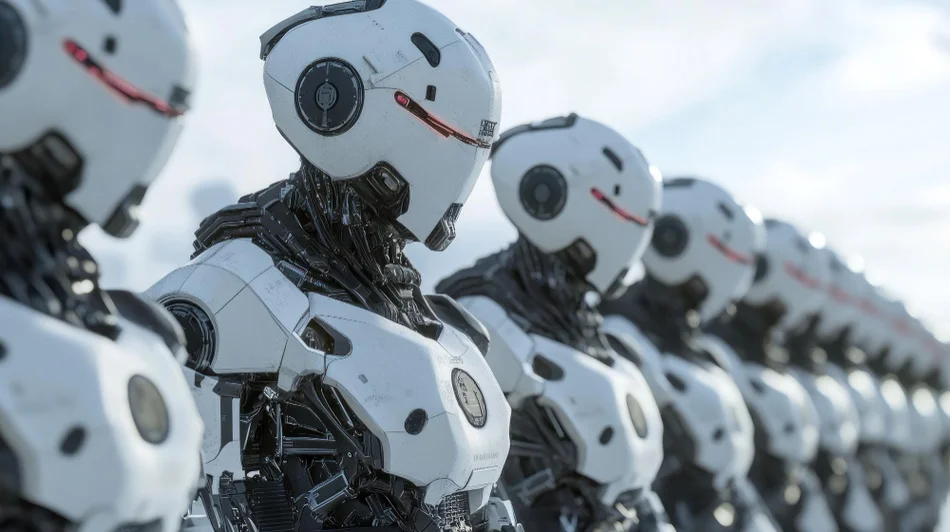
Yoo Heum-gu, Senior Research Fellow at the Korea Institute of Intellectual Property, suggested that 'securing early patents' for core foundational technologies and taking the lead in international standardization are urgent at this turning point. Senior Research Fellow Yoo emphasized the need to explore strengthened strategic IP policies through national IP-centered tax and financial support, and the linkage between national R&D and patent strategies 3.
The government has already designated humanoid robots as national advanced strategic technologies, promoting the internalization and localization of core components such as actuators and sensors as a key axis 3. The Korea Institute for Industrial Economics & Trade (KIET) also diagnosed that competition in the robot industry is transitioning from individual product performance and price to an industrial ecosystem unit combining AI, core components, demonstration, mass production, and supply chains 4.
However, the current reality—that 60–80% of reducers are still imported from Japan and humanoid-class components are still in the verification stage—shows that localization has yet to cross the remaining technical threshold.
References
- 로봇신문 · irobotnews.com↩
- 로봇 산업 해독실 — K-Insight · k-insight.kr↩
- 글로벌 휴머노이드 기술전쟁, ‘IP 주권’이 승부 가른다... 한국, 전략적 특허 패러다임 전환 시급 · m.e-patentnews.com↩
- KIET 산업연구원 - 메인 · kiet.re.kr↩