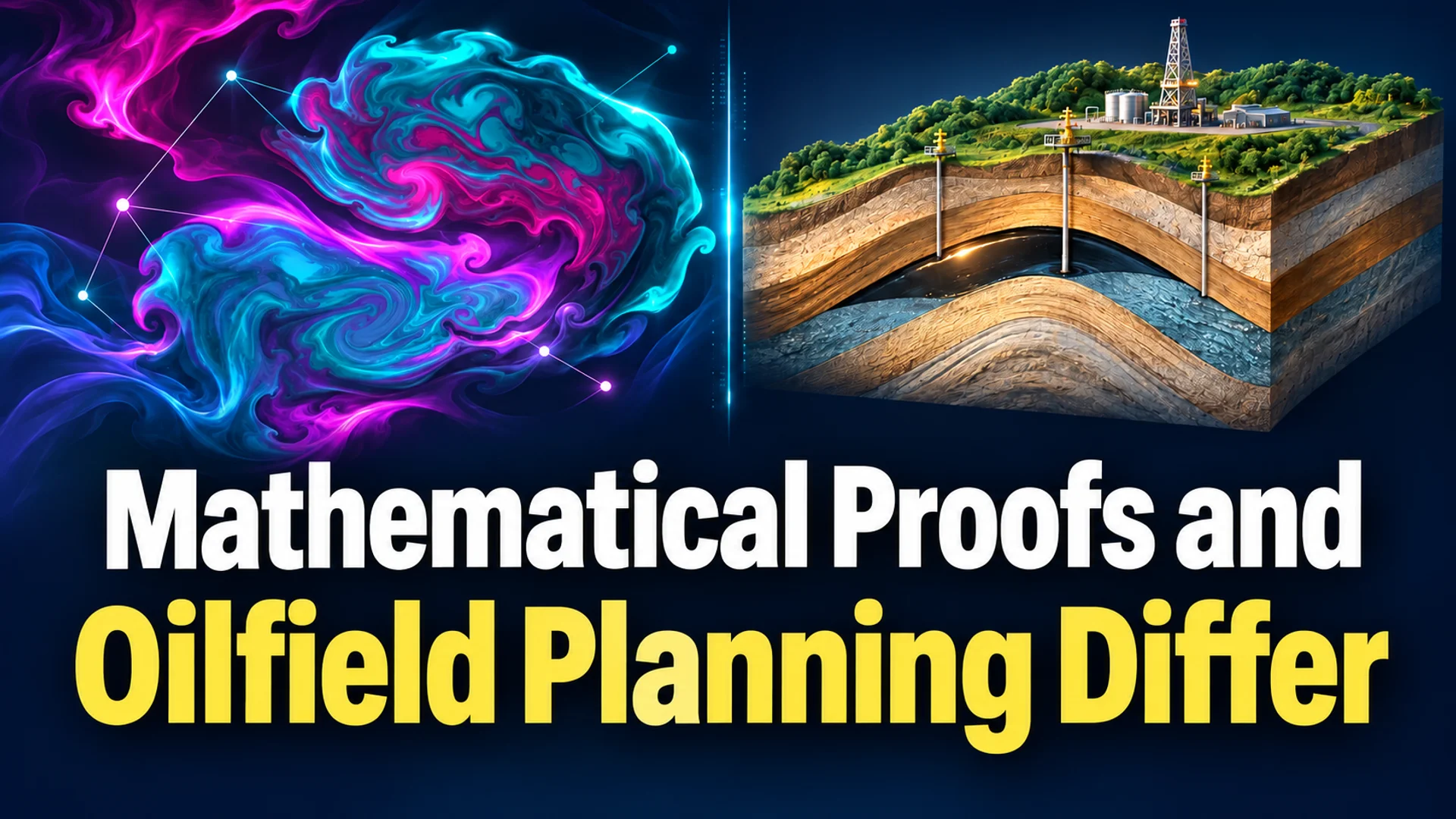
10,000 AI agents exchanged 2.7 million messages over 88 hours to produce a proof, which a research team from the University of Cambridge and King’s College London found to deviate from the original text by a single line—“m+4” rather than “m+5.” Then, on November 2, about two months later, the Abu Dhabi National Oil Company (ADNOC), which uses the same AI platform, is anticipating outcomes unrelated to that proof, such as reducing oil field development planning from months to hours.
Readers may easily juxtapose the two events and assume that because AI has solved a mathematical challenge, it will soon be deployed in oil fields. However, the two cases do not use the same technology in the same way. The proof reveals mathematical limitations inherent in the Navier-Stokes fluid equations themselves, whereas the tasks ADNOC plans to assign to agents involve oil field development planning and barrel-value assessment. Professor Donald Koch of Cornell University has stated that no engineering applications of this proof currently exist 1. Although the shared platform provides a point of connection, this link stems not from the proof’s mathematical conclusions but from the general capability of multi-agent collaboration.
What the Proof Means: Potential Breakdown of Fluid Equations

The Navier-Stokes equations describe the motion of continuously flowing fluids such as water and air. They are used in fields requiring flow calculations, including aircraft design, weather forecasting, and blood flow research. According to OpenAI’s announcement, the core of the Navier-Stokes Millennium Problem is whether, even when a three-dimensional incompressible fluid of constant density begins to move smoothly, a ‘singularity’ may arise within finite time in which velocity grows without bound 2. If fluid velocity becomes infinite, it would be impossible in real fluids, causing the equations to fail at describing matter at that moment.
OpenAI stated that it presented a proof showing a singularity can occur within finite time when a smooth external force is applied to a fluid that is initially at rest and smooth. This result satisfies propositions C and D in the Clay Mathematics Institute’s official specification 2. A specific depiction of how fluid motion might collapse was also revealed: a rotating vortex stretches inward like spaghetti in a long spiral. Velocity increases and shrinks in the central region, while total energy remains finite throughout 2. The critical point is that the velocity increase does not arise from an artificially applied infinite force but from a balance in which acceleration, pressure gradient, momentum transfer, and viscosity all increase yet precisely offset one another within the fluid motion itself 2.
However, whether this result directly corrects computational equations used in fluid dynamics is a separate matter. Professor Brian Kirby of Cornell University’s Mechanical Engineering Department explained that the Navier-Stokes problem is a mathematical problem inspired by fluid dynamics and deals with regimes of infinite velocity that do not occur in the physical world 1. Professor Koch noted that the 160-page results published by OpenAI are insufficient to judge practical applicability and that a process is needed for mathematicians to understand the results and then communicate them to engineers 1.
88 Hours, 2.7 Million Messages, and the Role of Human Intervention
The scale disclosed by OpenAI is large. On August 28, training began for a new internal model that showed unprecedented performance on internal benchmarks, and evaluation commenced on September 1 after rumors circulated that two Millennium Problems had been solved. The internal model was described as significantly outperforming GPT-6 Astra 2. Approximately 10,000 agents participated in the Navier-Stokes solution, which emerged about 88 hours after launch. Formal verification required an additional 17 hours. About 2.7 million messages and approximately 130 billion output tokens were used for this problem alone; including Millennium Problems and easier tasks, the total was 4.9 million messages and roughly 300 billion tokens 2.
At the opening ceremony of the Abu Dhabi Energy Exhibition ADIPEC on November 2, OpenAI CEO Sam Altman introduced the case, stating, “There was no hierarchy, no boss. It was completely decentralized.” He explained that the agents determined exploration directions, shared progress, learned from one another, and decided independently what to do 3.
OpenAI’s public record includes more than just ‘autonomy.’ Researchers assigned various variants of the Navier-Stokes problem to separate agent groups, presenting forms where ‘A·B’ could lead to proof and ‘C·D’ to disproof to distinct groups 2. In the Euler equation, approximately 100 agents solved the problem without external forces in about 50 hours; researchers then viewed Navier-Stokes as the most promising target and transferred agents from other problems to carry forward their solution 2. Codex was used to aggregate insights from each group and incorporate intermediate results into subsequent instructions, and the 10,000-agent group that found the solution was also guided through this process 3.
Within OpenAI, differing explanations emerged regarding the contribution of collaborative structures. According to The Decoder, OpenAI researcher Noam Brown, in a September interview with Dwarkesh Patel, estimated the multi-agent configuration’s contribution to this achievement at less than 10%, stating that the model itself, rather than the collaboration structure, was the main factor 3. While the 10,000 figure reflects the actual concurrent participation, it is difficult to interpret this number alone as meaning “succeeded without human involvement.” Stages such as selecting problem variants, reallocating resources, and transferring intermediate results remain documented in OpenAI’s work records.
The “Solved” Announcement and the Official Verdict Are Separate Matters
The term Millennium Problem is not metaphorical. On May 24, 2000, the Clay Mathematics Institute announced seven Millennium Problems in Paris, establishing a $1 million prize for each 4. To date, only the Poincaré Conjecture has been officially recognized as solved 3. Under prize rules, a proposed proof must be published in a peer-reviewed journal and undergo at least two years of verification 3.
OpenAI stated it does not intend to claim the prize and characterized the results as a milestone demonstrating significant advancement in AI models 25. In a statement on September 11, the Clay Mathematics Institute acknowledged mathematical excitement over OpenAI’s proposal while reaffirming its existing principle of intentionally not rushing evaluation and attribution procedures 3. As of November 4, the Clay Institute’s news section contains no verdict 3.
Verification is also required of the content itself. A research team comprising Anders Hansen and Fabian Circeli from the University of Cambridge and Alexandru Iosif Băstineanu from King’s College London claimed in a paper submitted on October 6 that OpenAI’s natural language proof and Lean 4 formal proof do not match 67. Specifically, in Lemma 8.6, the natural language proof requires a specific value to be less than m+4, whereas the Lean proof requires it to be less than m+5 7. The m+5 condition is mathematically weaker than m+4 7. The research team analyzed that the auto-formalization process likely shifted away from the natural language logic to ensure the Lean code compiled 7.
OpenAI acknowledged the discrepancy and told New Scientist it would correct the natural language proof’s error and continue formalization 7. This debate differs from claims that the Navier-Stokes problem remains unsolved. Hansen explained that he is neither saying the natural language proof is incorrect nor that it is correct 7. Professor Kevin Buzzard of Imperial College London stated that while he is confident the Navier-Stokes problem has been solved correctly, he is far less confident in the accuracy of the natural language proof in the PDF document 7.
External force conditions must also be distinguished. The Clay specification includes four propositions; OpenAI claims to have solved C and D, which involve external forces 3. A and B, without external forces, remain unsolved 3. However, OpenAI also disclosed a separate result deriving a disproof of regularity for the Euler equation without external forces using approximately 100 agents 2.
ADNOC Is Assigning Not Mathematical Proofs but Planning Optimization
The contract announced on November 2 was introduced as the first deployment of OpenAI’s enterprise agent platform Frontier in the energy industry. ADNOC CEO Sultan Al Jaber stated that this partnership would transform oil field development, well management, and commercial operations, and that ADNOC would become the first energy company globally to adopt OpenAI Frontier 8. The system runs on G42 infrastructure within the UAE, with important decisions overseen by human experts 3.
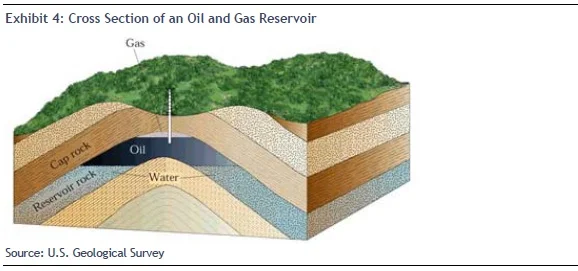
The initial application areas are two. First is oil field development planning. ADNOC expects to generate development plans in hours rather than months by integrating previously separate studies to simultaneously evaluate thousands of wells, multiple reservoir layers (underground layers containing oil), hundreds of surface facilities, costs, and commercial conditions 3. The second is barrel-value assessment. By linking production, sales, and trading, agents predict oil supply-demand, prices, and profits to assign values to barrels still underground 3.
CEO Altman explained that since the AI industry has benefited from support from the energy sector, it is now time to give back, noting that AI will be able to handle complex engineering problems, whether for new materials, turbine design, or operational improvements 83. However, when linking this outlook to the 10,000-agent proof case, the roles shift. While oil field development planning requires calculations evaluating variables such as wells, reservoirs, surface facilities, and costs, the publicly disclosed contract details include no indication that the Navier-Stokes singularity theorem is incorporated.
Professor Koch’s judgment clarifies this difference. He stated that no engineering application of this proof currently exists and explained that judging applicability requires first understanding the proof’s content and verifying whether its ideas are usable in engineering 1. Thus, the announcement that “AI has solved a Millennium Problem” and the expectation that “ADNOC will create oil field plans in hours” do not share the same conclusion from the same proof.
What connects the two events is the general capability of agents to handle complex problems by dividing tasks and exchanging messages. The Navier-Stokes solution cited as a proof of this capability has not yet been officially verified, and even if verified, judgments on engineering application require the understanding and transmission procedures described by Professor Koch 31. Therefore, rather than stating that “the energy industry is already benefiting from AI proof,” it is more accurate to say that “the energy industry is seeking to rapidly formulate business plans using the same agent platform, while the Millennium Problem proof underpinning this effort remains in a separate verification stage.”
References
- OpenAI Claims It Solved the Navier-Stokes Problem. We Asked Cornell Professors What This Means for the Future of Research. · cornellsun.com↩
- 나비에–스토크스 밀레니엄 문제에 관하여 | OpenAI · openai.com↩
- 알트만, 곧 출시될 다음 GPT가 밀레니엄 문제 증명한 모델 · gall.dcinside.com↩
- The Millennium Prize Problems - Clay Mathematics Institute · claymath.org↩
- 오픈AI, 1만 AI 에이전트로 88시간 만에 밀레니엄 문제 해결 주장 · topstarnews.net↩
- ↩
- OpenAI mistranslated mathematics into code for its Navier-Stokes proof | New Scientist · newscientist.com↩
- ADIPEC 2026 | Opening Ceremony | English · youtube.com↩