The 'Hidden Pollutants' Emitted by Ultrasonic Atomization Principles
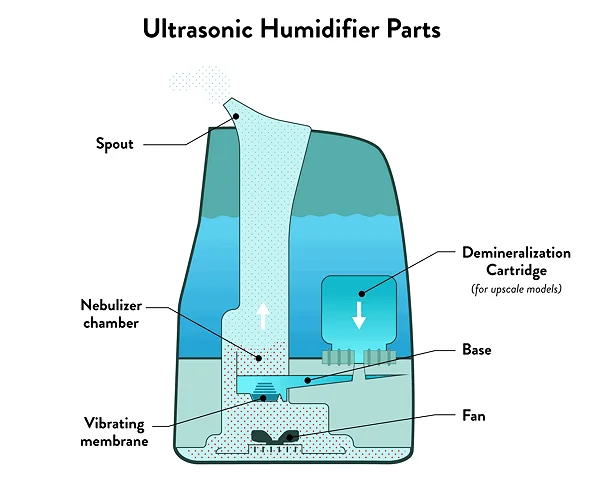
Ultrasonic humidifiers work by vibrating a transducer at high speed to break water into fine droplets. During this process, minerals and bacteria contained in the water are sprayed directly into the air. In particular, the mineral particles produced are often 0.4 μm or smaller in size 1, 2, and this size falls within the range capable of penetrating the alveoli. In fact, over 99% of the ultrafine particles generated when using ultrasonic humidifiers have been found to be small enough to reach deep into the alveoli 2. Unlike bacteria, which are destroyed by strong stomach acid in the digestive tract, microorganisms that enter the lungs directly are highly likely to cause issues such as respiratory infections or pneumonia 3, 4.
These characteristics were also confirmed in an experiment conducted by a research team from the Institute of Health & Environment at Seoul National University. When tap water was used in an ultrasonic humidifier, mineral components in the water were transformed into fine particles of 0.4 μm or less and released into the air. This size is classified as being within the range capable of alveolar penetration 1.
Changes in Residual Chlorine Levels and Bacterial Concentration Over Time
Many manufacturers recommend using tap water in humidifiers due to the chlorine content. Tap water contains residual chlorine, which initially suppresses bacterial growth inside the tank. However, this suppression weakens over time. Experimental results showed that after 12 hours of filling, the chlorine concentration in tap water decreased, resulting in bacterial concentrations similar to those found in purified water. After three days, bacteria such as mold enter a state of rapid proliferation 2, 5.
Even if water sits stagnant for just one day, anaerobic bacteria and mold spores proliferate rapidly. Spraying water from such a contaminated tank can lead to respiratory diseases such as hypersensitivity pneumonitis upon inhalation. Therefore, the sanitary condition of the tank itself becomes a core factor determining indoor air quality 4, 6.
What Are the Differences Between Tap Water and Purified Water?

Risks associated with the type of water have opposing characteristics. The Seoul Institute of Health & Environment and related studies have pointed out that using water from water purifiers or mineral water in humidifiers may increase the risk of mold and miscellaneous bacteria growth. In experiments where water was left for three days, tap water showed only harmless levels of bacteria, while multiple skin-disease-causing fungi were identified in purified water 2.
Conversely, the disadvantages associated with generating fine particles via the ultrasonic method must also be considered. According to a 2020 report by KBS Fact-Check K, citing a 1992 study from the journal Environmental Science & Technology (cited by the EPA and others), the indoor ultrafine particle concentration exceeded 7,000 μg/m³ when tap water was used. Under the same conditions, when distilled water was used, the concentration was only 54 μg/m³. While additional research is still needed on the direct health hazards posed by mineral particles to the respiratory system, using water from purifiers or distilled water is recommended for the purpose of reducing the amount of mineral particles generated 1, 4. Ultimately, regardless of which water is used, the benefit of the 'tap water' recommended by manufacturers is only bacterial suppression; it does not eliminate the risk of fine particle generation from ultrasonic mist itself.
Indirect Verification Methods for 'Tank Bacteria Counts' Applicable at Home
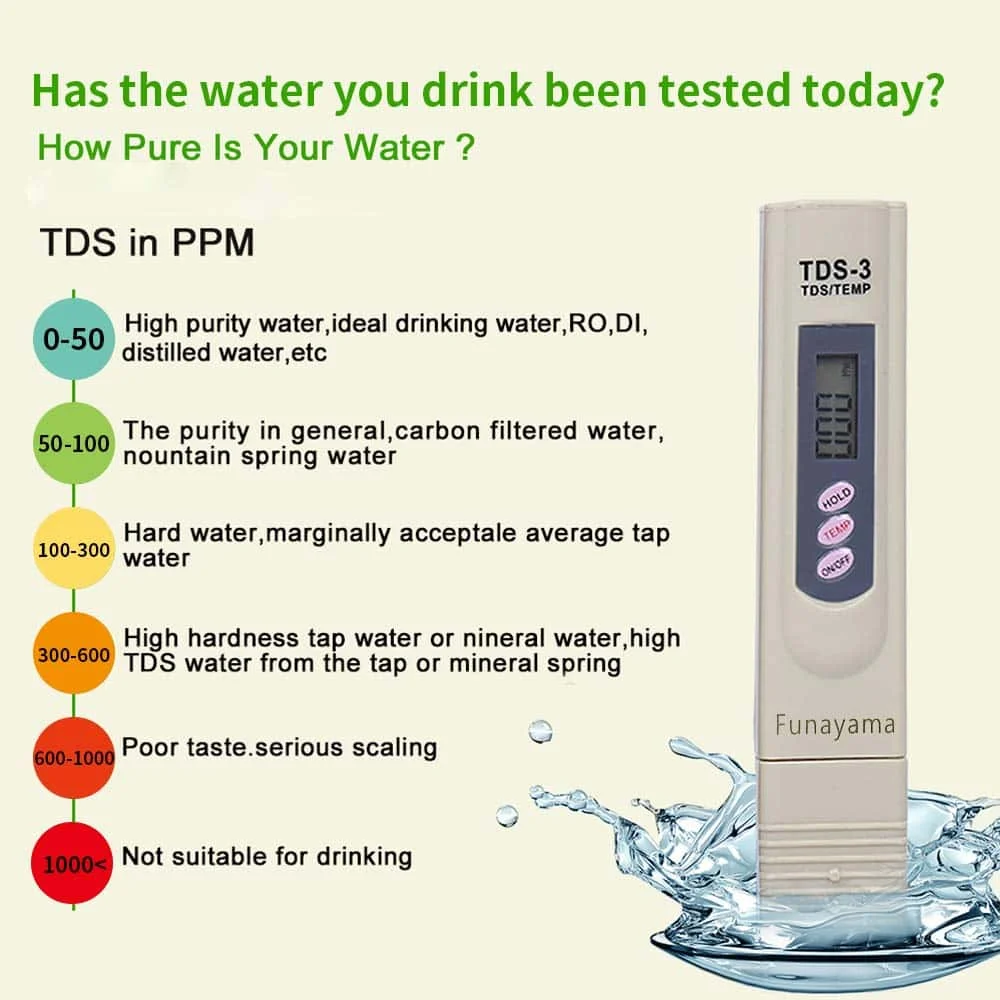
Using commercially available household test strips or culture tests to daily measure the 'direct bacterial count (CFU)' in the tank is practically cumbersome. Instead, households can use a TDS (Total Dissolved Solids) meter to check the concentration of minerals and lime scale in the water, thereby indirectly verifying the degree of water contamination or filter lifespan 7.
The lower the mineral content of the water used in the humidifier, the fewer fine particles are generated by ultrasonic atomization. Measurement procedures and management standards are as follows:
- Measurement Method: Turn on the TDS meter and dip the sensor end into the water to be measured, then check the reading (unit: ppm).
- Purified Filter Replacement Standard: If water passed through a water purifier or purification cartridge shows a gradual increase in TDS readings reaching a level of 50–60 ppm, it indicates that the purifying function of the filter has degraded and lime scale components in the water are mixing back in. At this point, the filter should be replaced 7.
- Comparison with Tap Water Standards: Comparing TDS readings of tap water and purified water allows for an objective assessment of the water purifier's working condition 7.
A high TDS reading implies a high content of lime scale, which not only causes scale buildup on the ultrasonic transducer but can also be linked to an increased emission of mineral fine particles entering the respiratory system, thus requiring management. Although bacteria and mineral particles are separate issues, the rough internal surface of a tank accumulated with scale and minerals creates an environment conducive to bacterial adhesion and proliferation 6.
Cleaning and Water Management Routines for Safe Humidifier Use
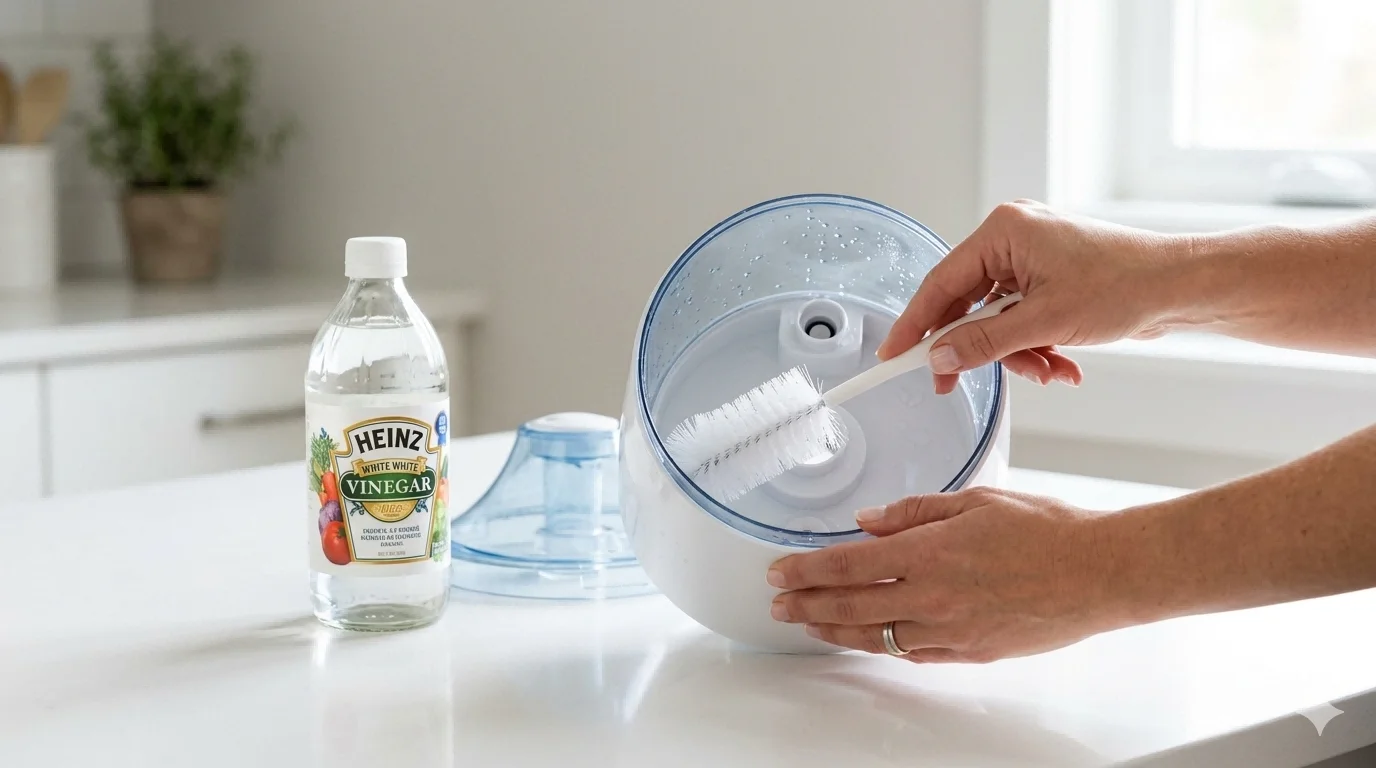
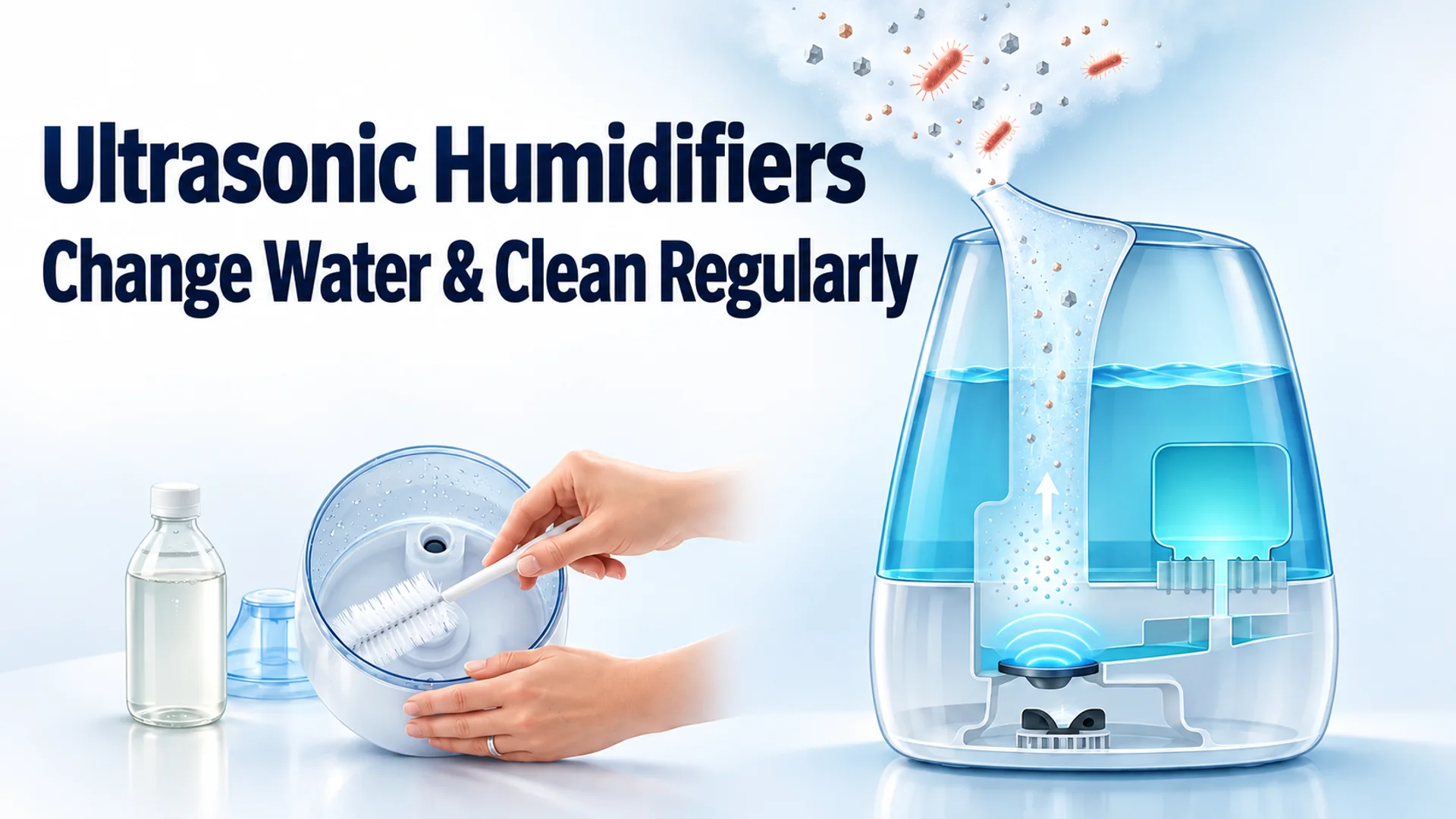
Humidifier management and cleanliness have a much more significant impact on respiratory safety than the type of water used 1, 4. Whether it is an ultrasonic humidifier or another type, a cleaning routine based on specific times and standards must be applied to control bacterial growth and scale in the tank 3, 6.
- Daily Water Replacement and Drying: This is the most certain measure for bacterial suppression. Completely empty the water tank every day, rinse it with running water, and then allow the internal surfaces to air dry 4, 6. Even if within 12 hours, bacterial concentrations increase in stagnant water, so replacing the water daily is the principle 2.
- Weekly Scale and Biofilm Removal: Weekly, mix 200 ml of vinegar or 2–3 spoons of citric acid with 1 L of water and soak it inside the tank. This gently dissolves scale (lime) and biofilms formed by microorganisms 6, but the immersion time for acidic detergents on the ultrasonic transducer part should be limited to within 20 minutes to prevent corrosion 2. Scrub scale-covered areas with a brush and rinse thoroughly.
- Monthly Inspection and Component Management: Boil or replace rubber packing and removable parts. For humidifiers with filters, replace the filters according to the manufacturer's recommended cycle of 1–3 months 6.
- Usage Environment and Humidity Control: Maintain indoor humidity between 40% and 60%, adjusting to keep it below 50%. Keep the mist outlet at least 1–2 m away from a person's nose and mouth. If water vapor from the humidifier begins to condense (condensation) on walls or windows, the location should be moved or the mist output reduced 3, 4.
The rapid mist speed and low power consumption of ultrasonic humidifiers are excellent advantages, but the moment management is neglected, they can transform into dangerous 'bacteria sprayers' that break mold and bacteria in the tank into fine particles and deliver them directly to the respiratory system. Understanding both the benefits of tap water and the characteristics of distilled water, and applying a systematic cleaning routine that includes changing water daily and removing scale, is the safest and most surefire method.
References
- [팩트체크K] 가습기 물 ‘수돗물 vs 정수기 물’ 뭐가 더 안전할까? · news.kbs.co.kr↩
- 가습기 '수돗물 vs 정수기 물'...전문가들이 추천하는 안전한 방법은 - 하이뉴스 · m.hinews.co.kr↩
- 세균증식, 석회, 물때, 전기세 폭탄...가습기 그래서 어떻게 써야합니까?ㅣ가습기의 과학ㅣ가습기 추천 · youtube.com↩
- 가습기에 수돗물? 정수기 물? 중요한 건 위생관리! · kr-weathernews.com↩
- 건조한 겨울 필수품 가습기, '수돗물·정수기 물' 중 고민하고 있다면 꼭 보세요 · wikitree.co.kr↩
- 가습기 물때와 세균 막는 세척 루틴 공기 중으로 뿌려지는 물, 그냥 믿지 마세요 · downtree.kr↩
- TDS 수질 측정기 사용 : 아비스 가습기용 정수기 사용가이드 · abiss.kr↩