Sam Altman, CEO of OpenAI, appeared on the podcast "Cheeky Pint" on October 29, 2026, characterizing local inference on personal PCs as a "terrible allocation of resources." The core of his argument is that individuals hold a substantial amount of DRAM with limited supply and an actual utilization rate of only 5%, so memory should be reallocated to cloud data centers from a global resource allocation perspective 1, 2, 3. This remark is evaluated as a symbolic event showing that the structural bottleneck in the AI infrastructure market is shifting from computational speed to large-capacity memory, beyond a mere debate on technical efficiency.
Elon Musk, CEO of Tesla, immediately refuted this cloud-centric efficiency theory on November 2, 2026, via X (formerly Twitter), stating, "People also deserve to have their own RAM" 2, 3. This clash between cloud-based AI service providers and the device sovereignty of individual users is resulting in contradictory market movements, such as rising memory semiconductor prices and OpenAI’s parallel adoption of local inference models. This article examines the realistic cost structures facing on-device AI and the necessity of hybrid infrastructure strategies from the perspective of the hardware ecosystem.
Supply Constraints and Statistical Multiplexing: The Structural Inefficiency Pointed Out by Altman
The background to Sam Altman’s criticism of memory utilization on personal PCs lies in the extreme surge in demand for AI computing infrastructure. According to analysis by market research firm TrendForce, the contract price of commodity DRAM in Q3 2026 rose by 13–18% quarter-over-quarter, with an additional increase of 10–15% projected for Q4 3. This is because production capacity is prioritized for AI server products, causing the entire DRAM supply chain to become dependent on AI data center construction projects 3.
The root cause of the ‘inefficiency’ pointed out by Altman stems from differences in resource ownership models. The biggest advantage of cloud data centers lies not in simple hardware performance but in ‘statistical multiplexing’ 4, 5. When uncorrelated (independent) inference requests from numerous users are aggregated into a single pool, cloud infrastructure can minimize latency and utilize resources to the limit 5. Conversely, on personal PCs, expensive GPUs and DRAM remain idle while users sleep or leave devices unattended for long periods, inevitably leading to resource waste relative to fixed costs; this is a legitimate criticism from a cloud infrastructure perspective 5.
Adding to this are the structural characteristics of semiconductor manufacturers’ investment patterns, raising concerns that supply shortages will become entrenched. Altman directly addressed the background of why DRAM manufacturers are extremely cautious about expanding facilities. The painful past experience where DRAM firms invested 19 billion in returns during past recessions is serving as a key cause for delays in new line expansions 3.
| Comparison Item | Personal PC (Local Inference) | Cloud Data Center |
|---|---|---|
| Memory Utilization Perspective | High idle time (5% utilization cited) 1, 2, 3, 6 | Extreme utilization via statistical multiplexing of many users 4, 5 |
| Cost Structure | Initial hardware costs, electricity, and cooling fees incurred 4 | Fixed costs per unit of computation can be distributed via batch processing at scale 4 |
| Bottleneck Cause | Memory bandwidth limitations of consumer GPUs 5 | Physical power infrastructure and DRAM wafer supply constraints 3 |
The Stargate Project Shaking the Semiconductor Supply and the DRAM Shortage
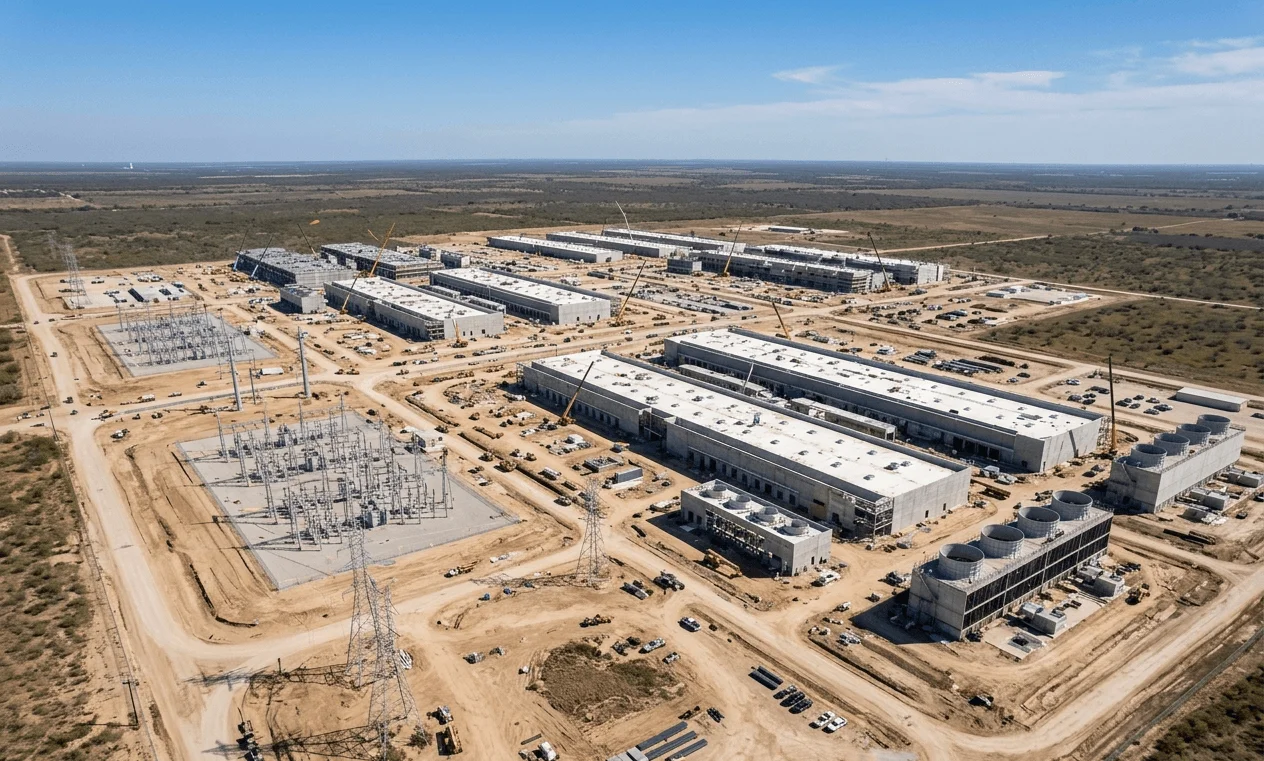
While the GPU shortage continues in the AI semiconductor supply chain, large-capacity memory (DRAM) supply and data transmission bandwidth are emerging as new bottlenecks 3. Amid this trend, OpenAI’s memory securing strategy is directly impacting the global PC market and semiconductor prices.
OpenAI is promoting the AI data center construction project ‘Stargate,’ and in October 2025, signed a large-scale memory supply letter of intent with Samsung Electronics and SK Hynix 3. At the time, SK Group predicted that the maximum monthly DRAM demand required for the Stargate project would reach 900,000 wafers (wafer-based) 3. This figure represents an overwhelming volume equivalent to about 40% of the estimated global DRAM production, serving as a prime example of how a few cloud companies can absorb resources from the personal market 3.
This surge in demand eventually transfers to the hardware prices paid by consumers. As the production share of high-value-added products for AI servers, such as High Bandwidth Memory (HBM), increases, commodity DRAM used in personal PCs suffers from supply shortages, leading to price increases—a structural contradiction 3. In online communities, criticisms have arisen that AI companies are fueling the memory supply shortage yet blaming personal PCs for memory usage 3.
The Break-Even Point of Local Inference: Conditions for Cost Competition with the Cloud
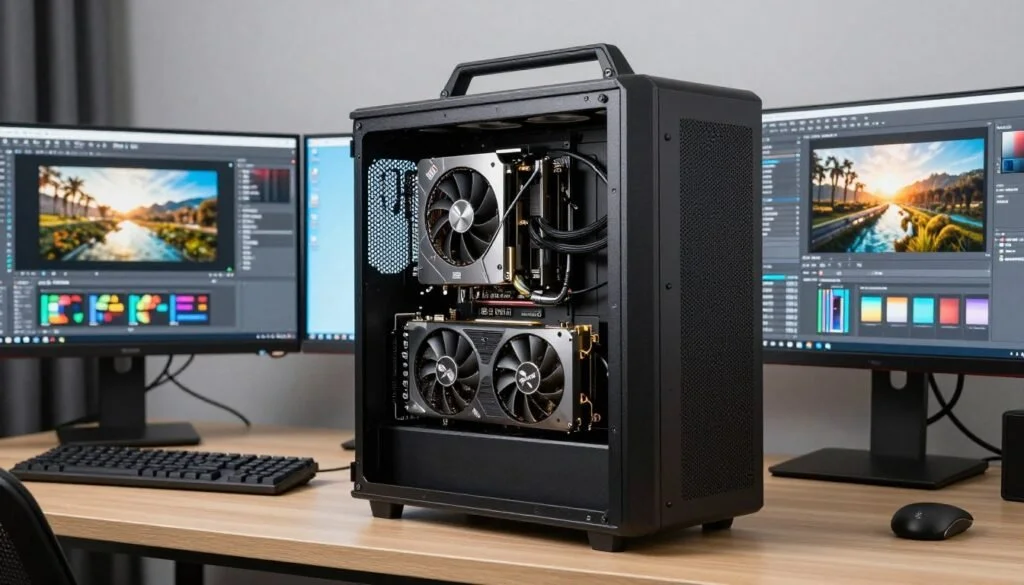
Does this mean that hardware investment in personal PCs or local servers is always a waste? Despite the scale advantages of cloud services, the economic viability of local inference is maximized when certain conditions are met. The cost-efficiency of cloud versus local inference is determined by two variables: ‘usage volume’ and ‘data control.’
According to analysis based on data from June and August 2026, comparing only the token unit price of cloud APIs when adopting LLMs falls into the trap of cost calculation 4. While local environments include hidden operating costs such as electricity and cooling fees in addition to initial hardware costs, they reach the break-even point once usage exceeds a certain threshold 4.
| Usage Tier (Daily) | Estimated Cloud API Cost (Based on OpenAI GPT-4.1) | Example Local Environment Infrastructure Configuration |
|---|---|---|
| Light (Under 1 million tokens) | 1,260/year) 4 | Recovery of initial investment cost is distant (Mac Studio, RTX 5090, etc.) 4 |
| Middle (1–10 million tokens) | Increases to $12,600/year 4 | Consideration possible for dual RTX 5090 workstations, etc. 4 |
| Heavy (Over 10 million tokens) | Rises sharply to $126,000/year 4 | Long-term TCO reduction through building H200 or MI325X server clusters (310k) 4 |
In the case of the RTX 5080 environment, if moderate to heavy usage of more than one hour per day is expected, hardware cost recovery proves faster than API fees. In this case, the break-even point can be achieved in about five months 5. Additionally, cloud APIs cannot avoid rate limit issues during traffic surges and require accepting privacy risks such as data egress costs and exposing data to external companies 4. Local inference holds an advantage that cannot be replaced by the cloud under clear constraints: ensuring availability even in network-disconnected environments and not exporting data externally 5.
OpenAI’s Local Model Strategy Contradicting Altman’s Remarks
Although Sam Altman emphasized the efficiency of cloud infrastructure and criticized the resource occupancy of personal devices, OpenAI’s actual product strategy exhibits a duality by embracing local inference (on-device inference) environments. This also suggests that Altman’s remarks partially include the perspective of a ‘product seller’ defending a business model based on cloud services 1, 3.
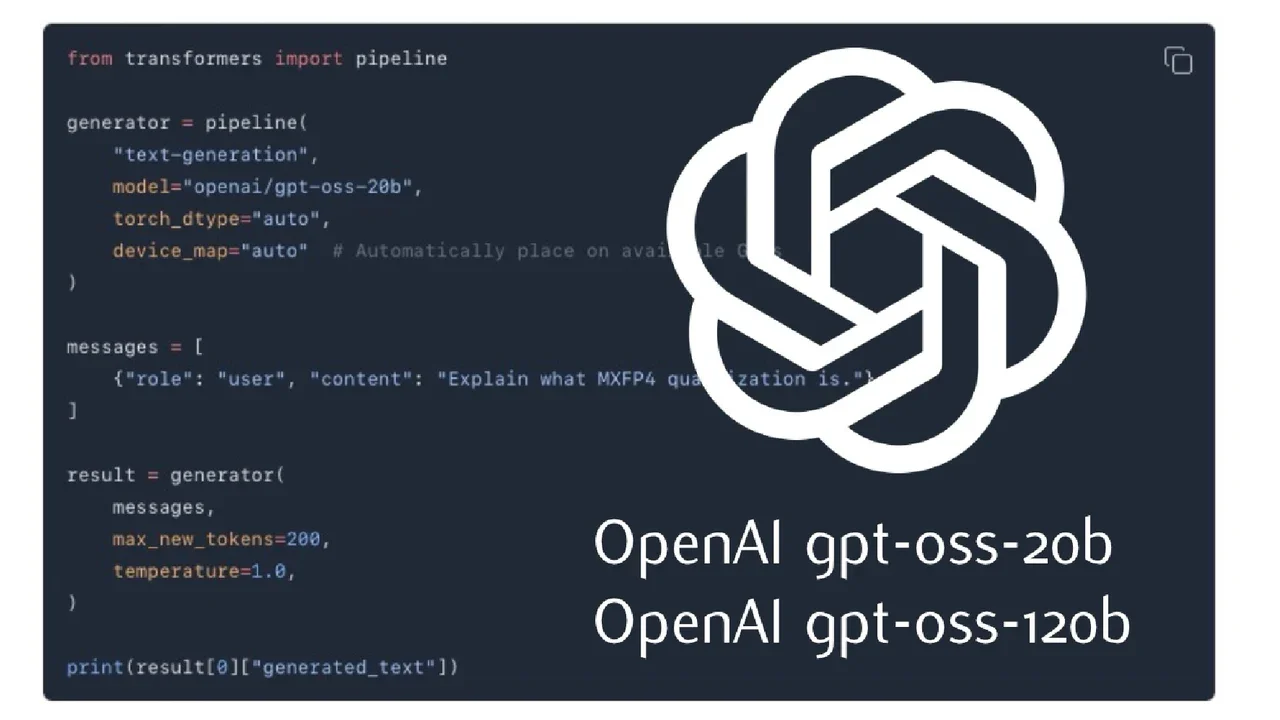
OpenAI’s open-weight model series, gpt-oss, is a representative case embracing on-device inference environments, with related analyses conducted as of August 2026 5. Notably, local inference does not necessarily mean execution on low-spec devices. The model lineup requires clear hardware lower bounds.
- The
gpt-oss-20bmodel is designed to run on personal PCs equipped with 16GB of memory 5. - The large model,
gpt-oss-120b, requires a GPU environment exceeding 80GB (e.g., workstation-grade equipment) that surpasses personal desktops 5.
Despite high expectations for hardware performance, OpenAI is keeping the door open to local inference. Reflecting the hybrid trend where boundaries between local and cloud inference blur, the company introduced a policy on October 28, 2026, to grant paid ChatGPT subscribers up to $500 in monthly API credits to support application and agent development 6.
This multi-track strategy can be seen as a sophisticated balancing act: distributing experimental environments for AI development locally while still absorbing essential demands requiring complex inference and long-context processing into its own cloud infrastructure. It is interpreted as an intention to supply its own open-weight models to avoid being marginalized by the expansion of the local AI ecosystem, while ultimately proving the structural advantage of cloud—that ‘total independence from data centers is impossible.’
Immediate Backlash from the Hardware Market and the Future of the Tech Market
Sam Altman’s resource waste theory and the views of the AI infrastructure industry defending it stirred consumer sentiment following Elon Musk’s social media remarks. Utilizing his status as Tesla CEO, Musk countered Altman’s logic of surrendering RAM to the cloud by asserting “users’ hardware ownership” 2, 3. This clearly illustrates the conflict between an equalization philosophy stating that AI infrastructure expansion should not limit personal technology access and a cloud-intensive vision 2.
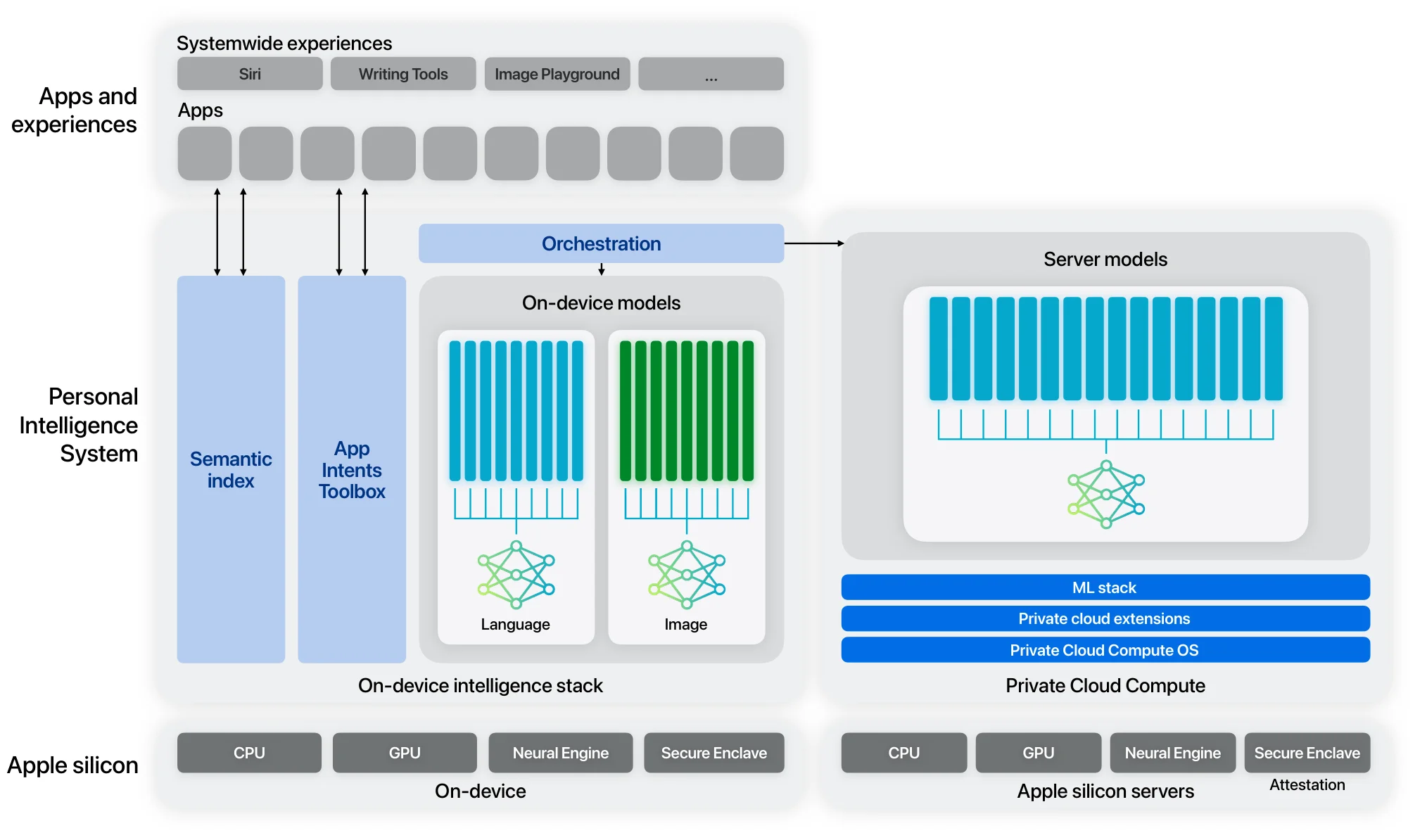
Ultimately, it is likely that the competition between personal local devices and cloud data centers will not result in a ‘zero-sum game’ where one completely excludes the other. As demonstrated by Apple’s Private Cloud Compute and Android’s hybrid inference APIs, the device market is evolving toward a fusion of both methods 5. The final deployment location is determined by considering data movement policies, internet stability, task complexity, and demand volatility 5.
With the physical center of gravity of AI computation shifting to competition for large-capacity memory (DRAM), individual users and developers must clearly establish criteria for choosing infrastructure based on their data sensitivity and processing volume. While the statistical advantages of high-density cloud infrastructure cannot be completely ignored, the justification for local environments—large-scale data processing and reduced network dependency—remains powerful. The words and actions of Altman and Musk regarding hardware resources are not a mere social media debate but a rough first signal of the differentiation process within the AI infrastructure ecosystem.
References
- ↩
- 올트먼 "PC 램은 낭비"…머스크 "사람들도 램 가질 자격 있어" · gall.dcinside.com↩
- 올트먼 "PC 램은 낭비"…머스크 "사람들도 램 가질 자격 있어" [IT썰] · n.news.naver.com↩
- ↩
- Local AI vs. Cloud AI: Which Is Better? | AI Flow Harbor · aiflowharbor.com↩
- ↩