K-defense is currently passing through a temporary slowdown in the pace of new export contracts. While defense export revenue in 2024 adjusted to approximately half the level of the 2022 peak, this is analyzed as a natural adjustment due to financing bottlenecks and the exhaustion of initial delivery volumes, rather than a contraction in market demand. At the same time, the four major defense companies have opened the era of a historic 100 trillion won order backlog for the first time, securing a stable workload for the next 4 to 5 years. Based on this 'workload foundation,' the industry is focusing all its efforts on strengthening future technological competitiveness and diversifying markets.
Adjustment After the Peak: Background of the 2024 Export Decline
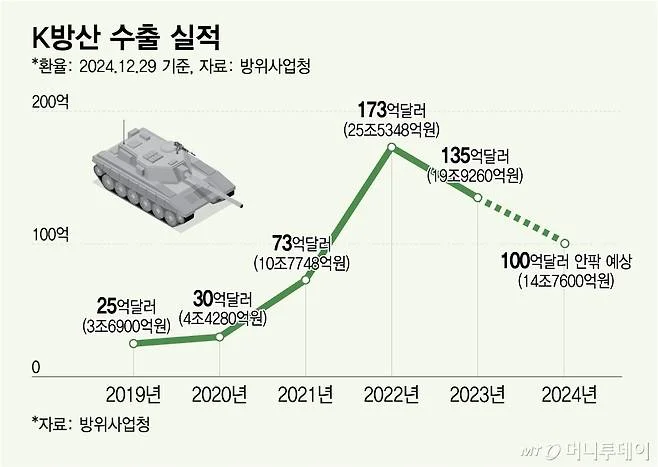
The landscape of K-defense exports has shown distinct fluctuations over the past three years. In 2022, export revenue peaked at 9.5 billion, adjusting to approximately half the level of the 2022 peak. While this may appear as a slowdown in new orders, it is actually the result of complex structural factors.
The primary cause is identified as the completion of most deliveries under the initial Polish contract. Additionally, bottlenecks in the financial procurement systems involving institutions like the Export-Import Bank of Korea were cited as factors delaying the fulfillment of new contracts. Changes in the global market situation also played a composite role. This period was not a market contraction but rather a 'breather' phase for the next leap forward.
Crossing the 100 Trillion Won Order Backlog: The Significance of Securing 4 to 5 Years of Workload
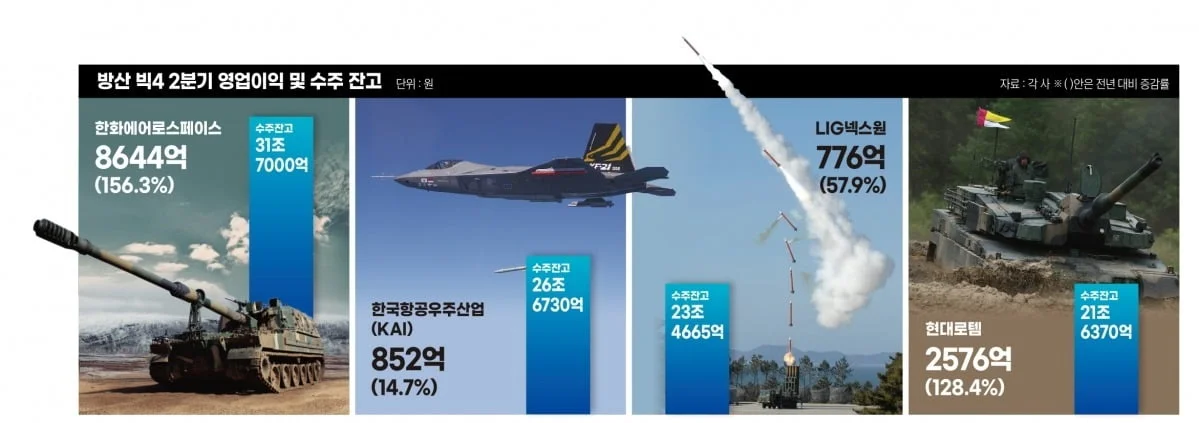
Despite the temporary decrease in new order values, the industry's future is evaluated as more stable. As of the second quarter of 2025, the total order backlog (Backlog) of the four major domestic defense companies—Hanwha Aerospace, Korea Aerospace Industries (KAI), LIG Nex1, and Hyundai Rotem—was reported at 103 trillion 476.6 billion won. This figure marks the first time in history that the backlog has exceeded the 100 trillion won mark.
| Category | Content and Figures | Remarks |
|---|---|---|
| Major Companies | Hanwha Aerospace, KAI, LIG Nex1, Hyundai Rotem | Top 4 Defense Companies |
| Q2 2025 Order Backlog | 103 trillion 476.6 billion won | First-ever breakthrough of 100 trillion won |
| Industry Assessment | Securing 4–5 years of workload | Ensuring production plan stability |
A 100 trillion won order backlog is generally interpreted in the industry as having secured '4 to 5 years' worth of workload.' This suggests that the immediate challenge has shifted from the uncertain realization of new contracts to how quickly and accurately already confirmed volumes can be processed. Based on this backlog, companies have laid the foundation to increase production line utilization rates and focus on quality control.
Resolving Financial Bottlenecks and Pioneering New Markets: Retrying for $20 Billion in Exports in 2026
In February 2024, a bill increasing the capital limit of the Export-Import Bank of Korea (KEXIM) from 15 trillion won to 25 trillion won was passed by the National Assembly. This was a key institutional improvement that removed the biggest obstacle to financial procurement that K-defense had been facing. As a result, major contracts finalized in February 2024, such as the Saudi Cheongung-II project (6.5 billion) and Romania’s K9 self-propelled howitzers ($920 million), have entered the full-fledged implementation stage.
Building on the resolution of these financial constraints and the smooth fulfillment of new contracts, the industry is re-pursuing the goal of achieving $20 billion in exports in 2026. In particular, the prolongation of the Russia-Ukraine war and changes in the global security landscape are increasing the necessity for each country to independently strengthen its defense capabilities, which naturally translates into demand for South Korean weapon systems.
The Other Side of External Growth: Structural Challenges and Future Technology Competition
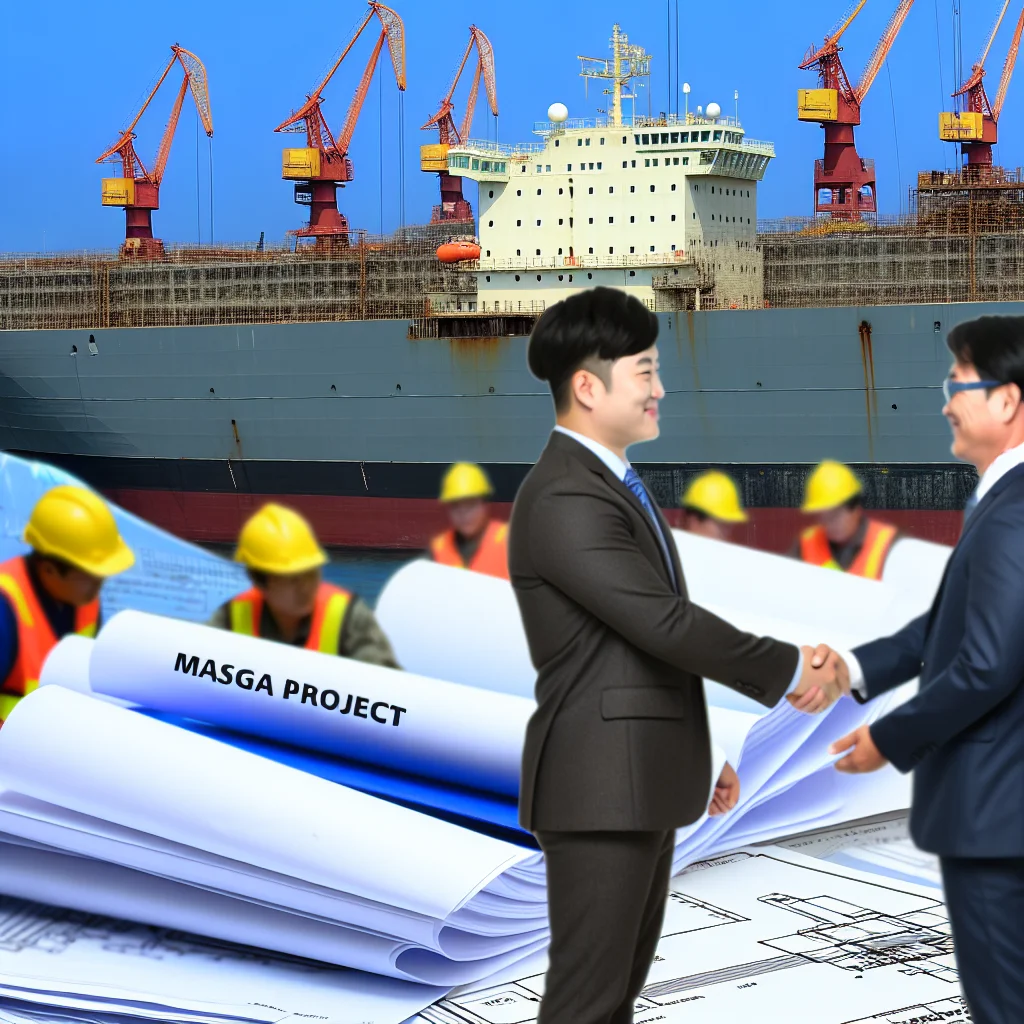
K-defense's 'second leap' goes beyond simply increasing export volumes. Currently, the structural bias toward Poland accounts for 46% of export dependency, a vulnerability to potential geopolitical variables in the future. To overcome this, the industry is expanding cooperation into diplomatic and trade areas, such as the maritime defense cooperation project with the United States (MASGA).
Furthermore, to achieve the goal of becoming one of the 'world's top four defense powers,' K-defense must maintain a technology gap in future R&D investments, such as in AI and unmanned systems. Analysis suggests that sustainable growth is only possible if the industry shifts from past manufacturing competitiveness and cost-effectiveness to a proactive response system based on advanced technology.
The current state of K-defense is closer to 'stabilization' than 'contraction.' The already secured robust order backlog of 100 trillion won provides companies with the leeway to move away from excessive external expansion competition, enhance product completion, and achieve sustained financial support and technological self-reliance. The industry's focus is now shifting beyond the quantitative indicator of achieving the 2026 export target to building qualitative solidity that meets global security demands.