Where did all the elements in our bodies come from—the iron, the calcium in our bones, and the elements that carry oxygen in our blood? Astronomy finds the answer in the deaths of stars. Stars fuse light elements into heavier ones throughout their lives, and at the end of their lives, they unleash massive explosions that scatter these elements throughout space. The provided materials do not include specific press releases or research results from the Korea Astronomy and Space Science Institute (KASI) regarding supernova observations and chemical evidence as of November 2026. However, we can examine the mechanisms of cosmic material recycling following stellar deaths through the chemical structure of supernova SN2021yfj, elucidated by an international collaborative study in 2025, and KASI’s observation infrastructure.
The Onion-like Interior of a Star: Its Shell Peels Away Just Before Explosion
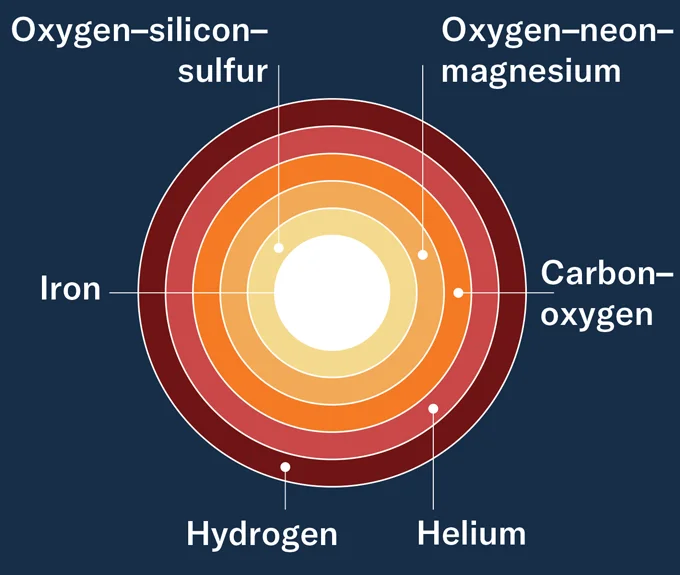
As nuclear fusion proceeds within a star, it forms a layered structure in which heavier elements are arranged toward the inside and lighter elements toward the outside. An international research team led by Dr. Steve Schulze of Northwestern University in the United States observed supernova SN2021yfj, located approximately 2 billion light-years from Earth, in August 2025. This observation revealed the star's internal layered structure just before explosion, providing the first direct evidence for long-standing stellar evolution theories 1. Spectroscopic analysis from the Palomar Observatory and the Keck Observatory confirmed that the star had experienced extreme mass loss, shedding its outer layers thousands of years before exploding. Consequently, with the outer layers of hydrogen, helium, and carbon gone, the interior layers of heavier elements were exposed 1.
This star possessed a massive mass, approximately 60 times that of the Sun. At the time of explosion, the energy released from its interior collided with previously ejected layers rich in silicon and sulfur, emitting light 1. This provides direct evidence that stars do not merely explode when they die; rather, they peel away their own shells prior to explosion, preparing to release chemical components from deep within into space.
Helium Observed Where It Should Not Be: Leading to a New Classification
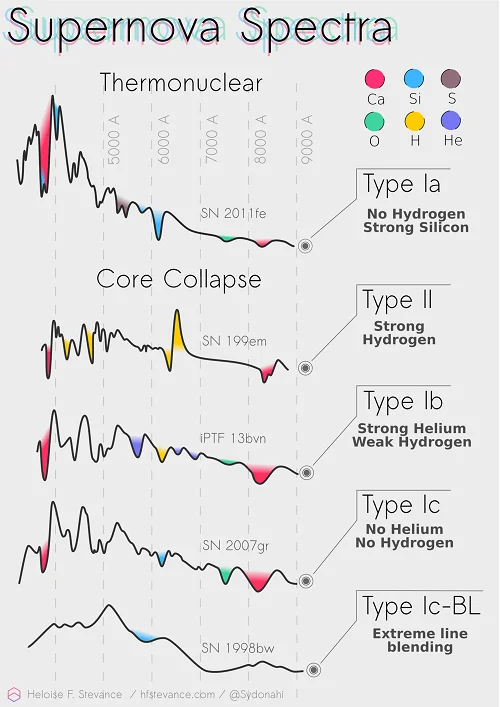
The observation of supernova SN2021yfj gave rise to unexpected unresolved challenges and a new classification. According to stellar evolution theory, helium, which should have been emitted first in the early stages, was observed in the outer layers 1. Since helium is typically revealed in phases after hydrogen has been depleted, this phenomenon was evaluated as an anomalous case conflicting with existing theories. Dr. Anya Nugent of the Harvard-Smithsonian Center for Astrophysics suggested the possibility of helium injection from a companion star or jet ejection, but a clear cause has not yet been determined 1.
These unusual chemical components provided the background for researchers to name SN2021yfj a new type, designated as "Type 1en," moving beyond the conventional classification into Type I and Type II 1. This suggests that analyzing chemical evidence from the moments just before stellar death goes beyond merely confirming stellar structure, becoming an opportunity to expand the classification systems of astrophysics itself.
The Origin of Heavy Elements Ejected by Stars into Space
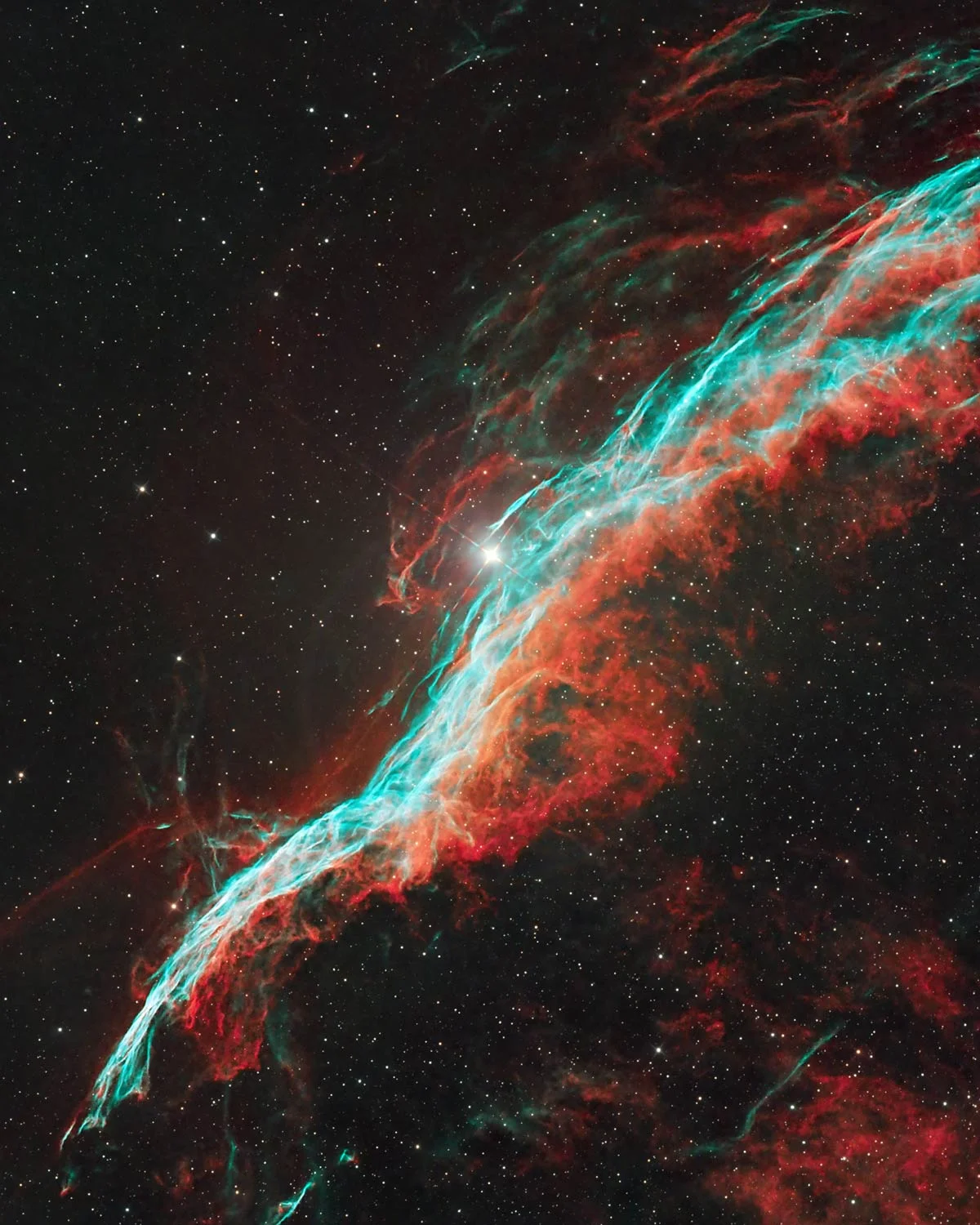
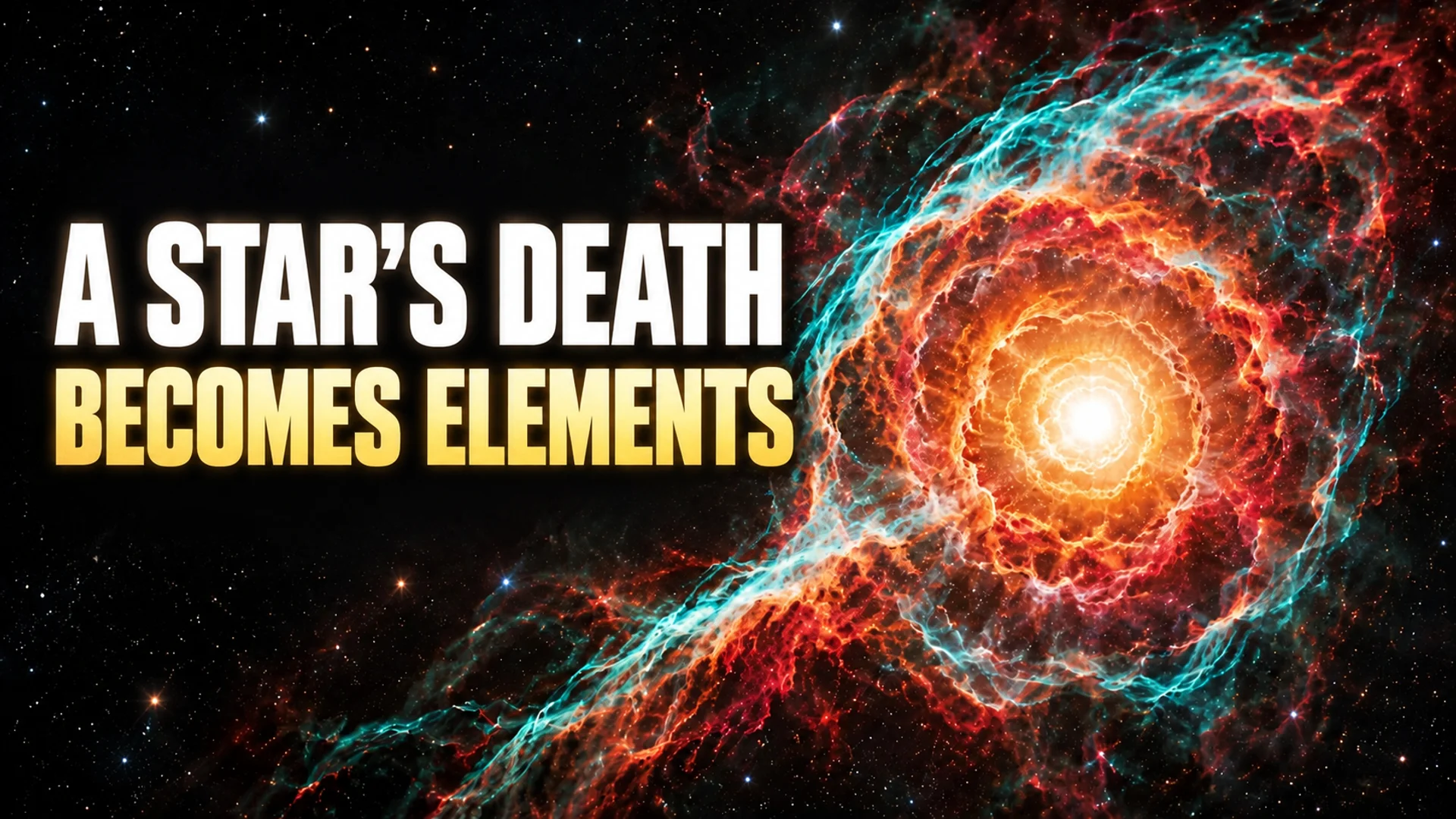
Supernovae are massive explosions that occur at the final stage of a star's life 2. Although most of the energy released during an explosion escapes in the form of hard-to-detect neutrinos, the observable light reaches a brightness equivalent to the combined light of hundreds of billions of stars in a galaxy 2. A nebula 10 to 50 light-years in diameter that remains after the explosion, known as a Supernova Remnant, retains the traces of the explosion intact 2.
By analyzing the chemical components of such supernova remnants, we can retrospectively determine which elements were synthesized inside a star before it died 1. The heavy elements released into space by the explosion become the raw materials for new stars and planets. The presence of elements essential for life, such as iron, calcium, and oxygen, on Earth is due to supernova explosions billions of years ago 2. A star's death is not disappearance, but rather a process of supplying resources that must circulate within the vast ecosystem of the universe.
KASI: The Eye That Reads the Remains of Stars
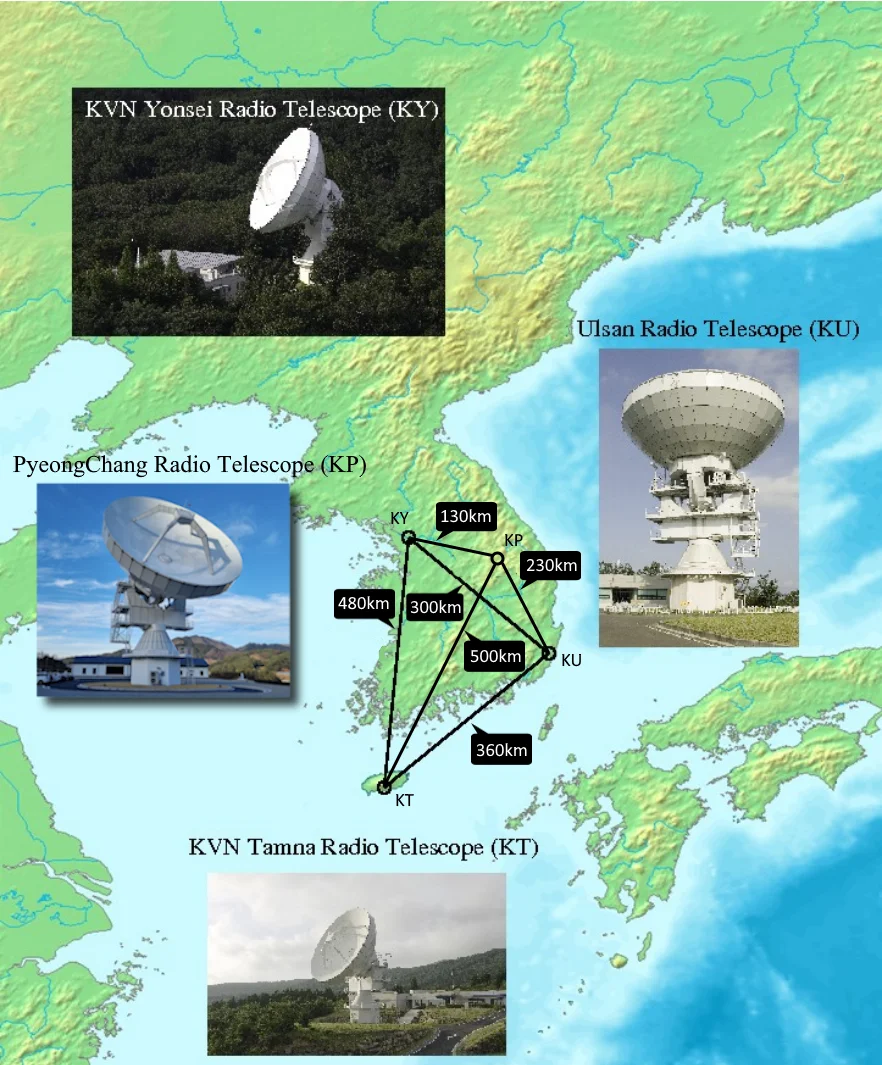
Such stellar remains and chemical changes are vividly observed even in the invisible radio wave spectrum. The Korea Astronomy and Space Science Institute (KASI) possesses a powerful infrastructure for researching physical and chemical changes in cosmic objects by utilizing the Korean VLBI Network (KVN), which has constructed 21-meter class radio telescopes at four sites: Seoul, Ulsan, Pyeongchang, and Jeju 3. In particular, KVN implemented the world's first system for simultaneously observing four frequencies (22, 43, 86, 129 GHz) and possesses key technologies for tracking element distribution and chemical changes in supernova remnants 3.
KASI has accumulated advanced spectroscopic observation capabilities, including the development of multi-beam receivers for the ALMA (Atacama Large Millimeter Array) telescope through international cooperation with the Taeduk Radio Astronomy Observatory (TRAO), established in 1984 3. These observation systems capture faint radio signals emitted by celestial objects, allowing researchers to gain a multidimensional understanding of how matter spreads into galactic space after a star's death and how the raw materials preparing for new stellar births are chemically transformed in the process.
A Gaze Toward the Afterlife of Our Star
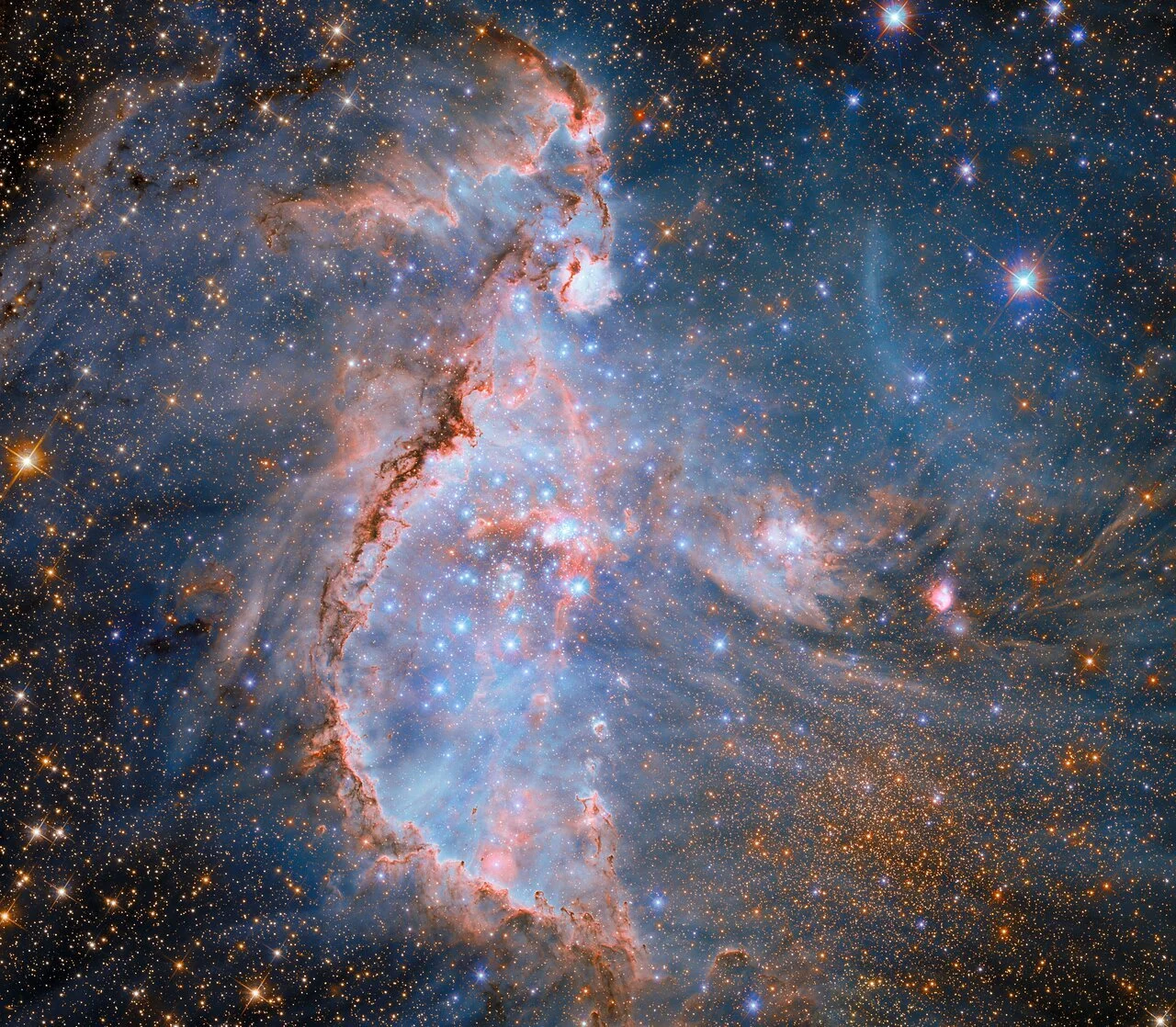
From the perspective of cosmic material recycling, a star's death is a starting point, not an end. Through chemical evidence observed in supernova remnants, astronomers directly confirm the shell structures of stars at each evolutionary stage and empirically demonstrate the mechanisms by which elements are released into space 1. Current astronomical observations, combining KASI’s observation infrastructure with international collaborative spectroscopic analysis, provide the foundation to concretely verify how the elements left behind by stars become the raw materials for stars, planets, and ultimately living organisms 3, 2.
The implications of the chemical components within nebulae, the remnants of supernova explosions, are clear. The work of revealing the origins of atoms in our bodies begins with observing the violent physical phenomena of a star dying. The process by which the interior harbored by a star as it synthesized heavy elements is scattered into the universe—the exploration of the afterlife of stars—is gradually filling in the scientific answers to where we came from in the universe.
References
- [사이언스샷] 초신성 폭발 전 내심 드러냈다...별의 진화이론 첫 입증 · v.daum.net↩
- 초신성 - 나무위키 · namu.wiki↩
- 전파천문이해 · radio.kasi.re.kr↩