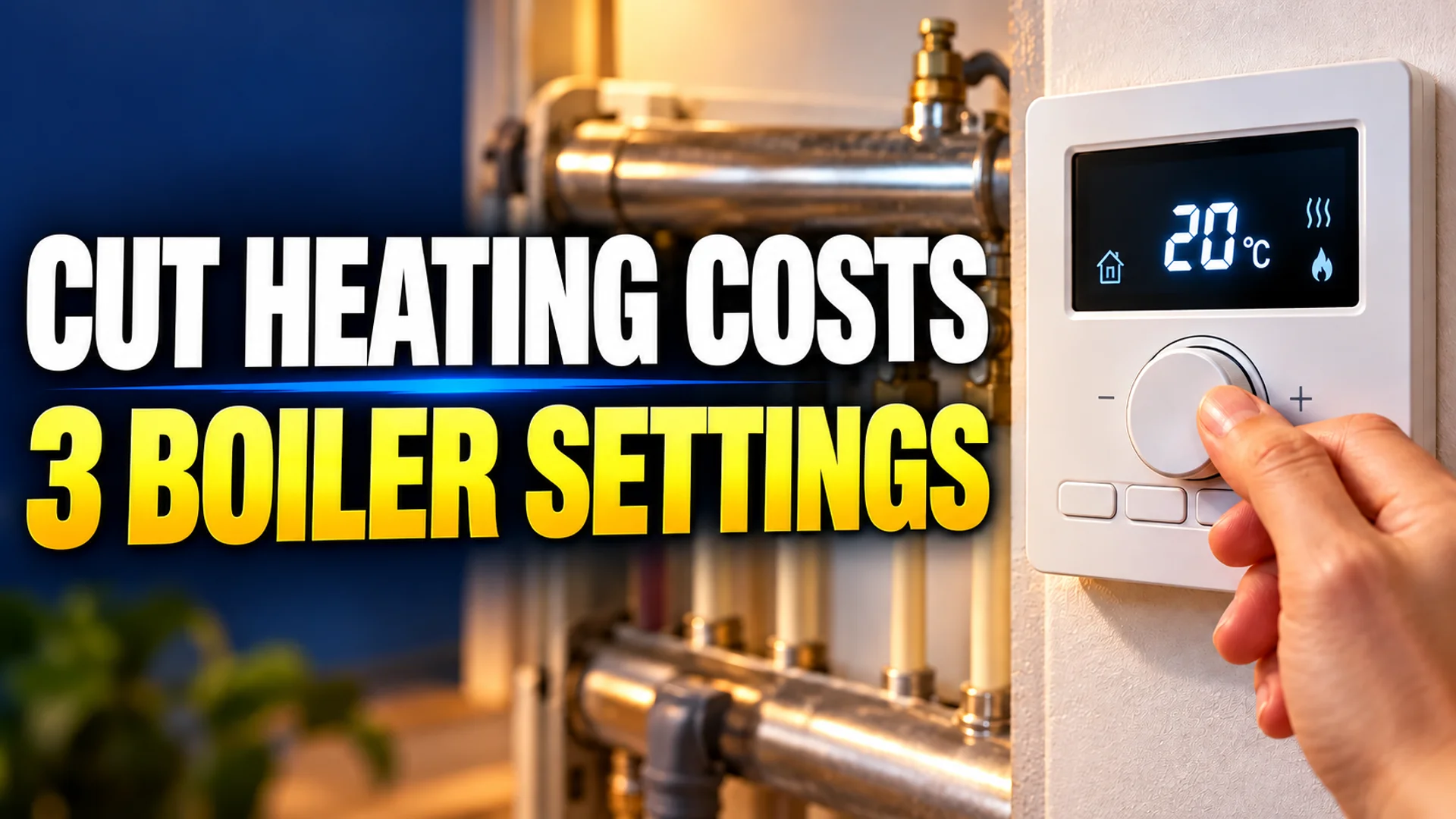
To reduce the burden of winter heating costs, many people turn off their boilers or overuse the away mode. However, because a boiler works by heating water and circulating it through the floor pipes in an ondol system, the process of reheating after the system has completely cooled down consumes the most energy. The key to saving on heating bills is to maintain an appropriate floor temperature while reducing unnecessary energy consumption. It is known that lowering the indoor temperature by just 1°C can result in approximately 5–7% energy savings, making step-by-step settings aligned with the boiler’s operating principles important 1234.
Step 1: Optimal Settings by Duration of Absence and Utilization of Schedule Mode
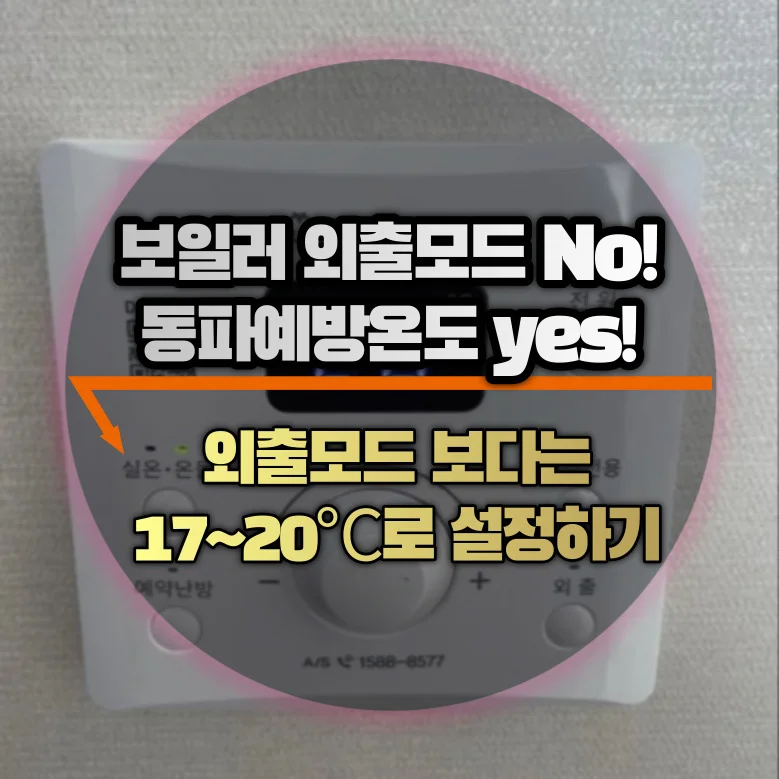
One of the most common misconceptions is turning on the 'away mode' during short trips out. In most boilers, the away mode is closer to a freeze-protection function that only activates when the indoor temperature falls below 8–10°C 152. Therefore, using the away mode for short outings, such as going to work, lasting a few hours or less can cause the floor to become cold, leading to higher fuel consumption during reheating upon return home.
For short outings (same day or within 2–3 hours), it is more efficient to simply lower the temperature by 2–3 degrees below the usual setting rather than using the away mode 163. Organizations such as Korea District Heating Corporation also recommend slightly lowering the set temperature unless there is a long-term absence 3.
For long-term absences of three days or more, it is appropriate to use the away mode to prevent freezing 163. On the other hand, if your return home time is consistent, utilizing the 'schedule mode' is advantageous. The schedule mode is not simply a feature that turns the boiler on at a specific time; rather, it operates by running the boiler periodically at set intervals (e.g., every 3 hours) to prevent the floor temperature from completely cooling down 56. This helps reduce energy waste associated with reheating, and it is advisable to adjust the scheduling intervals according to the insulation condition of the home.
| Insulation Condition | Recommended Schedule Interval | Characteristics |
|---|---|---|
| Cold homes with drafts | 2 hours | Requires more frequent circulation to maintain floor temperature |
| Standard apartment | 3 hours | Balanced temperature maintenance |
| Well-insulated home | 4 hours | Cools down relatively slowly |
Source: Summary of Min-gyeom TV video material 5
Step 2: Maintaining an Optimal Indoor Temperature of 20°C and Managing Perceived Temperature
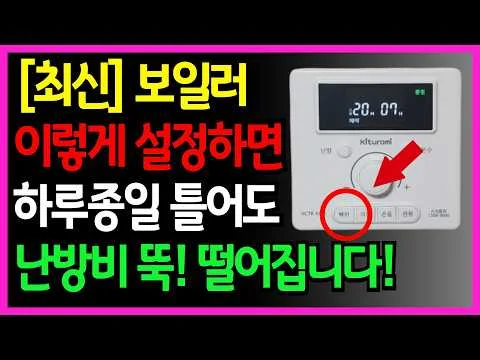
The recommended optimal indoor temperature in the government's winter energy conservation campaign is 20°C 3. Statistics indicate that maintaining an indoor temperature of 20°C results in an average monthly savings of approximately 5,150 KRW per household compared to maintaining 21–23°C 3. However, simply lowering the temperature number makes it difficult to overcome the perceived cold. In such cases, 'humidity management' plays a crucial role.
Maintaining indoor humidity at 40–60% allows water vapor in the air to transfer and store heat, creating a perceived temperature similar to raising the set temperature by more than 2°C 156. In other words, you can reduce boiler running time by lowering the actual temperature while increasing humidity. Additionally, wearing thermal underwear or warm clothing can increase the perceived temperature by approximately 2.4–3 degrees, with some analyses suggesting that simply maintaining an indoor temperature of 20°C can lead to savings of over 10,300 KRW per month 3.
Window insulation is also directly linked to perceived temperature. Since a significant portion of heat loss in homes occurs through windows, using bubble wrap (air caps) or windproof vinyl film to block drafts can help maintain the indoor temperature 2–3 degrees higher 1563. In particular, simply applying bubble wrap to the glass surfaces of windows, excluding south-facing ones, can raise the glass surface temperature and prevent the influx of cold air 3.
Step 3: Adjusting Manifold Flow Rate and Hot Water Temperature Settings
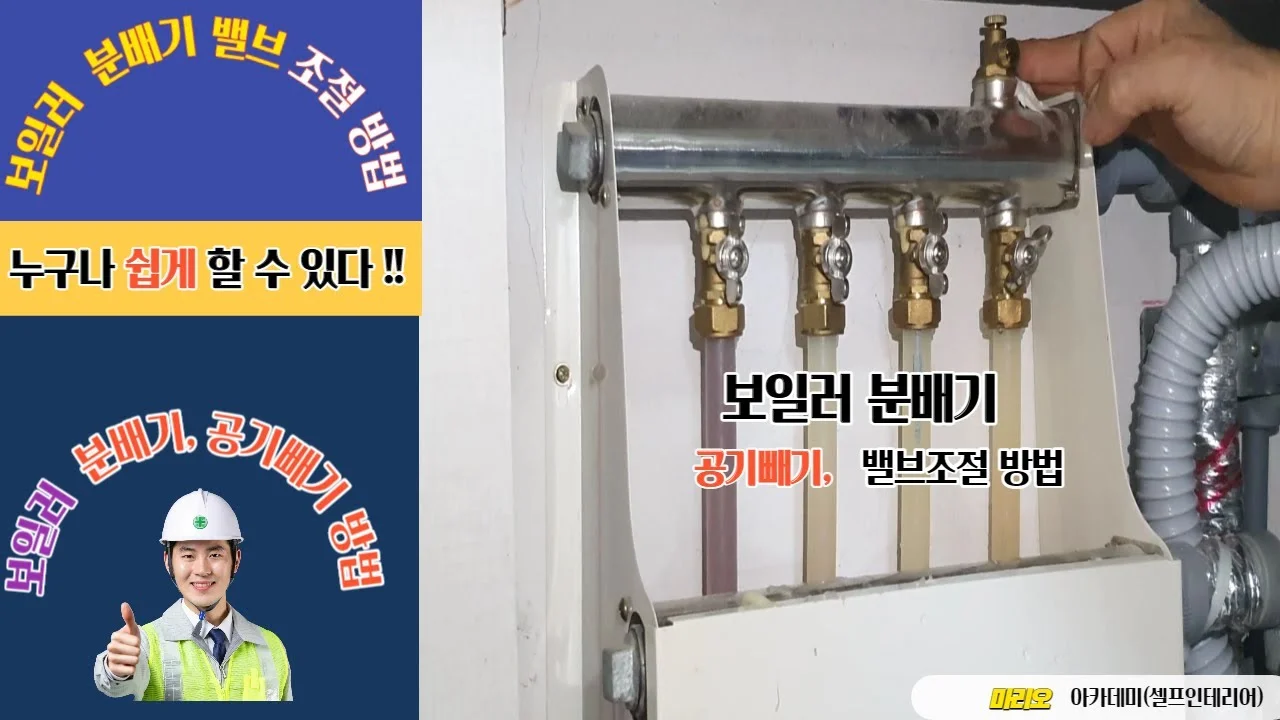
As important as the boiler main unit settings are the adjustments for the 'manifold,' which controls the amount of heat sent to each room, and the settings for daily 'hot water.' Simply fully closing the manifold valve for unused rooms may result in negligible heating cost savings. This is because the heating water originally destined for that room simply circulates more to other rooms, and the total amount of heating water the boiler needs to heat remains unchanged 3.
For effective savings, you should partially close the valves for unused rooms by about 70% or leave them slightly open by 15–30% to prevent circulation imbalance, while simultaneously partially closing the manifold's master valve to reduce the total flow rate 34. If heating energy for unused rooms is properly blocked this way, heating energy consumption can decrease by up to 20%, depending on the home's structure and usage 3. Some materials explain that this method can lead to savings of over 25,000 KRW per month 3.
Hot water temperature settings are also an item that should not be overlooked. Setting the hot water temperature to the maximum (60°C or higher) results in unnecessary thermal energy consumption because cold water must be mixed in during use 56. It is recommended to set it to 40–50°C, suitable for the human body, or to the 'Medium' level 156. Lowering the hot water temperature from 55°C to 40°C has been shown to result in savings of approximately 8,610 KRW per month, according to examples calculated by the Korea Energy Agency 3. While video content, among others, mentions savings of over 20,000 KRW per month depending on individual usage patterns, this can vary significantly based on each household's hot water usage 5.
Furthermore, it is important to select the boiler mode according to the home's insulation environment.
- Indoor Mode (Air Control): Operates based on the air temperature around the controller. This is advantageous for newly built apartments with good insulation 163.
- Ondol Mode (Heating Water Control): Operates based on the temperature of the heating water entering the floor. This is advantageous for older houses or villas with severe drafts where the floor temperature drops easily 163. In this mode, maintain the heating water temperature at 55–60°C (or the manufacturer's recommended temperature), but be aware that the numbers on the controller do not represent the indoor temperature 136.
In conclusion, reducing winter heating costs is not about vague endurance, but a process of helping the boiler manage the floor to prevent it from cooling down, tailored to your home's insulation environment and lifestyle patterns. Forming habits based on the boiler's operating principles, from mode settings during absences to hot water temperature and manifold adjustments, helps alleviate the actual financial burden on households.
References
- 난방 | 가스비 2배 아끼는 보일러 설정법 5가지 노하우 - stock-house · stock-house.fourth-energy.com↩
- 보일러 외출모드와 예약모드 차이 — 난방비 절약 설정법 | 홈케어랩 · homecare-lab.co.kr↩
- ↩
- 난방비 절약 팁 (아끼는법 총정리) ft. 외출 보일러 설정 및 분배기 · m.blog.naver.com↩
- 보일러 전문가에게 배운 난방비 절약방법 총정리! 이 버튼만 누르면 24시간 틀어도 난방비 반값됩니다! · youtube.com↩
- 겨울철 난방비 30% 절약하는 보일러 외출모드 vs 예약모드 핵심 비교 가이드 - 올인포 · salesother.com↩