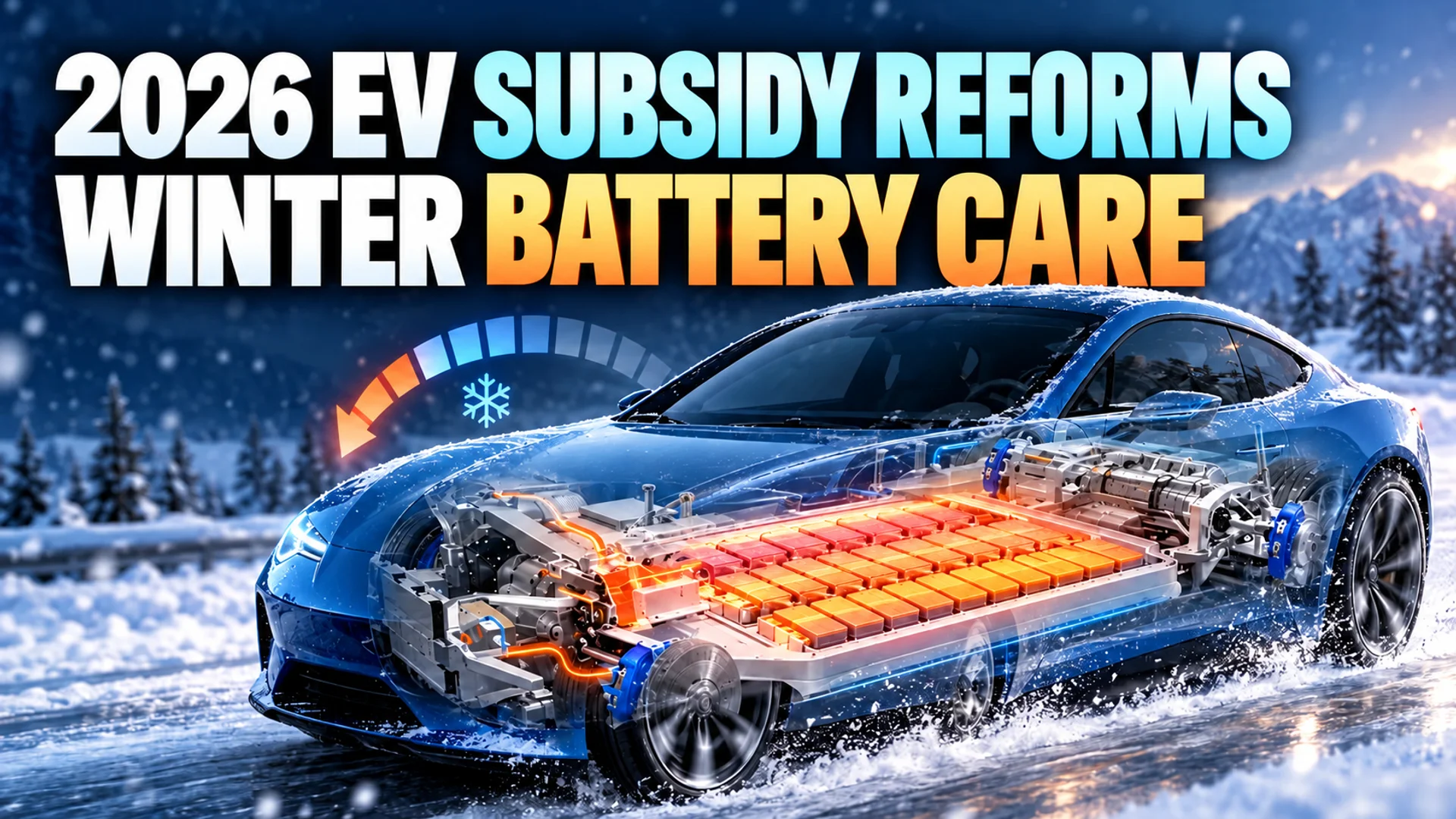
EV owners frequently experience a gap between perceived performance and official specifications due to reduced range in winter. As the revised EV subsidy guidelines targeting implementation in 2026 retain range and battery efficiency as quantitative evaluation criteria, this discrepancy affects vehicles’ market competitiveness and eligibility for subsidies. While performance degradation in cold environments stems from the physical characteristics of lithium-ion batteries as a medium, losses can be minimized through proper management and effective use of vehicle features. This article outlines the key changes in the 2026 subsidy policy, the causes of winter range reduction with real-world data, and specific management practices to maintain battery efficiency.
2026 Subsidy Overhaul: Expanded Weight of Qualitative Evaluations and Introduction of Comprehensive Assessment
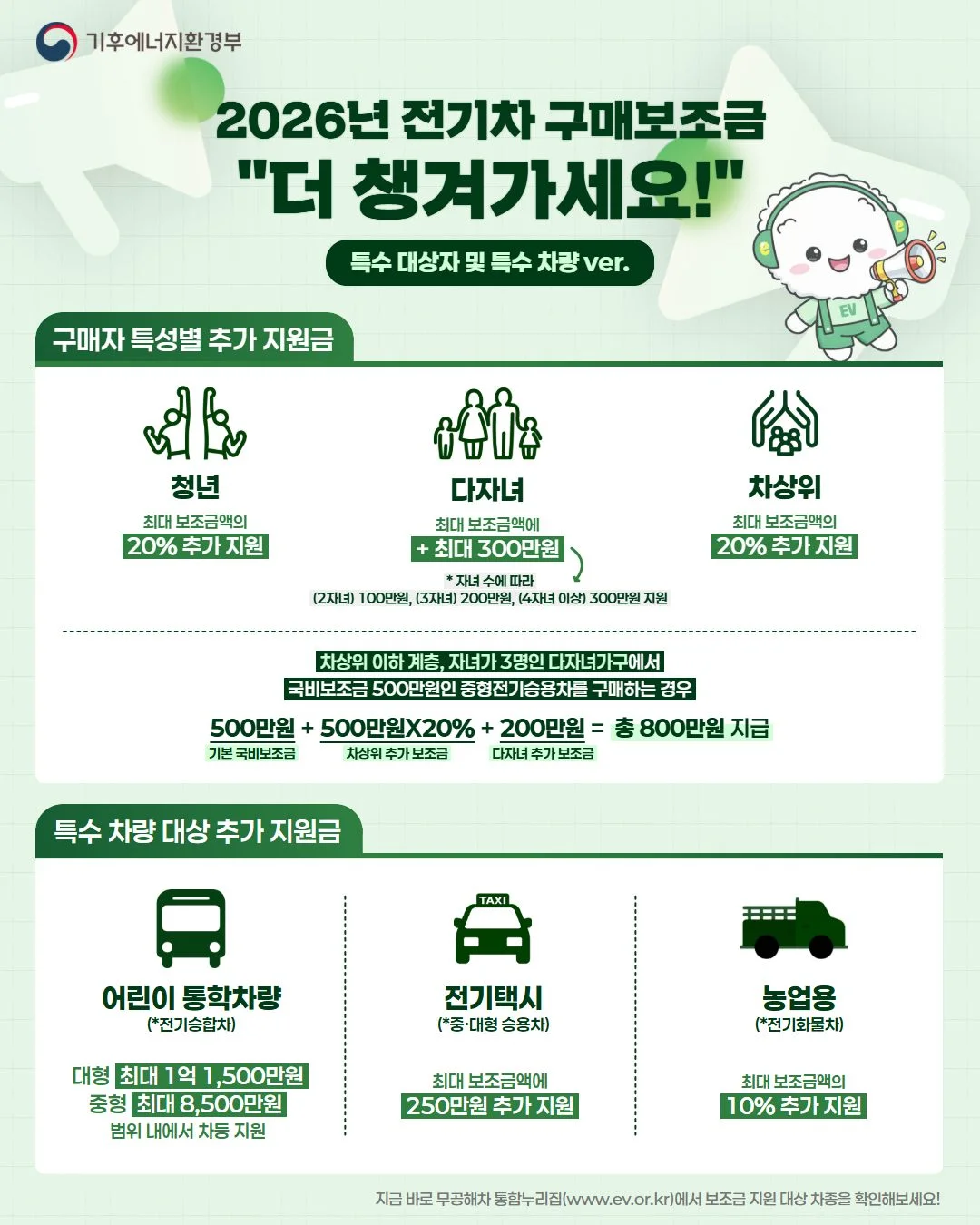
The “2026 Revised EV Subsidy Guidelines” announced by the Ministry of Climate, Energy and Environment are characterized by a significant strengthening of qualitative elements compared to the previous quantitative-indicator-centric evaluation system. Previously, subsidies were differentiated primarily based on quantitative indicators such as vehicle sales volume, maximum range per single charge, and battery efficiency, with domestic and imported vehicles evaluated equally if they met the standards1.
However, starting with the 2026 revised guidelines, vehicles must achieve a total score of 80 points or higher, combining 40 points for quantitative evaluations and 60 points for qualitative evaluations, to qualify for subsidies1. With the weight of qualitative evaluations expanded to more than half, new assessment items have been added, including domestic job creation effects, sustainability of after-sales responsibilities, contribution to the transition of the parts industry, and brands’ sustainability and ESG response capabilities1. The evaluations will be conducted around June 2026, and the new criteria will be applied from July 11. Range and battery efficiency remain core indicators of quantitative evaluations, but the evaluation structure shifts to comprehensively consider manufacturers’ contributions to the domestic ecosystem.
Gap Between Official and Measured Range: Reality Through Recurrent Auto Data
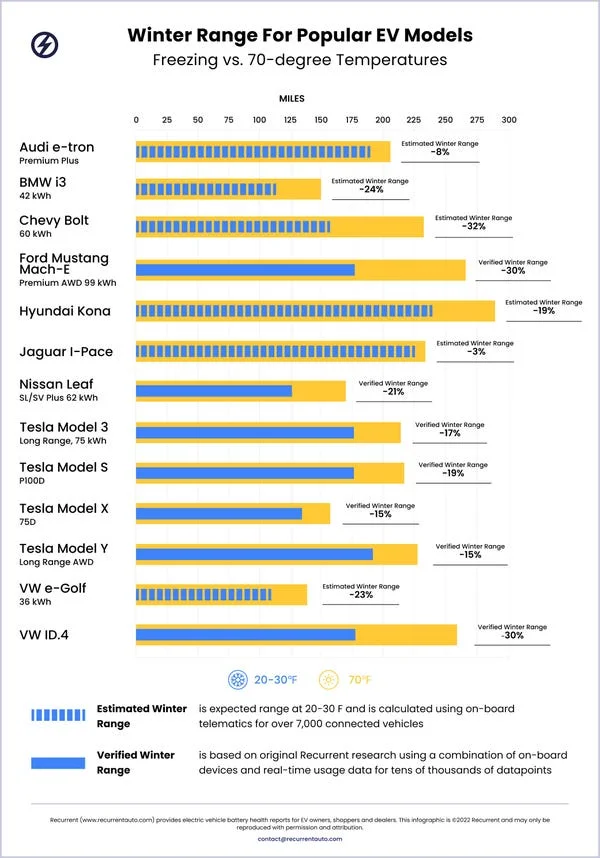
There is a significant difference between the official range that serves as the basis for EV subsidies and the range actually experienced by drivers (measured range). According to an analysis by Recurrent Auto, a US-based EV battery analysis platform, which examined over 10,000 electric vehicles, the average range reduction rate by model in cold winter environments was approximately 30%23.
Looking at the specific range reduction rates by model, the 2021 Volkswagen ID.4 recorded the largest decrease at 46%, followed by the Chevrolet Bolt EV at 42%, and the Hyundai Kona EV and Ford Mustang Mach-E at 34%23. In contrast, the Audi e-tron saw a decrease of only 16%, demonstrating relatively robust winter efficiency23. Tesla models showed range reductions of 24% for the Model Y, 3, and X, and 28% for the Model S, which were relatively good results among the models surveyed23.
However, Recurrent Auto explained that caution is needed in interpreting the analysis, as it did not consider variables such as terrain, driving speed, and battery aging23. The physical causes of this performance degradation are clear. At temperatures below -4 degrees Celsius, the electrolyte inside the battery hardens, increasing resistance to the movement of lithium ions23. Lithium-ion batteries have a temperature-sensitive structure, with differences in efficiency of up to 20% or more depending on the battery temperature management method23.
Comparison of the Impact of Heating and Low Temperatures on Range
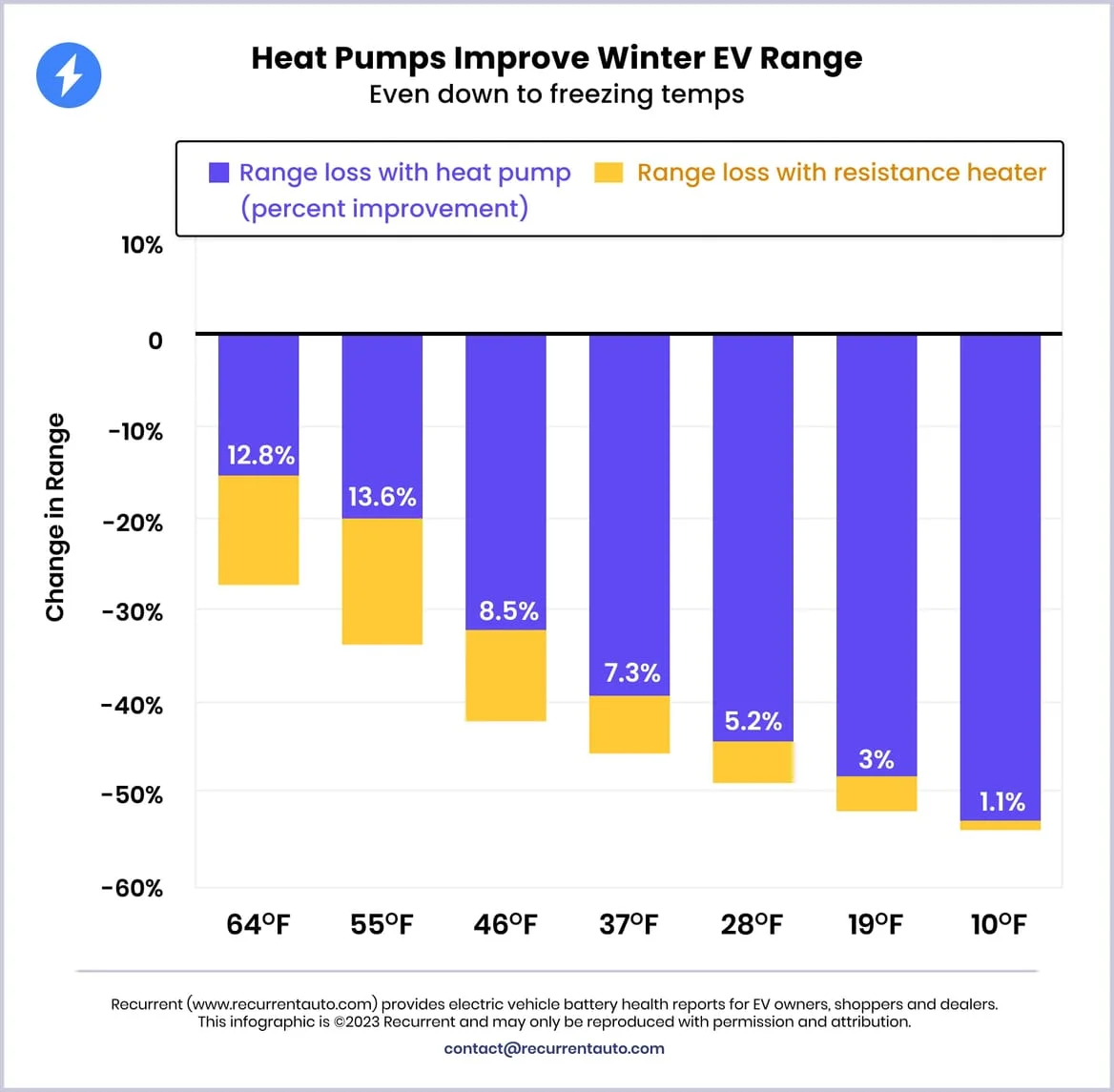
The reduction in winter driving range is closely related to cabin heating power consumption rather than the cold environment itself. In a test conducted by the American Automobile Association (AAA) in 2019 at ambient temperatures of approximately -7 degrees Celsius with climate control in use, vehicles’ driving ranges decreased by an average of approximately 41%4.
On the other hand, data from the US Department of Energy (DOE) indicate that combined fuel economy can decrease by approximately 39% at temperatures around -7 degrees Celsius, but the reduction narrows to about 8% when interior heating is not used4. A comparison of data from the two agencies shows that while cold temperatures themselves reduce battery efficiency, interior heating is the decisive factor in winter energy efficiency losses4. Unlike internal combustion engine vehicles, EVs cannot utilize engine waste heat and must warm the cabin using electric resistance heaters or heat pumps, resulting in additional power consumption4.
Additionally, in cold temperatures, internal chemical reactions in the battery slow down, limiting available output and energy, and regenerative braking intensity may weaken compared to normal conditions4. Repeated short-distance driving creates a structural inefficiency, as the cooled battery and cabin must be reheated after each trip, lowering energy efficiency4. Even a vehicle normally capable of 400 km of driving may see its feasible range shrink to approximately 240–360 km when heating and cold temperatures combine4.
Principles and Precautions of ‘Battery Conditioning’ as Seen in Kia’s Manual
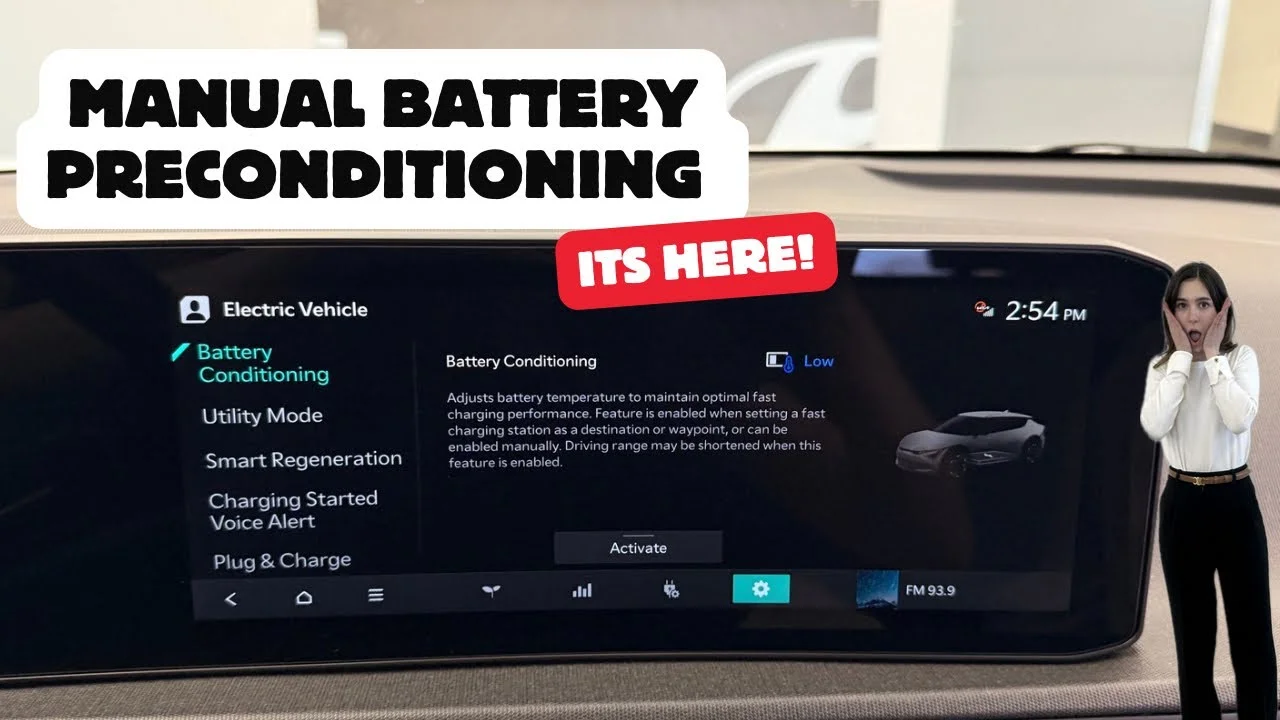
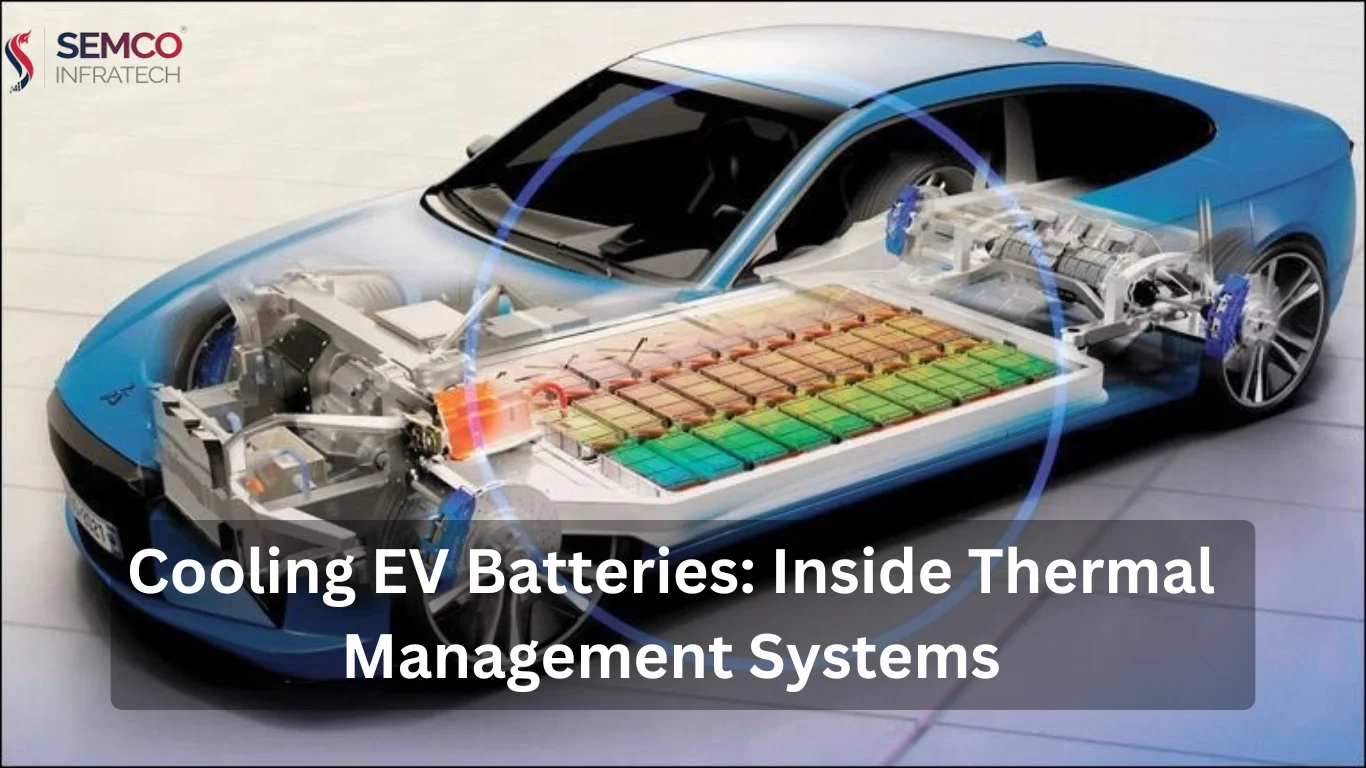
Manufacturers provide battery thermal management features to mitigate these winter performance losses. Kia’s manual-documented ‘Battery Conditioning Mode’ is a representative example for understanding this system. This feature helps maintain the high-voltage battery at an appropriate temperature (room temperature) in extreme ambient conditions, optimizing charging performance5.
Specifically, when a fast-charging station is set as a waypoint or destination in the navigation system, the vehicle pre-optimizes battery temperature according to the required time and route, reducing actual charging wait times5. It can also be activated remotely during parking via smartphone app; in this case, the mode automatically ends once the battery temperature reaches the suitable range or after 30 minutes5.
However, this feature comes with precautions. Because battery conditioning uses the battery’s own energy to adjust temperature, it may shorten the driving range5. Additionally, if the current state of charge is very low, the mode may not operate in order to secure driving distance5. Therefore, when planning fast charging, it is effective to utilize the feature with sufficient margin in battery state.
Practical Winter Management Tips to Enhance Battery Residual Value and Efficiency
To maintain long-term battery health amid subsidy policy changes and seasonal performance degradation, the following practical management practices are necessary.
First, the battery conditioning feature should be appropriately utilized during fast charging or long-distance driving. Using automatic optimization linked with navigation can improve charging efficiency, but it is advisable to operate with margin in range, considering that driving distance decreases by the amount of power consumed while the feature is active5.
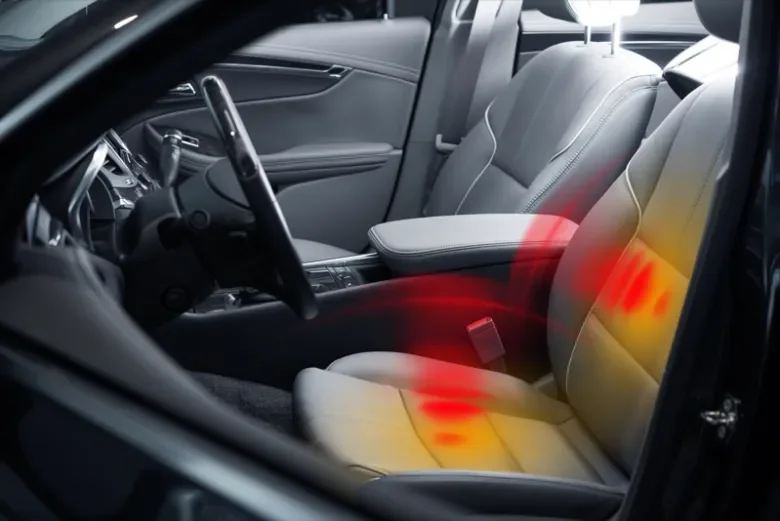
Second, interior heating management practices should be adjusted. As the AAA and DOE data indicate, there is a large difference in range reduction depending on whether heating is used. Therefore, it is advantageous to prioritize the use of comfort heating devices such as seat heaters or steering wheel heaters, regardless of whether the vehicle has a heat pump4. Preheating before departure also helps distribute power consumption4.
Third, repeated short-distance driving should be avoided, and smooth acceleration and deceleration should be maintained. Repeated short trips, which require reheating the cold battery and cabin each time, significantly lower winter energy efficiency4. In addition, winter tires and snowy road surfaces can increase driving resistance, so maintaining smooth acceleration and deceleration is efficient4.
Fourth, rather than judging battery abnormalities from a single dashboard figure, drivers should refer to their own energy efficiency records. Actual driving range varies greatly depending on ambient temperature, presence of a heat pump, wheel size, and driving speed, so recording cumulative and segment efficiency over time is crucial for understanding one’s realistic winter range4.
Integrated Perspective: Harmony Between Policy Changes and Driver Management
The 2026 subsidy policy maintains quantitative indicators such as range and battery efficiency while shifting toward a comprehensive assessment of manufacturers’ ecosystem contributions1. This trend will impose stronger demands on manufacturers for technical completeness, including guaranteed battery performance in cold environments and recyclability.
From the driver’s perspective, it is essential to recognize the possibility of winter range reductions ranging from 30% to as much as 46%, as shown by test results from Recurrent Auto and AAA, rather than complacently relying on official specifications243. This is a physical limitation of lithium-ion batteries rather than a technical defect, so it is important to wisely utilize battery conditioning and control heating power consumption54. Understanding and practicing vehicle thermal management features not only reduces winter driving stress but also serves as a key strategy for preserving vehicle performance and value in the long term.
References
- 중국산 전기차 보조금 개편 두고 옥신각신…”국내 완성차 보호 vs 정책... · ebn.co.kr↩
- 겨울철 전기차 주행거리 반토막.. 충격 진실 밝혀지자 차주들 초비상 · newautopost.co.kr↩
- 겨울철 전기차 주행거리 반토막.. 충격 진실 밝혀지자 차주들 초비상... · view.nate.com↩
- 전기차 겨울 주행거리 감소율은? – JKSNP · jksnp.com↩
- 배터리 컨디셔닝 모드 - Kia Owner's Manual · ownersmanual.kia.com↩