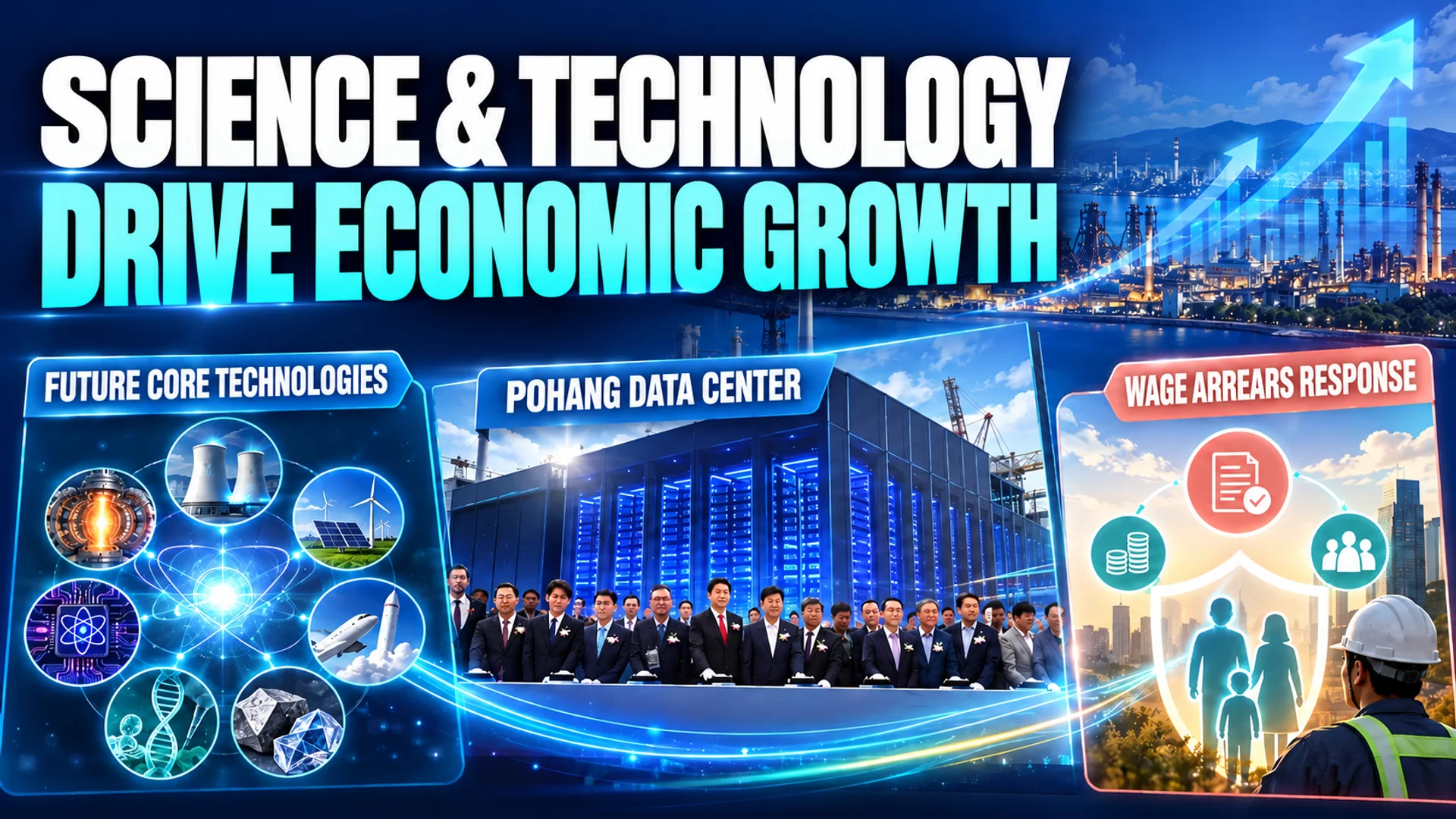
At the joint meeting of the Meeting on Economic Affairs Ministers and the Meeting on Science and Technology Affairs Ministers held at the Government Complex Seoul on October 28, 2026, Deputy Prime Minister and Minister of Economy and Finance Lee Hyung-il emphasized science and technology innovation as the driving force for economic growth 12. Deputy Prime Minister Lee stated, "Science and technology policies and economic and industrial policies must now move as one entity, from fundamental technology R&D through demonstration and commercialization to nurturing new industries," and called for inter-ministerial cooperation to ensure technology development leads to industry and market creation 32. This meeting was the first time the Meeting on Economic Affairs Ministers was held jointly with the Meeting on Science and Technology Affairs Ministers since the latter was launched in November of last year, making it symbolic in that it provided an occasion to discuss both policies in an integrated manner 32.
First Official Joint Meeting on Economic and Science Policies
The meeting that day was co-chaired by Deputy Prime Minister Lee Hyung-il and Deputy Prime Minister and Minister of Science and ICT Bae Kyung-hoon 13. Premising that "the driving force behind Korea's economic growth is science and technology innovation," Deputy Prime Minister Lee Hyung-il stated that the government would concentrate all efforts to mitigate polarization between industries, regions, and generations occurring during the rapid growth process 2. He emphasized that the ultimate goal of growth is the improvement of people's lives 2.
Deputy Prime Minister Bae Kyung-hoon mentioned Korea's recent achievements, including being included in the top-tier 'AI leader' group alongside the United States and China, and ranking first in Asia and fourth globally in the World Innovation Index 32. He emphasized that the national AI transformation must be accelerated and efforts to secure future core technologies intensified through the 7 SEED Projects so that these achievements lead to improved quality of life for citizens 32.
Deputy Prime Minister Lee mentioned the Q3 2026 real GDP growth rate of 1.0%, announced the previous day and exceeding expectations, expressing optimism that Korea had "taken a significant step toward achieving mid-3% growth this year and reaching a per capita national income of $40,000" 2. These macroeconomic indicators demonstrate alignment with the science and technology-based sustainable growth strategy 2.
7 SEED Projects: Linking Research to Industrialization
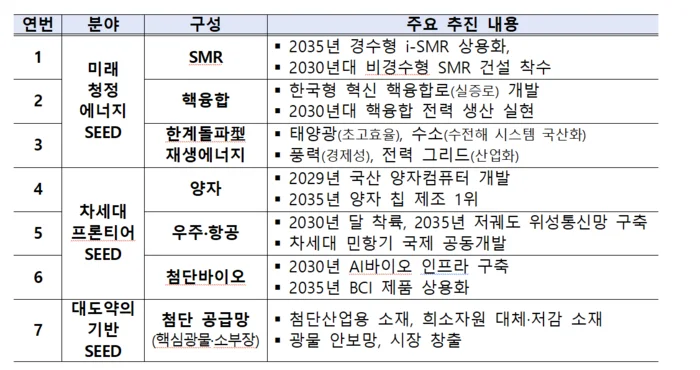
A core aspect of the specific cooperation plans proposed by the government is the direction of promoting the '7 SEED Projects' 32. Announced on August 12, 2026, this project encompasses seven fields: SMR (Small Modular Reactors), nuclear fusion, renewable energy, quantum, space and aviation, advanced bio, and advanced supply chains 4.
To achieve the project-specific core targets set for 2030 and 2035, the government decided to strategically link ministerial projects and investments around 'core missions,' moving away from the previous individual project-centered approach 32. For example, SMR targets commercialization by 2035, while quantum computers aim to secure 100-qubit capabilities by 2029 4.
To achieve these goals, the government decided to establish a public-private joint platform called the 'Frontier Board' 32. This body is responsible for reflecting private sector demand in policy design and resolving regulatory and licensing challenges that may arise in the process from technology development through demonstration and industrialization through inter-ministerial cooperation 32. The government plans to formulate specific implementation plans within this year and launch full-scale projects starting in 2027 3.
Accelerating AI Infrastructure and Digital Administrative Transformation
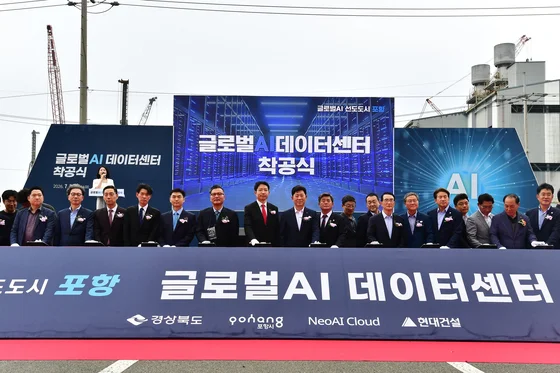
The combination of science and technology and the economy is also materializing in infrastructure construction and administrative system transformation. To revitalize regions, the government is constructing an AI data center worth 600 billion won in Pohang, Gyeongsangbuk-do 3. This project aims for completion in November 2027 and the start of operations in January 2028, with related procedures progressing swiftly 3.
| Category | Key Details | Remarks |
|---|---|---|
| AI Data Center | Construction of 600 billion won facility in Pohang, Gyeongsangbuk-do | Aiming for completion in November 2027 3 |
| Local Administrative AX | Integration of systems for 243 local governments and 16 provincial/metropolitan cloud platforms | Staggered opening from late 2028 to 2029 3 |
| Maritime and Fisheries AX | Construction of physical AI ports and creation of smart fisheries leader zones | Phased application and foundation establishment 3 |
Additionally, the government is promoting the construction of a 'Next-Generation Common Local Administrative System' to integrate administrative systems currently dispersed across 243 local governments into a cloud environment at the scale of 16 provincial and metropolitan units 3. This system, expected to be transformed into an AI and cloud-based platform, will enhance administrative efficiency and establish a foundation for standardized data to be utilized in AI learning and industrial innovation 3. The maritime and fisheries sector is also accelerating AI transformation through the construction of 'physical AI ports' and the creation of smart fisheries innovation leader zones 3.
Parallel Pursuit of Science and Technology-Based Growth and Social Safety Nets
The government emphasizes science and technology as the driving force for economic growth, which manifests as a policy trend strengthening inter-ministerial cooperation. In particular, formulating implementation plans for the 7 SEED Projects and expanding AI infrastructure can be seen as practical preparations for technology to permeate the economic ecosystem 3.
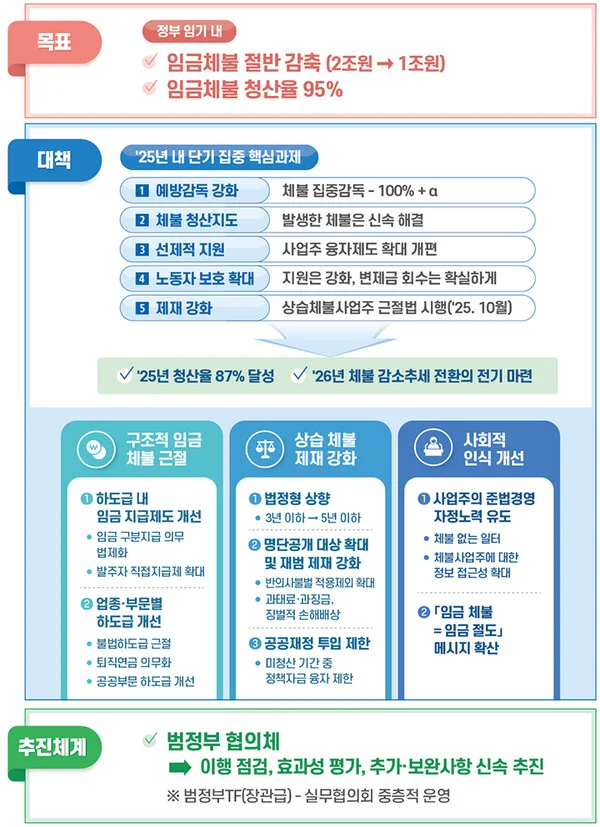
Agendas directly related to the livelihood economy were also discussed at this meeting. The Ministry of Economy and Finance plans to implement a system starting in 2028 that gradually mandates the external provision of retirement benefits, beginning with workplaces employing 100 or more workers, to prevent unpaid retirement payments 32. Measures introduced included introducing fund-type retirement pensions to boost returns through professional asset management and strengthening fiduciary duties to protect workers' rights to receive benefits 32.
The philosophy emphasized by Deputy Prime Minister Lee Hyung-il that "the goal of growth is improving people's lives" is consistently upheld in policies to mitigate polarization and in improvements to retirement pensions 2. By simultaneously pursuing securing growth engines based on science and technology and strengthening the livelihood safety net, the government's policy intent to ensure the fruits of technological innovation lead to stability in citizens' lives is evident 32.
Conclusion: Securing Growth Engines Through Policy Integration
Deputy Prime Minister Lee Hyung-il's remarks and this joint meeting demonstrate that science and technology policy is positioned not as a supplementary tool for economic policy but as an indispensable pillar of the growth strategy 32. Inter-ministerial linkage of the 7 SEED Projects and infrastructure investments such as the Pohang AI data center and the integration of local administrative clouds are the practical embodiments of this vision 3.
The government plans to finalize implementation plans within the year and launch full-scale projects starting in 2027, thereby establishing a system where the entire process from fundamental technology research to new industry creation operates as a single flow 3. Attempts continue to simultaneously achieve sustainable growth and improved quality of life for citizens through tight linkage between science and technology and economic and industrial policies 32.
References
- 연구기관장 간담회 개최 | 보도·참고자료 · mofe.go.kr↩
- 이형일 "성장 목표는 국민 삶 개선…양극화 완화에 역량 집중" | 연합뉴스 · yna.co.kr↩
- 과학기술·경제정책 첫 공동 논의…7대 SEED·AI 전환 범정부 협력 · newsis.com↩
- 정부, '7대 SEED' 추진 방안 발표…SMR·양자·우주 등 미래 먹거리로 · korea.kr↩