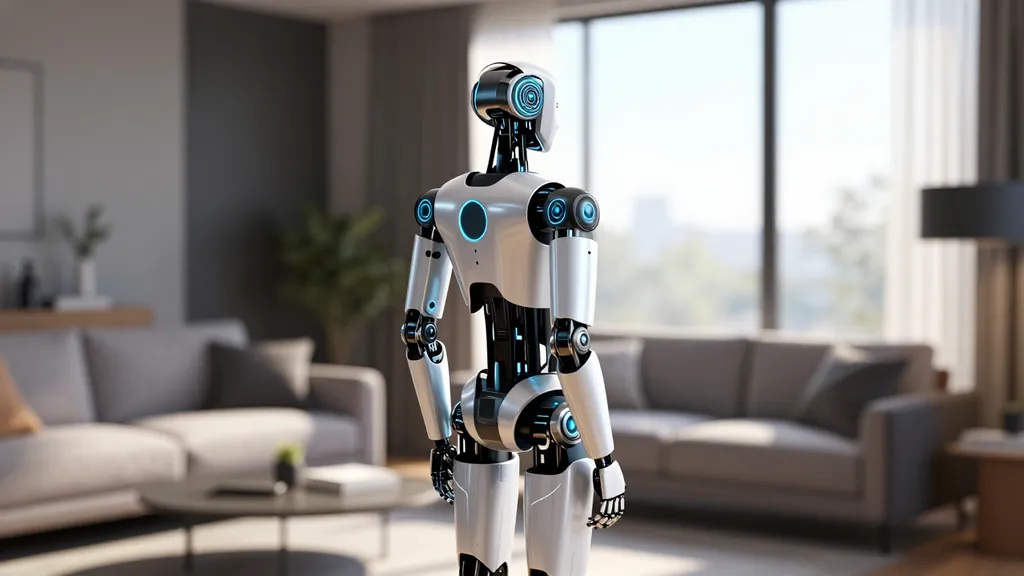
"How convenient would it be if that robot folded my laundry and did the dishes starting tomorrow?"
This kind of imagination is no longer just a story from sci-fi movies. From Tesla's Elon Musk to Hyundai Motor Group, global giants are pouring astronomical amounts of capital into making the grand dream of "humanoid robots" a reality.
However, reality is harsher than expected. While the news is constantly buzzing about the arrival of the robot era, why hasn't the "all-purpose robot butler" that will walk through our front doors appeared yet? Today, we will dive deep into everything from the intense heat of Silicon Valley to Korea's ambitious challenges and the cold technical limitations we face.
1. Why can't we live with robots yet?
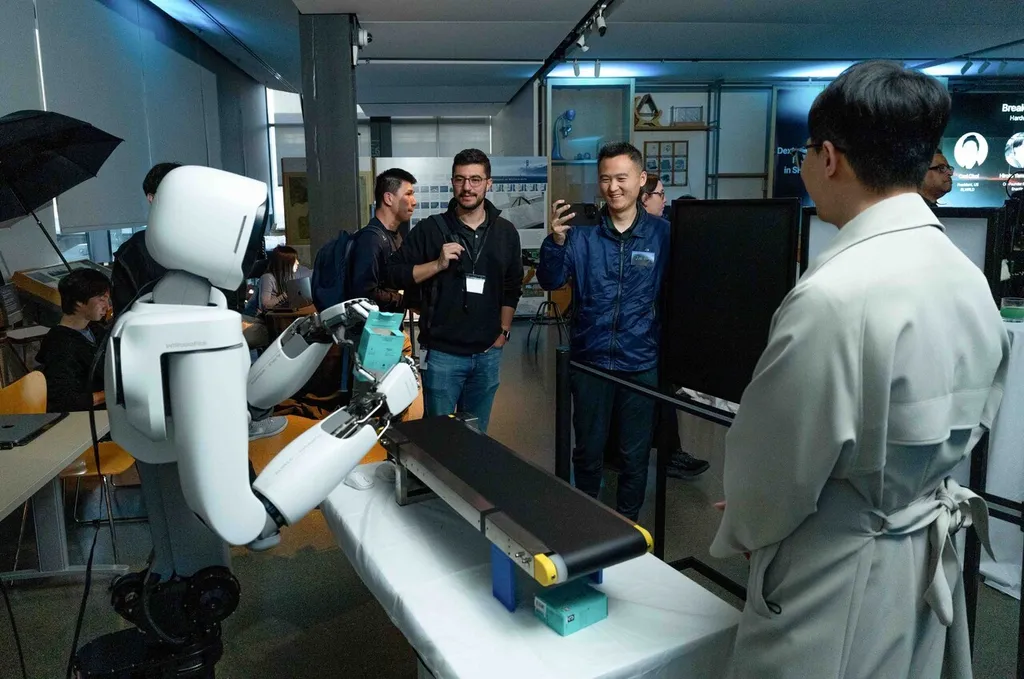
The reason we don't feel the commercialization of robots is not simply because of a "lack of technology." It is because much more complex and fundamental physical barriers exist.
The biggest problem is the decisive difference between the "digital world" and the "physical world." When an artificial intelligence like ChatGPT uses language and provides logical answers, it happens within digital data. However, the world in which robots move is full of unpredictable variables such as gravity, friction, and the slipperiness of objects.
Hanspeter Brondmo, a former head of robotics at Google, sharply points out that "we have not yet reached the 'ChatGPT moment' in the field of hardware." While text data can be generated infinitely, accumulating the "experience data" required for a robot to understand the physical environment is a much more difficult and expensive task.
Furthermore, robots lack the human-specific muscle memory. Just as we can pick up a cup or fold laundry even with our eyes closed, teaching a robot these delicate movements is an extremely arduous process. Current AI may have increased in intelligence, but it remains at the stage of trying to acquire the "sophisticated muscles" needed to translate that intelligence into physical movement.
2. Silicon Valley's 'Big Tech War' and the Two Paths of Technology
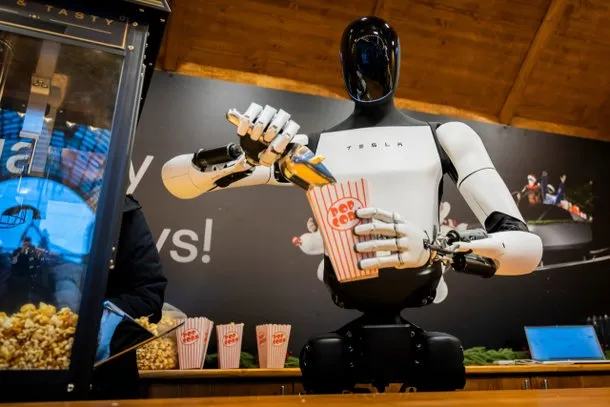
Even amidst these difficulties, Silicon Valley does not stop. Rather, companies with different strategies are clashing to bridge this gap, thereby expanding the market. Currently, the market is divided into two major trends.
The first is the camp pursuing 'extreme performance'. Boston Dynamics' 'Atlas' is a prime example. They focus on how flexibly a robot can move and how complex terrains it can overcome. They aim to perfectly mimic human movement, much like an Olympic gymnast. Their goal is to make robots capable of going anywhere a human can go.
The second is the camp aiming for 'overwhelming cost-effectiveness and scalability'. Tesla's 'Optimus' is the leader of this trend. Tesla is transplanting its experience in mass-producing automobiles into robotics. Rather than complex functions, their goal is to widely distribute robots at a low price in standardized environments like factories or warehouses. Tesla applies the vast visual data obtained from its Full Self-Driving (FSD) technology directly to its robots, dreaming of creating the "smartest yet most affordable robot."
This confrontation between the two camps is not merely a battle of specifications. It is a massive clash of paradigms that will determine whether robots will become "specialized experts" or "mass-produced laborers" in the future.
3. South Korea, Launching a Counterattack with the 'K-Humanoid Alliance'

While the US is racing ahead with software and AI, what strategy is South Korea taking? Very cleverly, Korea is utilizing its strongest weapon: its "Manufacturing DNA."
The government has set an ambitious goal to become a global humanoid powerhouse by 2030 and has launched the 'K-Humanoid Alliance.' About 40 industry-academic-research organizations have joined forces to build an ecosystem ranging from AI models to hardware, semiconductors, and batteries.
In particular, Korea's unique strength lies in its automotive industry technology. The actuators that serve as robot joints are very similar to automobile motor, reducer, and sensor technologies. This is precisely why Hyundai Motor Group has rapidly emerged as a key player in the robot market by acquiring Boston Dynamics. If they apply the know-how of mass-producing cars to robots, they can hold a more advantageous position than any other company in the world in terms of lowering manufacturing costs and standardizing quality.
However, there are homework assignments. Currently, the localization rate of core domestic robot parts remains at around 50%. The fact that we still rely on Japan or China for key components like reducers or motors is a mountain we must overcome to secure "technological sovereignty."
4. The Investor's Perspective: "Focus on companies making parts rather than companies making robots"
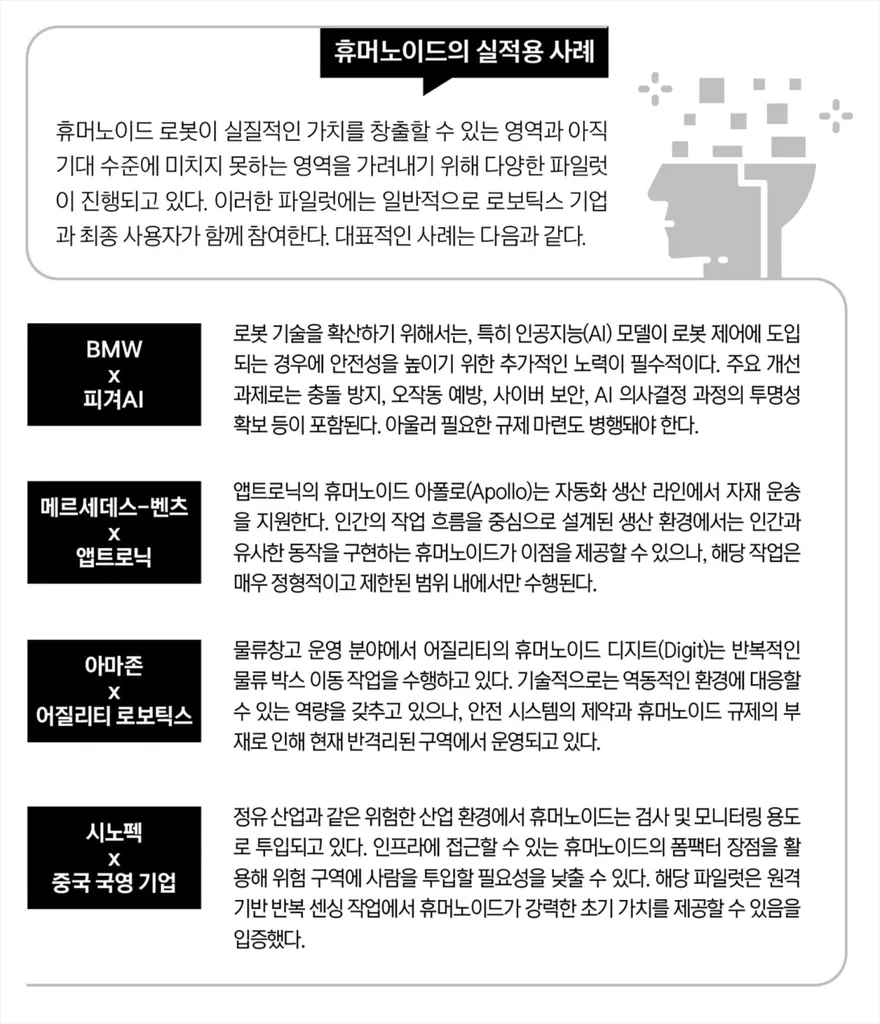
Now, we know robots will enter our lives, but where will the money flow? Investors reading the market trends are already moving.
Experts unanimously agree that the true battlefield of the humanoid industry lies with core component manufacturers rather than finished robot manufacturers. It is the same logic as how display and semiconductor companies were as important as smartphone manufacturers during the smartphone era.
- Advantage of Component Companies: Regardless of the robot's brand, companies that supply the 'skeleton' and 'nervous system' of that robot can generate continuous revenue. Companies with motion controllers for precision control, high-performance sensors, and joint actuators are highly likely to be the true "hidden gems."
- AI Dependency Risk: If a robot manufacturer becomes too deeply dependent on the AI models of big tech companies like OpenAI or Google, they may eventually lose technological leadership and be forced to share their profits. Therefore, the key is to select manufacturers that possess their own AI Stack to ensure technological independence.
Ultimately, investment in the robot industry will go beyond "who makes the coolest robot" to a battle of "who dominates the core infrastructure of this massive ecosystem."
5. Conclusion: Are you ready to coexist with robots?
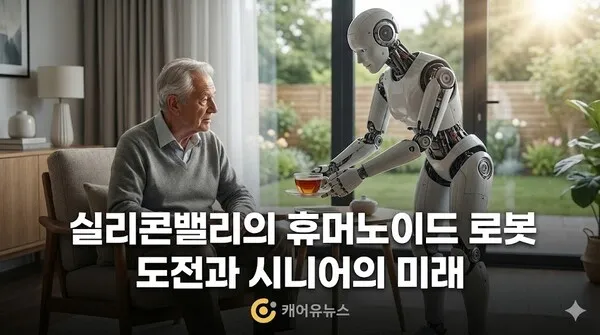
So far, we have explored the vast landscape of humanoid robots, from the technical limitations of Silicon Valley to Korea's manufacturing competitiveness and investment strategies.
To summarize:
- Technical Challenge: Converting AI intelligence into physical movement (muscle memory) is the biggest task.
- Market Structure: Boston Dynamics, focused on performance, and Tesla, focused on cost-effectiveness, are in fierce competition.
- Korea's Strategy: Based on strong automotive manufacturing technology, Korea is focusing on localizing parts and building an ecosystem.
The day a humanoid robot folds laundry in our living room might be further away than we think. However, the era of "industrial humanoids" that carry goods in factories and move boxes in logistics warehouses is already right before our eyes.
Rather than waiting for technology to become perfect, we need an attitude of reading the changing technological trends and considering how to ride those waves.
If robots were commercialized, what is the very first thing you would want them to do for you? Please share your creative ideas in the comments!
References
- 실리콘밸리, '휴머노이드 로봇 시대' 준비 분주… 현실적 장벽은 여전 · careyounews.org
- "韓 2030년 휴머노이드 최강국"…'K-연합' 이끄는 스타트업 어디 · mt.co.kr
- 공장서 일하는 로봇 현실화… 휴머노이드 패권, '제조업 DNA'가 가른다 · electimes.com
- 휴머노이드 상용화 쟁점 한눈에...규제부터 국제 표준까지 논의 場 열린다 · hellot.net
- (로봇) 보스톤다이내믹스 "아틀라스" vs 테슬라 "옵티머스" (feat: AI ... · blog.naver.com
- 2026년 주목해야 할 휴머노이드 로봇 기업 TOP 8 - EVS Robotics · evsint.com
- 자동차 회사의 미래는 로봇, 불붙은 현대차·테슬라 '휴머노이드 전쟁' · mauto.danawa.com
- 휴머노이드 시대 개화 · file.alphasquare.co.kr