"Ah, this game again?"
Just a few years ago, this was the first question I would ask whenever a new mobile game was released. Every day, a flood of MMORPGs with similar designs, advertisements for probability-based items filling the screen, and a focus on trying to solve everything with a single smartphone meant that deep immersion was always an afterthought.
As a gamer, this repetitive pattern felt like wanting to eat a delicious meal but being forced to eat the same convenience store lunch box every single time. However, in 2026, the landscape of gaming that I perceive has changed completely. We have entered an era of "experience," where games are not merely for "killing time" but are gateways to stepping into massive worlds.
Based on this flow of change that I have felt, I would like to talk about the massive restructuring currently taking place in the gaming industry.
The Betrayal of Familiar Flavors, and a New Thirst
For a long time, we were accustomed to a single menu item: "Mobile MMORPGs." This was also the secret behind the massive profits earned by domestic game companies. However, in 2026, signals are appearing everywhere that this golden age has come to an end.
The data makes it clear. While the growth rate of the mobile market has slowed down to the 2% range, the PC market is showing a steep growth of 3.9%, and the console market is surging at a staggering 8.2%. This is evidence that gamers' tastes have changed. Instead of watching numbers go up on a small smartphone screen, there is an exploding thirst for "real games" that allow players to enjoy overwhelming graphics and immersion through high-spec PCs and consoles.
I used to mainly enjoy mobile games during my commute, but these days, I find greater happiness sitting in front of a console every weekend to explore open worlds. The desire to feel the very air of that world, rather than just leveling up a character, is surely not mine alone.
Now, mobile has become "part" of the puzzle for game companies, rather than "the whole." They have realized that clinging to a single platform is no different from building a fortress around themselves and becoming isolated.
The Counterattack of 'Cross-Platform' Breaking Down Platform Walls

How, then, are game companies responding to this change? The answer lies in Cross-platform. In the past, the distinction was clear: "This game is for mobile," or "This is console-only." But now, those boundaries are becoming meaningless.
A "seamless" experience—enjoying high-spec graphics on a console at home and continuing the play on a smartphone when heading out—has now become a standard requirement. Advancements in technologies like Unity and Unreal Engine are providing the technical backbone for this mobility.
A particularly noteworthy point is the counterattack against the monopolistic positions of giant platforms like Google and Apple. The high commission fees (30%) of app stores have been a chronic problem eroding the profitability of game companies. However, it is very interesting to see recent moves by game companies to reduce this fee burden by introducing proprietary payment systems. This is more than just greed to earn more money; it is a survival strategy to escape the dominance of platforms and build independent ecosystems.
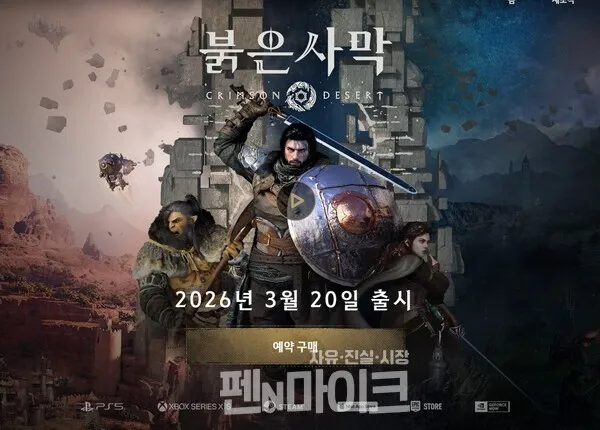
The moves made by domestic companies are also remarkable. Nexon is already achieving overwhelming results with a multi-platform strategy targeting the global market, and Krafton is also betting its life on expanding new IPs like "Palworld Mobile," breaking out of the single framework of "PUBG." The reason highly anticipated titles like Pearl Abyss's "Crimson Desert" excite gamers worldwide also lies in this platform diversification and technological prowess.
Infinite Worlds Created by AI: The Evolution of Open Worlds
Taking it one step further, where does the "freedom" we most expect from games come from? It comes from the meeting of Open Worlds and the Generative AI that supports them.
The global open-world game market is expected to grow to approximately 54.6 billion by 2034. Why is it growing like this? It is because of the sense of liberation that comes from being able to "do whatever I want."
However, it is physically near-impossible for humans to manually create every detail of a massive open world. This is where Generative AI enters as a relief pitcher. Currently, about 20% of new domestic titles are applying AI, and soon, AI will handle more than half of the development process.
AI does not stop at merely drawing backgrounds.
- Intelligent NPCs: Instead of puppets that only repeat fixed lines, AI creates characters that respond to player actions and seem to think for themselves.
- Autonomously Generated Content: Everywhere a player steps, AI creates terrain and ecosystems in real-time, providing a new adventure every time.
Thanks to these technologies, the lifespan of a game is dramatically extended. In the past, games would quickly become boring without updates, but now they are constantly changing like living, breathing organisms alongside AI. This is making the dream of an "endless adventure" a reality for gamers.
In Summary, Games Have Become an 'Experience' Beyond a 'Platform'
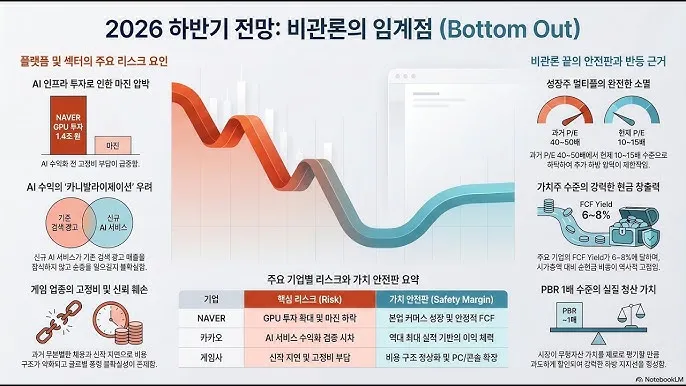
The 2026 gaming market we have looked at so far can be defined in one sentence: "The era of growth is over; the era of structural reorganization has arrived."
The era of blindly churning out many games has passed. Instead, games with the following three core pillars will survive:
- Multi-platform: Can it break the boundaries between mobile, PC, and console to be enjoyed anywhere?
- Strong IP and Open World: Does it have an original worldview and freedom that fascinates players?
- AI-based technological prowess: How much of an immersive and intelligent environment can it provide through Generative AI?
Domestic game companies are also at an inflection point, attempting to move away from the past glory of "probability-based items" and re-emerge as a true gaming powerhouse evaluated in the global market by their technological prowess and gameplay quality.
Now it is your turn. Instead of simply following the games others play, are you ready to explore your own world?
What kind of 'world' have you been most immersed in lately? Please share your life-changing games in the comments!
References
- [2026년 산업별 전망-게임] '멀티 플랫폼·IP 확대'로 구조 재편 본격화 · news.einfomax.co.kr
- 2026년 주요 게임 개발 트렌드: 기업이 알아야 할 사항 - LinkedIn · kr.linkedin.com
- [2026 게임 전망(上)] "성장의 시대는 끝났다"…게임업계, '새판짜기' 집중 · youthdaily.co.kr
- 2026년 정조준한 게임사들…장르와 플랫폼 다각화 - Daum · v.daum.net
- 오픈월드 게임 시장 규모 및 동향 | CAGR 8.5% · businessresearchinsights.com