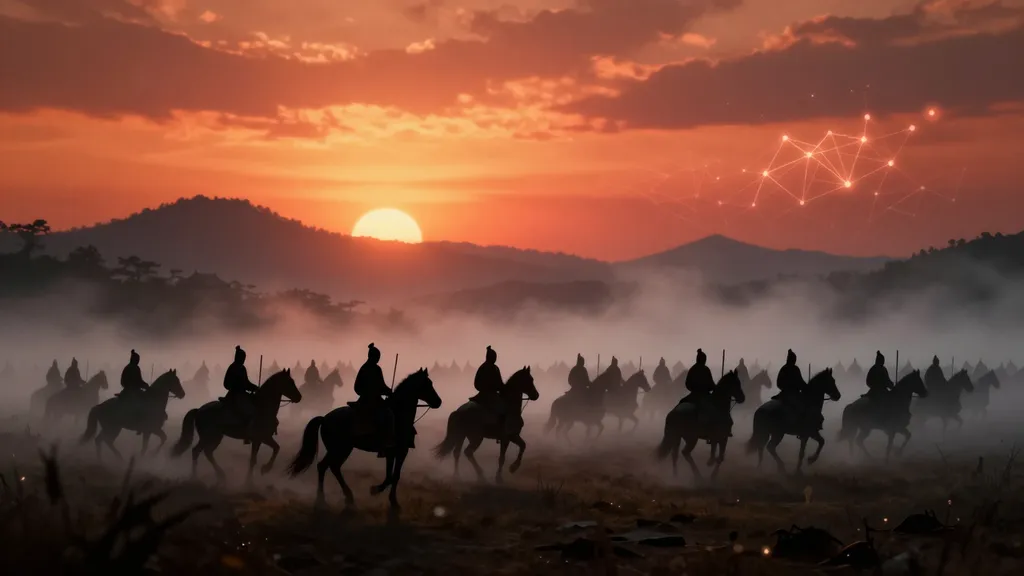
"If Gwanggaeto the Great of Goguryeo possessed modern data analysis technology, how would his victories have changed?"
This is an imagination that history lovers or strategic gamers might have entertained at least once. However, in 2026, this imagination is no longer mere fantasy. This is because we have entered an era where Artificial Intelligence (AI) learns from vast historical records and simulates new warfare scenarios based on them.
As AI technology has advanced leaps and bounds recently, we have moved beyond simply conversing with chatbots to a stage where we can reinterpret warfare strategies from thousands of years ago and even utilize them in future military education. But how should we handle this powerful tool? Should we simply trust the results produced by AI?
Today, through the lens of AI, we will re-examine the dynamic military history of the Three Kingdoms period and delve deeply into the strategic innovations brought by technology and the hidden risks behind them.
Why do we look back at past wars through AI?
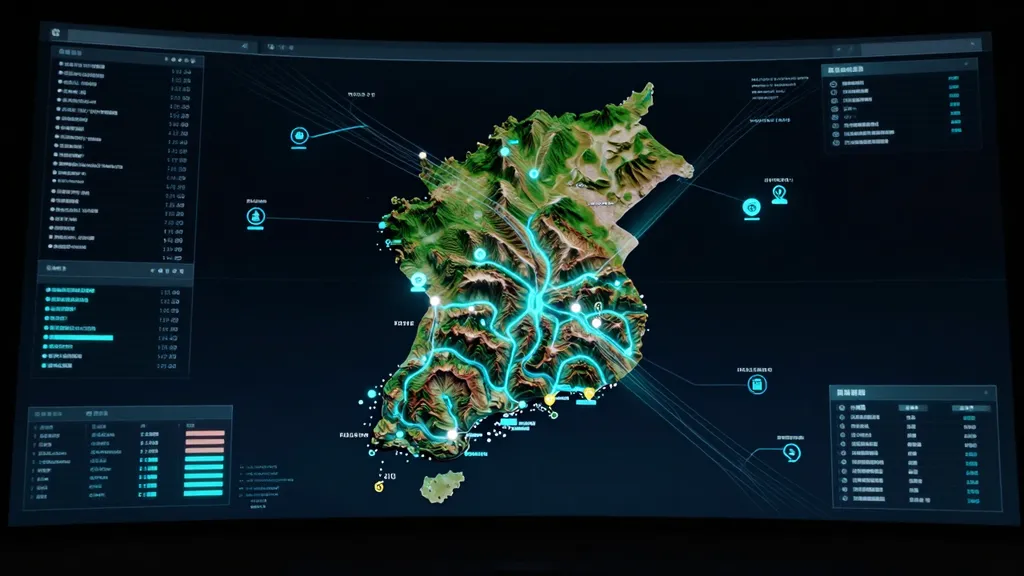
The reason we attempt to analyze the wars of the Three Kingdoms period with AI is clear: it is because of "data complexity" and "pattern discovery." The Three Kingdoms period was the most intense era of competition in the history of the Korean Peninsula. The military power of Goguryeo, Baekje, and Silla was not merely a difference in the number of soldiers, but a complex equation involving mobility using terrain, proficiency in iron technology, and the unique diplomatic strategies of each nation.
While past historians parsed through documents one by one to grasp context, 2026 AI finds invisible patterns within tens of thousands of pages of classical texts. For example, it can quantitatively analyze which cavalry tactics had a higher win rate in specific terrains or how supply lines were cut during certain seasons.
However, a problem arises here. Why should we use this expensive technology for historical research? Is it simply for "fun"? No. It is to understand the process of Co-evolution, where weapons and strategies influence each other and evolve together. By recreating the dynamics—such as how the distribution of iron in the Three Kingdoms period led to changes in large-scale maneuver tactics—through AI simulations, we can even catch a glimpse of modern strategies for responding to asymmetric forces.
The perfect victory envisioned by AI: Sweet traps and hallucinations

The optimal strategies proposed by AI are very seductive. Advanced game strategy AIs like the recently emerged Jenova, or military strategy systems trained on historical battle data, seem as if they possess the eyes of a god. They calculate millions of possibilities and produce conclusions like, "Performing a flank maneuver at this point increases the win rate by 15%."
However, we must remain sober. If we understand the operating principles of AI, we realize how dangerous it is to trust its conclusions unconditionally.
First, generative AI is essentially a prediction machine based on statistical probability. AI does not "understand" the narrative of the Romance of the Three Kingdoms; rather, it combines words that have the highest probability of coming next. The fatal problem arising from this is the "Hallucination" phenomenon. When reading classical literature where historical facts and literary fiction are intertwined, AI runs the risk of creating non-existent battles or completely distorting the psychology of specific historical figures.
Second, there is the loss of historical context. War is not merely a battle of numbers. "Nuances"—such as the cultural background of the time, the psychological tension between monarchs and generals, and unexpected weather changes—decide victory or defeat. The mechanical calculations of AI can lead to such a distortion of historical context. This is precisely why, even with the technology of 2026, AI cannot 100% replace human intuition and literary insight.
Three key steps to completing AI strategic simulation
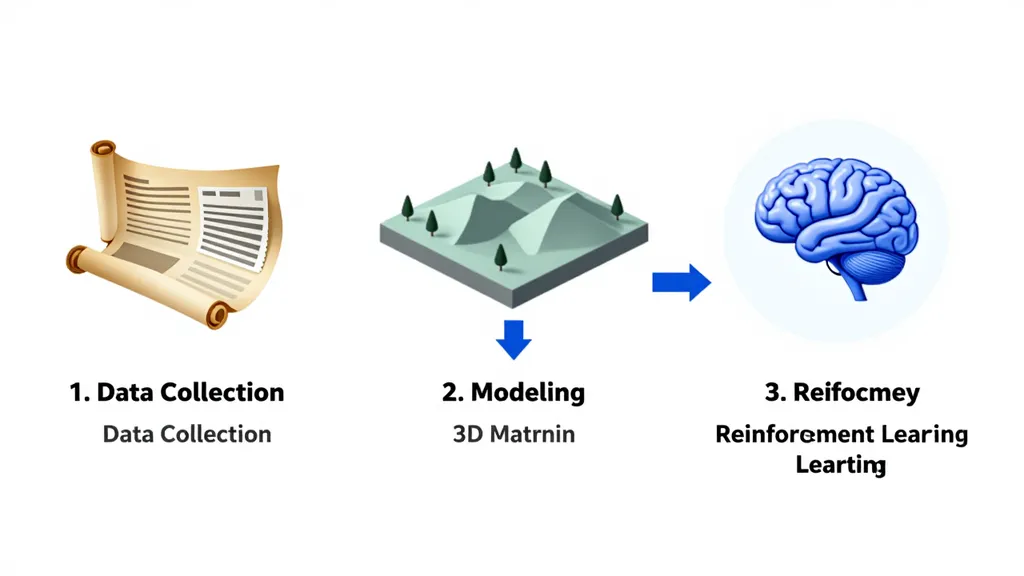
Then, how should we utilize AI so that we can use it as a useful strategic tool without falling into "hallucinations"? Cutting-edge AI strategic systems currently under development are evolving through the following systematic steps:
Step 1: Multidimensional Data Collection and Pre-processing It is not enough to simply input battle records. Everything from classical texts like The Art of War to data regarding the politics, economy, terrain, and climate of that era is combined. If analyzing the wars of the Three Kingdoms, data on the rugged mountainous terrain of the Korean Peninsula becomes an essential prerequisite.
Step 2: Combining Supervised and Reinforcement Learning Through Supervised Learning based on past successes and failures, the AI learns basic tactical patterns (encirclement, ambush, etc.). Afterward, it is trained through Reinforcement Learning, which forces it to fight against virtual enemies constantly, so that the AI can make better decisions on its own. Game theory is also integrated to develop the ability to predict the opponent's intentions.
Step 3: Expert Critical Review (Human-in-the-loop) This is the most important step. The outputs produced by AI must undergo verification by historians and military strategists. Only when a complementary relationship is established—where AI's computational power meets human critical thinking—does AI move beyond a simple calculator to become a true strategic partner.
Conclusion: Technology is merely a tool; humans are the masters of strategy

So far, we have looked at how AI is re-illuminating the warfare strategies of the Three Kingdoms period and what possibilities and limitations it possesses in the process.
AI demonstrates excellent capabilities in analyzing vast amounts of data and performing complex simulations. However, the insight to pierce through historical context and the critical thinking to discern the truth beyond the data remain firmly in the human domain. As technology advances, we are paradoxically required to engage in deeper humanistic thinking.
Ultimately, AI is a "bright lantern" that shows past wars more clearly, but it cannot be the "map" itself that dictates the path we must walk.
Would you trust a scenario of a "perfect victory" proposed by AI, or would you trust an imperfect strategy infused with human intuition?
I am curious to hear your thoughts. Please share your opinions in the comments!
References
- 생성형 인공지능을 활용한 <삼국지> 연구의 가능성과 한계 · kci.go.kr
- 『무기와 전략의 공진화: 한국 군사력 2000년의 진화』 : 네이버 블로그 · blog.naver.com
- 게임 전략 AI: 인공지능으로 모든 게임 마스터하기 (2026년 5월) · jenova.ai
- [인공지능 줌인] “생성형 AI의 활용으로 변화하는 전쟁 게임”...군사 전략 ... · wikileaks-kr.org
- 전쟁에서 전략을 세울 수 있는 AI 시스템을 개발하는 중입니다. - LinkedIn · kr.linkedin.com