
To you, reading this right now: are you perhaps scrolling aimlessly, relying on the blue light of your laptop amidst the silence of 3 AM?
In your head, a scream erupts: "Ah, I really need to do this..." yet your fingers move toward new news articles or social media feeds as if drawn by a magnet. The deadline approaches like a sharp blade, so why do we let time slip away so helplessly and torture ourselves like this?
Do not blame yourself, thinking it is simply a lack of willpower. Behind this painful 'procrastination' you are experiencing lies a sophisticated psychological mechanism and the meticulous design of modern technology. Today, instead of the cliché advice to "just have more willpower," we aim to delve into the true causes identified by psychology and data, along with in-depth solutions from experts.
Why Your Willpower Isn't the Problem: The Sophisticated Shield of 'Perfectionism'
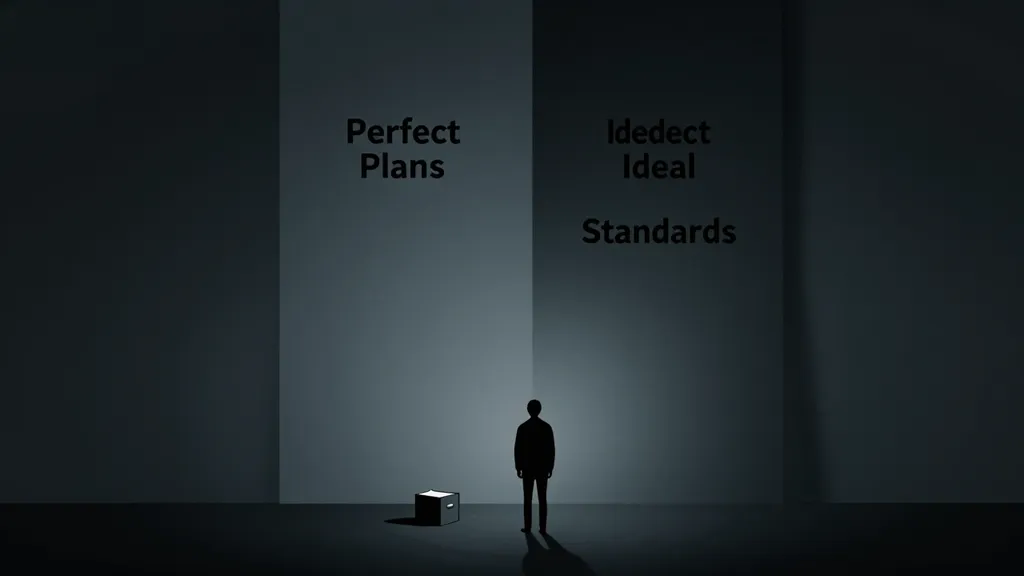
We often equate procrastination with 'laziness.' However, from a psychological perspective, this is a completely different story. In particular, if you harbor the mindset of "If I can't do it right, I'd rather not start at all," you are likely not lazy, but rather trapped in a state of Perfectionistic Concerns.
According to research from the Yonsei University Counseling Psychology Lab, perfectionism has two faces: 'adaptive perfectionism,' which pursues growth, and 'maladaptive perfectionism,' which fears failure. The reason we surf the web when facing a deadline is due to the latter.
Because the shame of failure, negative evaluations from others, and disappointment in oneself are so terrifying, our brains choose a strategy of avoiding the 'start' itself. In other words, web surfing is not mere amusement, but a psychological shield constructed to protect oneself from the massive fear of failure. According to psychological insights as of 2026, this is an avoidance response caused by the 'Fear of Failure,' which ultimately results in a fatal consequence: slowing down execution speed by an average of 37%.
In the end, the YouTube video you are watching right now might not be because of 'fun,' but rather a result of an unconscious escape: "I'd rather deny this moment than fail to do it perfectly."
The Dopamine Trap: The Sophisticated 'Escape Route' Designed by Algorithms
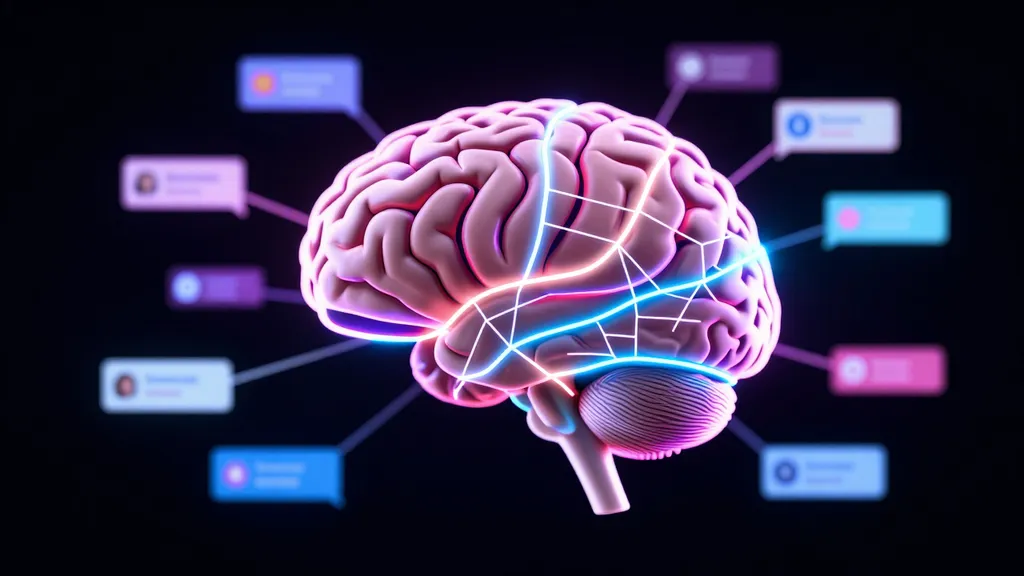
While psychological factors explain 'why' we want to escape, technological factors explain 'how' that escape is made so easy and alluring.
While we surf the web, a neurotransmitter called Dopamine is incessantly released in the brain. Every time we discover new information or scroll through an endless 'infinite scroll,' the brain receives an immediate reward. The problem is that the 'real work' we need to do offers very slow and uncertain rewards. From the brain's perspective, web surfing is the 'ultimate cost-effective dopamine party.'
According to the latest research in 2025, unconscious web surfing during work is not mere rest. The moment you encounter information on a different topic, it takes an average of 20 minutes to return to a state of 'Flow' in your original task. According to reports from global IT companies, modern workers engage in unconscious web browsing more than 9 times a day on average, wasting more than 30% of their total working time because of it.
What is even scarier is that algorithms in 2026 have become far more sophisticated than in the past. An algorithm that pierces through your tastes will present the 'sweetest temptation' right before your eyes the moment you lose focus, even for a second. This is not a battle against individual willpower, but a battle against supercomputers that have hacked human psychology.
Solutions 'Beyond Willpower' Proposed by Experts

How, then, can we win this massive battle? The common advice to "stay away from your smartphone" is already too familiar and often useless in real-world situations. Experts emphasize a strategic approach of designing the environment and building psychological barriers.
1. Psychological Barriers: Utilizing 'Behavioral Correction Tools'
You must supplement the points where your willpower weakens with technology. Evolving from methods used by developers in the past, modern tools focus on blocking the user's 'self-compassion.' For example, some Chrome extensions have a feature where, once you use up your allotted time for a website, you must type a very long sentence just to change the settings. This is a very clever way to control behavior by utilizing 'annoyance' instead of 'willpower,' by making you think, "Ugh, should I just change the settings and do a little more?"
2. 'Imperfect Execution' to Deconstruct Perfectionism
Psychologists recommend adopting the attitude that "Done is better than perfect." Do not hide behind the shield of perfectionism. Instead, practice the highly advanced skill of 'doing it roughly.' This does not mean simply doing a sloppy job. To reduce the fear of failure, you lower the barrier to entry by letting go of the greed to produce a perfect result from the start and instead adopting the mindset of 'just building the skeleton first.'
3. Environment Design and Digital Detox
According to Technology-Based Intervention (TBI) strategies, 'visualizing usage patterns' is more effective than simply blocking apps. Merely checking the data of how much time you spent web surfing today increases self-awareness, which improves autonomous regulation abilities. Furthermore, 'physical isolation'—such as physically placing your smartphone in another room or blocking internet access during work hours—is a necessity, not an option.
Now, It Is Time to Stop Scrolling and Write the First Sentence

Up to this point, we have looked at the psychological and technological traps behind why we suffer while surfing the web until dawn.
You are not a lazy person. You are simply in the middle of an intense battle between your fear of failure and the temptation of dopamine. The key to solving the problem is not squeezing out more willpower, but rather acknowledging the perfectionism that plagues you and designing an environment that acts on behalf of your willpower.
To summarize today's conclusion:
- Procrastination is not laziness, but a psychological defense mechanism to avoid failure.
- Web surfing is a dopamine swamp designed by algorithms.
- The solution lies not in a perfect plan, but in the 'art of execution'—starting even if it is imperfect.
Now, cherish the last bit of dopamine you used to read this article. And how about writing just one sentence toward your laptop screen, or toward a blank piece of paper? It's okay if it isn't perfect. Just starting—that is the only way to lead your night to victory.
What is the 'procrastination habit' that is holding you back the most right now? Share it in the comments and let's overcome it together.
References
- [조언 필요] 일해야 하는데 웹 서핑이나 하고 있음. : r/getdisciplined · reddit.com
- 인터넷 웹서핑 시간 낭비 막는 5가지 방법 - 네이버 블로그 · m.blog.naver.com
- 웹 서핑 하다 일하는 시간 다 까먹고 맨날 야근하는 사람을 위한 크롬 ... · yjacket.tistory.com
- 일과 중 무의식적 웹서핑이 업무 성과에 미치는 영향 - 나아가기 · wndkekt.com
- Perfectionism and procrastination - 연세 상담심리연구실 · yonseicounselinglab.com
- 완벽주의는 가장 세련된 미루기다:실패공포 - 브런치 · brunch.co.kr
- 디지털 디톡스를 위한 기술 기반 개입 전략의 체계적 고찰 · kci.go.kr