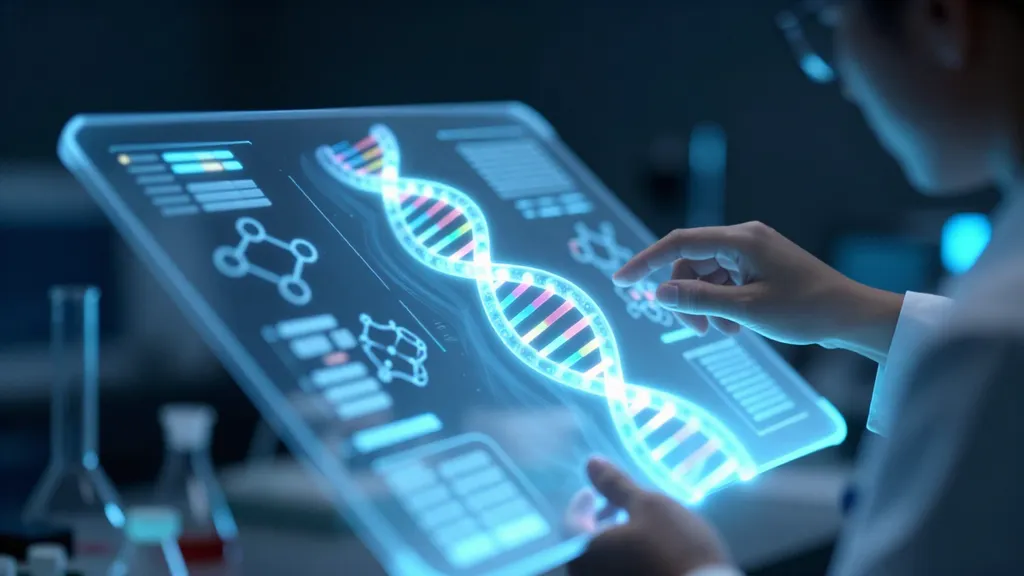
As of 2026, the paradigm of drug discovery has shifted completely from 'discovery' to 'design'. In the past, researchers waited to find candidate substances by luck while testing tens of thousands of compounds one by one; now, machine learning predicts protein structures and directly designs optimal drug combinations.
It is not merely a matter of increased speed. AI is demonstrating the potential to raise the success rate of Phase 1 clinical trials from the existing 50% range to over 80%, which is changing the very economic logic of the pharmaceutical industry. We are currently standing in the middle of a massive battlefield where 'K-Bio', equipped with the powerful engine of AI, clashes with global Big Pharma.
The Bubble Bursts, Revealing True Capability: The Cold Reality and Expectations of AI Drug Discovery

For the past few years, we were immersed in a rosy illusion that AI would solve everything. However, the experiences up until the end of 2025 left us with a cold lesson. According to research from MIT, 95% of the generative AI pilot projects pursued by companies at that time failed to lead to actual business results.
Why was this the case? The reason was simple. It wasn't because the model performance was lacking, but because the readiness of data and integration with existing work processes were not properly established. Simply bringing in a "smart AI model" does not result in the creation of a new drug.
The trend of 2026 has now shifted from a 'competition of model performance' to a 'competition of system integration'. We have begun to treat AI not as a simple tool, but as the laboratory infrastructure itself. Data engineering, workflow automation, and 'governance' regarding how to validate the outputs produced by AI have become the core keywords.
Now, the market does not invest based on model leaderboards, but on how stable and auditable those systems are. In other words, we have entered the stage of 'digital infrastructure' where AI flows like the blood vessels of a laboratory, connecting data and experiments in real-time.
The Final Test: Phase 3 Clinical Trials—Can AI Truly Succeed?
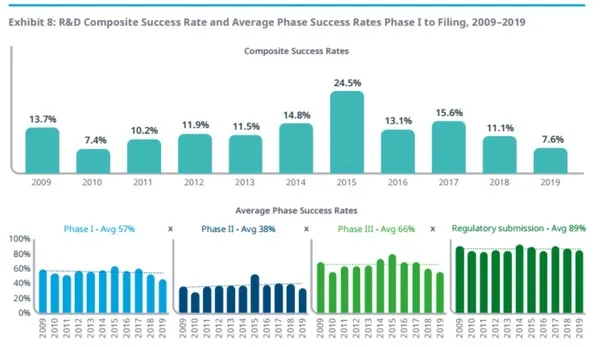
Many people ask, "I know AI finds candidate substances quickly, but can it actually create a drug that cures diseases?" The answer to this question depends entirely on the Phase 3 clinical trial data currently being generated in 2026.
We are witnessing a historic moment where drugs designed by AI are stepping onto the massive testing ground of large-scale clinical trials. 2026 is a decisive inflection point where the AI drug discovery industry will either prove that the investments of the last decade were correct or face a complete readjustment of expectations.
There is one important fact to note here. It is true that AI has increased the efficiency of the early stage (Discovery) by 30–40% and reduced the candidate development period from the traditional 3–4 years to just about one year. However, this does not immediately translate to a reduction in the overall drug development timeline.
This is because the clinical trial process, regulatory reviews, and the scaling of manufacturing processes for mass production still require physical time and rigorous procedures. Therefore, the key observation point for 2026 is focused on "whether AI can increase the clinical success rate itself to reduce the cost of failure." If AI-designed drugs prove to have efficacy equal to or higher than conventional methods in Phase 3, the landscape of the pharmaceutical industry will be completely overturned.
The Evolution of Regulation: FDA and EMA Join Forces
When technology moves forward, regulation inevitably follows. As of 2026, the US FDA and the European EMA are setting global standards by announcing joint guidelines to manage AI drug discovery.
The core of these guidelines is not 'unconditional regulation' but 'securing reliability based on risk'. In particular, for AI models that directly impact patient safety or product quality, they demand highly stringent traceability and verification structures.
An interesting concept emerges here: the 'Digital Cell'. While in the past we relied on individual biological experimental results, there is now a discussion about recreating biological systems digitally to generate evidence through computer modeling. This is expected to be utilized as a new scientific basis that can replace or reduce animal testing.
Movements at the government level are also intense. The South Korean government has selected AI Bio as a key national strategic sector and is building an AI-based drug review system by deploying over 300 specialists to the Ministry of Food and Drug Safety. This strategy is not about lowering the regulatory threshold, but about increasing the accuracy and speed of regulation to accelerate innovation.
Market Restructuring: The Combination of Massive Capital and AI
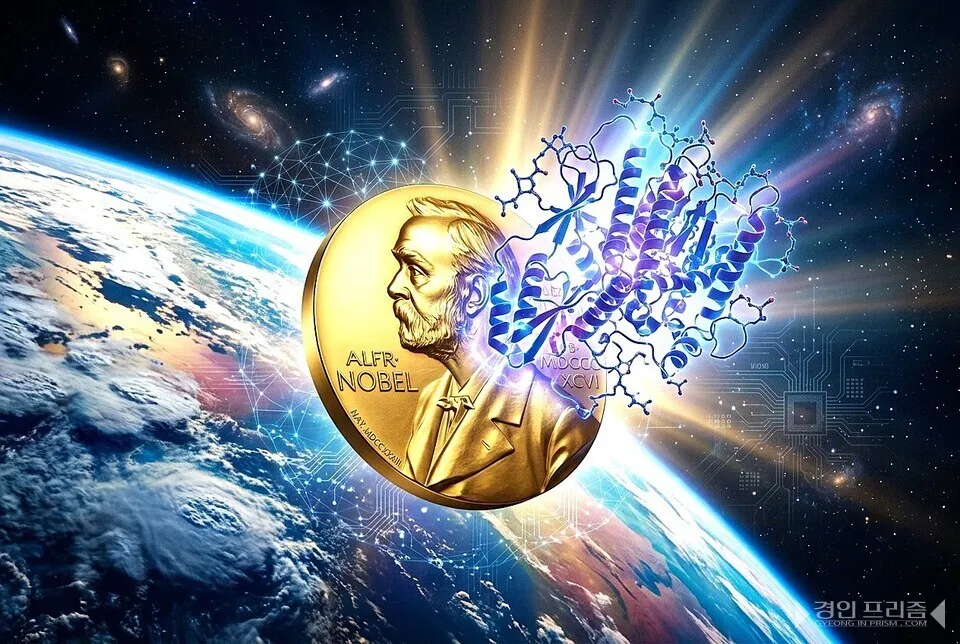
You can see the future by looking at the flow of money. The bio market of 2026 is experiencing extreme polarization. The frenetic investment up until 2025 has subsided, and the market is now being restructured around companies with actual technological prowess. While startups lacking capital are facing pressure to restructure, M&A activities are active, with companies possessing strong technology being acquired by Big Pharma.
The direction of global companies makes this trend clear:
- Eli Lilly is partnering with NVIDIA to build the most powerful AI supercomputer in the history of the pharmaceutical industry.
- AstraZeneca has strengthened its oncology pipeline by acquiring the AI specialist company, Modella AI.
This means that 'collaboration' is no longer an option but has become a 'mandatory strategy for survival'. This 'strategic alliance'—where pharmaceutical companies provide vast clinical data and expertise, and AI companies provide advanced algorithms—is the core model driving the 2026 market.
Conclusion: The Future We Will Face

AI Bio in 2026 goes beyond mere technological advancement; it is providing answers to the collective human challenge of an aging population. From the efficiency of drug development to the precision treatment of brain diseases and research into reverse aging (Epi-aging), AI is fundamentally changing our quality of life.
To summarize what we have looked at today:
- AI drug discovery has moved beyond simple modeling into the stage of data infrastructure and system integration.
- Phase 3 clinical trial results will be the decisive test to prove the true value of AI technology.
- Global regulatory standardization, led by the FDA and EMA, is balancing innovation and safety.
Ultimately, 2026 will be the year when AI rises from a 'supporting role' to a 'leading role' in drug development. The quality of data and clinical effectiveness hidden behind the brilliance of technology will determine the winners of the next decade.
When do you think the day will come when drugs developed by AI become as commonplace as the food on our dining tables?
Please share your thoughts in the comments!
References
- AI in Biotech: 2026 Drug Discovery Trends - Ardigen · ardigen.com
- AI in drug discovery: predictions for 2026 - Drug Target Review · drugtargetreview.com
- 2026 AI 바이오 유망 분야별(신약개발·뇌/역노화·의료기기 · blog.naver.com
- AI 바이오 국가전략 마련..신약개발 등 5대 핵심분야 선정 - Naver Blog · blog.naver.com
- 2034년까지 인공지능을 활용한 신약 개발 시장 규모 및 점유율 · straitsresearch.com
- FDA and EMA release collaborative AI framework for drug ... · clinicaltrialsarena.com
- EMA and FDA issue joint AI guidance for medicine development · europeanpharmaceuticalreview.com