
"Please teach me how to write good prompts." Only one or two years ago, this was the most common question asked by job seekers and junior professionals.
However, in 2026, this question sounds somewhat outdated. This is because AI has evolved beyond being a mere 'assistant' that provides answers upon command into an 'Agent' that can plan autonomously and use tools.
We have entered an era where the skill of simply creating good commands (Prompt Engineering) is no longer enough to provide a differentiated competitive advantage. Today, I want to talk to you about the key keyword shifting the landscape of the 2026 career market: AI Leadership, and the new job-seeking strategies based on it.
1. Changes Proven by Numbers: AI is not a tool, but a 'Teammate'
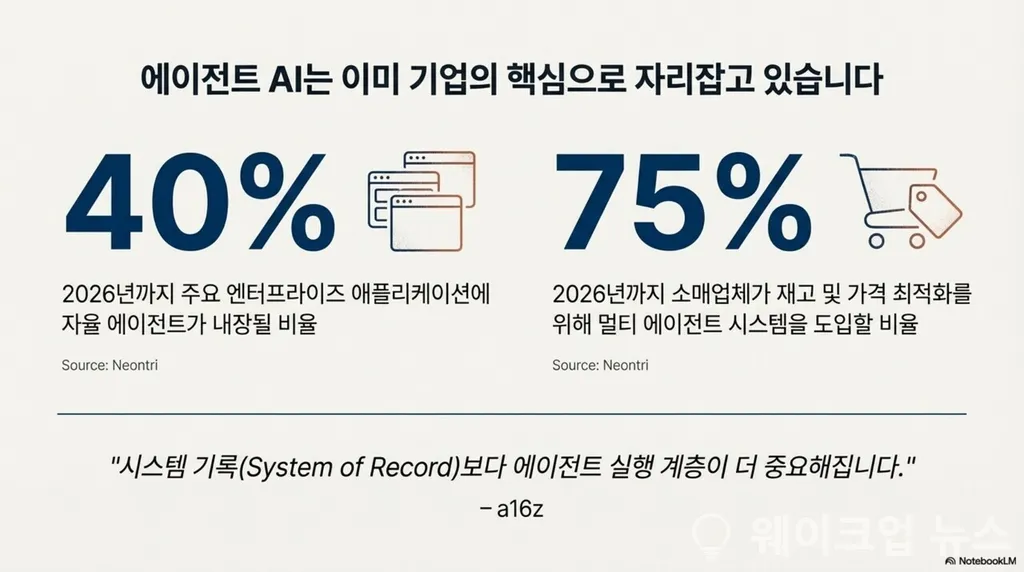
First, shall we look at the reality we face through numbers? As of 2026, the data showing how companies view AI is quite surprising.
According to research from MIT Sloan, when using a collaborative model where AI drafts and experts refine the work, the quality of the output improves by a staggering 86%. Even more surprising is the fact that human-AI collaboration efficiency is 3.5 times higher than traditional methods. This goes beyond simply 'getting faster'; we have entered a stage of human capability 'Augmentation.'
However, there is a pitfall here that must not be missed. While many companies are adopting AI, a survey (PwC, 2026) shows that only 56% of CEOs actually feel a tangible increase in revenue or cost reduction. Why does this gap occur?
The reason is that many organizations view AI merely as a 'cost-cutting tool' and overlook the redesign of work processes or the integration with human resources that AI brings. In other words, the technology is ready, but the 'Leadership' and 'Strategy' to handle that technology are missing—this is the biggest gap in current AI adoption.
2. Beyond Prompts to the Era of 'Harnessing'
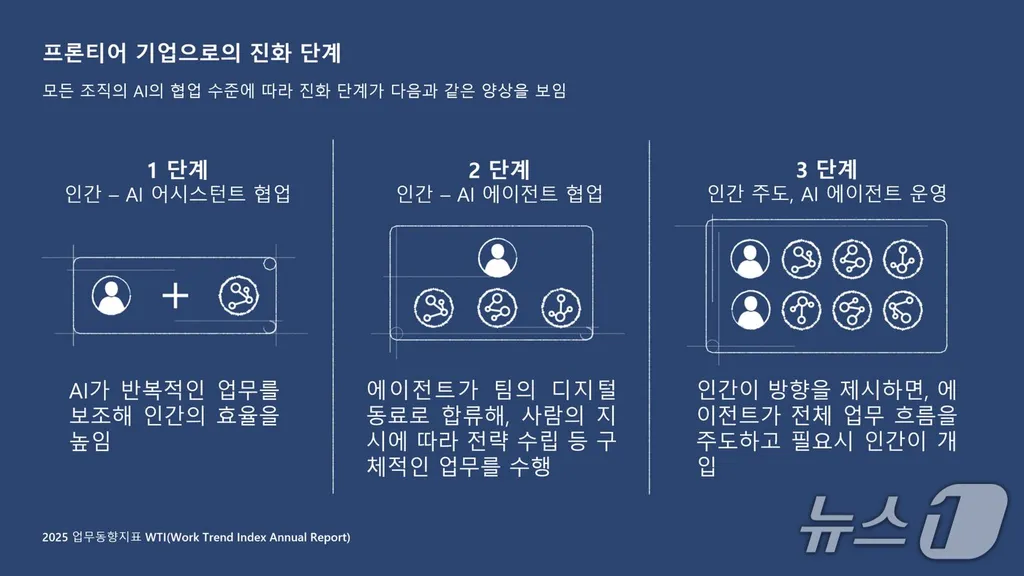
So, to what level must our technical skills evolve? It becomes clear when looking at the 4 Stages of AI Engineering Evolution presented by AI Literacy Instructor Yoon Sung-im.
- Prompting: The stage of asking questions to get answers (The past method).
- Contexting: The stage of precisely setting the situation and context.
- Agentic AI: The stage of designing AI to judge and act autonomously.
- Harnessing: The highest level of designing, controlling, and managing the vast capabilities of AI systems to produce consistent results.
We must now move beyond being people who ask good questions to becoming designers who harness (control/steer) the massive system known as AI.
In the past, you might have said to AI, "Write this proposal." Now, you must design the workflow itself, saying something like: "The goal of this project is A, the available resources are B, and the roles of the collaborating agents are C. The deliverables for each stage must be like this, and since I will make the final decision, you prepare the logical grounds." This is the true competence required for the 2026 talent.
3. The 'Strategist' Portfolio Wanted by the 2026 Job Market
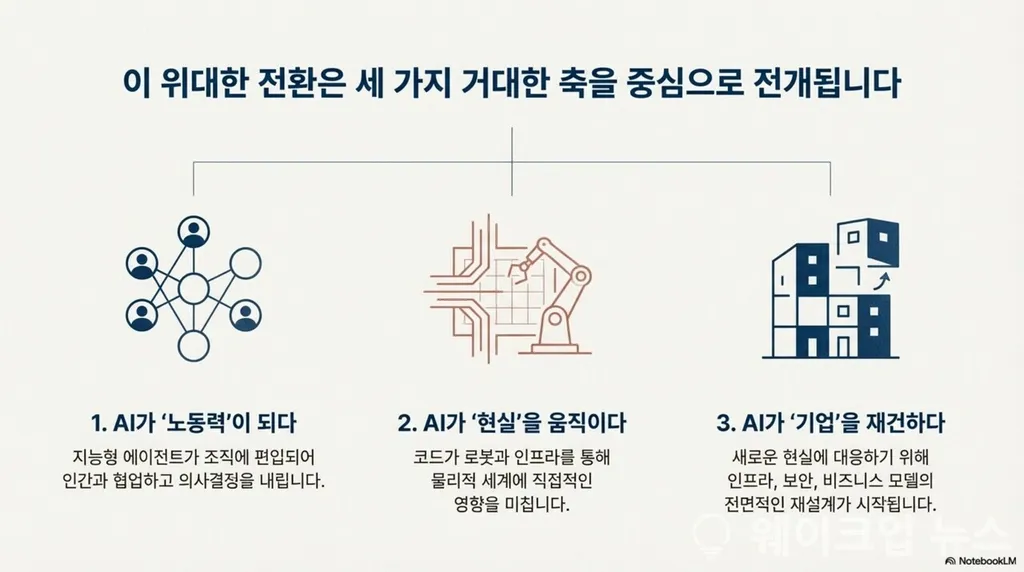
These changes demand a completely different approach to job-seeking strategies. Nowadays, writing "I am good at using ChatGPT" in your portfolio is as meaningless as saying "I know how to search the internet."
What corporate hiring directors want to see is not the flashy results produced by AI, but the 'logical insight' you exercised to create those results. To achieve this, your portfolio must contain 'WHY-HOW Logic'.
- WHY (Intent to solve business problems): Why did you perform this task using AI? What was the business challenge this task aimed to solve?
- HOW (Logical design process): How did you control the AI? What agent structure did you design, and what context did you provide to elicit the optimal result?
- OUTPUT (Actual business value): How much time was saved through AI, and how did the result contribute to actual business metrics (ROI)?
Rather than simply listing results, you must prove that "I am a strategist capable of redesigning business processes using AI as a tool." The critical thinking and restraint required to pick the 'one true' version that fits the brand identity out of hundreds of drafts generated by AI is the core differentiator for talent in 2026.
4. AI Leadership: The Power to Lead the 'Double Transformation' of Humans and Technology
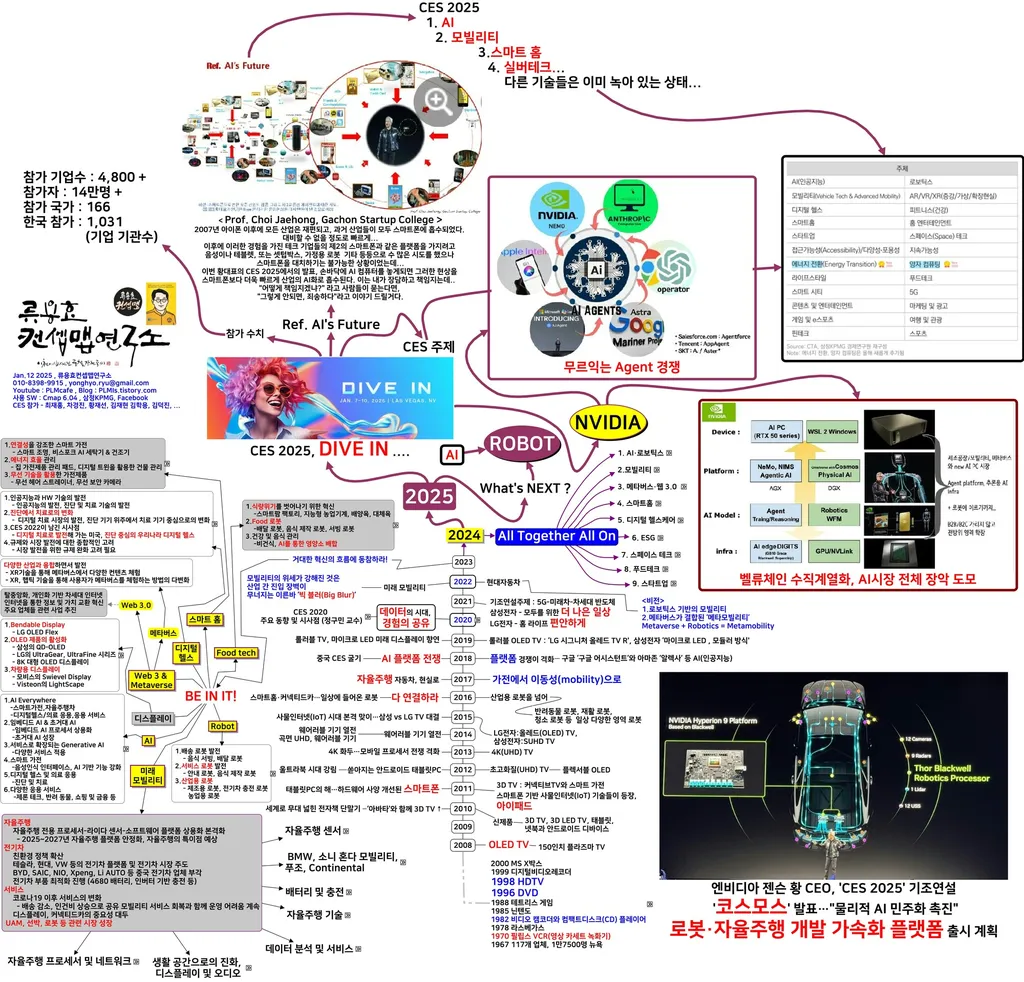
Finally, if you wish to stand at the pinnacle of your career, there is a concept you must understand: the 'Transform Square' proposed by CEO Heo Il-mu.
Leadership in 2026 is not simply about adopting technology, but about leading a Double Transformation—a combination of humans, technology, data, and emotion. In particular, 'AI-Integrated Leadership' begins with perceiving AI not as a mere tool, but as a Co-pilot that assists a leader's decision-making.
A successful AI leader must demonstrate the following abilities:
- Data Literacy: The ability to read algorithmic bias and judge the authenticity of data.
- Override Ability: The decision-making power to boldly intervene and correct direction when the AI's judgment does not fit the context.
- Hybrid Decision-Making: The ability to design workflows that allocate areas requiring scale and speed to AI, and areas requiring ambiguity and ethical judgment to humans.
Within organizations, 'Digital Mentorship' between generations will become crucial. When the younger generation, skilled in AI utilization, produces rapid drafts, and experienced senior leaders act as 'Quality Controllers' who verify the quality and interpret the context, organizational productivity is maximized.
Summary: Will You Be Replaced by AI, or Will You Lead AI?

Let me briefly summarize today's points.
- Prompting skills are the baseline: Now, the core is the ability to harness, designing and controlling the entire AI system.
- Position yourself as a strategist: Include the logical flow of WHY-HOW-OUTPUT in your portfolio instead of just the results.
- Cultivate AI Leadership: Design collaborative structures between technology and humans, and develop the ability to make critical, data-driven decisions.
A career in 2026 is not a fight against AI. It is an era where only those with the insight to find 'true value' amidst the vast amount of data produced by AI, and the 'handling ability' to steer the powerful engine of AI in the desired direction, will survive.
Will you wait for AI to take the lead, or will you evolve alongside AI and exercise leadership? The choice is yours.
What kind of preparation are you making right now? Are you simply learning how to ask good questions, or are you contemplating how to lead a team called AI?
Please share your thoughts in the comments!
References
- [2026 리더십 트렌드, AI시대 리더십이 ROI 210% 만드는 비밀 허일무 ...
- AI 보조 리더십: 2026년까지 모든 리더가 필요로 하는 새로운 역량 세트
- 09화 2026 AI 시대, 취업 전략 Insight - 브런치
- “에이전틱 AI 전략의 빠진 고리” IT와 HR의 협력 - CIO
- [윤성임 AI리터러시] AI를 다루는 기술, AI 엔지니어링의 4단계 진화와 ...
- AI Agent Engineer 커리어 가이드: 2025년 가장 뜨거운 AI 직군의 모든 ...
- AI 성과를 끌어내는 5가지 핵심 지표 - CIO
- [리더십] "AI 시대를 이끌어갈 리더를 위한 인공지능 활용 전략