Have you ever found yourself smiling unconsciously when you hear the sounds of "Yoo-de-lay-ee~" in your surroundings?
If you thought it was just a playful song meant to induce laughter, you have only seen the very surface of yodeling. In fact, yodeling is one of the most sophisticated and difficult vocal techniques that tests the limits of the human voice.
Today, based on the advice of experts with 30 years of experience and scientific principles, I will provide a practical guide so that anyone can transform from a "bedroom yodeler" into a "true yodeling master."
Yodeling is Not Just Simple 'Imitation'
Many people believe that yodeling is simply about breaking or flipping the voice. However, this is a huge misconception.
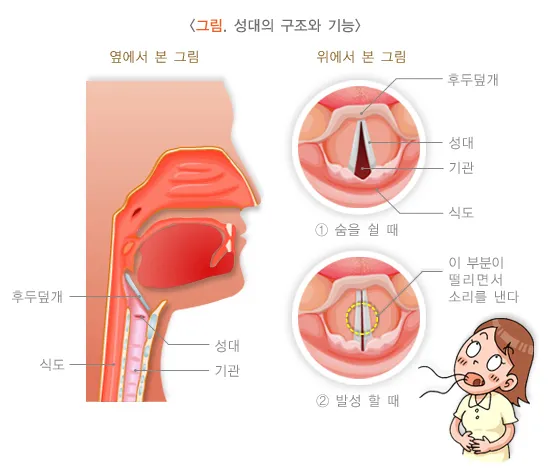
The essence of yodeling lies in the rapid and precise transition between chest voice (chest sound) and head voice (head sound). If you do not understand this and simply shout blindly, it won't be a joyful song, but merely "self-satisfying noise" that damages your throat.
Shall we compare our body to a musical instrument? In yodeling, the vocal cords act as the microphone, and the entire body acts as the speaker. No matter how good the microphone (vocal cords) is, a rich yodeling sound can never be produced if the speaker (body resonance) does not function properly.
Furthermore, yodeling styles vary greatly. There is the Swiss "Alpine style" that resembles grand nature, the "Western style" with lighthearted and flashy tongue movements, and the powerful and intense "German style." Deciding what color of yodeler you want to become is the beginning of your studies.
The First Gate to Mastery: Perfect Harmony Between Chest Voice and Head Voice

Now, it is time to actually produce sound. To create the "break" sound, which is the core technique of yodeling, you must move freely between two resonance positions.
1. Deep Resonance: Chest Voice
When singing the lyrical parts or the lower register of the yodel, you must use the chest voice. The key is not just making sound in your throat, but utilizing the vibration felt in your chest.
- Practice Tip: Place your hand on your chest and sing. If you feel a pleasant vibration in your palm, you are doing it correctly. If the sound feels like it is floating only above your head, you need to practice finding the chest resonance again.
2. Clear and High Resonance: Head Voice
In the high-pitched parts of "Yoo-de-lay-ee," you must transition to the head voice. The important thing here is not to tilt your head back to produce high notes.
- Practice Tip: You should have the feeling of "sending" the sound to your forehead or the tip of your nose. Making an expression as if you are smiling brightly will naturally open the vocal tract, producing a much clearer sound.
3. The Magical Turning Point: The Vocal Cord Break
The most difficult section is the momentary instant of transitioning from chest voice to head voice. Experts call this the vocal cord transition point. The realm of a master is creating a "bridge" that smoothly connects chest and head resonance so that the sound does not cut off abruptly or sound strained.
The Unshakable Root: The Secret of Abdominal Breathing

If your sound keeps cutting out or your throat gets hoarse quickly, the problem is likely not your vocalization, but your breathing.
Many beginners use thoracic (chest) breathing, breathing with their chest. However, to withstand the rapid changes in pitch like in yodeling, abdominal breathing is essential. When you inhale, you must collect enough air into your abdomen and the thoracic (back) area to maintain a stable sound.
Do not simply exhale the air; sing with the feeling of using the wind gathered in your lower abdomen to push up your vocal cords. This allows you to complete much longer and more powerful yodel lines while reducing the pressure on your throat. It works on the same principle as filling a dam with water and then using the water pressure to shoot the water upward when needed.
Practical! Step-by-Step Practice Routine (Roadmap to Master)
Now that you know the theory, it is time to make it a part of your body. If you blindly try to follow fast songs, you will give up quickly. Here is the recommended step-by-step practice method for 2026.
-
Step 1: Slow Motion Practice Try singing "Yoo-de-lay-ee" very slowly and brokenly. The goal is to feel the boundary line of how the sound changes when moving from chest voice to head voice. It is perfectly normal for the sound to feel awkward or strange at first.
-
Step 2: Learning Vowel Patterns Utilize the most basic vowels, 'A' and 'O'. Practicing the repetition of switching from 'A' (low chest voice) to 'O' (high head voice) builds the foundation of the yodel rhythm.
-
Step 3: Pattern Copying Once you have mastered one pattern, try applying that exact pattern to other pitches or rhythms. This is the process of expanding the familiar path of sound, much like "Copy (Ctrl+C)" and "Paste (Ctrl+V)" on a computer.
-
Step 4: Adding Emotion and Expression Once the technique becomes familiar, you must now "act." This is the stage of delivering energy to others by adding a bright smiling expression and a lighthearted sense of rhythm. Do not forget that yodeling is music meant to make the listener happy.
Core Summary to Become a Yodeling Master
Let's briefly summarize what we have covered.
- Core Principle: Yodeling is not just a simple break, but a precise transition between chest voice (chest) and head voice (head).
- Essential Technique: You must relax the tension in your throat and supply air steadily through abdominal breathing.
- Practice Strategy: Rather than going fast from the start, you should practice slowly and step-by-step while feeling the changes in sound.
Yodeling is by no means a song performed solely through innate talent. It is the process itself of understanding correct vocalization principles and learning how to tune the instrument that is your body.
At first, it might feel so awkward that you wonder, "What is this sound?" However, if you feel the changing vibrations of your voice little by little every day, at some point, your beautiful yodeling, resembling the winds of the Alps, will burst forth.
Now, are you ready to deliver joy to the world with your voice?
Why not start right now with the 'A-O' transition practice we learned today? Please let us know in the comments how your first yodeling felt!
What do you think?
References
- 진짜 요들송 발성 강의 비법 공개 !! - YouTube · youtube.com
- 장인에게 배우는 진짜 요들송 강의 - YouTube · youtube.com
- [방구석 배움교실] ⑧ 펭수가 잘 부르는 요들송 배우기 (뮤지션 참좋은실) · youtube.com
- [레전드 요들송 강좌] 단 5분이면, 여러분도 요들송 부를 수 ... - YouTube · youtube.com
- [도전] 요들송을 ..잘..부르고..말테야..! - 네이버 블로그 - NAVER · m.blog.naver.com
- 교양동스쿨 [음악] 요들송 (초중고급) · gydong.com
- 요들송 - 뮤직필드 - 악기/음악 인터넷강좌 · musicfield.co.kr