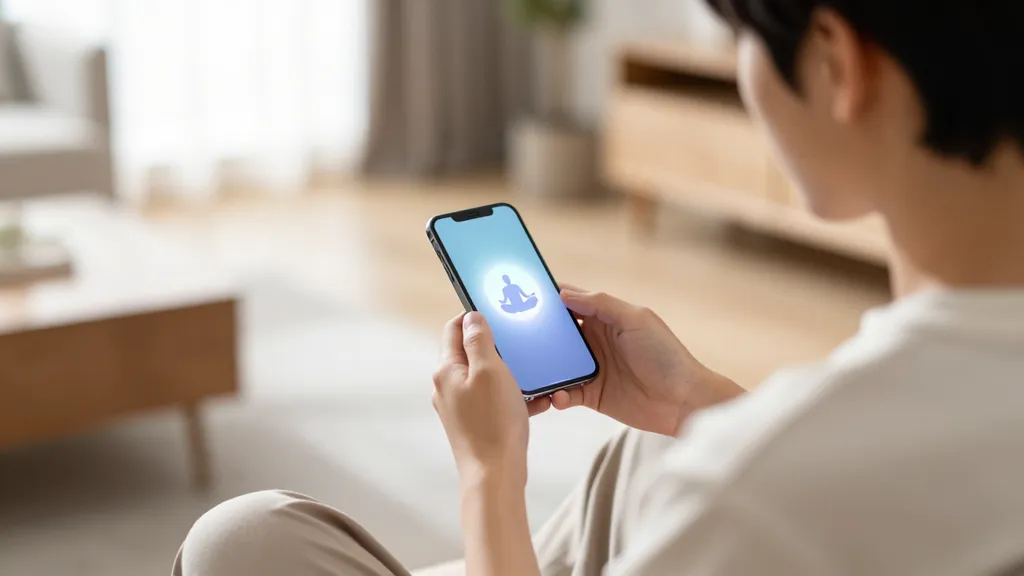
"Was my heart truly okay today?"
In 2026, an increasing number of members of the MZ generation find themselves asking this question while staring at their own reflections in the subway windows during their commute home. Beyond a mere sense of fatigue, when an inexplicable anxiety and emptiness begin to consume daily life, we habitually reach for our smartphones.
The interesting part, however, is that what we are searching for is not the stimulating shorts of YouTube or flashy games. Instead, we launch digital meditation apps filled with the sound of calm waves and the soothing voices of gentle guides. Why is it that in 2026, we are paradoxically trying to find the 'most human tranquility' through technology?
Mental Health Indicators in 2026: Seen Through Numbers and Data
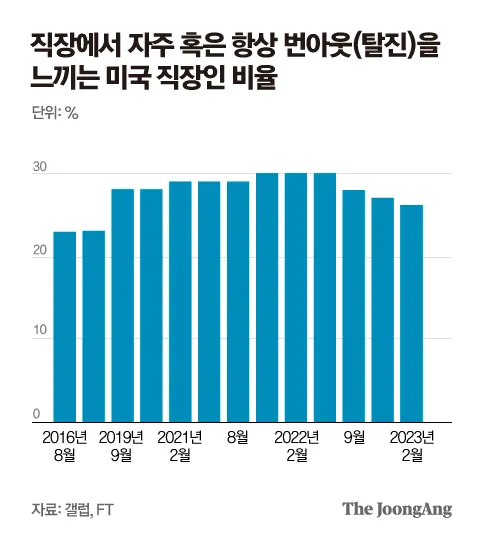
This sense of helplessness we feel is by no means a personal illusion. According to research by the World Health Organization (WHO), one in four people will experience a mental disorder at least once in their lifetime. In particular, the warning that depression will become the largest global disease burden by 2030 is rapidly becoming a reality.
Amidst this massive trend, the paradigm of consumption has completely shifted. The key keyword for 2026 is Feelconomy. While performance or cost-effectiveness was important in the past, consumers now open their wallets based on how a product "comforts" their emotions.
Rather than simply buying an object, the core drivers of purchase have become the joy, comfort, and confirmation of identity felt through that object. Wellness is now expanding beyond simple self-care into a 'medical domain' that completes an individual's identity. This is precisely why meditation apps have risen as an 'alternative therapy' rather than just a passing fad.
The Real Reason Why the MZ Generation is Enthusiastic About Meditation Apps Like 'Mabo'
So, why digital meditation specifically? And why is the MZ generation so enthusiastic about it? The answer becomes clear when looking at the case of 'Mabo,' a leading meditation app in Korea.
Looking at a program conducted with students of Bucheon University, participants' stress decreased by 15% and their life satisfaction increased by 8% simply by using a meditation app for four weeks. This effect, proven by numbers, shows that meditation is by no means a vague concept.
The secret to why the MZ generation is immersed in digital meditation can be summarized in three points:
- Immediate Accessibility: Instead of the hassle of booking and visiting a psychological counseling center, you can turn your room into a meditation hall with a single finger.
- Routine Formation: Programs designed to allow daily reflection on one's mind become a Morning Ritual for those pursuing 'God-saeng' (a diligent and exemplary life).
- Connected Isolation: If meditating alone feels lonely, users can participate in group meditations or challenges within the app, forming loose connections with 'people facing similar struggles.' The act of posting meditation certification shots on social media has itself become a form of identity-based consumption.
Meditation is no longer just the act of sitting with eyes closed. It has evolved into a modern lifestyle where one 'subscribes' to their own mind through a smartphone and manages their state through data.
A Double-Edged Sword: The Peace and Potential Risks Provided by AI Guides

However, behind the sweetness offered by technology, there exists a shadow that we must address. Recently, the meditation app market has been growing explosively by combining with AI technology. The penetration of technology is so great that approximately 23% of meditation app users worldwide already prefer AI-guided meditation.
AI provides an incredible level of personalized, customized solutions, such as adjusting lighting and music by analyzing a user's Heart Rate Variability (HRV) or brain waves in real-time. Places like 'Inscape Tokyo' have used AI to adjust lighting in sync with a user's breathing, reducing the time required to enter a meditative state by as much as 40%.
However, here we must consider the 'limitations of technology.' Experts warn that AI is still immature in its ability to fully understand the complex structures of the human mind. In fact, some AI apps have reported the following side effects:
- Inducing Psychological Anxiety: Cases where inappropriate AI responses trigger a user's delusions or even induce panic attacks.
- Depersonalization: Cases where the boundary between reality and virtuality becomes blurred, leading to a feeling of losing control over oneself.
- Data Privacy: Anxiety regarding one's most intimate emotions and biological information remaining as digital data.
Ultimately, meditation apps are powerful tools, but they are not a magic wand. Experts advise that the effectiveness of meditation apps can only be maximized when they are combined with the guidance of dedicated professionals or traditional therapeutic methods. This means that while technology is a 'tool,' the 'subject of healing' must ultimately be oneself.
Wellness in 2026: Beyond Personal Taste to Social Infrastructure

Wellness is no longer just an option for 'changing one's mood.' As McKinsey's analysis suggests, wellness is establishing itself as a structural infrastructure of our society.
To prevent employee burnout, corporations are introducing meditation programs as a welfare benefit, and governments are bringing mental health into the realm of public service, such as the Seoul Metropolitan Government providing meditation app vouchers to youth. The economy of 2026 has become a massive wellness ecosystem that moves based on 'how one completes themselves through certain emotions' rather than 'what one buys.'
We no longer define health simply as 'the absence of disease.' Instead, we define it as 'a state of being able to manage one's emotions while maintaining an authentic identity.' Using a meditation app is, in fact, the most active survival strategy for modern people aligning with this new definition.
To summarize:
Consumption in 2026 has entered the era of Feelconomy, which pursues emotional satisfaction. Accordingly, meditation apps have established themselves as a means of identity expression and an everyday mental care tool for the MZ generation. While caution regarding the side effects of AI technology is necessary, digital wellness has become an irreversible social structure and an essential way of life.
How is your heart feeling today? Perhaps, in running so hard toward the future, you have been missing the voice within you.
Why not put down your smartphone for a moment and ask yourself a question with a single deep breath? What kind of personal 'Ritual' do you have to manage your stress? Please share your stories in the comments!
References
- [ Trend 2026 ②] 2026 소비 대전환 — 감정·정체성·의료화 웰니스가 ... · spotlightuniv.com
- 정신 건강을 위한 신(新)소비 트렌드: 명상 앱부터 멘탈 케어 드링크까지 · iconsumer.or.kr
- MZ 세대의 마음건강, 명상 앱 '마보'로 지킨다 - 이로운넷 · eroun.net
- MZ 세대의 마음건강, 명상 앱 마보로 지킨다 - MEDI:GATE NEWS · m.medigatenews.com
- 1억 이상 다운 받은 AI명상 앱…"공황 발작" 부작용 논란 터졌다 · joongang.co.kr
- [방구석 IT열] 포스트 코로나 시대 '명상 앱' 찾는 MZ세대 늘었다 · epnc.co.kr
- ♀️ AI와 함께하는 명상 공간, 정말 평화로울까? - 재능넷 · jaenung.net
- 웰니스는 선택이 아니다, 구조다 — 내일의 건강 경제를 이끄는 다섯 차원 · blog.naver.com