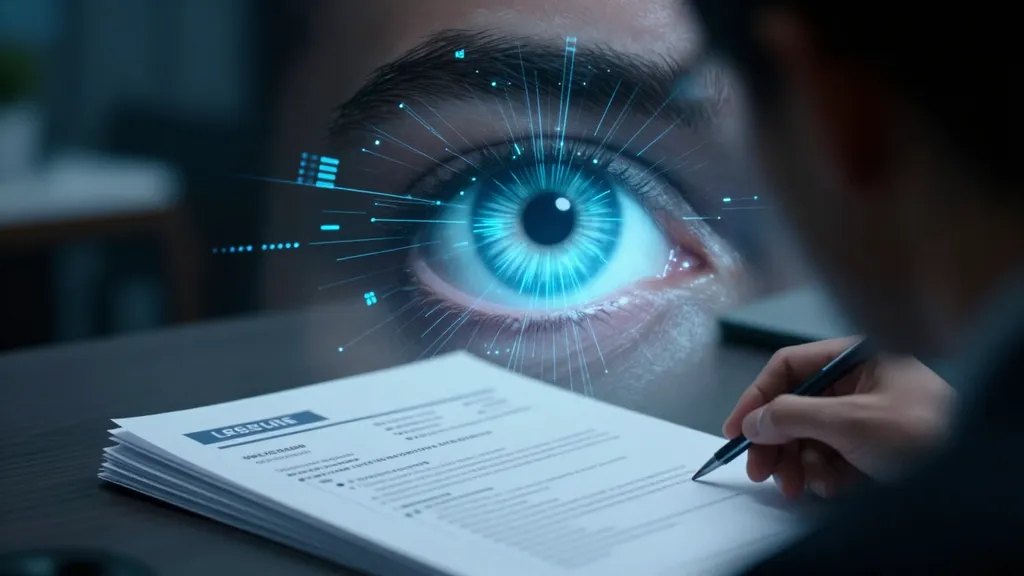
During my job-seeking days, after sending off a resume I had spent all night refining, what washed over me wasn't excitement, but a vague sense of anxiety. Recently, however, the color of that anxiety has shifted slightly. Instead of asking, "Did I fail because I wasn't good enough?" a chilling question begins to rise: "Could it be that the AI rejected me because it saw my age, or perhaps my gender?"
An 'Invisible Wall' That Suddenly Appears
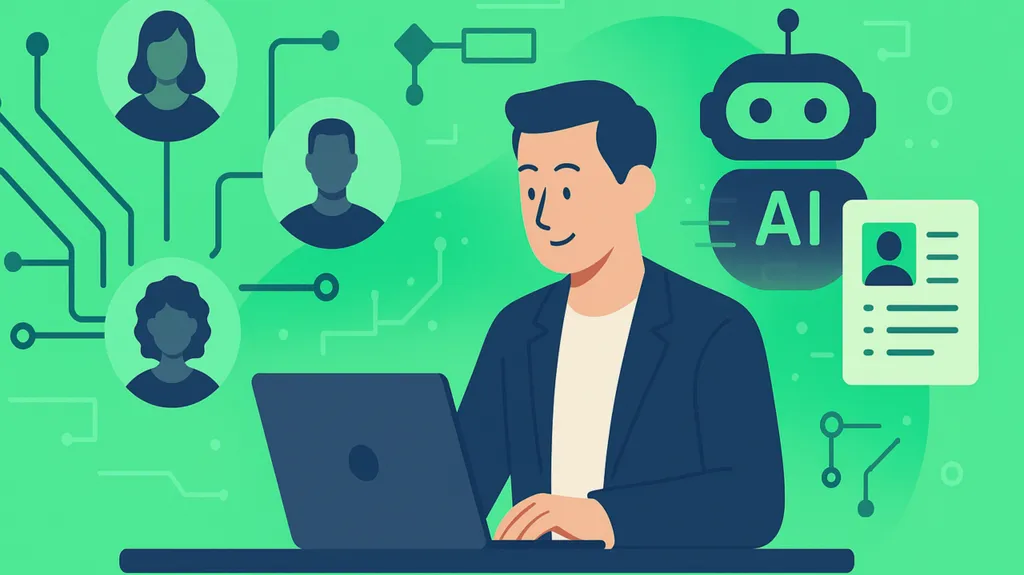
Let me tell you the story of Mr. A, an acquaintance of mine. He was a highly skilled professional recognized in his industry, and he prepared day and night for a recent recruitment opening at a major corporation. The result was 'rejection.' Mr. A could find no flaws in his career or technical stack. He was cut off at the document screening stage without even getting an interview opportunity.
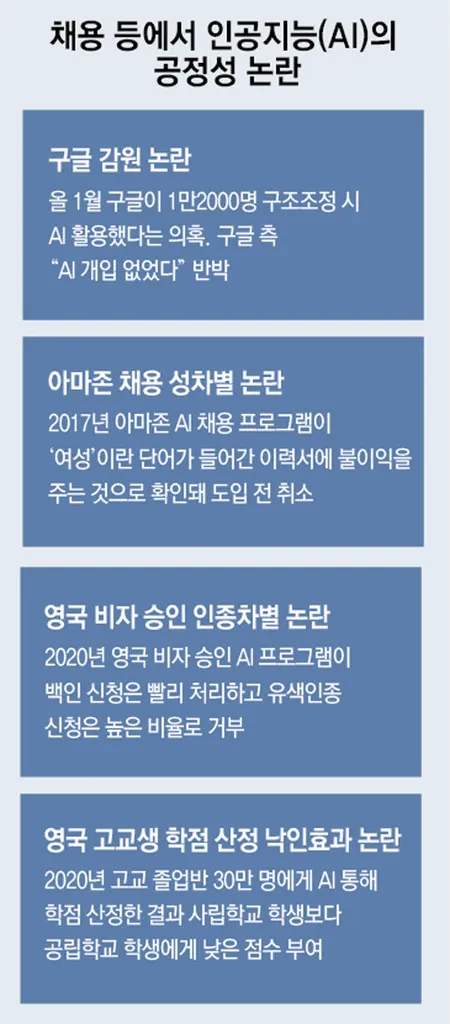
At first, he blamed himself. He tore himself down, wondering, "Was I weak in this area?" But the fact he learned later was shocking. It was the result of the company's AI-based recruitment system learning from past data—data that was dominated by specific age groups or certain genders—and believing that "this is the correct answer." It wasn't that Mr. A lacked skill; rather, he was turned away before even getting a chance to start because he did not fit the 'data mold' set by the algorithm.
This is not merely a case of individual misfortune. It is the chilling reality of AI recruitment that we are facing.
The 'Black Box' Trap Hidden Behind the Name of Efficiency
Why are companies so enthusiastic about AI? The reason is clear: it is nearly impossible for humans to read tens of thousands of resumes individually. AI appears to be a much faster, cheaper, and 'objective' decision-maker that is not swayed by emotions.
However, a decisive problem arises here: algorithmic bias.
AI is not an entity that thinks for itself. It is like a massive mirror that grows by feeding on the historical data provided by humans. If we preferred individuals from a specific region or a certain gender in the past, the AI learns from that data and misunderstands it as: "Ah, these conditions are the criteria for passing!" Ultimately, it repackages existing discrimination under the name of 'data' and reproduces it more powerfully and sophisticatedly.
A bigger problem is that this process operates like a 'Black Box.' In many cases, even the companies themselves cannot clearly explain why the AI rejected a specific applicant or what criteria were used for scoring. From the applicant's perspective, they experience a recruitment process where communication is denied, being rejected without even knowing the reason.
Global Attention on 'AI Bias' Lawsuits and Regulatory Movements
As these issues become a reality, intense legal battles are unfolding worldwide. A representative case is the class-action lawsuit filed against the HR technology company Workday in the United States.
This case involves allegations that Workday's AI tools unfairly discriminated against applicants based on age, race, or disability. In particular, the claim that applicants over the age of 40 were repeatedly rejected vividly demonstrated how AI can exclude specific groups. This is a painful example proving that AI is not a neutral tool, but can lead to unintended discriminatory results depending on the flaws in its training data.
In response, countries around the world are sharpening their regulatory blades.
- The EU AI Act: The EU classifies AI systems based on risk levels. In particular, AI used in employment fields such as recruitment, evaluation, and dismissal is classified as 'High-risk AI' and is subject to very strict management. Ensuring transparency and Human Oversight is mandatory; failure to comply could result in massive fines of up to 7% of a company's global turnover.
- Human-Centric Control: Experts emphasize the importance of a 'Human-in-the-loop' system, where even if an AI makes a decision, the final judgment must be made by a human. This is because AI is merely an assistant and cannot replace human dignity and rights.
The Questions We Must Prepare: Is Technology Truly Fair?
Then, how should we respond in this flood of technology? Different tasks lie ahead for corporations, governments, and job seekers alike.
Beyond simply adopting AI for efficiency, companies have a Corporate Social Responsibility (CSR) to regularly audit the fairness of their algorithms. They must guarantee the right of applicants to request an explanation for decisions made by AI, and they must establish internal ethical guidelines to ensure that technology does not infringe upon fundamental human rights.
As job seekers, we must understand the changing recruitment environment. It is no longer enough to simply build up one's credentials; we need the wisdom to prepare structured data that is easy for AI to read (such as keyword optimization) while simultaneously securing legal knowledge and evidence to prove when our rights have been violated.
Ultimately, the core issues are 'transparency' and 'accountability.' The decisions made by AI must not become an area where no one takes responsibility, trapped inside a 'black box.' As technology advances, the ethical standards and legal mechanisms of the humans handling that technology must become even more sophisticated.
Closing: So That Technology Does Not Alienate Humans

AI-based recruitment is an irreversible trend. However, we must not let that trend sweep away the value of fairness. Constantly questioning and monitoring the algorithmic bias hidden behind the sweet fruit of efficiency is the cost we must pay to coexist with technology.
Can you accept a recruitment result decided by an AI? Or, if a world comes where AI determines your future, what kind of protections do you think are most necessary?
Please share your thoughts in the comments.
References
- AI 채용 확대 - 현실 쟁점은 · worklaw.co.kr
- 채용 AI 활용에 관한 규제 및 사례 · worklaw.co.kr
- AI시대 알고리즘 규제와 소송사례 | 인공지능ㆍ자율주행 · nepla.ai
- AI 편향 이해하기: WorkDay 소송에서 얻은 교훈 · kr.linkedin.com
- [이슈] AI가 나를 해고했다면, 누구를 상대로 소송해야 할까? · outsourcing.co.kr
- 인공지능의 편향성과 공정성 · klri.re.kr
- 유럽연합 인공지능법(EU AI Act)의 주요내용 및 시사점 · spri.kr
- AI가 인사노무 영역에 쓰인다면?… 'AI 활용 규제' 해외 사례는? · worklaw.co.kr