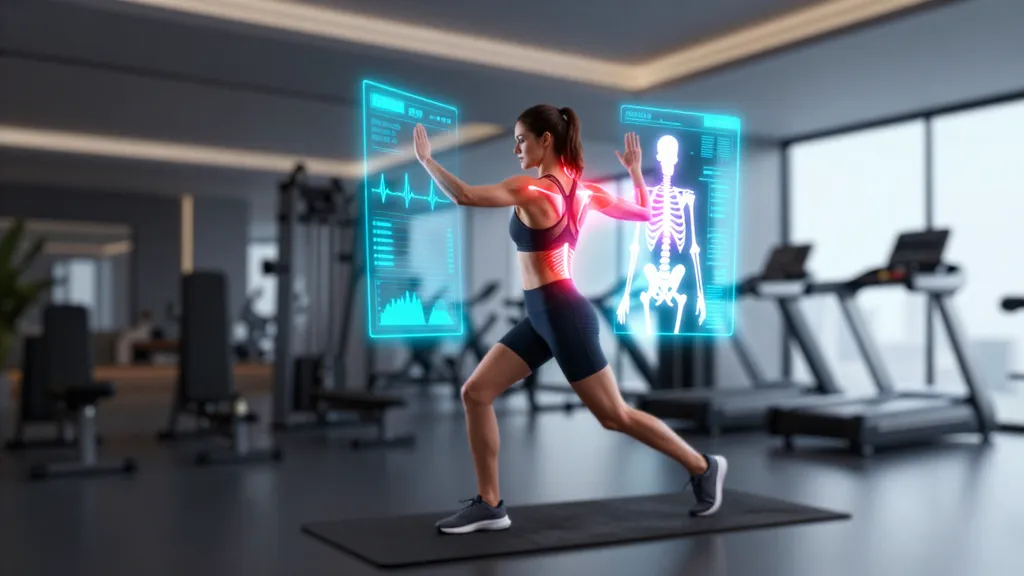
"Was yesterday's workout effective? Or was it just a waste of time?"
This is a question that anyone who exercises consistently has likely asked themselves at least once. We sweat every day, but we have no way of knowing how efficiently we used our muscles today, whether our bodies currently need recovery, or if we are adopting postures that pose a risk of injury.
However, in 2026, the answer to this question is no longer a matter of guesswork. As biometric data emanating from our bodies combines with AI that analyzes it in real time, exercise has moved entirely from the realm of 'intuition' to the realm of 'data.' Today, I want to tell you about this fascinating transformation—how technology reads our every muscle and cell, and how it creates a one-of-a-kind 'personalized routine' for each individual.
Data Reading Muscle Movements: The Evolution of Wearables

Only a few years ago, wearable devices were merely pedometers that checked "how many steps did I walk today." But in 2026, wearable technology has evolved beyond imagination.
One of the most surprising changes is hyper-personalized biometric monitoring. Take, for example, the AI smart insoles from Japan's 'Orphe' that garnered attention at the recent CES 2026. Instead of simply recording walking, they analyze weight distribution and gait patterns on the soles of the feet 24 hours a day. What happens when this data meets AI? It identifies subtle walking imbalances that you might not even notice, preventing knee injuries or immediately designing a rehabilitation program.
The variety of wearables has now become extremely diverse:
- Smart Ring: Discreetly tracks sleep quality and body temperature changes to provide today's 'recovery score.'
- Continuous Glucose Monitor (CGM): Predicts blood glucose trends during exercise to guide the optimal timing for energy intake.
- Smart Clothing: Smart shirts like Hexoskin read everything from your breathing rate to muscle fatigue in real time.
In this way, our bodies have become 'living sensors' generating data 24 hours a day. We have entered an era where these data points converge to draw a personalized health map for each individual.
An AI Trainer Inside My Exercise Equipment?
Once the data is collected, we must decide 'how to move' based on that data. This is where the true magic of AI begins.
In the past, a trainer would stand beside you shouting, "Come on, 12 more reps!" Now, intelligent exercise equipment takes over or assists in that role. Look at Technogym's 'Connected Dumbbell.' This dumbbell uses AI to set the weight based on the user's data. It doesn't just change the weight; it adjusts the resistance to match the user's strength levels.
In particular, systems like 'Biostrength,' which can be seen in premium fitness centers, are phenomenal. AI analyzes the user's physical ability and fatigue in real time, automatically adjusting exercise resistance and range of motion so that muscles are stimulated most efficiently. It even possesses the sophistication to set different weights for muscle contraction and relaxation, inducing continuous tension in the muscles.
This is not mere automation. It is as if the world's best trainer is sitting inside the dumbbell in your hand, adjusting the weight while feeling the tremors of your muscles. Thanks to this, even when doing home training, one can achieve high-efficiency performance comparable to professional centers.
The Perfection of Data, and the Value of 'Humans'

If so, a question might arise: "If AI can analyze my body so perfectly and even lead my workouts, are human trainers no longer necessary?"
This was a major topic discussed by many experts at the SPOEX 2026 venue. To give you the conclusion first: as technology becomes more sophisticated, 'the value that only humans can provide' will become even more precious. This is because while AI can interpret data, it cannot read the 'context' hidden behind that data.
AI can see your heart rate rise and say, "Your exercise intensity is high." However, whether that is due to simple exertion, extreme stress experienced at work today, or poor condition due to a lack of sleep last night is something only a human trainer can perceive.
The role of the human trainer will be reorganized into three main areas:
- Contextual Interpretation: Proposing truly customized solutions by combining biometric data with the user's emotions and daily lifestyle habits.
- Emotional Support and Motivation: Acting as a psychological supporter who helps maintain exercise consistency through empathy and encouragement that numbers cannot provide.
- Hands-on Technique: The skill of directly correcting subtle joint movements and muscle sensations with the fingertips that AI sensors might miss.
In short, AI becomes the 'precise tool,' while the human trainer becomes the 'master' who uses that tool to care for the user's entire life. Technology is not moving toward replacing humans, but toward expanding human capabilities.
Smart Workouts in 2026: How to Apply Them?
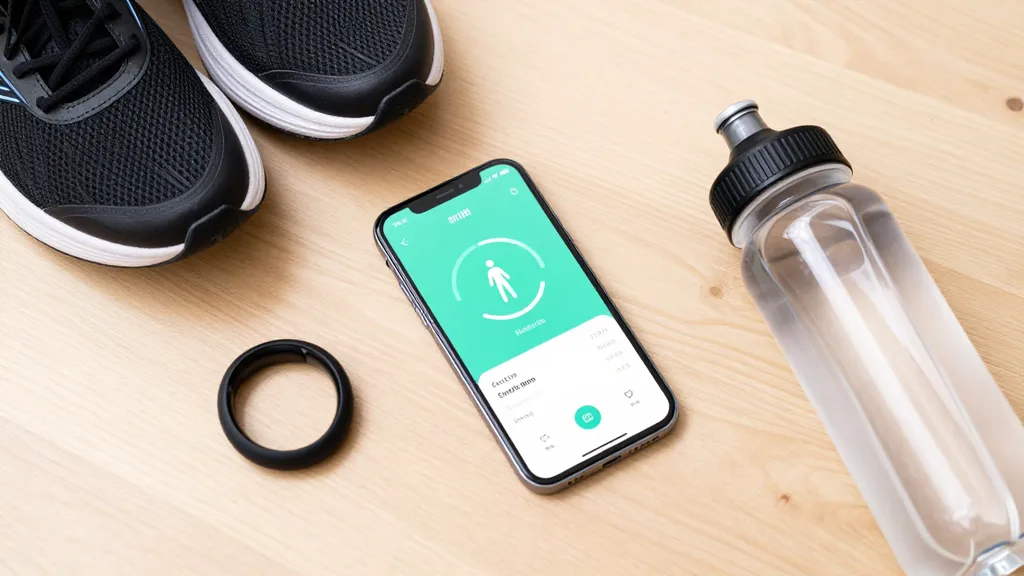
Now, how can we apply these amazing technologies to our daily lives? I propose a step-by-step strategy that you can start even without expensive equipment.
Step 1: Making Data Collection a Habit (The Data Collector) First, use a smartwatch or smart ring to understand your basic biological rhythms. Pay particular attention to sleep data and Heart Rate Variability (HRV). If your HRV is lower than usual, it is a much wiser strategy to opt for light stretching or rest rather than high-intensity weight training on that day.
Step 2: Utilizing Real-time Feedback (The Real-time Learner) During exercise, actively utilize AI-based feedback systems. According to recent studies, real-time AI-based biofeedback significantly improves performance in compound exercises like squats. If you develop the habit of recognizing and correcting your posture in real time through smartphone apps, you can grow quickly without injury.
Step 3: Data-Driven Routine Optimization (The Data-Driven Athlete) Instead of a simple plan like "exercise for 1 hour every day," try setting a data-driven plan such as, "I will only perform high-intensity training when my recovery score is above 80." If you can utilize smart equipment like Technogym's Connected Dumbbell, you can complete a 'hyper-personalized routine' that finds the optimal weight allowed by your strength in every set.
In Summary: The Perfect Harmony of Technology and Humans
Fitness in 2026 is no longer a product of vague effort.
- Wearable devices have become 'tiny general hospitals' monitoring our bodies in real time,
- AI exercise equipment has become 'intelligent coaches' adjusting weight and resistance to individual capabilities,
- Human trainers have evolved into 'wellness guides' who care for our lives and minds based on all this data.
Ultimately, the key is not the technology itself, but how you connect the data obtained through technology to your healthy life. Data is merely a compass pointing the way; it is your will that actually walks that path.
What data is recorded on your wearable device today? What movement is that data recommending to you?
How close is your workout routine to being data-driven? Please share your smart workout methods in the comments!
References
- ”AI가 운동을 가르치는 시대, 트레이너는 사라질까요?“ 이번 SPOEX ... · instagram.com
- CES 2026이 보여준 미래, 웨어러블 AI와 초개인화 혁명! - Naver Blog · blog.naver.com
- 웰니스의 미래: AI와 웨어러블이 건강을 혁신하는 방법 - LinkedIn · kr.linkedin.com
- 웨어러블 기기: 신체 모니터링의 과거와 미래 - 카이스트신문 · times.kaist.ac.kr
- 2026 헬스 스포츠 산업 트렌드는?? -AI기술이 들어간 운동장비 -AI ... · instagram.com
- 데이비드 간디는 테크노짐 커넥티드 덤벨과 함께 AI 기반 중량 설정 ... · instagram.com
- [인더필드] AI가 만드는 '미래형 헬스장'...이탈리아 운동 기구 '테크노짐' · inthenews.co.kr
- 인공지능 기반 실시간 바이오 피드백 단기훈련이 스쿼트 운동 수행에 ... · kjsm.org