
"Isn't it so hard to read the news these days? I feel like just looking at what AI summarizes would be enough."
This kind of conversation comes up naturally when sharing a cup of coffee with a friend. Amidst the flood of overwhelming information, AI news summary services—which pinpoint only the core essence—feel like an oasis in a desert. However, a hint of anxiety lingers in a corner of the mind: "Is this content summarized by AI truly unbiased, real fact?"
We stand at a point where we must contemplate whether we are trading 'context' and 'neutrality' of information for the sake of convenience. Today, we will examine the current state of rapidly growing AI news summarization and fact-checking technologies and coldly compare the choices facing us.
The Temptation of Convenience: Innovation in News Consumption Brought by AI Summary Services

First, shall we look at the gifts that AI summary services have given us? In the past, to properly understand a specific issue, one had to search through and compare articles from various media outlets one by one. It was an era when the so-called 'information search cost' was incredibly high.
According to a report by the Korea Press Foundation, AI now performs the role of automatically collecting and synthesizing articles with different perspectives reported by numerous media outlets. This demonstrates the potential of AI as a "neutral information provider" that helps users grasp various perspectives at a glance without being buried in the biased views of a specific media outlet. It has laid the foundation for understanding complex political issues or social conflicts in a multi-dimensional way.
However, we must pose an important question here: "Is AI truly a neutral tool?"
Light and Shadow: Algorithmic Bias and the Data Dilemma
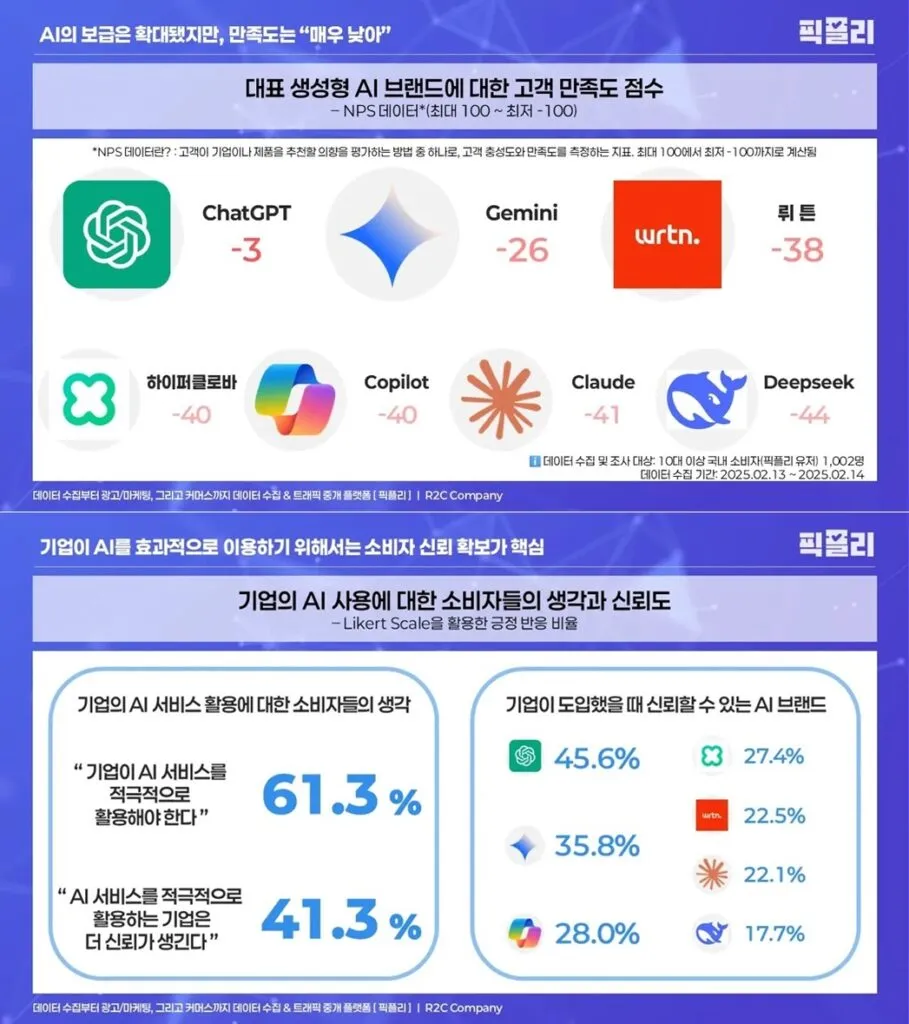
To get straight to the point, AI is by no means a 'flawless mirror.' Rather, it carries the risk of becoming an "amplifier of bias" that projects and amplifies the prejudices we already hold.
1. The Shadow of Developers and Data
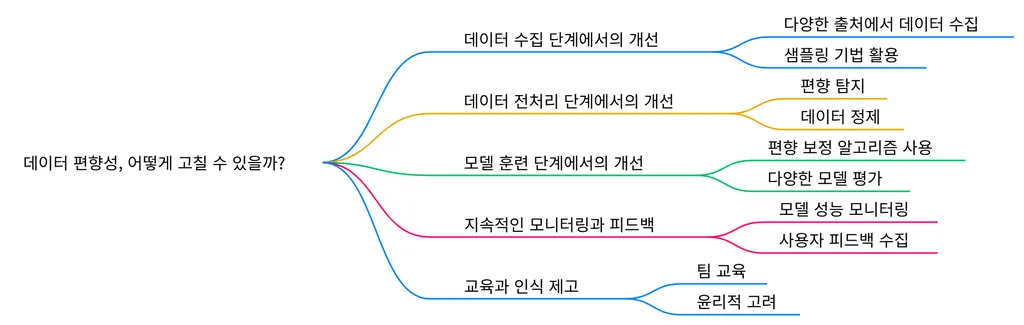
As analyzed by the Korea Legislation Research Institute, AI ultimately learns from data created by humans. If the training data itself contains specific political leanings or social prejudices, the AI will output that bias as if it were an 'objective fact.' It is like looking at the world through biased glasses. Instances where news recommendation algorithms of major portals prioritize content skewed toward a specific ideology serve as a warning light that technological neutrality can be compromised.
2. The 'Black Box' and Platform Power
The Justice Policy Institute focuses on the "dominance" held by the algorithms of platform companies. The internal process of how an algorithm summarizes and recommends news is like a 'black box' that is not disclosed to the public. If corporate commercial interests or specific political preferences seep into the algorithm design stage, users will find themselves trapped within a fence of biased information without even realizing it. This is a serious issue that goes beyond mere technical error and can infringe upon 'the right to choose information,' which is a core pillar of democracy.
3. Limitations of the Korean Context
The situation in Korea is particularly complex. According to domestic studies, high-quality Korean language datasets are essential for the development of AI fact-checking technology. However, along with copyright issues, there is a shortage of 'verified Korean language data' itself. When data is insufficient, AI relies on 'probabilistic reasoning,' which can lead to losing context or making incorrect judgments.
Comparison of Alternatives: How Should We Utilize and Control AI?
Then, how should we view this technology? Let's compare the three approaches currently under discussion.
| Category | Method | Pros | Cons |
|---|---|---|---|
| A. Fully Automated Model | AI independently performs news collection, summarization, and fact-checking | Overwhelming speed, low cost, real-time response capability | Lack of contextual understanding, risk of bias transfer, 'Hallucination' phenomenon |
| B. Human-AI Collaboration Model (Hybrid) | AI drafts and scans data, while humans perform final verification | High accuracy and reliability, supplements context and ethical judgment | High cost, decreased real-time capability due to human intervention speed |
| C. Explainable AI (XAI) Model | AI presents the basis for its judgment (why it summarized this way) to the user | Improved user trust, ensures algorithmic transparency | High technical implementation difficulty, possibility of information overload |
Which model is most realistic?
Many experts and research results strongly suggest the necessity of 'B. Human-AI Collaboration Model.' It is most ideal for AI to act as a 'scanner' that rapidly scans vast amounts of data, while human experts act as 'interpreters' who read the intentions and contexts hidden within that information.
Furthermore, to gain user trust, 'C. Explainable AI (XAI)' technology must be integrated. According to recent studies, providing a Counterfactual Explanation—such as "If variable A had been different, the result would have changed like this"—increases user understanding and trust much more than simply providing the result. In other words, only when AI can explain "why it made such a summary" can we finally doubt or accept the result.
Conclusion: In the Era of AI News, Smart Readers Survive

As we have seen, AI news summary services are a double-edged sword. They are innovative tools that dramatically increase information accessibility, while simultaneously harboring risks of bias and opacity.
Ultimately, the future news ecosystem can be healthy when the following three pillars work in tandem:
- Technical Transparency: Algorithms must be able to explain why they made certain judgments (XAI).
- Data Diversity: Social consensus is needed to secure unbiased, high-quality data.
- The Human Role: It is essential to have human experts who make final ethical and contextual judgments without being swallowed by the speed of AI.
What we can do is clear: rather than accepting the summary provided by AI as the 'correct answer,' we should maintain an attitude of using it as 'one useful reference material.' Only readers who, based on the core content summarized by AI, ask once more, "Why did it summarize it this way?" or "What other perspectives lie behind this?" can protect their sovereignty over information.
How much do you trust the news summarized by AI? Have you ever felt that an AI's summary was biased? Please share your thoughts in the comments!
References
- 12 커버스토리 - 한국언론진흥재단 · kpf.or.kr
- 인공지능의 편향성과 공정성 - 한국법제연구원 · klri.re.kr
- 플랫폼 기업의 알고리즘 편향과 지배 문제 - 정의정책연구소 · research21.justice21.org
- XAI 설명방식이 사용자의 인지된 이해도와 신뢰도에 미치는 영향 · jiisonline.org
- 팩트체킹 인공지능 기술과 사실성의 역학 : 현장 참여자의 심층 인터뷰 ... · kci.go.kr
- [인공지능 기반 팩트체크, 어디까지 왔나] 월등히 빠른 검증 가능하나 ... · blog.naver.com
- 미디어브리프 - 한국언론진흥재단 · kpf.or.kr
- [아카데미 인사이트] 저널리즘 환경에서 팩트체킹 인공지능 기술이 ... · banronbodo.com