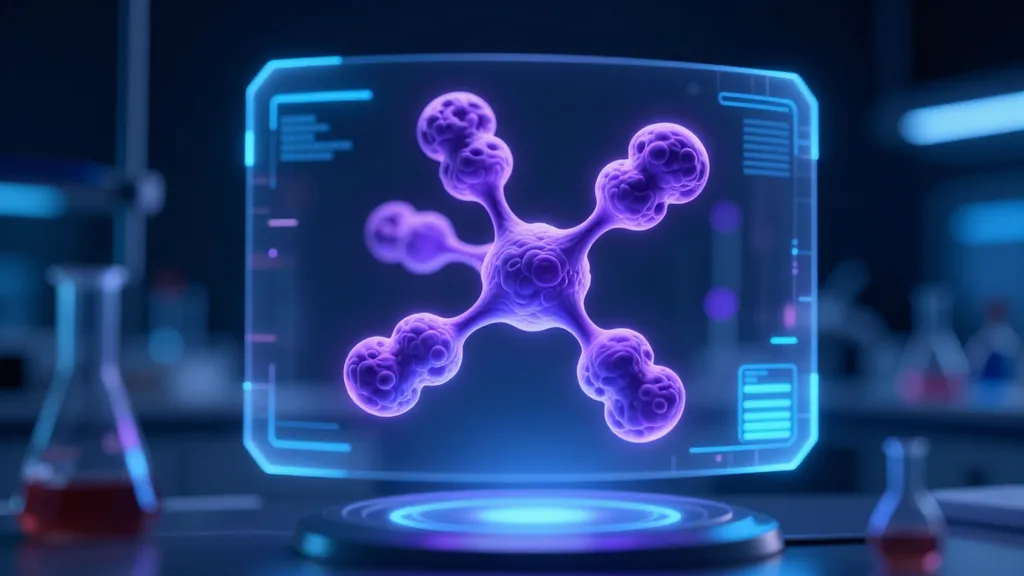
Did you know that it takes an average of 10 to 15 years for a new drug to reach our hands, and the cost involved can reach trillions of won?
To cross this massive "swamp of failure," humanity has gone through countless trials and errors, but that flow is now changing completely. The achievements shown by Google DeepMind's AlphaFold, which clinched the 2024 Nobel Prize in Chemistry, go beyond simple technological progress; they are redefining the very way humanity fights disease.
AI has evolved beyond being a mere assistant tool in the laboratory to becoming the "core engine" of drug discovery, directly designing drugs and predicting the success or failure of clinical trials. In today's post, we will dive deep into the reality of this revolutionary change—how AI is creating shortcuts in drug development.
1. The Key to Unlocking Protein Secrets: AlphaFold and the Honor of the Nobel Prize
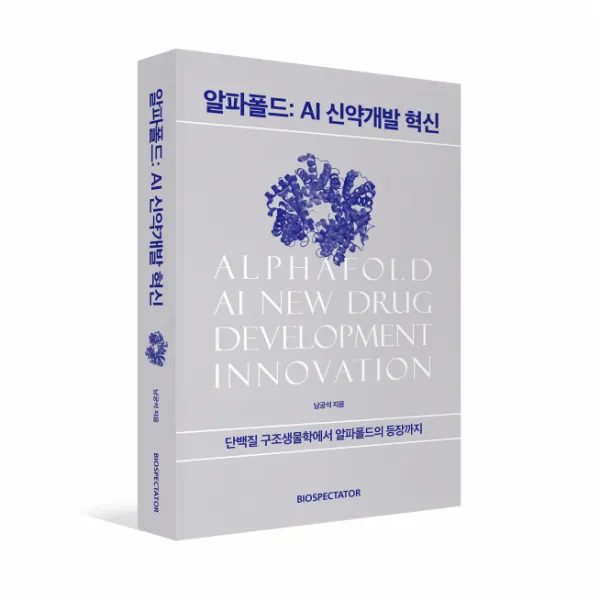
The first step in drug development is understanding the "protein structure." Proteins in our bodies have complexly folded 3D structures, and to find the perfect "key (drug)" for a protein that causes a specific disease, one must know this structure accurately.
In the past, traditional methods such as X-ray crystallography or cryo-electron microscopy were used. However, it could take years just to reveal a single protein structure, and the costs were astronomical. It was like digging thousands of times in a massive maze just to find the shape of a tiny hole.
This is where Google DeepMind's AlphaFold entered the scene and completely changed the rules of the game.
- Revolution in Speed: It performs structure prediction, which used to take years, in just a few minutes.
- Revolution in Accuracy: It predicts protein structures with atomic-level precision, improving accuracy by about 50% compared to traditional physical methods.
- Expanded Capabilities: The latest version, AlphaFold3, can simulate complex interactions not only between proteins but also between DNA, RNA, and drug molecules (ligands).
Thanks to this incredible achievement, the developers were awarded the 2024 Nobel Prize in Chemistry, proving its value to the world. Now, instead of physically carving and refining proteins in the lab, scientists can start by finding the most likely structures through computer simulations.
2. Beyond Theory to Practice: AI Drugs Knocking on the Doors of Clinical Trials
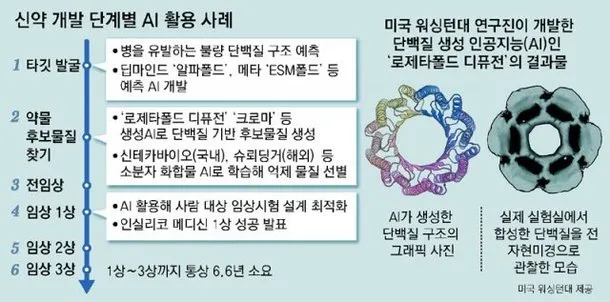
So, does this technology actually work "in reality"? It is natural to wonder, "Will a drug made by AI truly be effective?" However, as of 2024, we are witnessing an "era of demonstration" where AI is moving beyond theoretical possibility to be converted into "commercial products."
The most notable case is the obesity treatment MDR-001 from the Chinese biotech startup MindRank. This candidate material, developed through AI, has achieved the remarkable feat of entering Phase 3 clinical trials. The structural clues found by AI, targeting the complex metabolic disease of obesity, are now ready to be applied to actual patients.
Additionally, the case of the Korean company Pharos iBio is noteworthy. The anticancer drug candidate "Lasmotinib (PHI-101)," developed through their proprietary AI platform 'Chemiverse,' showed remarkable data in Phase 1 clinical trials.
- Proven Safety: As predicted by the AI in advance, not a single case of cardiotoxicity risk was observed during the clinical process.
- Confirmed Efficacy: It achieved a 50% Complete Response rate (CRc) in a group of patients with relapsed/refractory Acute Myeloid Leukemia (AML), proving that the AI's predictive power matches actual efficacy.
This is a very important point. It means that AI has moved beyond merely guessing, "This drug might be good," and has begun to prove with actual patient data that "This drug will be safe and effective."
3. The Economic and Social Grand Transformation Brought by AI Drug Development
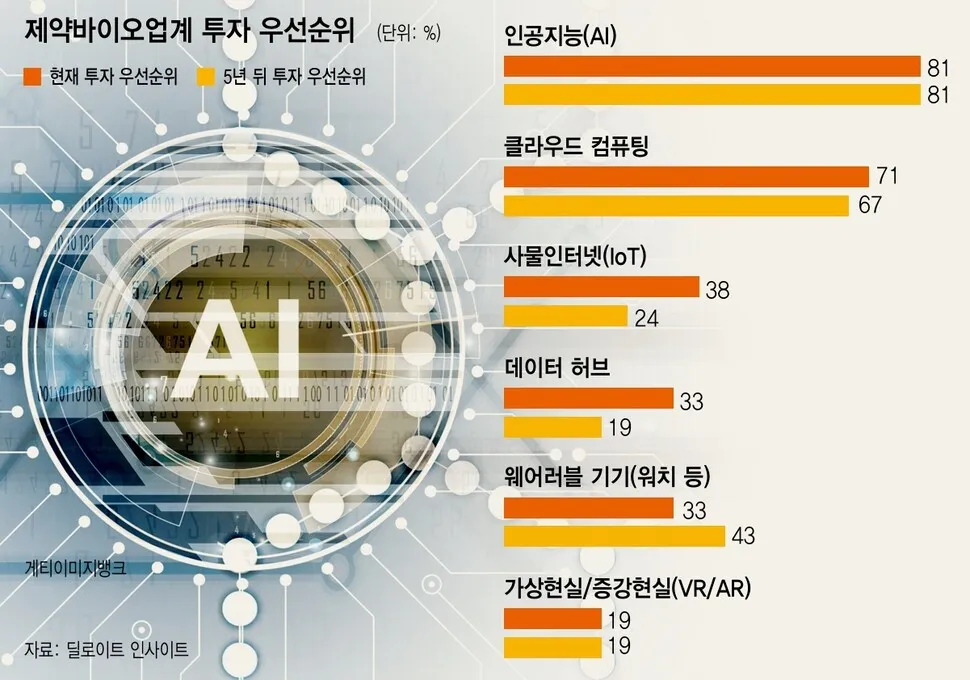
The changes occurring as AI is introduced to drug development cannot be fully explained by the word "fast." It is something that changes the entire economic structure of the pharmaceutical industry and the healthy lifespan of humanity.
Drastic Reduction in Cost and Time
The cost and time, which were the biggest barriers to drug development, are being drastically reduced through AI. According to the case of Pharos iBio, using an AI platform allowed for a reduction of up to 80.2% in cost and 63.6% in development time compared to traditional methods. The hope that projects requiring trillions of won and more than 10 years can be shortened to less than half the cost and time is becoming a reality.
Realization of Precision Medicine
AI analyzes individual patient data to predict which specific drug will work best for which patient, or what side effects it might cause. This goes beyond simply making "drugs that cure diseases" and accelerates the era of Precision Medicine, which enables personalized treatment for patients.
But Challenges Remain: AI is Not a Panacea
Of course, not everything is rosy. Experts warn that AI is not a "magic wand that completely eliminates failure."
- The Wall of Phase 2 Clinical Trials: Even if AI selects candidate materials well and gets them through Phase 1, the success rate in Phase 2 can still remain at levels similar to traditional methods (about 40%) due to the complex immune responses of the human body and heterogeneity among patients.
- Data and Regulation: The problem of a lack of high-quality biological data, the transparency of algorithms (the black box problem), and the regulatory approval processes that cannot keep up with the speed of changing technology are still tasks to be solved.
- Monopoly Issues: There are also antitrust concerns that if giant tech companies like Google monopolize AI technology, opportunities for drug development—which is directly linked to life—could be limited.
Ultimately, future drug development will not be about AI replacing everything, but rather evolving into a "hybrid model" where the ultra-fast computational power of AI is combined with the precise judgment of human scientists.
Conclusion: The Shortcut to Drug Development, a New Door Opened by AI

So far, we have explored the world of AI and AlphaFold, which are changing the paradigm of drug development in 2024.
To summarize, AlphaFold has revolutionized the speed and accuracy of protein structure prediction, and based on this, AI-developed drugs are already proving their efficacy by producing substantial results in the clinical trial stage. Although challenges such as the complexity of clinical trials and the lack of data remain, AI will be the key driver in providing faster and cheaper treatments to humanity by drastically reducing the cost and time of drug development.
AI has now established itself not as an assistant tool in the lab, but as the "architect" of drug development that will extend the healthy lifespan of humanity. Aren't you excited to see how this massive revolution brought by technology will change our lives to be healthier?
Do you think drugs developed by AI can be perfectly safe, or do you believe human verification is still absolutely necessary? Let us know your thoughts in the comments!
References
- [사설] AI 신약 개발 '실증 시대' 열렸다 - 헬스코리아뉴스 · hkn24.com
- 알파폴드: 신약 발견의 새로운 시대를 열다 - LinkedIn · kr.linkedin.com
- 신약 개발의 오랜 난제…AI가 해결한다 [트랜D] - 네이트 뉴스 · news.nate.com
- "글로벌 AI 신약개발, 어디까지 왔나" 임상시험 사례로 살펴보니… · pharmnews.com
- AlphaFold 3 리뷰 - Google DeepMind, 신약 개발의 새로운 패러다임 ... · hyperlab.hits.ai
- AI가 신약을 만든다? 임상에서 드러난 '현실적 성과'는? - 바이오타임즈 · biotimes.co.kr
- [동향리포트]의생명과학 분야에서의 AI 활용 사례와 전망 - BRIC · ibric.org
- AI 예측하고 임상이 증명…AI 신약개발 실효성 논란 종지부 · medicaltimes.com