"Why were the formulas I stayed up all night memorizing completely useless in today's exam?"
This is the most frequent lament I have heard while meeting numerous students and parents over the past year. In the past, being called an "honor student" was possible just by cramming an entire textbook into one's head, but the educational landscape of 2026 has become a battlefield of a completely different dimension. Now, the question of simply "what you know" has lost its meaning, because AI can retrieve knowledge much faster and more accurately than we can.
Today, I would like to talk to you about a shift in the educational paradigm that might be somewhat shocking, but is something we must face head-on.
The Arrival of an Era Where the Expiration Date of Knowledge Has Passed

Let me tell you the story of Minsu (a pseudonym), a college student and an acquaintance of mine. Minsu was a typical "hard worker." During exam periods, he would stay up for days in the library, underlining countless texts in his major textbooks and memorizing core content by rote. However, Minsu was deeply shocked during this semester's midterm exam. The problem was not simple conceptual definitions, but rather descriptive questions that asked, "Based on this concept, how would you solve a complex real-world social problem?"
The knowledge Minsu had memorized was trapped within the text. On the other hand, his peers who studied using AI were different. Instead of memorizing knowledge, they spent their time understanding the context between pieces of information by asking AI questions. As of 2026, the AI utilization rate among college students has reached a staggering 92%, and statistics show that students who actively integrate AI into their learning achieve exam scores that are, on average, 54% higher than those who study in the traditional manner.
Now, rote memorization of knowledge is becoming an inefficient "relic of the old era." From a cognitive science perspective, it has already been proven that passive learning—simply reading and underlining—is highly inefficient. We now stand at a crossroads between "study automation" and "active learning."
How AI Became a Private Tutor
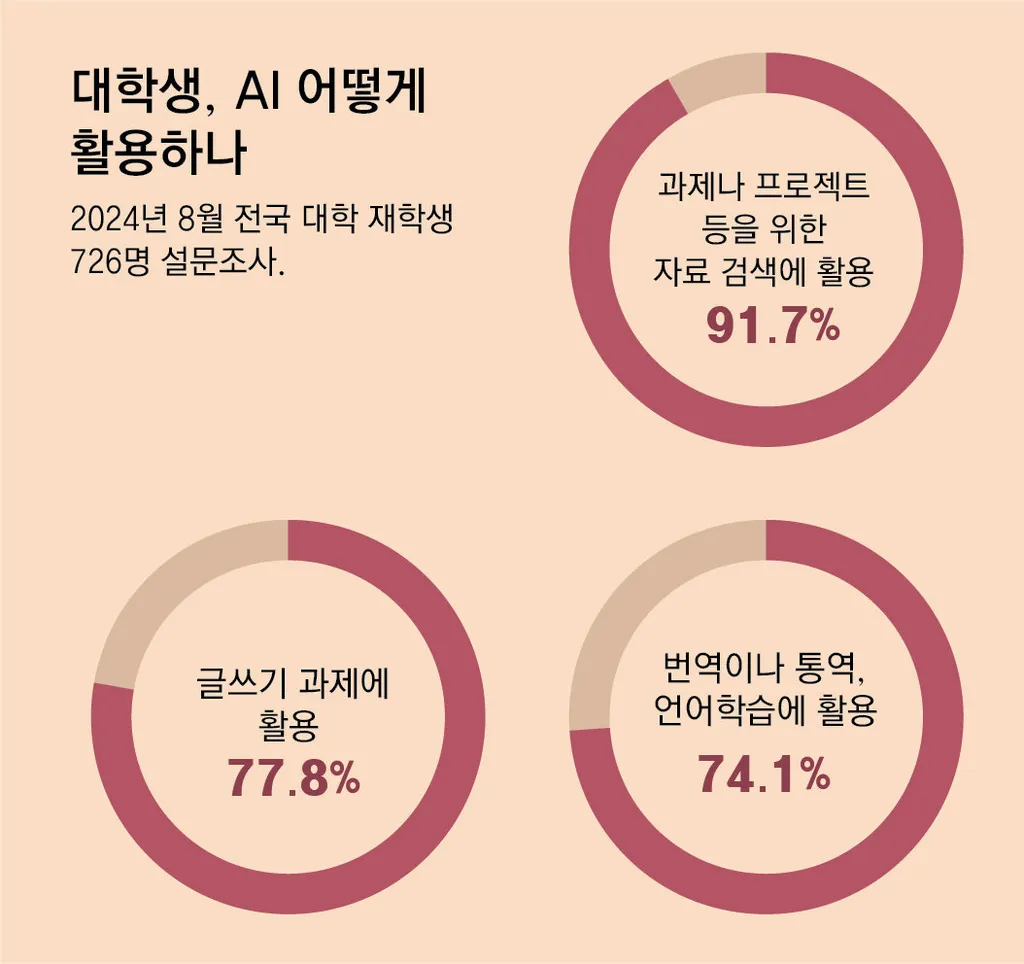
So, specifically how is AI helping our children study? It has moved beyond the level of simply asking ChatGPT for answers. The 2026 education market has grown to a massive $112.3 billion, and at its center are "specialized agents."
For example, looking at cutting-edge platforms like Jenova, they go beyond merely answering questions; they provide an optimized environment for students by combining the reasoning capabilities of GPT-5.2, the vast contextual understanding of Claude Opus 4.5, and the massive data processing power of Gemini 3 Pro. Not only are there customized tutors for professional certification exams like the SAT, GRE, and LSAT, but academic research assistants linked with Google Scholar have also emerged.
What makes this amazing is that AI analyzes a student's strengths and weaknesses in real-time to design a "personalized learning path." In the past, a single teacher had to look after dozens of students at a 1:35 ratio, but now AI can provide close 1:1 feedback to each student 24 hours a day.
However, there is a point of caution here. Just because AI does everything for them does not mean a student's thinking ability will develop automatically. Rather, the moment a student becomes accustomed to the correct answers provided by AI and "stops thinking," learning regresses. This is exactly why we must focus on the next step: "questioning."
'Question Design Ability' is the New Class Status
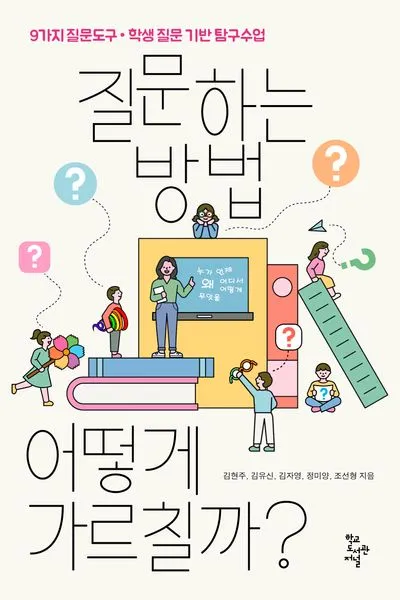
The core competency of education has now shifted to Prompt Literacy. Various academic circles, such as the Korean Language Education Association, are already redefining creativity for the AI era. If past creativity was about coming up with unique ideas that others hadn't thought of, today's creativity depends on the "question design ability"—the ability to decide "how to elicit better answers from AI."
Prompt literacy is not merely the skill of inputting commands well.
- It is the ability to accurately grasp the context of the problem you want to solve,
- To design what kind of logical structure the question should be posed to the AI, and
- To critically review whether the answer provided by the AI is correct or biased.
This process is like an orchestra conductor. Just as a conductor does not play every instrument directly but instructs and tunes each instrument so they can produce the best sound, the learner must orchestrate powerful tools like AI to produce the best results.
In fact, there is a strong movement in the corporate world to adopt this "questioning skill." Conducting "question coaching" training so that organizational members can ask deeper and more accurate questions through AI is now a matter of survival, not a choice. This is because when the quality of questions rises, the quality of decision-making rises, which directly leads to organizational competitiveness.
The Paradigm of Education: From Teacher to Designer
This massive shift is even shaking the roles of teachers and parents. A teacher in 2026 is no longer a "transmitter" of knowledge. As AI takes over grading and administrative tasks (in fact, platforms like Pensive reduce professors' grading time by tenfold), teachers must become "Learning Designers" and "Mentors" who help with students' emotional growth and design complex learning experiences.
However, it is not all optimistic outlooks. We face several serious challenges:
- The Digital Divide: There is a risk that the learning gap will widen between students who can afford expensive paid AI services and those who cannot.
- Algorithmic Bias: If AI provides biased information, students lacking critical thinking skills may accept it uncritically.
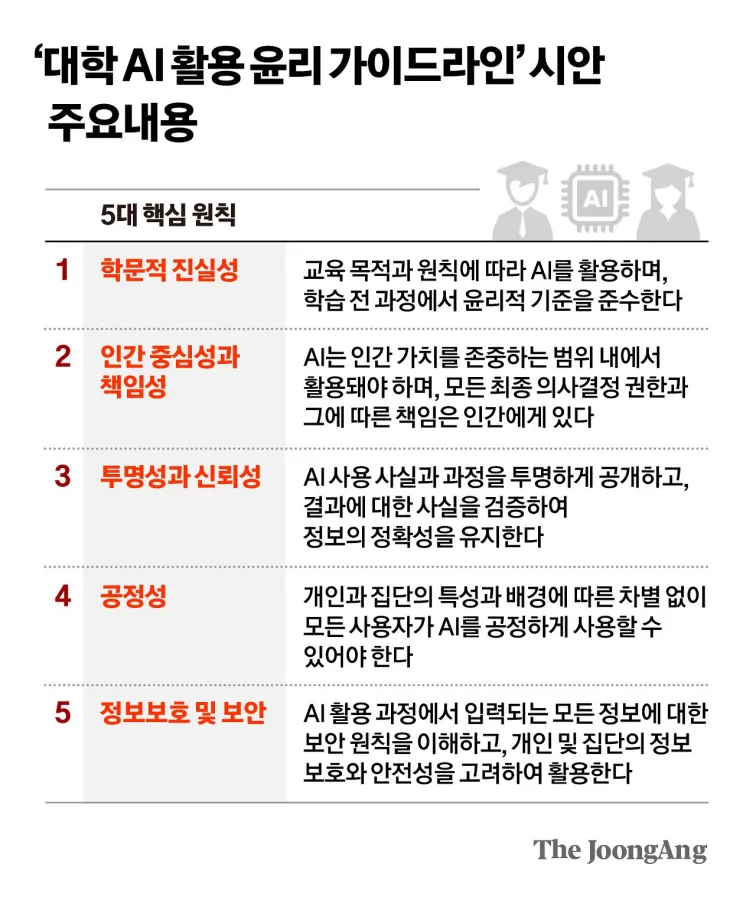
- Academic Integrity: The issue of how to prevent cheating using AI and how to educate human honesty.
As emphasized by KDI (Korea Development Institute), AI literacy has become an essential element for social inclusion, going beyond individual technical proficiency. This is why governments and educational institutions must establish "agile governance" to ensure equitable AI access and prepare ethical guidelines.
In Summary: How Are Your Questions?

Today, we have looked at the reality of education in 2026.
In summary, we are in an era where the application of knowledge is more important than the accumulation of knowledge, and question design ability (Prompt Literacy) is a more core competency than simple memorization. AI should not be used as an enemy that replaces us, but as a powerful partner that expands our thinking.
Ultimately, the winners of the future will not be those with the most information, but those who know how to ask the sharpest and most creative questions.
What kind of questions did you ask AI today? Or, rather than telling your child what to memorize, what kind of questioning skills do you want to teach them?
I am curious to hear your thoughts. Please feel free to share them in the comments!
References
- 학습용 AI: 2026년 지능형 학습 도구 완벽 가이드 - Jenova.ai · jenova.ai
- AI로 서술형 답 채점…하버드大 교수도 써요 - 매일경제 · mk.co.kr
- Feasibility Study on Implementing AI Prompt-Based “Questioning ... · journal.dcs.or.kr
- 생성형 AI 시대의 창의성과 프롬프트 리터러시 - 국어교육학회 · koredu.net
- 인공지능 시대의 미래 교육_ 패러다임 전환과 과제 · heartplay.tistory.com
- AI 리터러시 교육이 시급하다 | 나라경제 | KDI 경제교육·정보센터 · eiec.kdi.re.kr