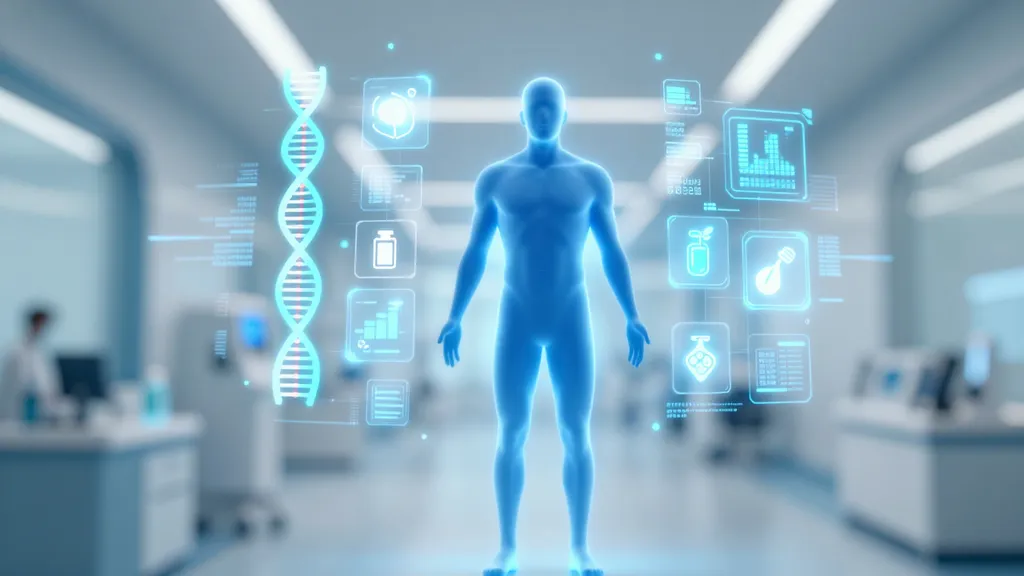
"What supplement should I take today?" or "How much will my blood sugar rise if I eat this food?" To answer these questions, we often find ourselves typing into search bars or waiting for recommendations from YouTubers.
However, as of 2026, these concerns are no longer limited to vague individual guesswork or general advice from experts. This is because the AI Health Coach has emerged—a system capable of reading your genetic information, real-time blood sugar levels, and gut microbiome status all at once.
In an era where data serves as the compass for health, let's take a deep dive into why we must now move past the "era of eating haphazardly" and transition into "data-driven personalized nutritional management."
1. The Reality We Face: 'Decision Fatigue' and 'Data Disconnect'
We live in a flood of information, yet paradoxically, managing our health is becoming increasingly difficult. Why is that?
The biggest issue is Decision Fatigue. Modern individuals make more than 200 food-related decisions every single day. After being exhausted by work and depleting cognitive energy after office hours, judging "Which nutrients am I lacking?" or "Will this meal help with my weight loss?" is practically impossible. Consequently, we end up making the easiest, most stimulating, and least nutritious choices.
Another problem is the massive gap between data and action. While many people check their bodily data through smartwatches or Continuous Glucose Monitors (CGM), fewer than 10% actually change their diet after seeing that data. This is because while data accumulates, there are no "actionable guidelines" to apply it to one's life.
Traditional health management methods have been too static. Even though our body state today is different from yesterday, we still rely on yesterday's calorie charts or general recommended daily intakes.
2. Comparison of Alternatives: Traditional Management vs. AI-Based Personalized Management
What choices do we have? Let's compare the current health management methods from three perspectives.
① Traditional Methods: Universal Nutritional Guides and General Diets
This is the most common approach. It involves following recommended amounts such as "consume this much Vitamin C per day" as mentioned in TV health programs or books.
- Pros: Costs almost nothing and has very high accessibility. Anyone can implement it immediately.
- Cons: It completely ignores the uniqueness of the "individual." It may have no effect on someone who genetically has a low absorption rate for certain vitamins, and it fails to reflect individual activity levels or blood sugar responses.
② Digital Tracking: Simple Logging Apps
This involves inputting calories and checking step counts.
- Pros: You can see objective figures by keeping a record of your actions.
- Cons: It logs data but doesn't provide "solutions." While data accumulates, it lacks intelligent feedback that tells you "exactly what you should eat right now" based on that data.
③ AI-Based Hyper-Personalized Platforms: The 2026 Standard
This method integrates and analyzes multi-omics data—including genetics, microbiome, blood sugar, and sleep—to provide real-time, customized solutions.
- Pros: The pinnacle of data-driven personalized nutritional management. It acts as a "personal nutritionist for me" by considering genetic flaws, gut environment, and real-time blood sugar changes. Beyond simply providing information, it increases executability by suggesting everything from meal compositions to grocery lists.
- Cons: Advanced analysis requires initial costs such as genetic testing or the use of wearable devices, and privacy considerations regarding data provision are necessary.
3. Why Should We Pay Attention to the 'AI Health Coach' Now?
It is not merely because technology has advanced. The healthcare environment of 2026 has shifted rapidly toward a direction that necessitates this technology.
Integration of Technology: From Genetics to Blood Sugar
Current market leaders do not simply calculate calories. By collaborating with genetic testing services like Genoplan or LabGenomics, they recommend nutrients that match the user's genetic characteristics. For example, if a user genetically has a low absorption rate for a specific vitamin, the AI immediately recognizes this and suggests products with a high content of that vitamin.
Furthermore, platforms like Pilize utilize Continuous Glucose Monitor (CGM) data to link diet and exercise in real-time. This is also extremely important for patients undergoing drug treatments (e.g., Mounjaro, etc.). This is because AI can monitor and supplement muscle loss or nutritional imbalances caused by medication in real-time.
Economic Value and Market Expansion
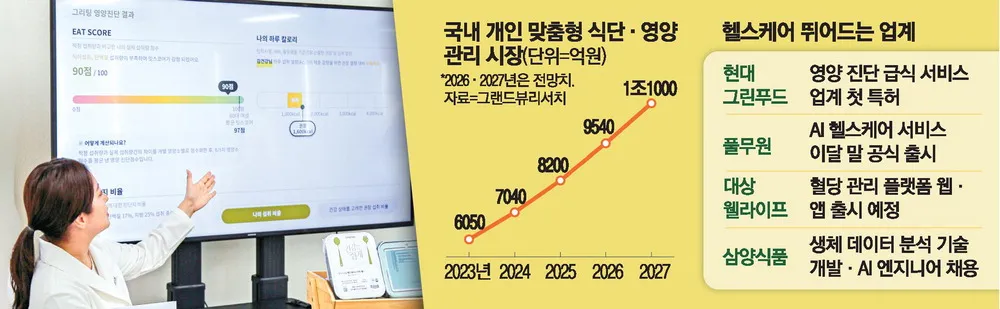
The growth of this market is phenomenal. The global personalized nutrition AI market, which was approximately 10.2 billion by 2033. This proves the global aging population, the increase in chronic diseases, and the paradigm shift from "treating disease" to "preventing disease."
Innovation in User Experience: Ensuring 'Sustainability'
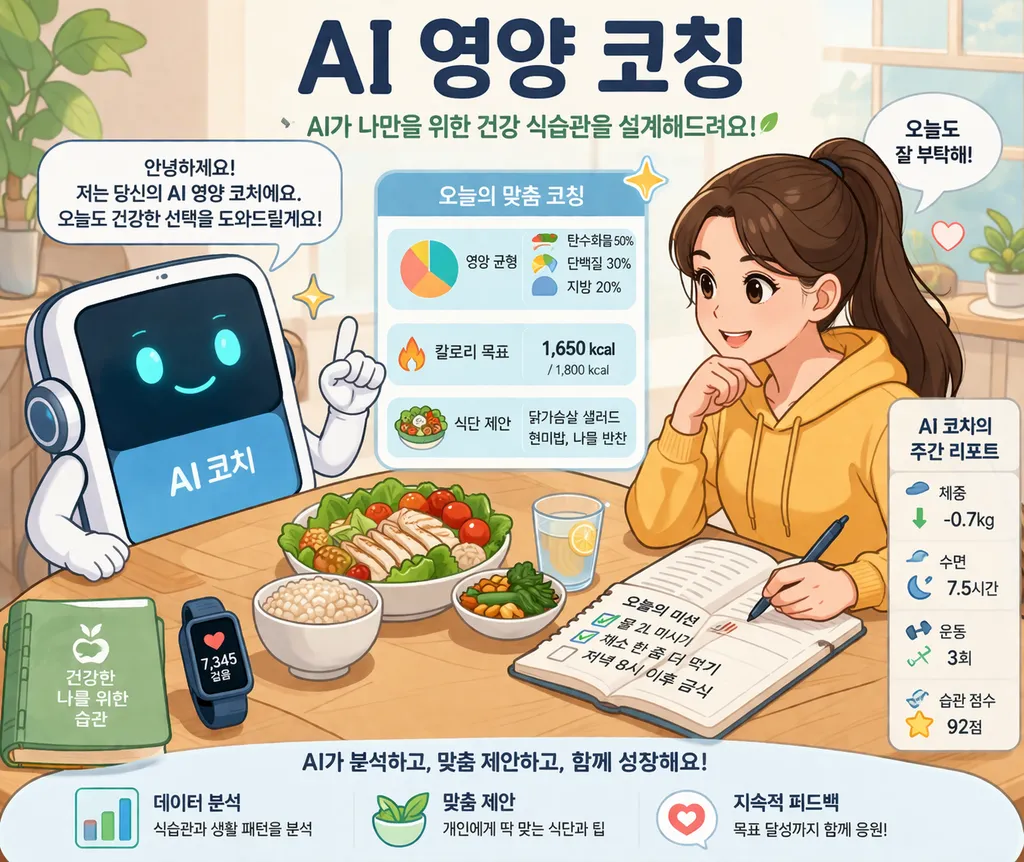
The reason past diet management failed was due to 'boredom' and 'difficulty.' However, the latest AI platforms evolve alongside the user by learning their preferences and metabolic patterns. If a user shows changes in weight or increases exercise intensity, the AI immediately readjusts the meal plan. Thanks to this 'adaptive' nature, the 90-day retention rate of AI-based platforms is reported to be 67% higher than that of general platforms.
4. Expert Advice: How to Use AI Wisely
However, there are clear cautions. Blindly believing that AI will solve everything is dangerous.
First, you must verify the reliability of the data. The recommendations provided by AI are based on the data provided by the user. Keep in mind that genetic testing or microbiome analysis results are not absolute truths, but rather indicators showing your current state.
Second, collaboration with experts is essential. While AI is a powerful tool, medical judgments or the management of complex diseases must be accompanied by consultations with experts such as doctors or nutritionists. In particular, for sensitive issues like interactions between medication and nutrients, it is safer to refer to the AI's analysis while following the final judgment of a professional.
Third, you are ultimately the subject of management. AI is merely a sophisticated navigation system; you are the one holding the steering wheel. While the perfect diet recommended by AI is important, if the basic principles—balanced eating habits, consistent exercise, and sufficient rest—break down, even the AI's advice will lose its luster.
Conclusion: Designing Your Healthy Future with Data

Health management in 2026 has entered the era of sophisticated data-driven personalized nutritional management, rather than mere vague efforts.
In summary, we are utilizing AI technology that combines genetics and real-time biological data to solve the problems of decision fatigue and data disconnect. This technology goes beyond simple recording to provide hyper-personalized solutions tailored to individual biological characteristics, making our healthy lives sustainable.
Keep a powerful assistant like AI by your side, and do not miss the signals in the data your body sends. If you use technology wisely while not forgetting the fundamentals of healthy lifestyle habits, your healthy lifespan will follow a trajectory entirely different from before.
When you check your health data, what is the first thing you want to change? Please share your thoughts in the comments!
References
- 2026년 AI 맞춤 영양제 시대! 내 몸에 딱 맞는 영양제, AI가 찾아줄까? · youtube.com
- AI 건강 식단 플래너: 인공지능으로 구현하는 개인 맞춤형 영양 관리 ... · jenova.ai
- 마운자로 뜨자 더 주목받는 AI 건강코치…식단·혈당·운동 맞춤 관리 · mt.co.kr
- 개인 맞춤형 영양 AI 플랫폼 시장 규모, 2034년 예측 · gminsights.com
- AI로 촉발된 헬스케어 산업의 대전환 · assets.kpmg.com
- 정밀영양 AI 상용화와 맞춤형 식품 생태계의 미래는? - 식품저널 · foodnews.co.kr