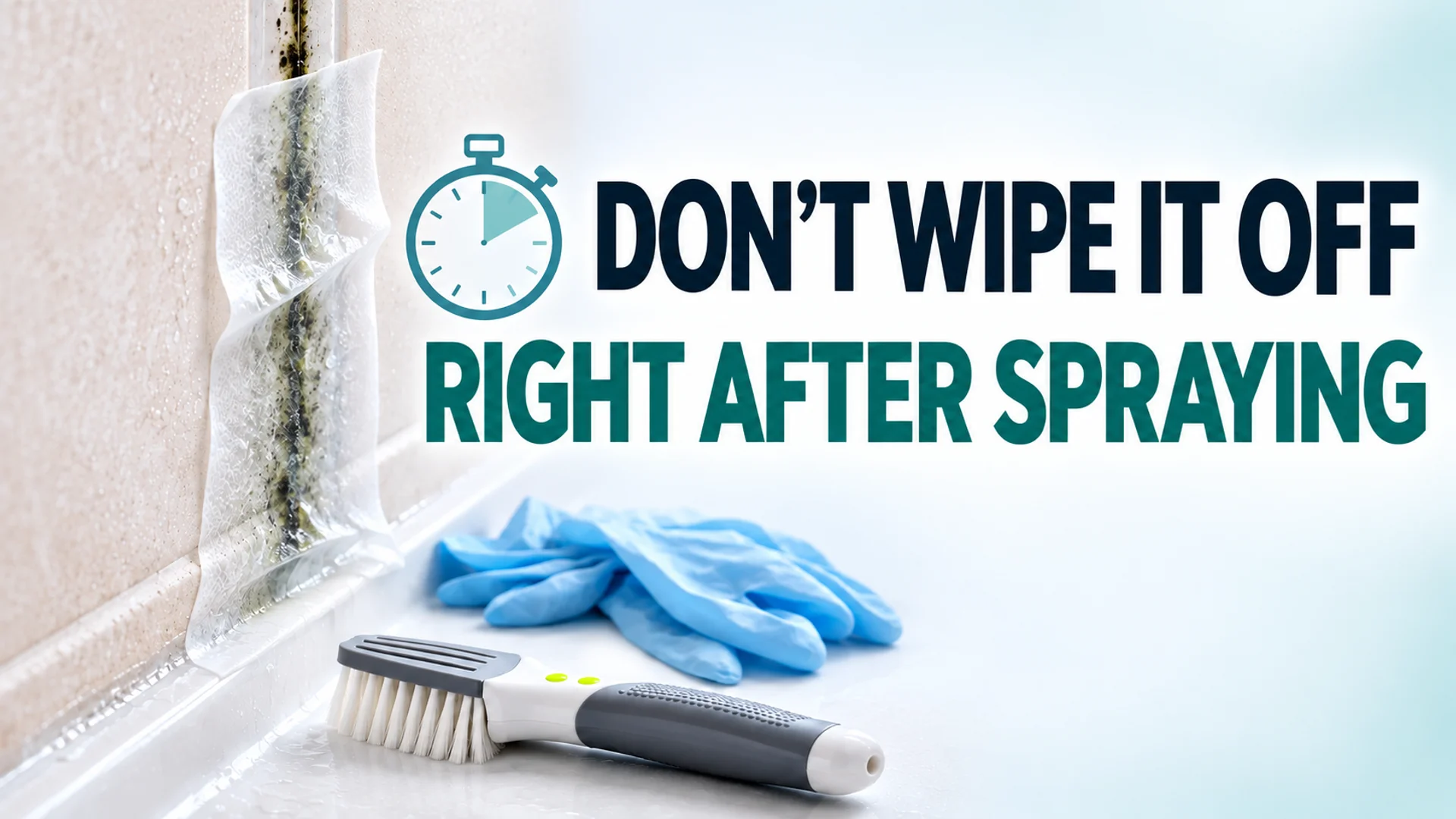
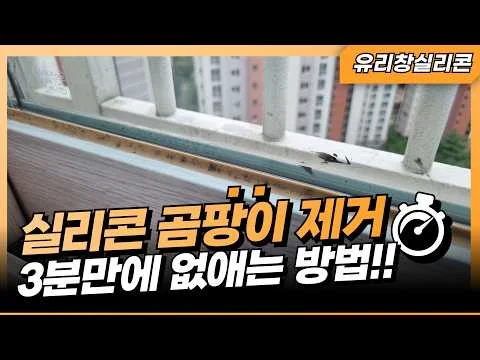
When you spot mold, your hand reaches for a cloth before you even think. Scrubbing hard makes the black spots disappear, bringing immediate relief. However, the operator of the ‘SaeYuri GwanNaejum’ (New Glass Let Us Do It) channel—who has handled silicone mold on-site while running a window cleaning service—states firmly that this behavior actually backfires. Scrubbing spreads mold spores in all directions, which can irritate the respiratory system and skin. Instead of wiping, this expert recommends soaking a wet wipe in a 1:1 mixture of bleach and cold water, placing it neatly over the moldy silicone, and waiting. When the wipe was removed after 3 to 4 hours, the camera captured a significant lightening of the black lines 1.
To state the conclusion first, mold removal spray is not a product meant to be wiped away immediately after application. This is because the spray does not perform physical cleaning by scrubbing off dirt, but rather initiates a sterilization reaction that chemically damages the mold’s cellular structure. Chemical reactions do not finish instantly. If the solution is not given time to penetrate to the mold’s roots and complete the reaction, the stain may appear to fade temporarily, but the fungus remains alive and will reappear in the same spot days later. The timing for wiping should be determined not by “when the black color disappears” but by “when the contact time required by the product has elapsed” 12.
What Happens Inside the Mold the Moment You Spray
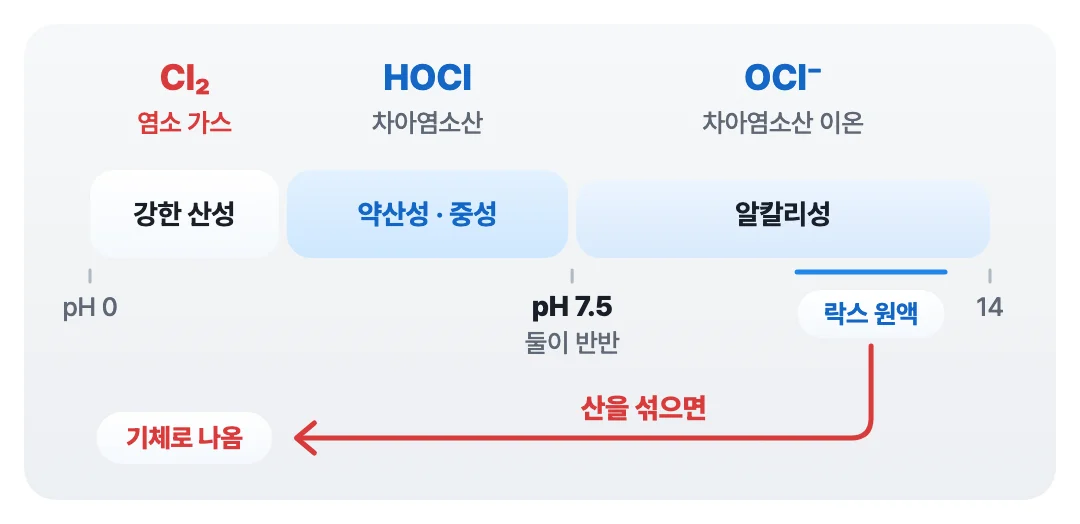
Most mold removal sprays are chlorine-based products containing sodium hypochlorite, the main ingredient in bleach. In water, sodium hypochlorite exists in two forms with slightly different properties (hypochlorite ions and hypochlorous acid), both of which act as oxidizing agents. An oxidizing agent is a substance that steals electrons from other molecules, breaking their bonds. When the bonds in the pigment sections that create stains are broken, the color fades (bleaching), and when the mold’s proteins, enzymes, and cell membranes are oxidized and lose their function, the mold dies (sterilization) 3. The key point here is that this electron-stealing process is not a single event but a progression. If the solution dries or is wiped away, the chemical participating in the oxidation disappears, and the reaction stops midway.
This principle clearly illustrates why indiscriminate scrubbing is risky. Scrubbing merely removes the surface pigment and has no correlation with the oxidation reaction time remaining on the surface. The time the solution stays on the surface—known as ‘contact time’—is the actual condition for sterilization.
Waiting Times Vary by Material
The required contact time depends on how deeply the mold has penetrated. The situation is entirely different for the same agent when applied to smooth tile surfaces versus rubber silicone grout lines.
| Contamination Location | Recommended Waiting Time | Basis and Source |
|---|---|---|
| Flat bathroom tiles | Visible removal begins around 5 minutes | A case where ‘Iron Doctor TV’ confirmed via video that mold was removed approximately 5 minutes after spraying a Wanpangyi product 4 |
| General wall and tile surfaces | Leave for 10–20 minutes, then rinse with water | Standard time to allow penetration after spraying to cover the affected area with foam (Agricultural Information Blog) 2 |
| Mold spreading deep into silicone/grout | 3–4 hours; at home, up to 1–48 hours | On-site demonstrations and home recommendations (‘SaeYuri GwanNaejum’) 1 |
Why does this difference occur? On smooth tiles, mold primarily adheres to the surface, so a contact time of just five minutes yields visible results. As demonstrated by ‘Iron Doctor TV’ on bathroom tiles in 2019, color changes occurred during the waiting period, and mold was visibly removed after five minutes 4. In contrast, in silicone grout lines, mycelium (the mold’s roots) has penetrated deeply into the tiny gaps. A solution that only lightly touches the surface cannot reach the roots. Therefore, the operator of ‘SaeYuri GwanNaejum’ explains that leaving it longer allows penetration into the deeper parts of the silicone. In professional settings, they maintained the application for 3–4 hours alongside window cleaning, and suggested that leaving it for about a day at home is acceptable, with the best results achieved after 48 hours 1.
The Reaction Continues Only if You Prevent Drips and Evaporation
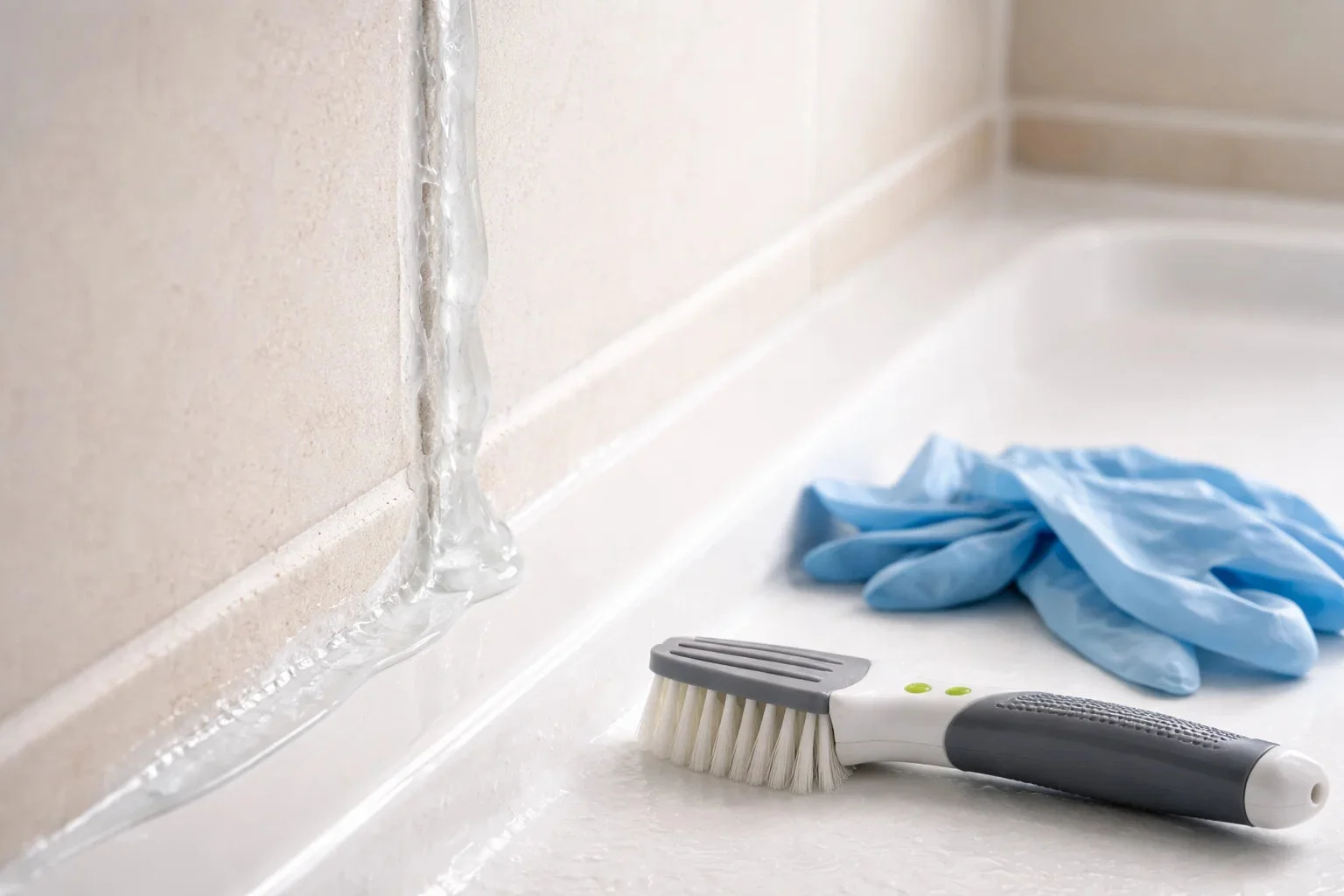
On vertical or curved surfaces like silicone, the key is to create a structure that keeps the solution in place for an extended period. This method is commonly called the wrapping technique, and multiple sources offer it as a practical approach.
The simplest form involves thoroughly soaking paper towels or wet wipes with the agent and pressing them firmly against the moldy area. ‘SaeYuri GwanNaejum’ explains that by tearing a wet wipe and soaking it in a 1:1 mix of cold water and bleach, the process of attaching it to the silicone can be completed in under three minutes, and the liquid within the attached wipe adheres well to the silicone surface 1. ‘Iron Doctor TV’ similarly recommends attaching toilet paper soaked in the chemical to silicone mold and removing it after some time 4. Taking it a step further, covering the paper towel with plastic wrap prevents the agent from evaporating into the air, extending the chemical reaction time. Using both adhesion and covering allows deep penetration to the mold’s roots, which is the core of the wrapping technique summarized by ‘Agricultural Information’ 2.
The choice of product formulation also aligns with this principle. Liquid types are suitable for flat areas like floors, while foam types cling longer to vertical walls without dripping, offering high penetration. Gel types are advantageous for areas requiring long-term fixation, such as window frame silicone or narrow grout lines 2.
The Time to Resist the Urge to Wipe Immediately
Once you establish contact time as the standard, you no longer need to rely on intuition to decide when to wipe. Unlike physical cleaning, an oxidation reaction means that “the visible stain has disappeared” does not necessarily mean “the fungus is dead.” The Clean Content Team explains that disinfection is complete only if the specified contact time is observed at the specified concentration, emphasizing that moisture must be maintained with a cover because the contact breaks if the solution dries. They also clarify that the presence of odor is not a criterion for judgment 3.
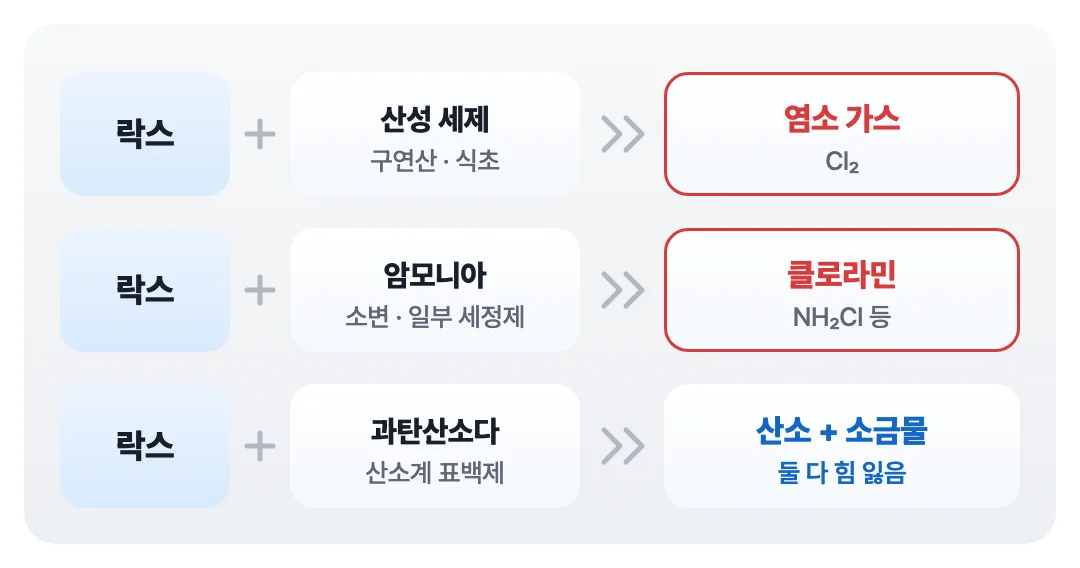
While following this standard, safety principles must also be observed. These habits also help increase the duration of action without diminishing the agent’s oxidative power. Sodium hypochlorite decomposes rapidly when heated, losing its oxidizing ability. Therefore, only cold or lukewarm water should be used when handling bleach and bleach-based products 31. Furthermore, acidic detergents, vinegar, or ammonia must not interfere with this chemical reaction. Acid contact generates toxic chlorine gas, and ammonia contact produces chloramine gas. If an acidic agent was used previously, the area must be rinsed with water and ventilated before applying bleach 3. Opening windows and exhaust fans to create cross-ventilation and wearing protective equipment are common guidelines 23.
In summary, spray products are not meant to be wiped the moment they are applied; they are products that require waiting for the reaction to finish from the moment of application. Based on the ‘Wanpangyi’ (Marvelous Cleansing) demonstration by ‘Iron Doctor TV,’ visible removal was confirmed on flat tiles approximately 5 minutes after spraying 4. For general wall and tile surfaces, the standard is leaving it for 10–20 minutes 2, while for areas where mycelium has penetrated, like silicone grout, it must be kept moist with wrapping and monitored for several hours or more 1. The time the solution remains on the surface is exactly the time required for the oxidation reaction to reach the mold’s roots. Instead of rushing to erase black spots, observing this waiting time helps reduce mold 421.
References
- 다이소 가장 빠른 유리창 실리콘 곰팡이 제거방법 과정 공개 · youtube.com↩
- 곰팡이제거스프레이 | 10분 만에 뿌리까지 뽑아내는 확실한 제거 노하우 - 농업 정보 · 1.farm.house-friend.co.kr↩
- 락스 희석 비율과 섞으면 안 되는 세제 세 짝 | 깔끔 · kkalkkeum.com↩
- 곰팡이 초 완벽 제거제 완팡이(마블러스 클린싱) 리뷰! · youtube.com↩