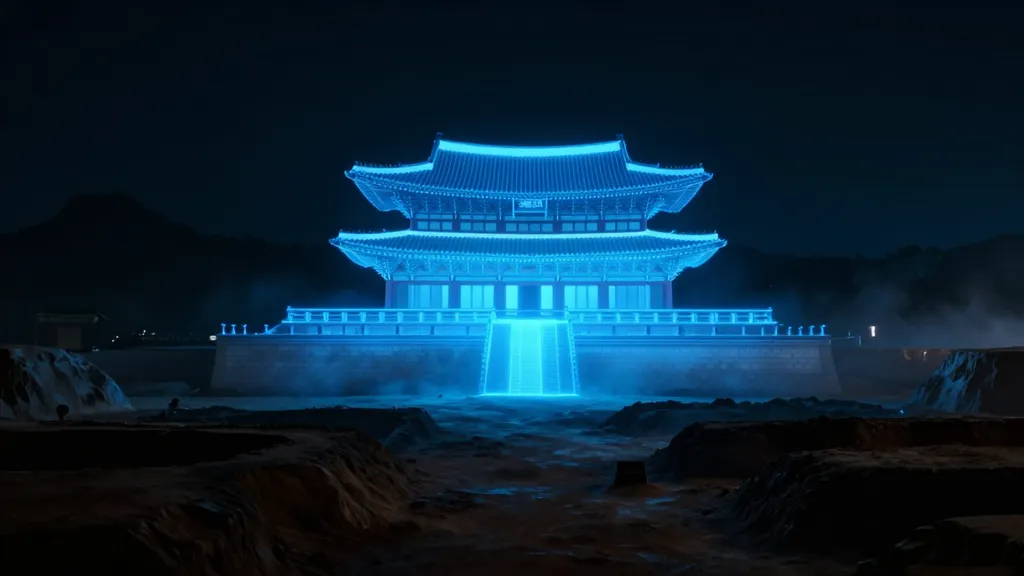
"What if we could reassemble the lost pieces of the past with just a single click?"
Have you ever felt a sense of emptiness while looking at old ceramic fragments behind a museum glass pane, or a stone pagoda so worn by wind and rain that its original shape has become unrecognizable? History does not exist merely within written words; it hides deep beneath the earth or within forms that have already vanished.
The truths that might have remained undiscovered even after decades of digging through traditional methods are being encountered in a completely different way as of 2026. This is because powerful tools like Artificial Intelligence (AI) and 3D scanning are shifting the paradigm of archaeology, awakening the sleeping history of the Joseon Dynasty.
A Journey to the Past: Why Have We Always Had to Fight 'Scarcity'?
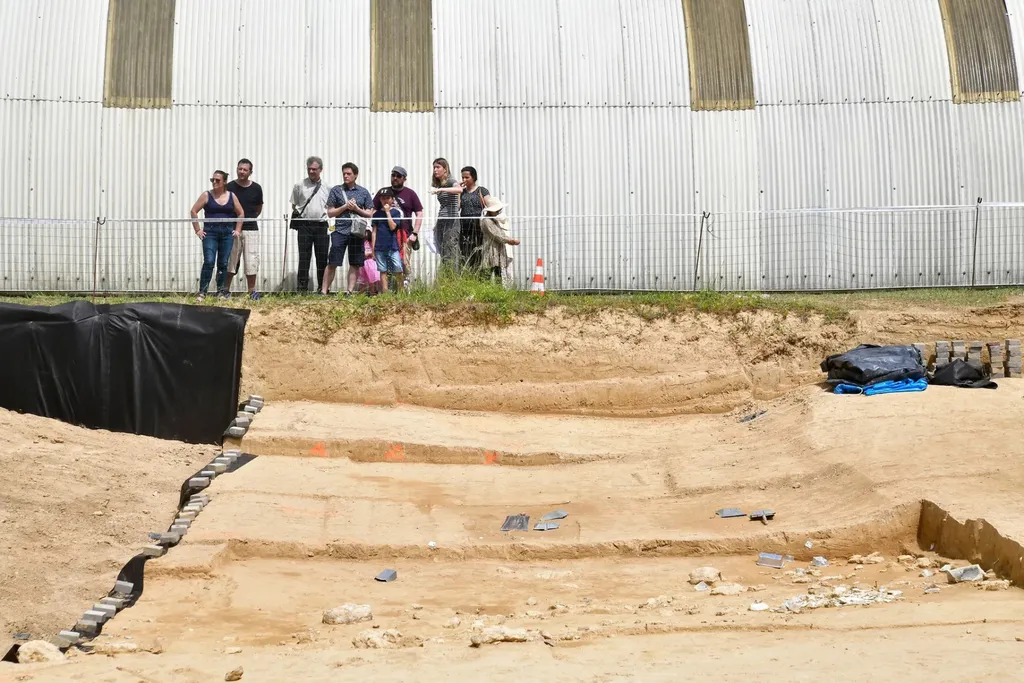
Imagine the arduous life of archaeologists. Inspecting massive excavation sites eye-by-eye and classifying thousands of broken ceramic shards one by one is like an endless marathon.
The problems faced by traditional archaeology can be categorized into three main areas.
First is the 'Limit of Visibility.' Finding ruins hidden beneath dense forests or massive geological strata was like searching for a needle in a haystack. Second is the 'Loss of Data.' The moment an artifact is excavated, the original context in which it lay is inevitably destroyed. Since once-disturbed ground cannot be returned to its original state, if the records are imperfect, that history vanishes forever. Third is the 'Limit of Human Resources.' There was always a shortage of skilled experts to perform precise measurements and classification, and processing vast amounts of data required too much time.
Due to these physical and temporal constraints, we had no choice but to miss countless pieces of history or lament over damaged artifacts. However, technological progress has begun to tear down these seemingly impossible barriers.
Digital Archaeology: The Revolutionary Solutions Brought by AI and 3D Technology
Archaeology is no longer just a task of picking up shovels and brushes. We have entered the era of "Digital Archaeology," where data and algorithms reconstruct history. As of 2026, we approach the truths of the past through three core technologies.
1. 'AI Insight': Seeing the Unseen
AI reads subtle patterns that the human eye misses. Much like Sherlock Holmes using a magnifying glass to find clues, AI analyzes subtle changes in soil color or differences in vegetation within satellite and aerial imagery.
In fact, the case where deep learning technology was used to find 60,000 Mayan ruins hidden under dense jungles surprised the world. This technology is also shining in South Korea. Recently, a research team at Ajou University introduced an AI technique called Masked Language Model (MLM) to restore the Daegu-bu Family Register of the Joseon Dynasty, which had missing or damaged records, with astonishing accuracy. By having artificial intelligence learn the context to fill in the blanks, they reassembled the scattered population and social structure of Joseon.
2. '3D Scanning and Digital Twins': Minimizing Damage
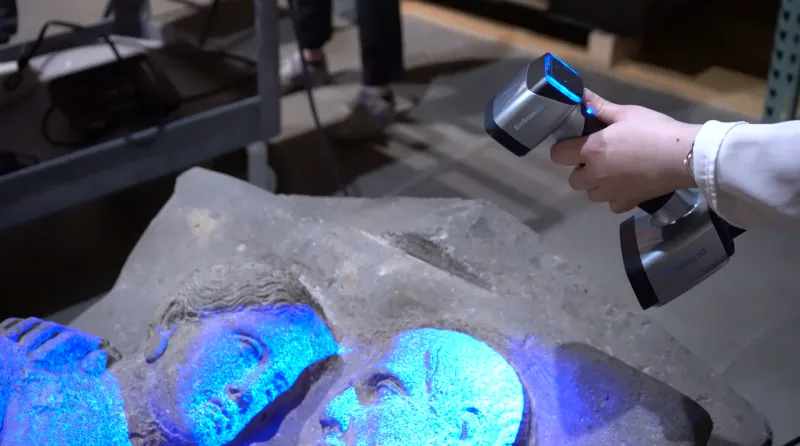
How wonderful would it be if we could perfectly reproduce an artifact without touching it? 3D scanning technology makes this possible. By using handheld scanners to precisely digitize the surface of an artifact, even microscopic cracks invisible to the naked eye can be implemented as digital blueprints.
In particular, Digital Twin technology has changed the paradigm of cultural heritage management. It involves building a virtual model identical to the actual site within a computer; through this, one can confirm the original form of the Yeonsujeon at Gounsa Temple in Uiseong, which was lost to a forest fire, or simulate structural safety in advance. Now, archaeological sites have moved beyond being mere objects of 'preservation' to become data that 'lives and moves' in digital space.
3. Collaboration between Drones (UAV) and Robots
Roof tiles in hard-to-reach high places or vast excavation sites are now the domain of Drones (UAV). High-resolution images collected by drones are converted into sophisticated 3D point cloud data through photogrammetry technology. Furthermore, an era has opened where robots precisely reassemble damaged artifacts, much like Italy's RePAIR project. Technology is taking over tasks in places difficult for human hands to reach, increasing the reliability of research.
Technology is Not a Panacea: Why the Expert's Eye is Necessary
Of course, technology is not a magic wand that solves all problems. There are clear points we must be wary of.
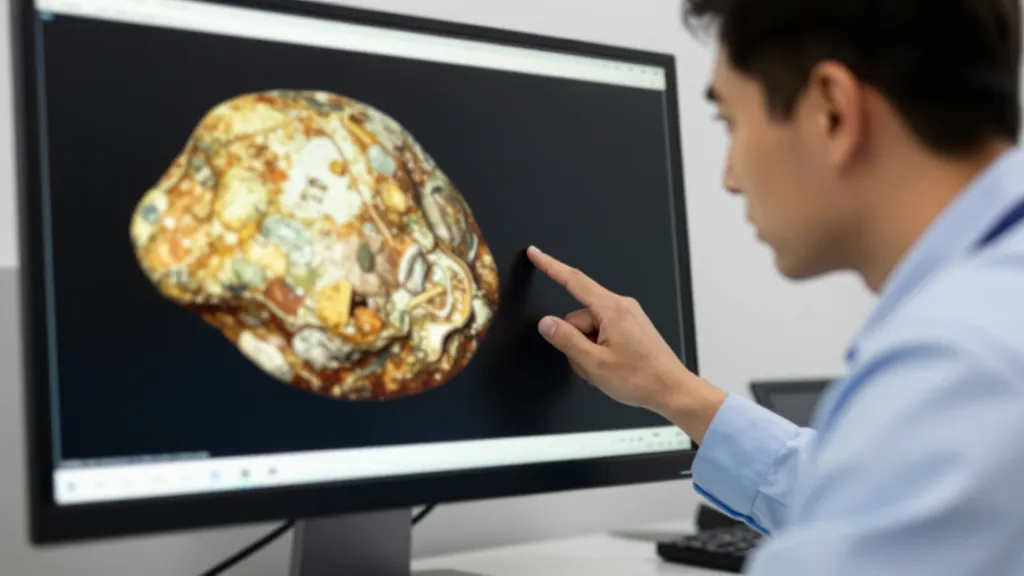
First is the technical limitation. 3D scanners struggle to collect data in curved areas where light cannot reach or from transparent materials. Additionally, while technology can perfectly draw the shape of an artifact, it cannot automatically read the 'manufacturing techniques' used to create it or its deep historical significance.
More importantly is the ethical issue. The results produced by AI are not always the correct answer. There is also a risk of creating a distorted history due to data bias. Therefore, the core of digital archaeology lies not in the 'technology' itself, but in the 'proficiency of the expert handling the technology.' Technology is merely a powerful tool to assist the expert's eye; ultimately, reading the context of history and judging its final value is the role of humans.
Therefore, modern archaeology must move toward a 'hybrid approach' where AI and traditional field investigations harmonize. We can only approach the true truth when we do not rely solely on technology but combine the insights of experts with digital data.
The Key to the Future: The Digital Expansion of K-Heritage
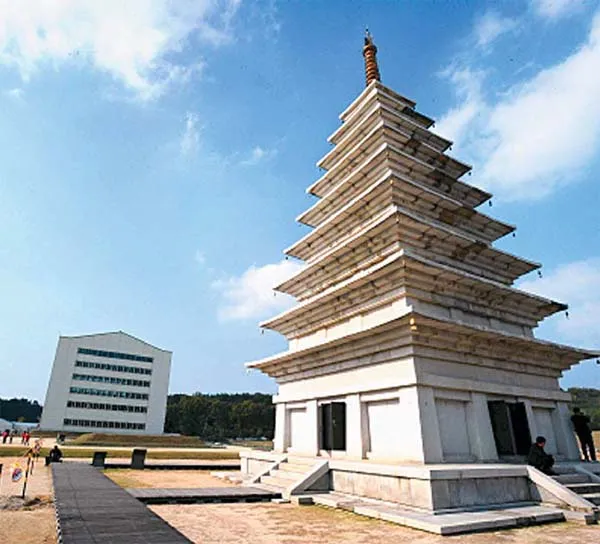
The cultural heritage around us is no longer just an artifact in a distant museum. The fact that the Cultural Heritage Administration recently opened 680,000 pieces of digital data to the public is a historical turning point. From precise 3D data to 3D assets that can be used in games and movies, our history is transforming into digital assets.
In particular, the 'Korean Archaeology Dictionary,' the first AI chatbot in the field of archaeology, is becoming a new window of knowledge for researchers and students. Now, if we have questions, we can converse with AI to immediately find information ranging from the Paleolithic Age to the Joseon Dynasty.
This trend goes beyond mere technological advancement; it will serve as a powerful weapon to permanently preserve our precious heritage and widely promote it to the world as 'K-Heritage.' The records and artifacts of Joseon, brought back to life through digital technology, will now breathe vividly before the eyes of people worldwide, transcending the constraints of time and space.
Digital archaeology is not a technology that simply copies the past. It is the work of building a 'digital bridge' that connects the past and the present. What other amazing stories will the future of artifact excavation, created by AI and 3D scanning, tell us?
Which aspect of the Joseon Dynasty restored by AI are you most curious about? Please share your thoughts in the comments!
References
- 디 지 털 고 고 학 미 래 를 발 굴 하 다 · uci.k-heritage.tv
- 새로운 발견의 길을 여는 고고학 분야의 AI · ultralytics.com
- 국가유산 디지털 데이터 68만 건 전면 개방… AI 챗봇 '한국 ... · heritageon.com
- 3D 스캔을 활용한 유물 제도작업의 현황과 향후 과제 · kci.go.kr
- 인문과학연구소, AI로 조선시대 호적대장 복원 · ajou.ac.kr
- 디지털 트윈 기반 문화재 건축물 3D 모델링 및 UAV 아카이브 ... · kci.go.kr
- 건축문화유산연구 > 수리 및 복원정비 기법 연구 · nrich.go.kr