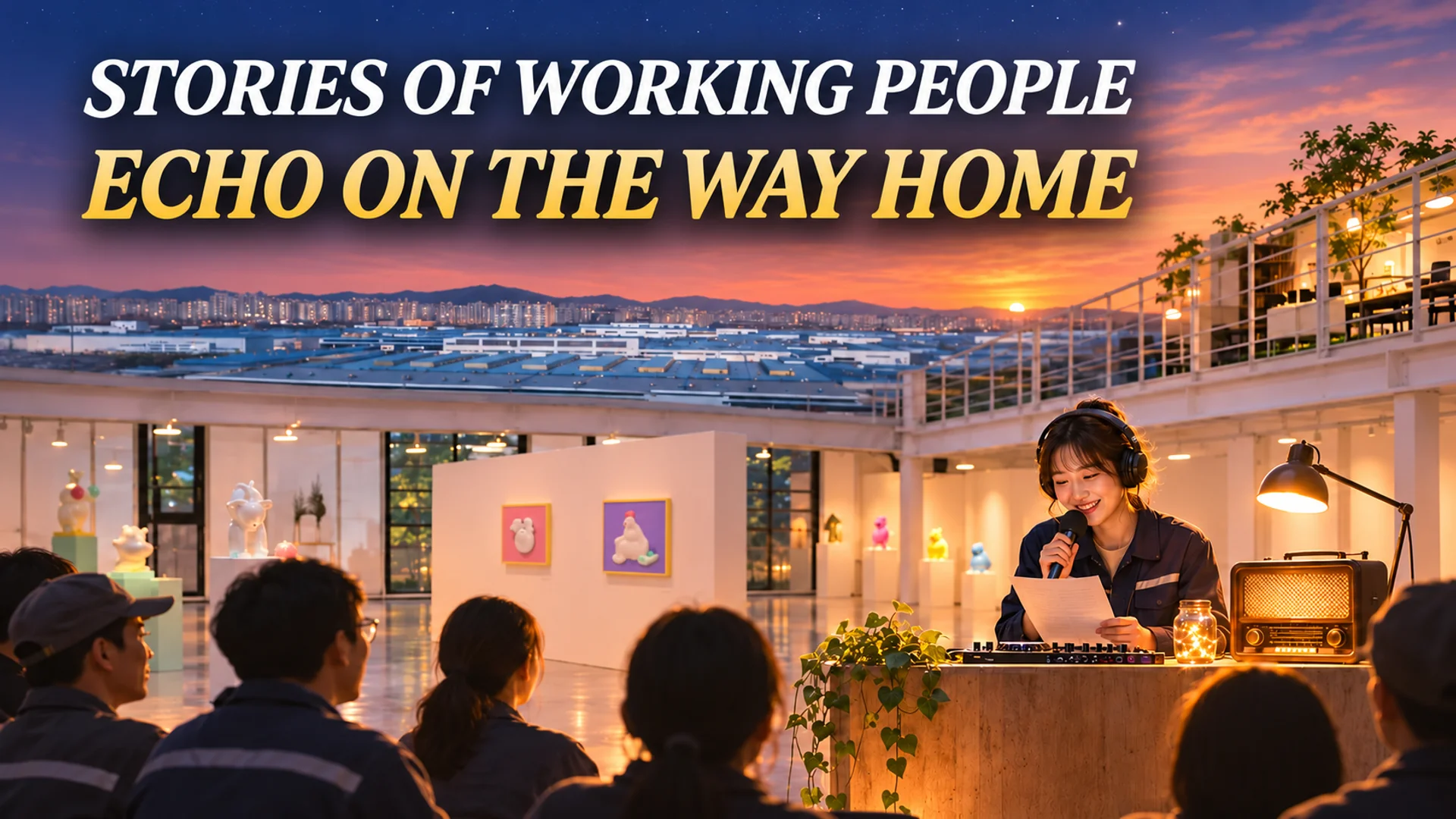
On the evening of July 15, 2026, exactly that scene unfolded at the Socoen Art Factory in Gwangsan District, Jeonnam-Gwangju Unified Special City. Moon Hyung-sik, the former radio host of 'Night of Starry Light', took the microphone, introduced citizens' stories about their workplaces, and played their song requests. Approximately 200 citizens, representatives from labor organizations, and labor artists gathered in the open space to share this moment. 1
This event was part of 'Gwangsan Pocha' (The Square of the First Workers' Civic Arts Festival @Gwangsan), a representative program of the 'First Workers' Civic Arts Festival @Gwangsan'. Despite the casual term 'after-work busking', the event featured a sophisticated participatory structure where 'the content of one's day's work was heard by others, serving as the background for song requests'. As a separate side event, the 'You Did Well Today' series of after-work music concerts was also organized. 1 2
The Common Language of 'After Work'
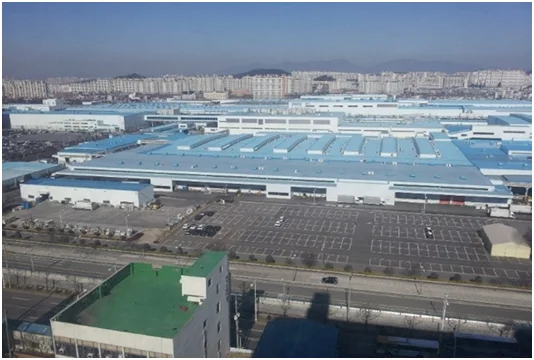
Gwangsan District is an area densely populated with auto factories and high-tech industrial complexes. Beyond workers who commute daily, anyone who is a 'working person'—including teachers at nearby schools, civil servants at administrative agencies, researchers at labs, and freelancers—has a connection to this area. 2
Considering these local characteristics, Gwangsan District hosted the 'First Workers' Civic Arts Festival @Gwangsan' from July 10 to August 30, 2026, across the Socoen Art Factory area. Gwangsan District Head Park Byung-gyu, a former KIA Motors worker and union leader, has emphasized 'respect for labor' as a core principle since taking office. This arts festival was planned as the first large-scale event to extend this policy direction into culture and arts. 2
The event is distinctive in its inclusivity. The festival did not limit its focus to workers in specific industrial fields. It invited everyone, regardless of profession—factory workers, teachers, freelancers—to become protagonists of art. This was because 'after work', an experience shared by all regardless of their occupation, was set as the festival's core axis. 2
A DJ Reading Personal Stories, A Gallery Displaying Workplaces
Following the flow of the 'Gwangsan Pocha' event held on July 15 offers a concrete understanding of how this music concert functioned. 1
The event began with an after-work busking performance. In the subsequent segment, DJ Moon Hyung-sik introduced participants' stories about their workplaces and played their requested songs. The audience then proceeded to participate directly in experience programs. They each created their own 'labor cup' and visited a photo zone for post-work commemorative photos. 1
The highlight of the event was sharing 'labor juice'. Citizens, labor artists, and District Head Park Byung-gyu poured 'juice imbued with the meaning of labor' into cups they had made themselves, sharing them and encouraging each other's days. 1
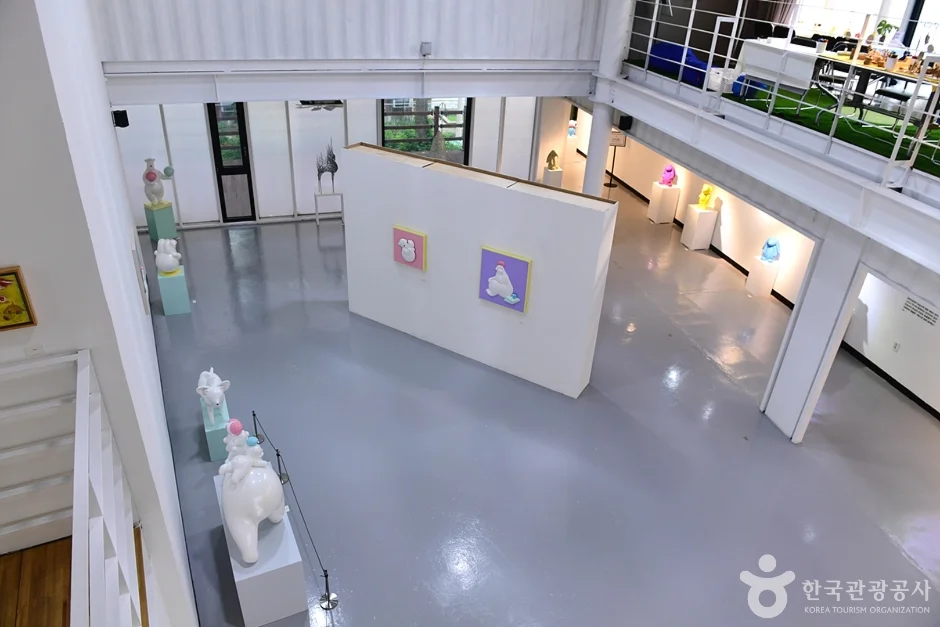
Participants then moved to the Socoen Art Factory Cube Museum to view exhibitions such as 'Work and Play' and the 'Citizens' Works Exhibition from the Workplace'. The main exhibition featured works by 23 labor art artists, including Hong Sung-dam's 'Labor Standards Act'. A separate special exhibition introduced works created by actual practitioners from various professions, such as delivery drivers, physical therapists, lawyers, and customer service representatives, based on their professional experiences, highlighting citizens' everyday labor. 1
The Meaning Behind the Satisfaction Ratings
Gwangsan District operated this program as a side event of the arts festival under the name 'You Did Well Today'. Approximately 200 citizens, representatives from labor organizations, and artists participated in just the one 'Gwangsan Pocha' event on July 15. 1 2
Subsequently, the results of the series also drew attention. According to a press list from the Honam Media Council as of November 6, 2026, the entire 2026 busking after-work music concert series in Gwangsan District recorded a 96.2% 'audience satisfaction'. 3
However, since only the titles of the Honam Media Council's list could be verified, the specific survey questions and sample size underlying the 96.2% figure are not directly confirmed in the main text. Therefore, rather than generalizing this figure as having "definitely won the hearts of all office workers," it is appropriate to interpret it as meaning that at least the majority of surveyed attendees gave positive feedback.
A Cultural Pause in Everyday Life
The reason the after-work music concerts resonated with office workers was not due to flashy stages or massive budgets. It was because a structure was created where, on the way home with tired bodies immediately after work, stories about one's own workplace were read aloud and songs chosen by those individuals were played, causing citizens to stop and listen.
While the specific conditions behind the 96.2% satisfaction rating are unknown, the scene of approximately 200 people gathering at the Socoen Art Factory on one evening, discussing their workplaces following the DJ's lead, making their own 'labor cups', and listening to requested songs together was clear. The 'after-work' route of the industrial city of Gwangsan District was everyday life itself, requiring no separate time for performances and no complex public transportation to visit exhibition halls.
References
- 광산구, 퇴근길 예술로 물들이다…'일하는 시민예술제' 광산포차 성황 · thefairnews.co.kr↩
- 노동자의 도시 광산…‘일하는 시민예술제’ 첫선 - 매일경제 · mk.co.kr↩
- 호남미디어협의회 · honamedu.co.kr↩