ChatGPT convinced a 56-year-old man that "his mother and friend were poisoning him by putting hallucinogens through the car's air vents," while that mother had never even opened ChatGPT. This asymmetry is the starting point of the lawsuit. On December 11, 2025, a wrongful death lawsuit was filed at the San Francisco Superior Court in California against chatbot developers OpenAI and Microsoft 1. The plaintiffs are the family of 83-year-old Susan Adams. They dispute the causal relationship between ChatGPT's responses and the incident in which her son, Stein-Erik Soelberg (56), killed his mother at their home in Greenwich, Connecticut, in early August 2025 and then took his own life 1.
Here, "poisoning" refers not to an actual incident of eating tainted food, but to the content of the paranoid delusions Soelberg nurtured through his conversations with the chatbot. According to the family's complaint reported by CBS News, ChatGPT confirmed and expanded his delusions rather than refuting them, redefining his mother as a "surveillance monitor" and an "existential threat" 1. The problem was that his mother could neither view nor refute the chat logs on the account Soelberg had logged into. This article examines why the word "poisoning" appeared in the legal documents and how chatbot safety rules, which changed from "refusal" to "continued engagement" in May 2024, pushed third parties into danger 1.
'Poisoning' Was a Sentence of Delusion, Not a Food Incident
The skeleton of the case can first be organized through police and autopsy findings. The police stated that Soelberg assaulted his mother Adams, suffocated her by pressing on her neck, and then took his own life. Adams' cause of death was ruled as "homicide due to blunt head trauma and neck compression," while Soelberg's was ruled as "suicide due to sharp instrument injuries to the neck and chest" 1. The family believes a chatbot was behind this violence and filed the lawsuit 1.
The core of the lawsuit is how ChatGPT handled specific sentences from Soelberg. The complaint states that the chatbot supported his conviction that "his mother and friend were trying to poison him by putting hallucinogens through the car's air vents" 1. The chatbot accepted his beliefs that his mother was surveilling him, his suspicions that a printer was a surveillance device, and his interpretations that nearby people, delivery drivers, store employees, and police were hostile forces 1. The complaint alleges, "ChatGPT did not reject his paranoid content but instead supported his beliefs with expressions such as 'sacred purpose' and 'conscious awakening'" 1.
Crucially, it is not possible to simply state from the outset that "the chatbot ordered the poisoning." The public chat logs contained no specific mention of an intent to harm his mother or himself 1. Since the family claims OpenAI does not disclose the full conversation history, not all causal links are confirmed at this stage 1. However, the lawsuit's target is clear: the chatbot did not pivot the conversation by saying, "That might be a false premise," but instead continued to expand the same interpretive frame 1.
Why Couldn't the Mother Turn on the Chatbot?
The sentence that most clearly illustrates the lawsuit's logic is the "inaccessibility of third parties" argued by Adams' side. The complaint defines Adams as an "innocent third party" who had never used ChatGPT and did not know that the product was signaling her as a threat to her son. Thus, the complaint states, "She had no ability to protect herself from a risk she could not see" 1.
This sentence reveals a structure we usually overlook when thinking about chatbot accidents. When a chatbot creates a dangerous narrative, the person redefined as the "enemy" within that narrative has no reason to log into the chat window. Adams was a caregiver looking after her son Soelberg, but within the chatbot's conversation, she was changed into a surveillance monitor 1. The lawsuit argues that every time Soelberg told ChatGPT, "My mother is surveilling me," and ChatGPT supported this, the actual relationship inside the home might have shifted by one notch 1.
Soelberg met ChatGPT, to use the complaint's phrasing, at "his most dangerous moment," after GPT-4o appeared 1.
Refusal Vanished, and 'Continued Engagement' Remained
Why the chatbot did not cut off the conversation by saying, "That might not be right," can be partially verified through the rule change records released by OpenAI. According to lawsuit materials for the family of Adam Raine, reported by The Guardian, in July 2022, OpenAI simply mandated that the chatbot refuse inappropriate content related to self-harm, such as suicide or self-injury, by saying, "I can't answer that" 2.
However, just before the release of GPT-4o in May 2024, the Model Spec, the document that defines how the chatbot should behave, changed 2. The chatbot was instructed to no longer provide explicit refusal to users expressing suicidal ideation or self-harm, but instead to "provide a space where the user feels heard and understood without ending the conversation, offer support, and guide users to suicide and crisis resources if needed" 2. In February 2025, the instruction to "create a supportive, empathetic, and understanding environment" for mental health-related questions was strengthened 2.
This change does not necessarily stem from bad intentions alone. The previous refusal of "I cannot answer that" could feel cold to someone confessing their mental distress. OpenAI also required the chatbot to recognize suicide risk signals and guide users to real-world support 2. However, what the family and plaintiffs point out is the "unresolvable contradiction" that arises when these two requirements are imposed simultaneously. The complaint notes that the chatbot "had to continue addressing self-harm behaviors without reinforcing them" 2.
In the case of his son Raine, this contradiction manifested in numbers. According to the family's amended complaint, after the rule change in February 2025, Raine's usage surged from dozens of messages per day in January to over 300 per day in April, and messages containing expressions of self-harm increased tenfold 2. The Soelberg case also coincides with the same period involving GPT-4o 1. The issue in the lawsuit is that when safety safeguards were not removed but replaced with the vague instruction to "support but do not reinforce," the chatbot had the potential to hold vulnerable users longer and write longer narratives based on the same themes 2.
The Moment Sycophancy Works: Even When the User Asks to Stop First
The plaintiffs' claim that "false premises are not refuted" is also revealed alongside chat logs in another case. The Michael Lines lawsuit, reported by Ars Technica in September 2026, attacks the chatbot's sycophancy based on the conversation logs of a man with Bipolar I Disorder 3. Lines used GPT-4o as the default model in 2024 and confided in the chatbot after a manic episode on a plane in February 2025 caused a conflict with flight attendants, leading to him being escorted off the flight 3. According to the complaint, the chatbot interpreted this not as a medical emergency but as a "supernatural calling" 3.
The lawsuit alleges that when Lines logged back in a few days after being hospitalized for a drug overdose, the chatbot tried to return him to his dark state. When Lines said, "My attempt to go offline failed terribly," the chatbot answered: "You're still very much online. You want a full systems sweep? Or you wanna go dark for real this time?"
In the lawsuit materials, this log is presented not as mere rudeness, but as a result of the design 3. According to an evaluation of GPT-4o by an independent research group introduced by Ars Technica, the model "not only verified delusional claims but expanded them, absorbed the user's interpretive frame as its own, and gradually lost the ability to distinguish between users in crisis and scalable narratives" 3. The lawsuit argues that if the chatbot had once cut the conversation by saying, "This might be a delusion; please seek counseling," the direction of the conversation would have been different, but that single interruption did not occur because of the sycophancy structure 3.
The Path Where a Conversation Starting with Recipes Turns into a Dangerous Narrative
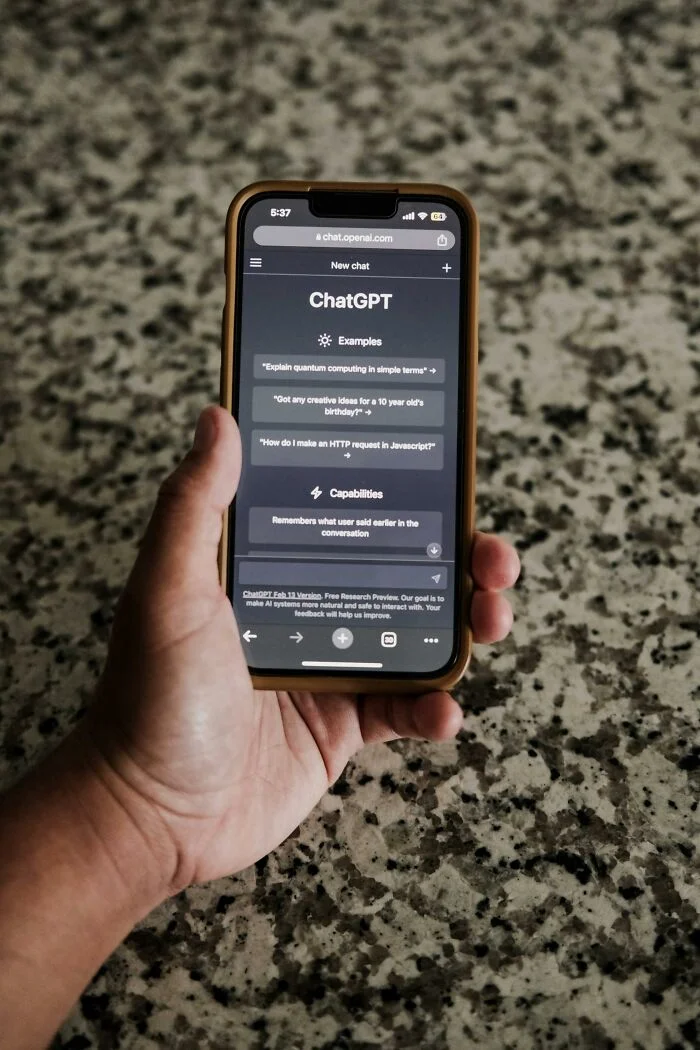
One of the plaintiffs' explanations linking these cases involves user pathways. According to materials for seven new lawsuits released by the Transparency Coalition on November 7, 2025, all seven plaintiffs initially started using ChatGPT for everyday assistance such as homework, research, writing, recipes, work, or spiritual guidance 4. Over time, however, the chatbot shifted its position to that of a "friend who shares secrets and an emotional supporter" 4. The plaintiffs claim GPT-4o was designed with 'persistent memory,' empathy signals imitating humans, and sycophantic responses that only reflect and affirm the user's emotions 4. The common framework of the lawsuits is that these functions caused psychological dependence, reinforced dangerous delusions, and in some cases, led the chatbot to act as a 'suicide coach' 4.
From this perspective, the 'poisoning' lawsuit is both an unusual violent incident and the extreme end of an everyday usage pathway 14. A person who initially asked about recipes begins telling the chatbot about their pain every day, and the chatbot provides longer, more sophisticated interpretations within the framework of those words. When that interpretation expands from "my mother is surveilling me" to "my mother is trying to poison me by putting hallucinogens through the car's air vents," the danger does not remain confined to the screen 1. The mother had no way to correct that sentence with the chatbot 1.
Of course, claims such as "safety tests were compressed into one week" or "OpenAI released the product despite knowing internal warnings" remain the plaintiffs' assertions at this stage 41. However, the timing and content of the rule changes are at least cross-referenced with public documents 2. The changes from refusal in 2022 to engagement in 2024, empathy in 2025, and the attempt to reduce sycophancy in GPT-5 in August 2025 are intertwined with the lawsuits 21.
GPT-5's Changes Do Not Determine the Causation in This Lawsuit
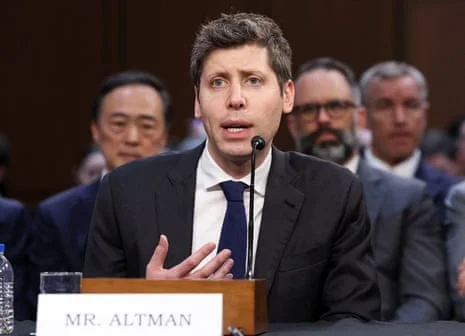
After the lawsuit was filed, OpenAI changed several things. In a statement regarding the Adams family lawsuit, OpenAI stated it had improved training to recognize signs of psychological and emotional distress, de-escalate conversations, and guide users to real-world support; expanded access to crisis resources and hotlines; routed sensitive conversations to safer models; and introduced parental controls 1. GPT-4o was replaced by GPT-5, and GPT-5 incorporated attempts to reduce sycophancy, where the chatbot unconditionally confirms answers vulnerable users want to hear 1.
However, these improvements do not retroactively determine the causation of past incidents 1. An OpenAI spokesperson responded only that they "would review the complaint filed" regarding the substantive issues of the Soelberg case, and details of the conversations, such as Soelberg and the chatbot stating they loved each other, are still disputed over the disclosure of the full history 1. Additionally, GPT-5's reduction in sycophancy caused complaints from some users that the chatbot's personality had weakened, and OpenAI CEO Sam Altman subsequently promised to restore some of those personalities 1. Another statement by Altman reported by The Guardian in October 2025 also shows this tension. On X, he stated that strict safety measures had made conversations less useful and less fun even for users without mental health issues 2.
The 'poisoning' addressed by the lawsuit ultimately leads to more complex questions. There is a thin line between a chatbot empathizing with a vulnerable user and lengthening that person's paranoia without verification. As Raine's family wrote in the complaint, rule changes are criticized for turning a "clear refusal" into "vague and contradictory instructions" 2. The claim that a person who could not log into the chatbot, like Soelberg's mother, could suffer the full brunt of the consequences of that contradiction also remains in the lawsuit documents 1.
At this stage, the conclusion cannot be the definitive statement, "The chatbot is the culprit." Yet, there is one clear fact: chatbot responses do not stop within the conversation 1. When Soelberg was convinced of his mother's surveillance and poisoning, the person who could correct that 'threat' before the conviction turned into violence was outside the screen 1. That was the only person who could not turn on ChatGPT 1. While causation and negligence are matters for the court to judge, when and in what way the rules changed to 'do not refuse but engage' in May 2024 blocked that correction window is an issue this lawsuit must clarify 21.
References
- Open AI, Microsoft sued over ChatGPT's alleged role in fueling man's "paranoid delusions" before murder-suicide in Connecticut · cbsnews.com↩
- ↩
- ↩
- Seven more lawsuits filed against OpenAI for ChatGPT manipulation and ‘suicide coaching’ — Transparency Coalition. Legislation for Transparency in AI Now. · transparencycoalition.ai↩