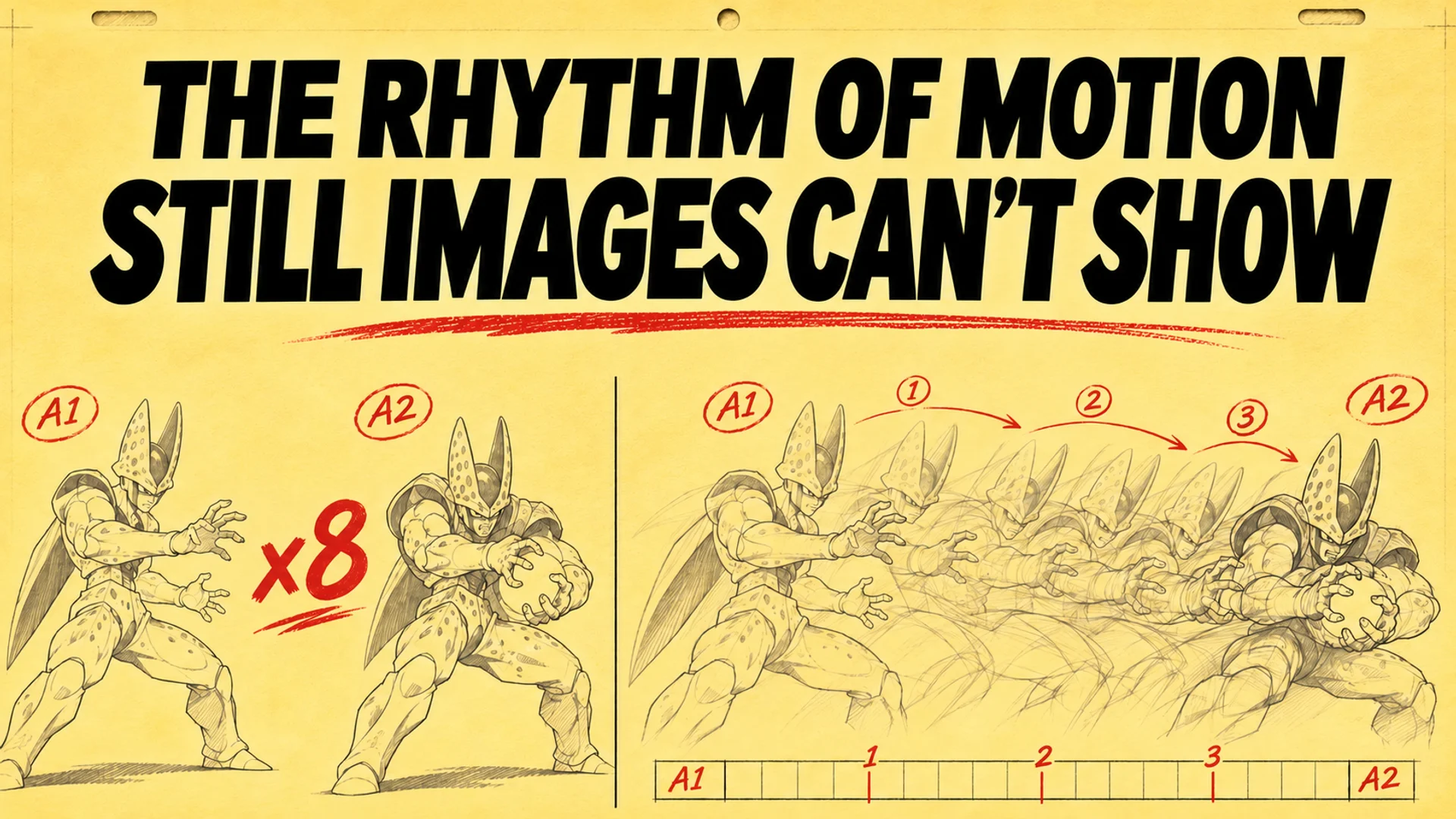
Recall the scene in Dragon Ball Z Episode 142 where the antagonist Cell prepares his finishing move. Between the key animation (Key Animation) frames A1 and A2 of this scene, an instruction calls for eight 'in-between frames (In-betweens)'. What happens if you simply fill the space between these two drawings with eight evenly distributed frames, based solely on the number '8'? The motion might read as a heavy, steady buildup of energy, or conversely, as an anticlimactic, hurried release lacking proper preparation.
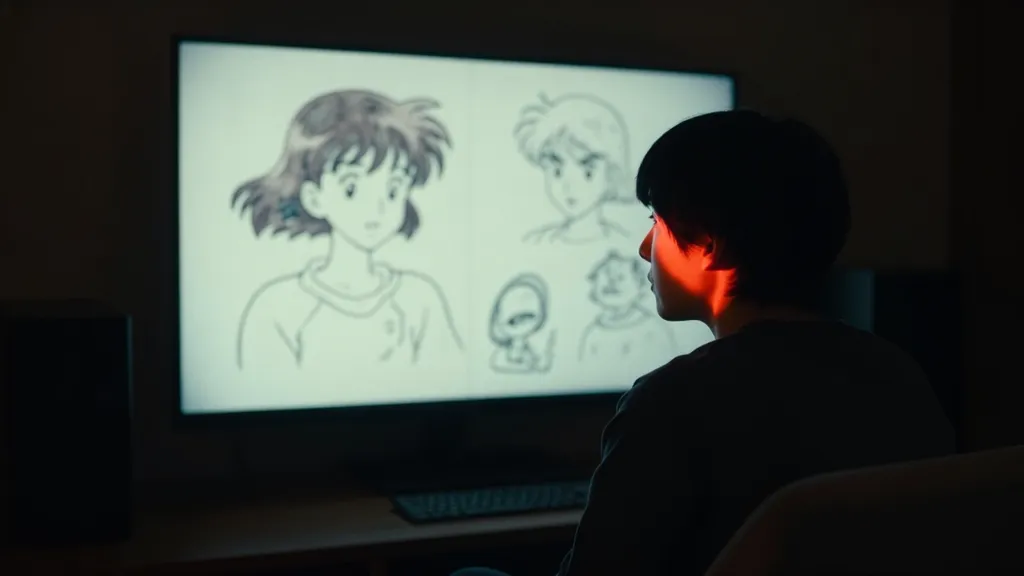
This distinction cannot be perceived by examining each drawing in isolation. It is a temporal rhythm that becomes perceptible only when multiple frames are played back in sequence at the actual frame rate (for example, 24 frames per second). In animation production, a 'Line Test' is an essential verification process that allows animators to preview this temporal information using uncolored line art.
The Timing Chart as a Design Blueprint for Performance
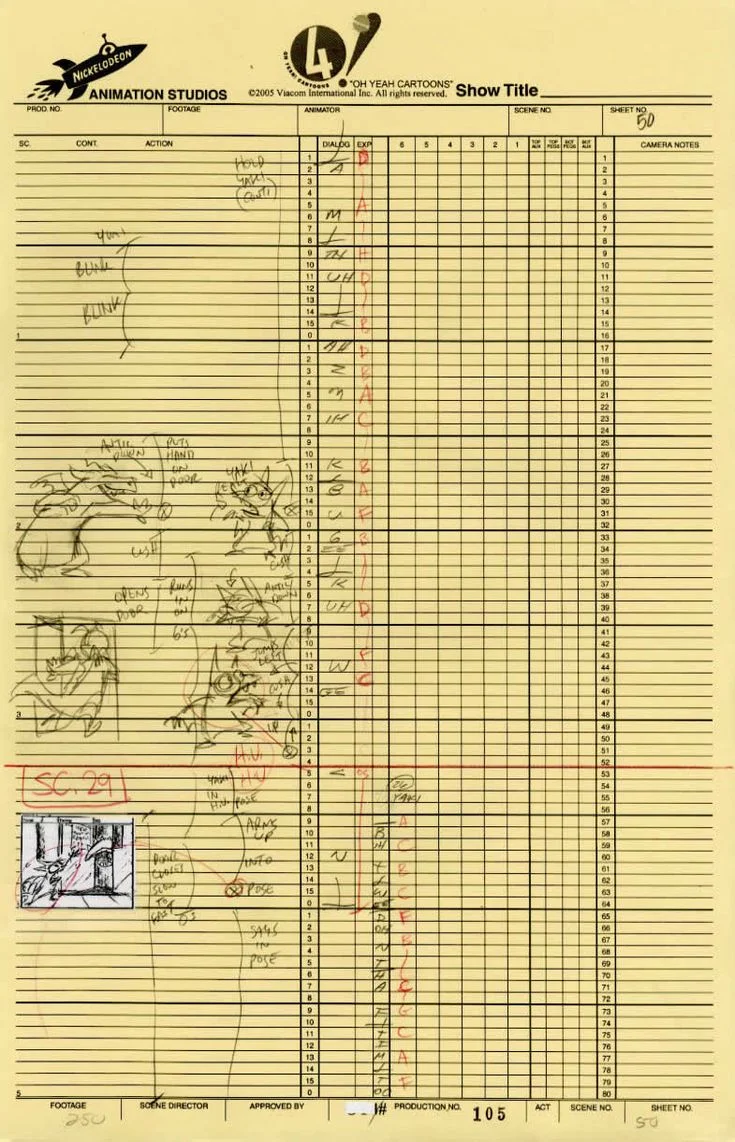
To understand why line tests take precedence over checking individual drawings, one must first recognize that 'timing' in animation is not merely schedule management. According to production guidelines released by Toei Animation in 2019, timing charts that specify the number and distribution of in-betweens between key frames are not simple count instructions but rather blueprints for a character's performance (Acting) 1.
Even within the same eight frames, the emotional impact on screen changes completely depending on where the spacing is concentrated. If the eight frames are clustered at the beginning (front-loaded), the motion conveys a tension where energy is rapidly gathered and then abruptly halted; if they are clustered at the end (back-loaded), it reveals a sense of gradually increasing weight. When evenly spaced, the movement reads as a mundane action with constant speed. Such subtle differences disappear in static images because the human eye recognizes shape and color in still images but perceives rhythm and acceleration-deceleration patterns in continuous motion. Line tests serve as a critical tool to convert these temporal differences into visible motion for verification.
The 'Playback Confirmation' Gate in the Pipeline
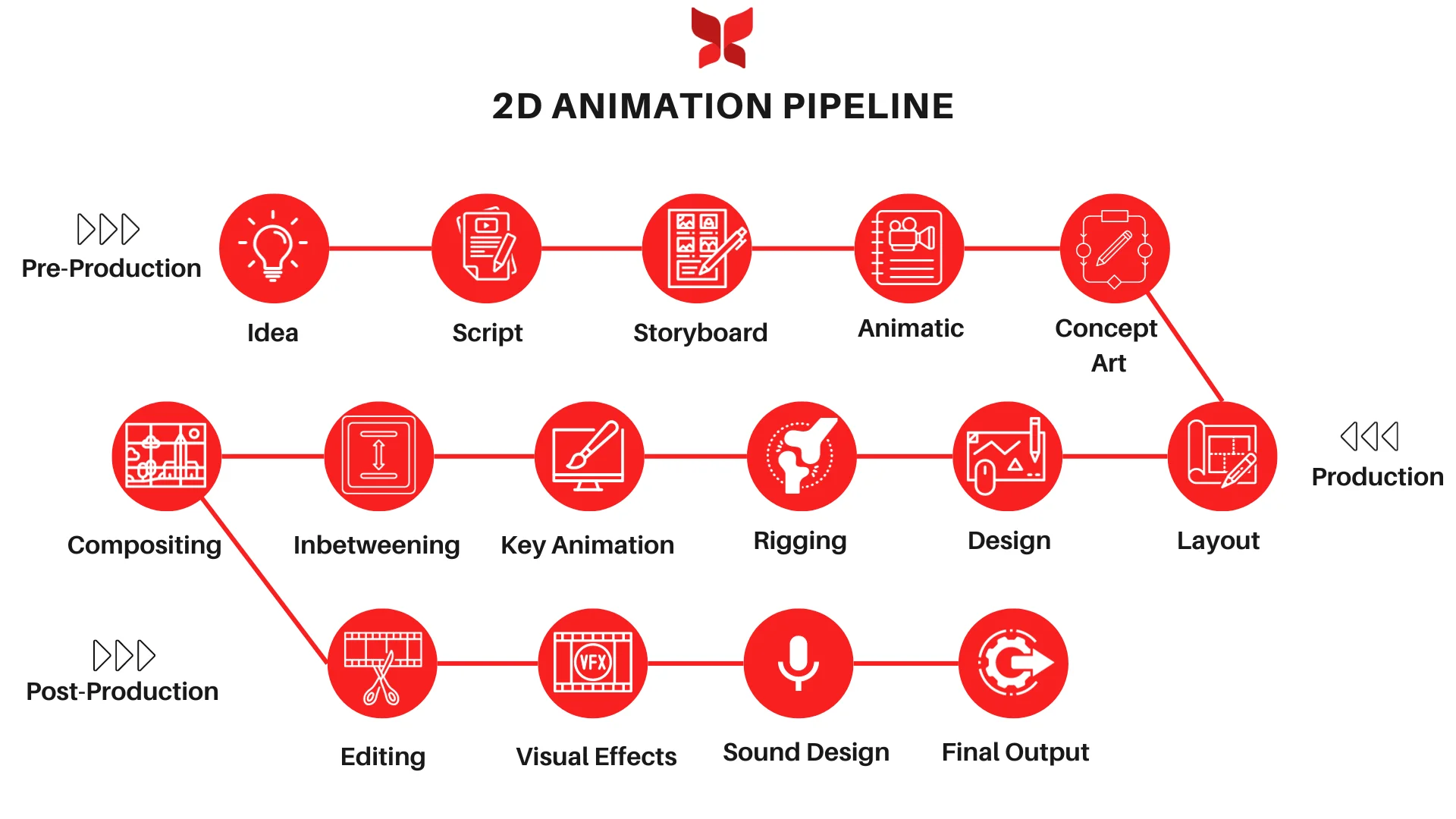
Animation production proceeds through the stages of Rough (draft) → Cleanup (polishing line art) → Coloring → Composite 2. Line tests are primarily conducted after the completion of key frames in the Rough stage and before moving on to the Cleanup process. This stage serves as a gate for approving whether it is acceptable to proceed to subsequent processes.
Michel Connolly, founder of Educational Voice, explains in a pipeline guide that thorough pre-planning and verification during the early stages prevent costly revisions that occur later in the production process 2. If timing issues are discovered only after coloring and compositing are complete, it results in massive rework that requires erasing and redrawing all polished line art, followed by re-coloring. Therefore, playing back the motion to check the direction at the foundational line-art stage is essential not only for production quality but also for economic efficiency 2.
An Animation Supervisor’s Judgment Is Drawn from the Motion
Multiple animators work on a single episode. Their individual styles and habits can alter the rhythm of motion from cut to cut, which can result in inconsistent character performance. In the case of Toei Animation, the process includes the Animation Supervisor reviewing and issuing correction instructions for key animations and timing before in-between work officially begins 1.
At this stage, the supervisor’s instructions are not simply “the drawings are not pretty enough.” They involve specific adjustments to temporal distribution, such as “allocate two additional frames to the anticipation motion to increase the sense of weight” or “widen the spacing to create a sense of urgency.” Such judgments can only be made by observing the flow of the drawings as they actually move. Correcting a flawed flow at the skeletal stage is far more accurate and easier than making corrections after watching the completed footage 1.
The Persistence of Verifying the 'Living Feel' in the Age of AI
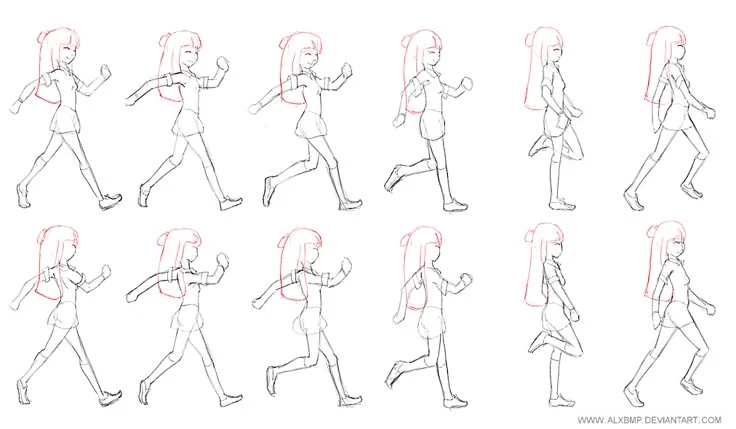
With the recent introduction of AI technology into the animation pipeline, certain processes such as automated in-between generation and narration generation are becoming increasingly efficient. A July 2026 industry report on AI-related trends noted that AI is now capable of performing tasks such as generating in-between frames or creating scenes from documents to a considerable level 3.
However, the same report pointed out that in the realm of 'character performance'—specifically the subtle weight and anticipation that bring motion to life—AI still faces significant limitations 3. No matter how precisely AI generates sophisticated line art, it cannot replace the task of judging whether the playback follows the intended emotional arc or whether the character is given physical and emotional weight. As line art generation becomes faster, the importance of line tests, which verify this 'living feel' through playback, inevitably increases.
Ultimately, line tests are necessary because the quality of movement is a function of time. No matter how closely one examines individual drawings, it is impossible to determine whether eight frames between two key poses will read as a heavy energy accumulation or a hollow delay. Just as Toei Animation explicitly specified eight frames for an energy ball and confirmed its distribution through playback, a 'living feel' in animation is created by repeating the cycle of design and playback.
References
- Animation Production Guide | The Animation Process · kanzenshuu.com↩
- Animation Workflow Guide: Quality Pipeline Steps · educationalvoice.co.uk↩
- AI Is Quietly Rewriting the 2D Animation Workflow · iplocation.net↩