Recently, when scrolling through YouTube Shorts or TikTok, we often encounter short but intense animations that are impossible to look away from.
On the other hand, when we turn on Netflix on a weekend evening, magnificent blockbuster animations produced with hundreds of millions of dollars await us.
The animation industry is currently facing a new phase as two massive waves collide: "blockbusters" fueled by huge capital and "short-form" content flowing through algorithms.
The Massive Wave: The 'Era of Blockbusters' Led by Netflix
First, the most familiar way we encounter animation is through the large-scale lineups led by global OTT platforms like Netflix.
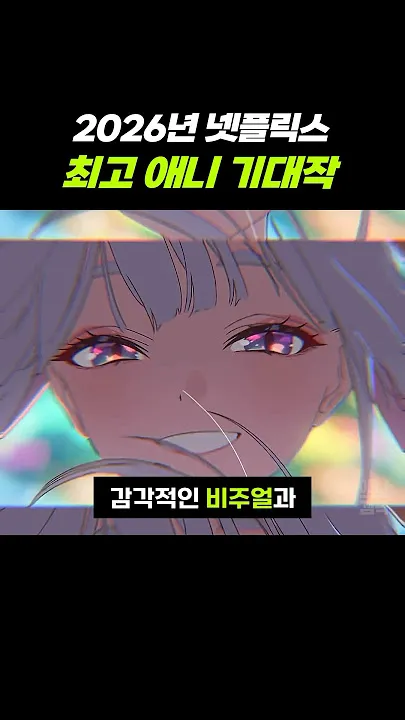
Looking at the lineup unveiled by Netflix at 'AnimeJapan 2026' in March 2026, its scale is truly impressive. From news of the Gintama anime adaptation to JoJo's Bizarre Adventure: Steel Ball Run, and even recently popular titles like Spy × Family or Jujutsu Kaisen, massive content targeting global viewers is pouring out regardless of genre.
The characteristics of these blockbusters are clear: overwhelming visual perfection and the power of solid original works. Based on vast capital, Netflix secures proven IPs (Intellectual Property) and implements them with top-tier animation quality, maximizing the "lock-in effect" that keeps viewers tethered to the platform.
However, this approach has clear limitations. Because production costs are astronomically high, the risks are very significant. If a project fails to become a hit, the blow to both the production studio and the platform is immense. Additionally, the long production periods make it difficult to react sensitively to shifting trends.
The New Trend: The 'Aesthetics of More is Better' Brought by YouTube and Short-form
In contrast, a completely different ecosystem is being built in the recent digital media environment. This is the rise of "short-form animation" centered around platforms like YouTube.
According to recent studies, short-form animation adopts a so-called "More is Better (Many Hands Make Light Work)" strategy. Instead of creating a single massive masterpiece, the structure focuses on maximizing advertising revenue by producing a large volume of short content at a low cost.
To increase the time users spend on the platform, algorithms constantly recommend videos, and creators use real-time data analysis to identify which subjects drive "views," allowing them to immediately produce the next video. This is highly sensitive to trends, much like breaking news, and possesses a powerful weapon to immediately reflect viewer needs.
However, this method cannot escape criticism. If the focus remains solely on quantitative expansion, it is easy for the quality of content to decline, and while it may provide temporary entertainment to viewers, it is very difficult to build long-term brand value. It is prone to being labeled as "mass-produced content."
Rediscovery of Artistic Value: The Revival of Short Animations
Here, we discover a very interesting point. A third path is gaining attention—one that is neither a large-scale capital blockbuster nor simple mass-produced short-form. It is the revival of "short animations with artistic depth."
The recently notable from Chungkang College is highly significant in this regard. Based on the novel by German author Fred Uhlman, this work deals with a tragic friendship under the Nazi regime in the 1930s. Its texture is different from the flashy action of the Netflix style or the fast pace of the YouTube style. Instead, it provides a deep resonance by unfolding the complexities of the human interior and historical trauma through visual metaphors.
These high-quality shorts are currently finding new breakthroughs with industrial support. The Bucheon International Animation Festival (BIAF) operates production support programs for next-generation talent to vitalize the creative ecosystem, and the Korean Film Council is seeking the fusion of technology and art through AI-based film production support in 2026.
Ultimately, a new golden age of animation is opening at the intersection where technology (AI), art (short films), and platforms (YouTube/Netflix) meet.

Comparative Analysis: Where Do Your Tastes and Production Environments Lie?
Let's compare the three trends discussed so far using a table.
| Category | Blockbuster (Netflix, etc.) | Short-form (YouTube, etc.) | Artistic Short (BIAF/AI Support, etc.) |
|---|---|---|---|
| Primary Goal | Securing global fandom & subscription retention | Maximizing ad revenue & increasing dwell time | Artistic achievement & building creator brands |
| Pros | Overwhelming quality, powerful IP power | High production efficiency, trend responsiveness | Deep narrative, unique aesthetic value |
| Cons | Massive risk, long production period | Risk of quality decline, low brand value | Difficulty in funding, difficulty in reaching mass audience |
| Key Keyword | Large-scale Capital | Data-driven Efficiency | Fusion of Tech and Art |
So, which direction should we focus on?
If you are a viewer who wants to immerse yourself in a massive worldview, Netflix's lineup will still be the most attractive choice. However, if you want new stimulation every day, the world of short-form provided by YouTube's algorithm might be more enjoyable.
But as an expert and a content enthusiast, I would like to suggest paying attention to the third path: "The combination of artistic shorts and technology."
Conclusion: Searching for the Golden Ratio of Quantity and Quality

As of 2026, the animation industry is undergoing more dynamic changes than ever before. Netflix's capital, YouTube's efficiency, and the artistic experiments of creators are colliding to create a new ecosystem.
Ultimately, the key to sustainable growth lies in the "balance between Quantity and Quality." If we can introduce AI technology into the efficient production methods of short-form to lower costs while still capturing the deep narratives shown by short animations, we will experience an animation dimension entirely different from before.
We are moving from an era of simply making "a lot" to an era of "how to make it meaningfully."
Which type of animation draws your heart more? A flashy blockbuster, a short but intense short-form, or a deep short film that touches your soul?
I am curious about your thoughts. Please feel free to leave them in the comments!
References
- [ENG] Reunion (리유니언) | Animation Short Film 2026|청강애니 · youtube.com
- 넷플릭스, 애니메재팬 2026에서 확장되는 애니메이션 라인업 공개 · animationmagazine.net
- 숏폼 애니메이션의 특성과 발전방향에 관한 연구 - SciSpace · scispace.com
- 단편애니메이션제작지원 - 부천국제애니메이션페스티벌 · biaf.or.kr
- 2026년 AI 기반 영화 제작지원 단편 부문 사업공고 - 영화진흥위원회 · kofic.or.kr