The names “Director” and “Animation Director” listed side by side in the ending credits do not denote the same person correcting the same drawings. The director dictates the composition and emotional pacing of the screen based on the storyboard, while the animation director physically corrects already-drawn key animations to ensure characters read naturally. Because these two roles intervene at different points in the production pipeline and adhere to different criteria, viewers can trace the answers to their questions by recognizing that “why this emotion is conveyed from this angle” lies within the director’s purview, while “why this character’s expression and movements appear smooth or unnatural” stems from the animation director’s adjustments.
The Independence of Duties Proven by Separate Credit Columns
The fact that these two roles handle different layers of the screen is clearly revealed by the credit structure on the production floor itself. As of November 2026, the episode list for the second season of the anime Bocchi the Rock!, currently confirmed to be in production, shows the staff list divided into independent columns: “Storyboard,” “Director,” “Animation Director,” and “Chief Animation Director” 1. This structurally demonstrates that the two roles are thoroughly separated administratively and practically, with each bearing different scopes of responsibility as a single frame is completed.
The way names are replaced in the credits during the production process also supports this division of labor. When the second season of Bocchi the Rock! was announced, Keiichiro Saito, who directed the first season, did not express an intention to direct the sequel himself, having considered the first season a completed work. Consequently, a change in director occurred, with Yûsuke Yamamoto, who had served as assistant director for the first season, taking over the role of overseeing the overall direction of the screen 1.
At the same time, the person responsible for drawing was also replaced. Kerori, who had handled character design and served as chief animation director for the first season, appointed Keito Oda as the main character designer and chief animation director, stepping down himself to become the sub-chief animation director. Kerori explained that he chose Oda as his successor because he seemed close to him in many respects 1. Thus, it is evident that the person designing how the screen is composed (director) and the person correcting how characters are established within the screen (chief animation director) control their respective movements independently, according to their own perspectives and criteria.
Episode Directors Determining Mise-en-Scène Through Layouts
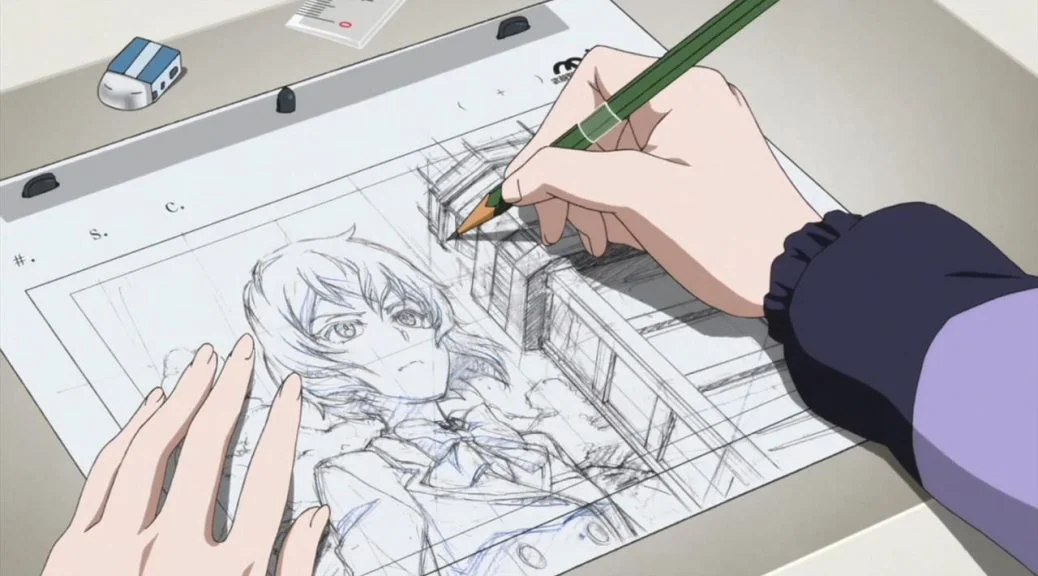
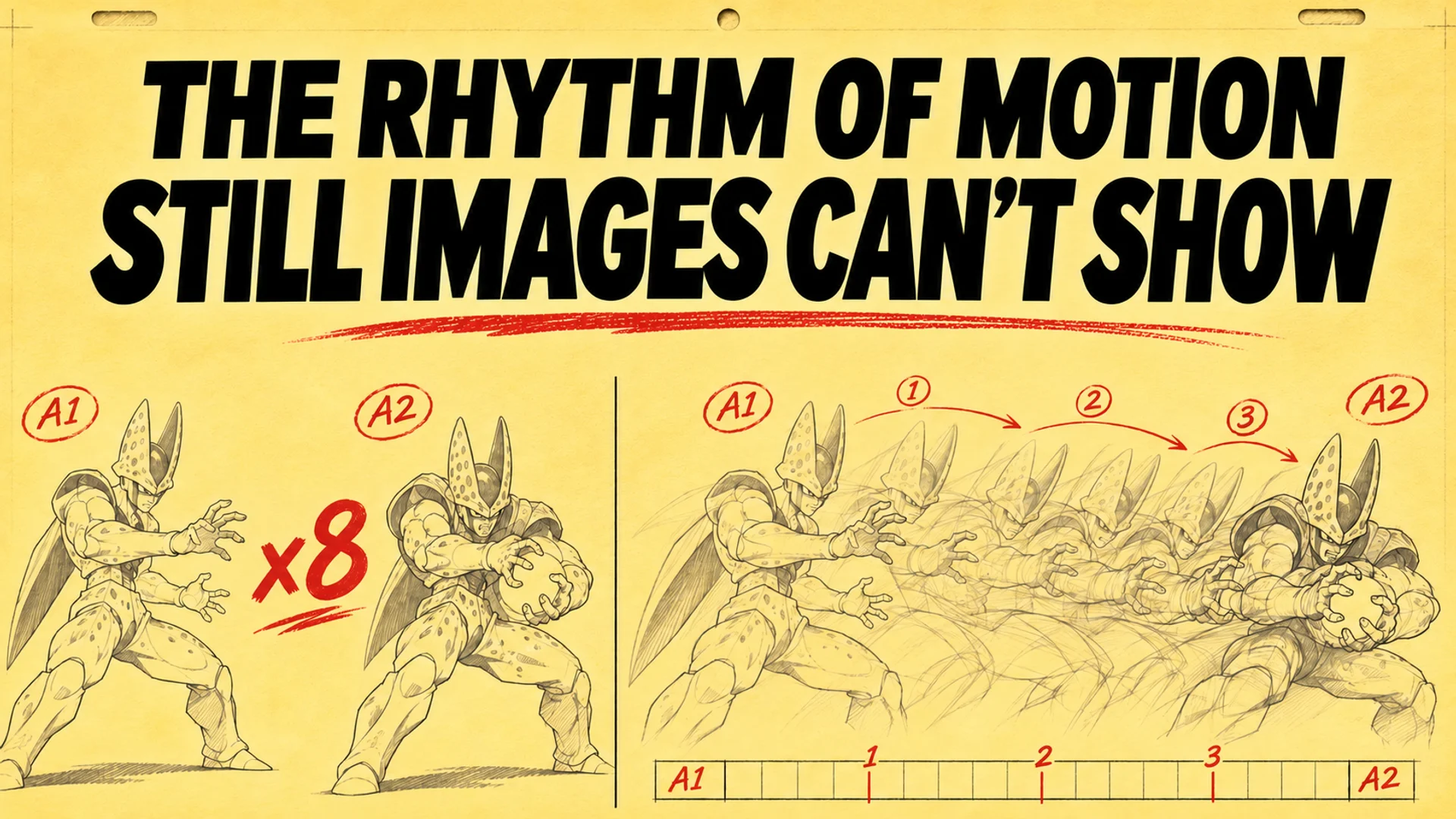
The domain dominated by the episode director is the skeleton of the screen, namely the mise-en-scène. The director sets instructions for the screen’s mise-en-scène, camera work, and characters’ expressions and movements at the storyboard stage. These instructions are concretized as they expand into the actual skeleton of the animation through the layout 2, 3. Here, the layout refers to the blueprint that expands the simple visual ideas contained in the storyboard into the actual skeleton of the animation, detailing the spaces for key animators to draw characters and for background staff to fill 4.
Thus, the screen composition instructed by the director becomes the foundation of anime production. Unlike live-action films, where physical variables such as actors and sets exist, everything in anime is drawn by hand. Therefore, characters’ actions and expressions are reflected in the key animation according to the director’s instructions and the storyboard, while the screen’s mise-en-scène, camera work, and lighting are also determined based on those guidelines 2.
As seen in the case of Koudai Watanabe after his transition to a storyboard director, cleverly utilizing camera movement and perspective, or framing the screen with shadows and designing eye-tracking lines, occurs at the storyboard and direction stage 3. The answer to the question “Why does the character appear in this composition and release emotion at this moment?” lies entirely in the name in the director column and the screen layout he designed.
Animation Director Adjustments That Establish Characters’ Physical Acting
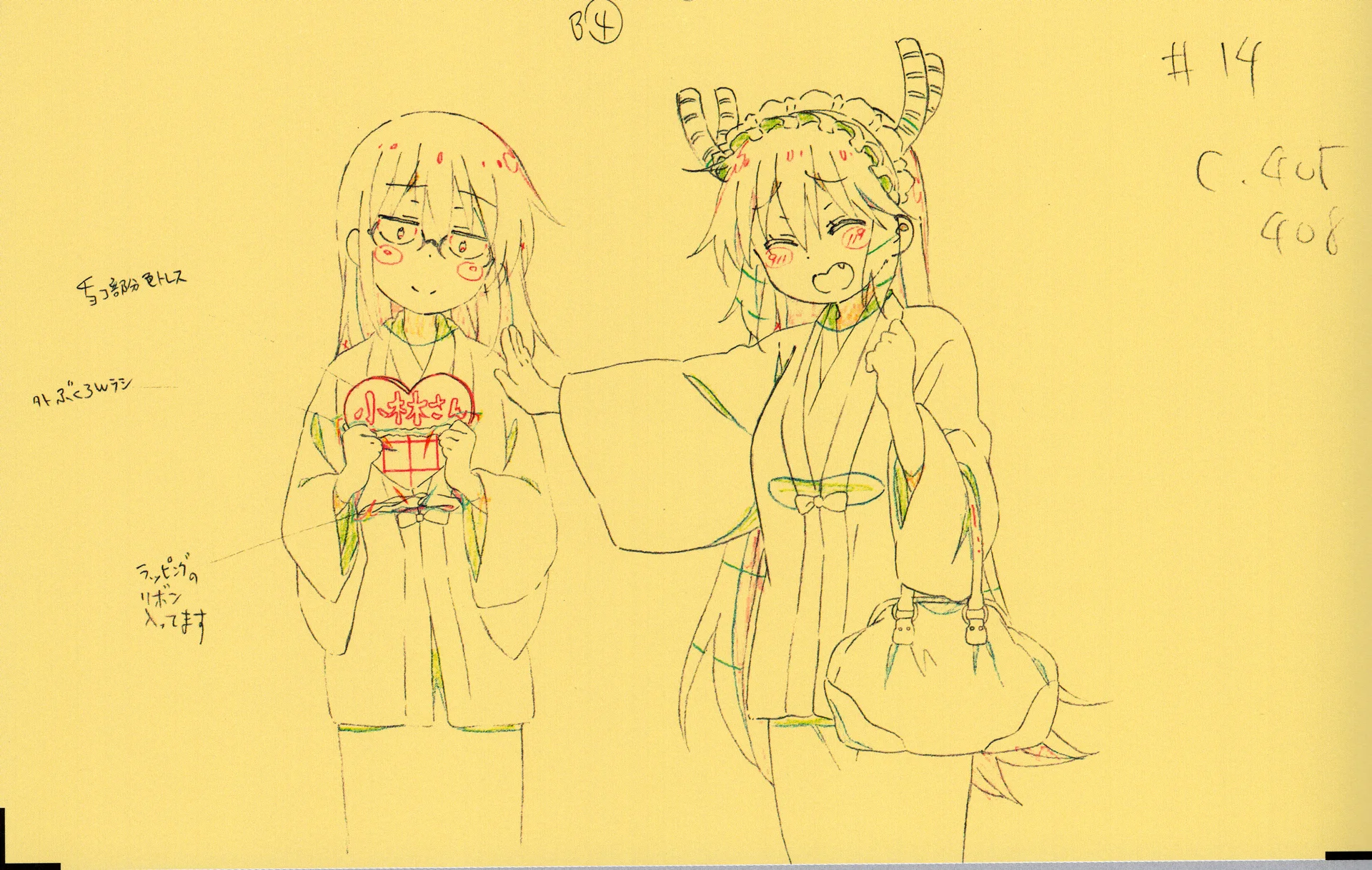
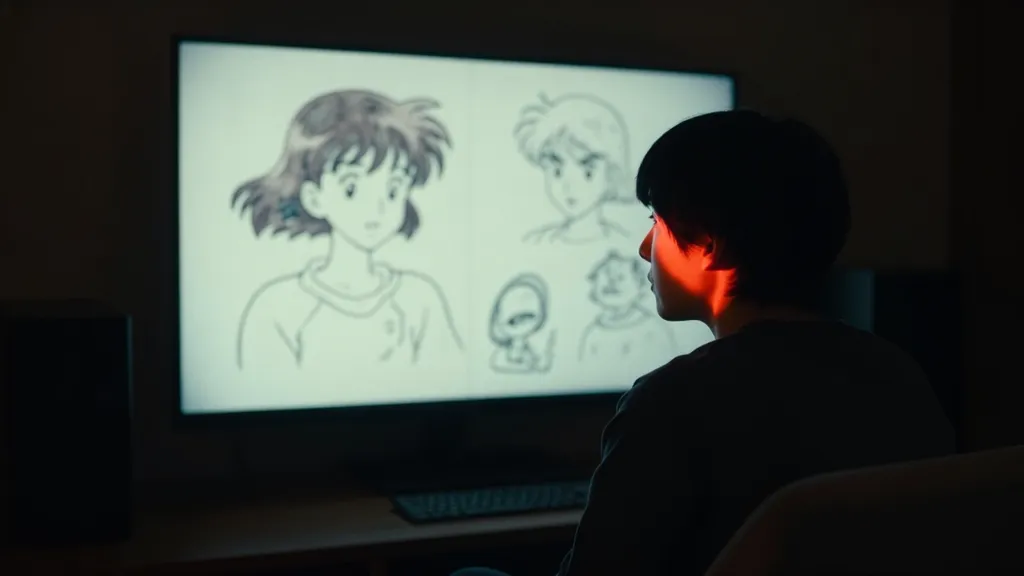
The animation director maintains consistency in key animation movement and character design, directly modifying the key animation to ensure that characters’ movements and expressions read persuasively on screen 3.
Understanding this process reveals the answer to “Why does this character’s expression read smoothly?” In the past Japanese anime industry, it was common for a single key animator to receive a storyboard, draw the layout, create the key animation, and lead the entire scene up to the cleanup stage, thereby expressing individuality 4. At that time, the animation director’s role was closer to managing quality to prevent the screen from collapsing, rather than suppressing the key animator’s unique expression 4.
However, the reality of the production floor requires more specific intervention. Koudai Watanabe, who debuted as an animation director at the age of 22 at Toei Animation, heavily modified and redrew cuts drawn by other animators, even personally drawing the key animation for the most difficult sequences 3. This shows that the animation director physically adjusted characters’ movements and expressions so they would “hold up” on screen through the process of heavily revising key animation. The animation director’s drawings do not determine the screen’s mise-en-scène or camera work; rather, they serve as the first corrector, refining the characters to move in character-appropriate ways within the given mise-en-scène.
Authority and Boundaries Read Through the Order of Revisions
Up until the actual screen is finalized, the two roles intervene in the work according to clear priorities. The order of checking and revising drawings within the screen designed by the episode director follows the structure: “Animation Director First Pass → Director Second Pass → Final Director Check.” Only after passing this final check is the screen broadcast to the world 2.
These differences in roles and authority provide viewers with criteria for reading the clues in the credits. For instance, if the screen composition, angle, or emotional pacing within the screen seems questionable, one should look to the direction part that issued the layout and screen instructions. Conversely, if the screen composition follows the instructions but the character’s expression or movement feels awkward, one must trace the cause to the animation director column, where key animations are refined first.
These boundaries between roles are less about completely severed areas and more akin to functional roles that divide layers of work. A case in point is Koudai Watanabe, who, as of 2018, served as an animation director on a specific episode, heavily correcting drawings, and then shortly after debuted as a director by drawing the storyboard himself for an episode of another show at the same studio, directing camera movements 3. This demonstrates that the job of an “animation director,” who draws to establish, and the job of a “director,” who designs the screen’s skeleton, operate on different layers through the same individual.
When the name in the episode director column changes, the angles, timing, and emotional composition of the same scene change. When the name in the animation director column changes, the physical quality and consistency of how characters’ expressions and movements read within the same angle change. The reason these two columns remain separately listed in the credits of new anime productions in 2026 is to provide the minimum structure for the audience to clearly trace who designed the screen’s mise-en-scène and who physically established the character acting within it.
References
- namu.wiki/w/봇치 더 록!(애니메이션 2기) · namu.wiki↩
- 애니메이션 감독 · namu.moe↩
- Anime's Future: Koudai Watanabe - Sakuga Blog · blog.sakugabooru.com↩
- The Fragmentation Of Anime Production: Too Many Cooks Spoil The Broth - Sakuga Blog · blog.sakugabooru.com↩