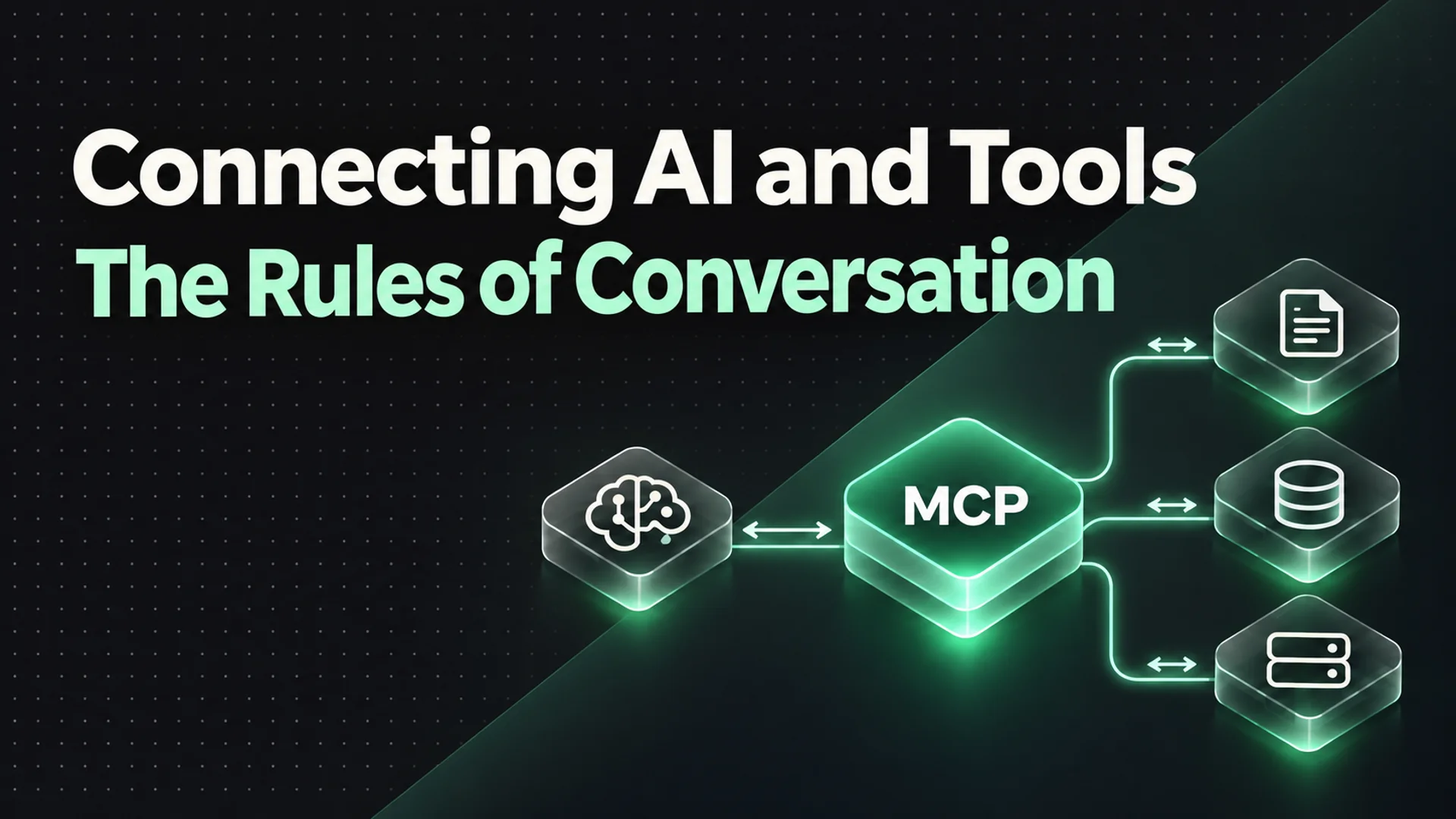
"Summarize last week's news and save it as a file." When a non-coder gives this one sentence to an AI, the AI searches the web on its own and creates a file in the user's folder. While this process may seem like magic, it is actually mechanical communication following a fixed order through rule-based messages. This infrastructure is named MCP (Model Context Protocol), which defines the standardized "order of speech" connecting AI to the external world. Following the specification revision in July 2026, this dialogue changed so that each request carries its own information, making the conversation more stable.
Why does AI that uses tools need standard specifications?
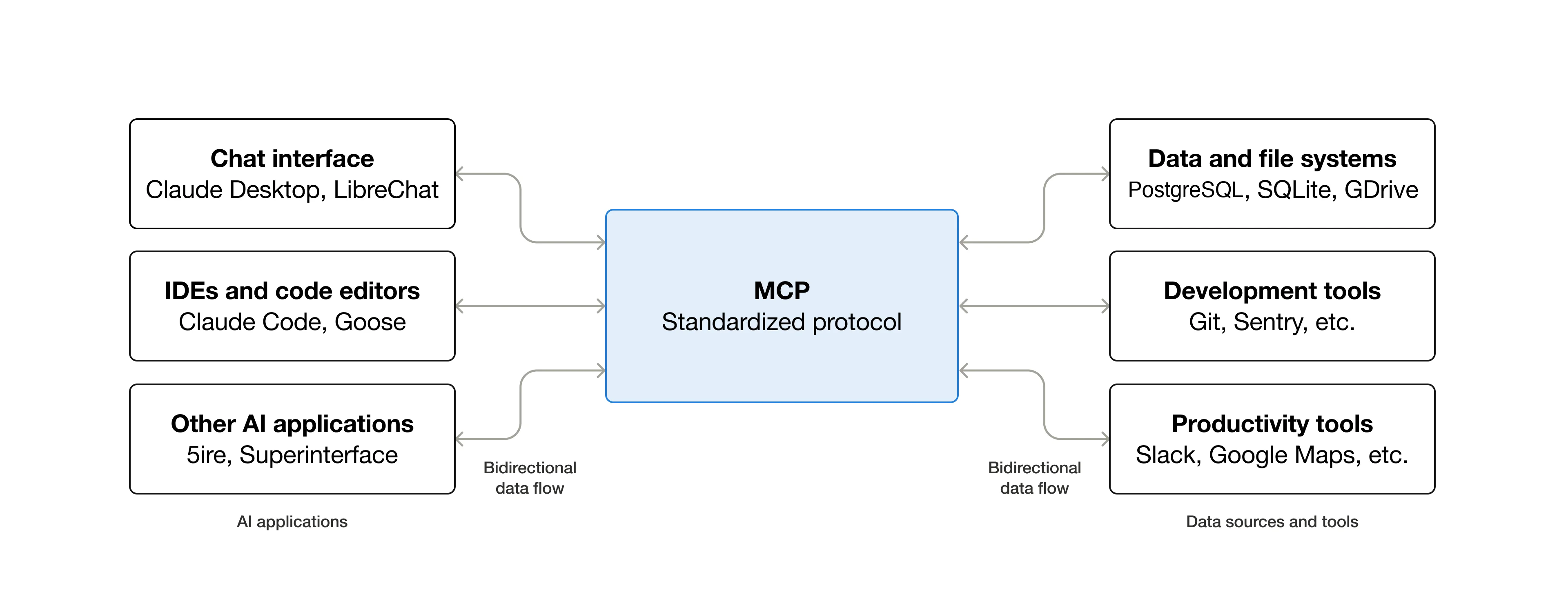
If there are 3 types of AI models and 10 tools to connect to, theoretically, 30 separate connection codes must be produced individually. This method of customizing connection codes each time makes scaling difficult. Whenever a tool is updated or a model is replaced, all pre-wired connections must be modified. Anthropic pointed out that this information isolation is the biggest bottleneck constraining AI performance, and released MCP at the end of 2024 1. In the official documentation, the role of MCP is likened to a USB-C port. Just as a USB-C connector links various electronic devices, the idea is to connect AI and external software through a single standardized method 2.
The introduction of MCP resolves this inefficiency. If the tool side declares once that "I receive commands via the MCP method," the connection can be maintained through a 3(models) + 10(tools) approach rather than 30 codes. AI platforms can handle countless external applications simply by supporting the common language of MCP.
Hosts and servers: "Wireless calls" defining the envelope of messages
To understand the operating structure of MCP, one must identify the participating entities. First, the AI application with which the user converses on the screen (e.g., Claude, VS Code) is the 'host.' The host creates a 'client' as an intermediary manager whenever a conversation with each external server is needed, connecting them one-to-one. Programs that actually control databases or file systems are called 'servers,' and are responsible for exposing their feature lists to the host 3.
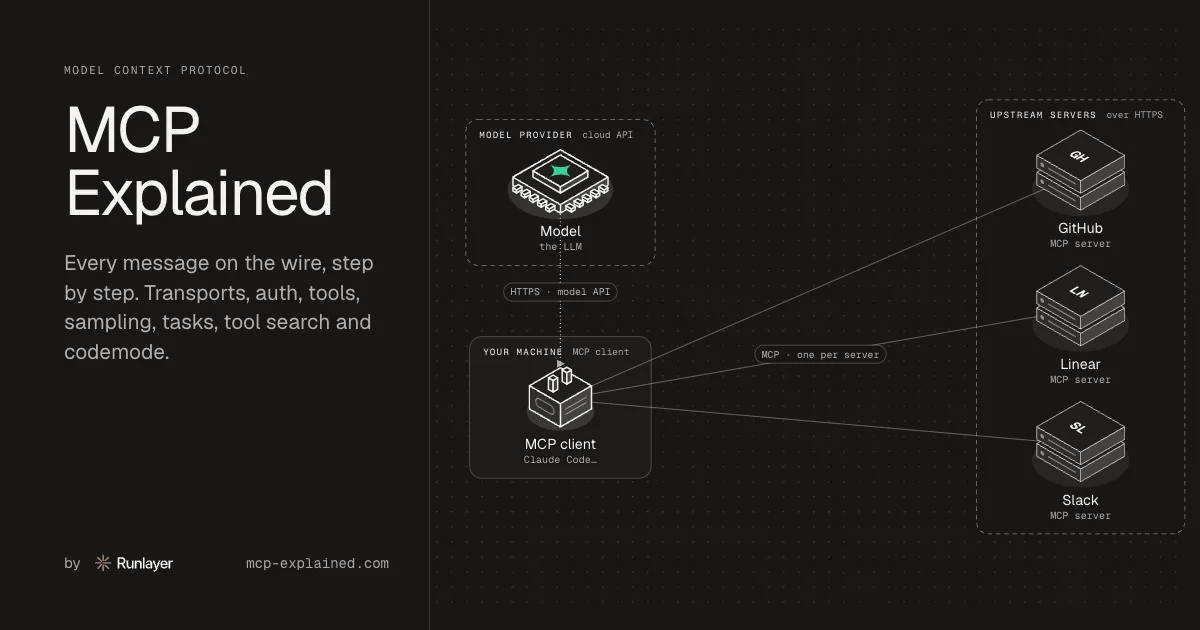
A data exchange rule called JSON-RPC is used between these three entities. The technical explanation site mcp-explained.com explained this structure with an easy analogy. JSON-RPC serves only as the 'envelope' for messages. MCP is the upper-level specification that determines what to put inside that envelope—specifically, which features to ask about and how to return results (methods, feature negotiation, etc.) 4.
This specification was designed to support both transmission methods computers use when communicating externally. Servers operating only within a PC, such as file search, exchange data quickly using direct program channels (stdin/stdout). Conversely, when communicating with external clouds or remote servers, data is transported through a communication channel called Streamable HTTP. Regardless of which pipe is used, the sequence of the conversation (message structure) remains identical 3.
Server menus: Tools, resources, and prompts
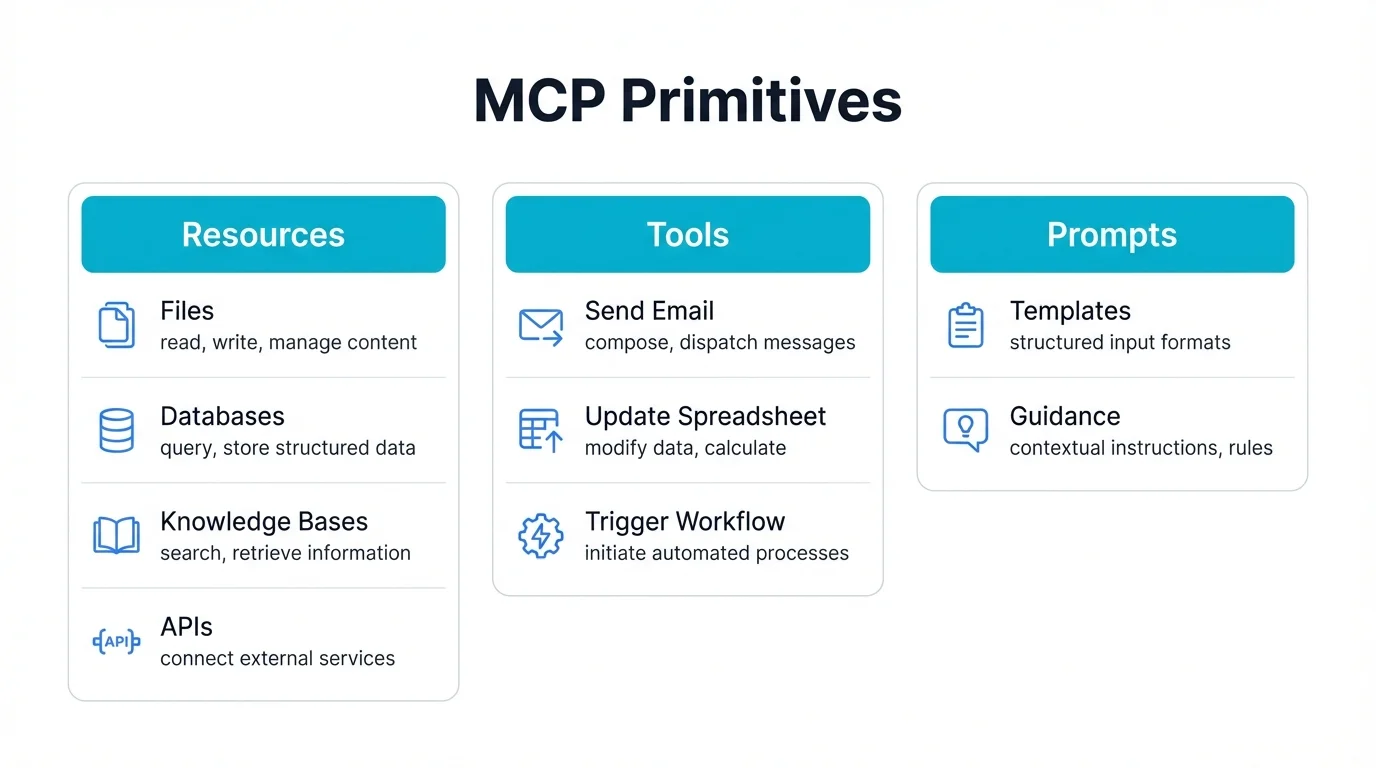
In MCP, servers must provide AI with useful context. To this end, the official architecture document defines three core components (primitives) that servers can offer. These three serve as the "menu board" through which the external world informs AI of its capabilities 3.
The first is 'Tools,' executable functions. These are like buttons the AI presses when it wants to 'do' something directly, such as copying files, calling APIs, or querying databases. The second is 'Resources,' reference documents that inform AI of data, file contents, or server structures that must be consulted before a task. The third is 'Prompts,' which function as dialogue forms or system guidelines to help the AI operate correctly when posed with complex questions 3.
Consider an MCP server connecting to a database. This server simultaneously exposes ① a tool to search data, ② a resource providing the table schema, and ③ a prompt offering few-shot examples to aid data retrieval. AI ingests this information via listing methods such as tools/list or resources/list, and executes specific tools via tools/call when needed. Once this standardized menu board is created, any MCP-supported AI can access and use the database via the identical procedure 3.
July 2026: Why connection drops and confirmation procedures changed
Even after the standard specification was established, the biggest event changing the actual MCP usage environment was the specification revision on July 28, 2026. Changes that non-developer users can feel are included in this revision. In a blog post, solo entrepreneur "Art Gourmet" explained the changes this revision brought to daily life by comparing it to 'phone calls' and 'text messages' 5.
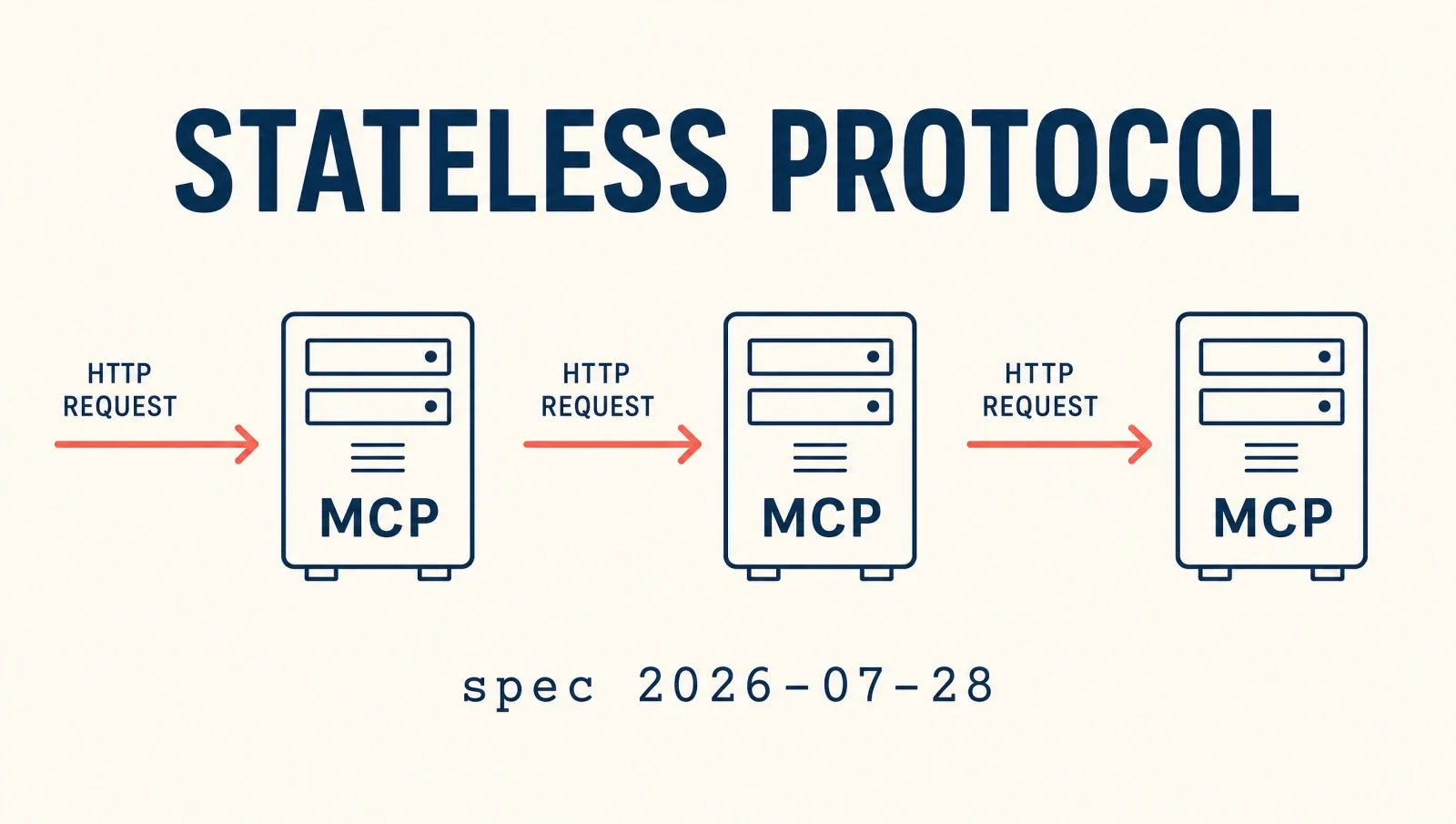
First, the system transitioned from a method requiring AI and external tools to maintain an active call to a 'stateless' structure where each request carries its own information. Previously, if the network connection became unstable, all automations would quietly stop by the time they were checked in the morning; but now, because individual messages manage their own information, the entire task is not lost even if the connection fluctuates midway 5.
Second, AI can now request 'confirmation' from the user before taking action. Specification-level support was added for elicitation, a method where AI asks on the screen, "Are we really executing this?" and waits before performing irreversible tasks like deletion or payment 5. Third, long-running tasks that take tens of minutes are formally supported (task extensions), allowing users to assign a task to the AI and check the results later while doing other things 5.
MCP goes beyond simply reducing connection code; it defines the rules and safety measures for the dialogue when AI handles external files or data. With the July 2026 revision, tasks are not reset even if the connection drops, and confirmation can be sought from the user before executing dangerous commands. Reviewing the displayed lists and calmly answering when the AI asks a follow-up question is the starting point for using MCP correctly—a hidden plumbing system that significantly impacts our daily lives.
References
- MCP: What It Is and Why It Matters · addyo.substack.com↩
- What is the Model Context Protocol (MCP)? - Model Context Protocol · modelcontextprotocol.io↩
- Architecture overview - Model Context Protocol · modelcontextprotocol.io↩
- MCP Explained: how the Model Context Protocol works · mcp-explained.com↩
- MCP가 뭔가요? — 코딩 몰라도 되는 AI 커넥터 완전 정리 (1인 창업가용) · artgourmet.cloud↩