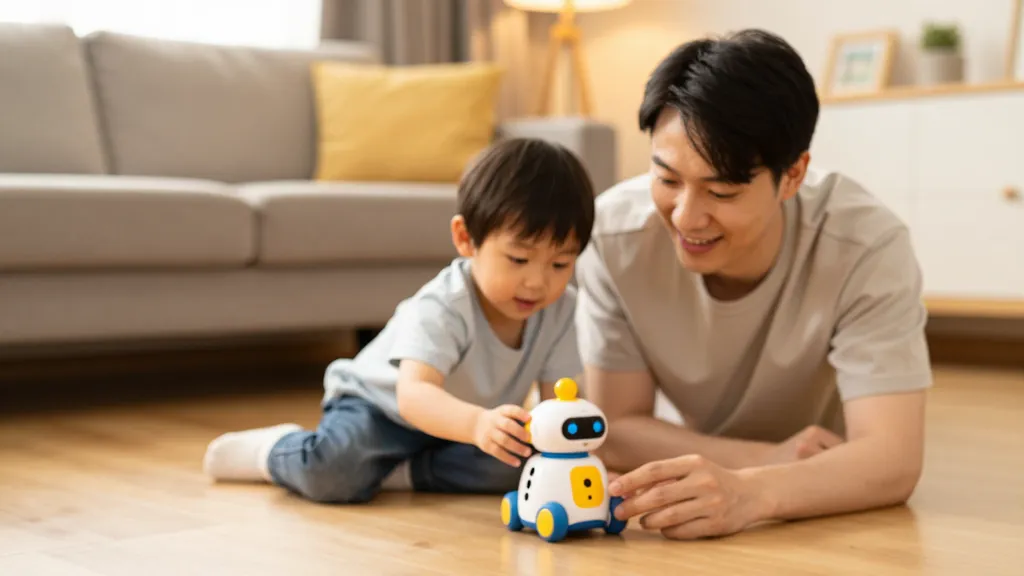
What determines a child's future is not mere rote memorization of knowledge, but the 'power of thinking'—the ability to find their own way when facing a problem.
In an era where AI provides all the answers, what parents should focus on is not memorizing programming languages, but planting the seeds of Computational Thinking in the child's brain. To get straight to the point, coding education does not begin with sitting in front of a computer. Rather, it is the 'continuity of step-by-step play'—starting from stimulation during pregnancy, continuing through enjoyable play in early childhood, and leading to robot activities in early elementary school—that determines a child's logical reasoning skills.
Why should we pay attention to 'Computational Thinking' now?

There is a common misunderstanding among many parents. They worry, "They are still so young, do they really need to sit in front of a computer already?" However, according to recent studies, coding play experiences in early childhood not only increase a child's attention span but also play a decisive role in developing logical thinking skills.
In fact, one study showed that young children who experienced coding play had significantly higher computational thinking skills than those who did not, and in particular, logical thinking showed a deep correlation with self-regulation. In other words, coding is not merely a skill for operating machines; it is a comprehensive brain development process that induces frontal lobe activity, where the child independently plans (sequence), discovers problems (analysis), and finds solutions (resolution).
You have likely seen children who can swipe through smartphone videos effortlessly but become frustrated when they try to create something on a computer. This phenomenon occurs because they are accustomed to 'consuming' digital devices but lack the logical structure to 'control' technology. What we must convey to our children now is 'Digital Literacy'—the power to understand and govern the digital world.
A step-by-step coding roadmap by age

Coding education also has a 'Golden Time' and specific 'stages.' Blindly teaching difficult languages is the fastest way to kill a child's interest. Here is a summary of the systematic curriculum recommended by experts.
Stage 1: Toddlers and Early Elementary (Unplugged & Robot Play)
The key keyword for this period is 'Unplugged.' This means learning the principles of computer science without using a computer.
- Utilizing Board Games: Board games like 'GoGoGelato' or 'Qucorun' are excellent educational tools. By assembling cubes and setting directions, children naturally learn the core concepts of coding, such as 'sequence' and 'conditions,' through physical experience.
- Playing with Robot Friends: Robots like 'Genibot' or 'Truetru' are both the best toys and teachers for children. Through the robot's movements, children receive visual feedback and build the foundation for logical thinking.
There is a point to note here. Many people confuse Robot Science Education with Robot Coding Education. Simply assembling and operating a robot is closer to an engineering experience. True coding education must include the process of using the robot as a 'tool' and giving logical commands to make it move exactly as intended.
2. Stage 2: Middle Elementary (Block Coding Stage)
Around the 3rd grade of elementary school, children move into the Block Coding stage, where they begin assembling blocks on a screen.
- Entry & Scratch: These are the most widely used tools globally. They allow children to stack commands like blocks to make characters move.
- Using Educational Tools: Using tools that have been proven in after-school programs, such as Probo's 'Soft Coding Journey,' allows children to become much more immersed and interested.
3. Stage 3: Upper Elementary and Above (3D Space & Text Coding)
Once logical reasoning is somewhat established, it is time to manifest the world of imagination into reality.
- CoSpaces: A platform where you can code 3D spaces. It is excellent for developing collaboration skills as children can experience AR (Augmented Reality) or VR (Virtual Reality), gaining early experience in the Metaverse era.
- App Inventor: Children can feel the practical joy of development by planning and creating Android apps they use themselves.
- Python: This is the stage of coding with actual 'text.' Python, with its excellent scalability, is the most recommended introductory language. If a child is truly serious about making games, the 'Lua' language is also a great alternative.
The Attitude of Parents Preparing for the AI Era: Understanding STEAM Education
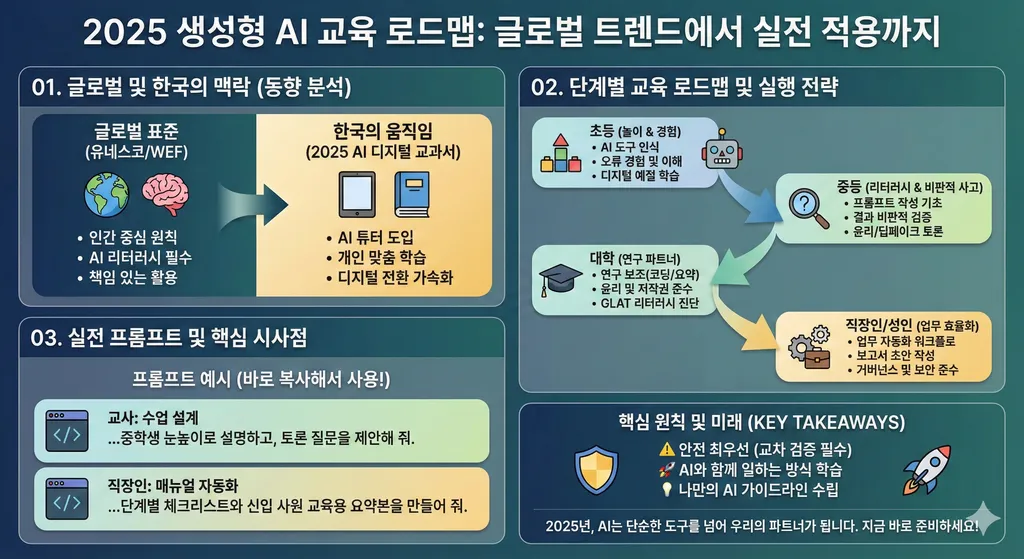
Future education will be dominated by STEAM (Convergence) Education, which does not lean toward any single field. This educational model, which integrates Science (S), Technology (T), Engineering (E), Art (A), and Mathematics (M), aims to cultivate 'creative problem-solving skills'—a uniquely human domain that artificial intelligence cannot replace.
The goal is not simply to create coders, but to create talent that understands scientific principles (S), implements them through technology (T/E), designs them with artistic sense (A), and analyzes them mathematically (M).
In this process, the role of parents is crucial. Recently, 'Dad's Coding Learning' has been gaining attention. A father learning coding himself and solving problems together with his child serves as the most powerful learning model for the child. By watching their parents challenge, fail, and try again (Iteration), children learn resilience—the understanding that 'failure is merely a part of the process.'
Closing: Coding is not a skill, but an 'attitude'
Ultimately, the core of coding education is teaching a child the 'joy of thinking for themselves.'
As we have seen today, education should start from stimulation during pregnancy and early childhood play, leading to systematic stages during the elementary school years. Rather than forcing them to sit in front of a massive computer from the start, begin with a fun board game or playing with a cute robot friend.
A child's logical reasoning is not completed overnight. However, if they accumulate experiences of defining and solving problems bit by bit every day, our children will become the protagonists who command any technology, no matter what kind of AI emerges.
For your child's first coding education, which method do you think is most suitable? Is it board games, or is it robots? Please share your thoughts in the comments!
References
- 코딩교육전문가가 추천하는 연령별 단계별 코딩교육 커리큘럼 · youtube.com
- AI 시작! 놀이로 배우는 코딩기초 어린이 참여자 모집 - Naver Blog · blog.naver.com
- 태원에듀 | 놀이로 배우는 첫 코딩 · taewonedu.com
- 태지쌤이 추천하는 연령별 단계별 코딩교육 커리큘럼 - Naver Blog · blog.naver.com
- 24년 6월, 7살 ~ 10살 초등3학년 자녀 코딩 포트폴리오, 아빠 코딩 학습 ... · blog.naver.com
- [STEAM 교육] AI 시대 교육 해법은 STEAM…창의 융합 인재, 교실에서 ... · edumorning.com
- 성장판 검사 비용 및 시기 2026년 어린이 코딩 교육 시작 ... - 위키독스 · wikidocs.net
- 코딩놀이 경험에 따라 유아의 자기조절력과 주의집중력이 컴퓨팅 ... · scholar.kyobobook.co.kr