
Many readers seeking to improve their reading habits feel pressured by the goal of "completing a book." However, the causes of declining completion rates may not simply stem from a lack of volume, but rather from cognitive overload resulting from the inability to organize read information in the mind. By combining the recently highlighted perspective of "cognitive rearrangement" with "photoreading" techniques, readers can formulate strategies to enhance comprehension by rearranging the order and context of already collected information rather than merely filling the mind with new knowledge. This approach helps reduce information overload and enhances the sustainability of reading practices by structuring the content of complex books.
Why Is Cognitive Rearrangement Necessary?

The phenomenon of accumulating unread books, driven by the obsession with organizing bookshelves, undermines reading success. Guilt from unread books acts as a psychological barrier that leads readers to avoid reading altogether 1. While selective reading, such as "choosing books wisely," is recommended to address this issue, simple excerpts alone make it difficult to grasp the logical structure of a book 1.
In this context, the concept of "cognitive rearrangement" serves as a critical alternative. In "Cognitive Rearrangement," the author Ki-hoon Kim proposes changing the framework of thinking by rearranging existing information and shifting contexts, rather than acquiring new knowledge 2. Instead of obsessively attempting to read line by line from start to finish, identifying core sentences and then logically reassembling them can be more efficient for information processing 2. This serves as a cognitive tool that aids memory retention by connecting the principles provided by books to the reader’s own experiences 2.
Step 1: Broad-Scope Information Input via Photoreading

For efficient information input, readers can refer to "photoreading" techniques. Photoreading involves scanning pages like images to input information subconsciously, serving as a stage to secure the raw materials needed for sentence rearrangement 3.
Photoreading programs set a training goal of 25,000 words per minute 3.
Step 2: Sentence Rearrangement via Activation and Summarization
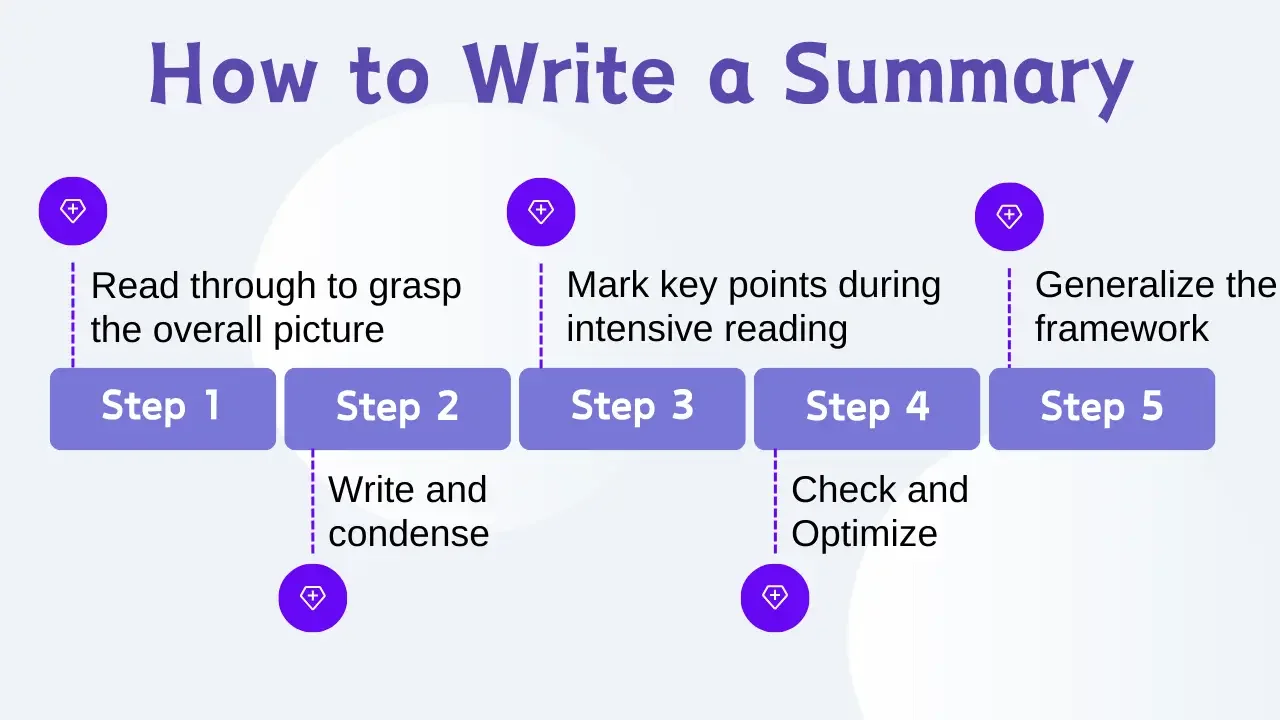
The second step involves consciously retrieving and organizing keywords and sentences that emerge from the inputted information. This process is similar to the "activation" phase, where keywords that come to mind immediately after photoreading are noted down 3, and the "three-sentence summary method" for condensing core messages 4. First, note down any keywords or striking sentences that come to mind immediately after photoreading and convert them into question forms 3.
Subsequently, instead of simply listing the collected sentences, rearrange them from the perspective of the author’s intended "logical flow" or "context shift." The author of "Cognitive Rearrangement" emphasizes training in context shifts, such as applying patterns learned at work to hobbies or applying principles discovered in hobbies to professional tasks 2. For instance, this might involve connecting sentences from Chapter 1 with case studies in Chapter 5, or placing conclusion-related sentences at the beginning 2. The very process of changing sequences and making connections serves as a thinking exercise that enhances comprehension 2.
Step 3: Logic Verification via SQ3R Review

The final step involves checking how well the logic of the rearranged sentences aligns with the author’s original intent and filling in any gaps. Since simply moving sentences can lead to distorted understanding, the "Review" stage of the SQ3R technique must be applied 4. Based on the noted questions, reread the relevant sections of the book to verify the rearranged structure 34.
At this stage, the habit of "collecting quotes" is helpful 4. Reorganize striking sentences in your own language and integrate them into the rearranged structure 4. Explaining the concepts to others or briefly recording the day’s rearrangement logic in a reading journal are also effective verification methods 4. Such iterative understanding and confirmation can contribute to higher memory retention rates 4, and this approach focuses on preventing information from being trapped in fixed contexts and finding connections between different domains to enhance cognitive flexibility 2.
Strategic Shift for Sustainable Reading

As seen in photoreading training cases, practicing proper methods fosters the ability to move away from word-by-word reading to perceiving the overall structure 3. However, the specific quantitative impact of such training on improving completion rates has not been clearly proven in the source texts.
For practical books or professional literature aimed at information delivery, referencing the SQ3R technique to structure and review content aids comprehension and memory 4.
References
- '골라 읽는' 독서의 시대 -책장을 정리하며 - ReBegin · rebegin.kr↩
- 인지의 재배치 | 김기훈 | 북위드미- 교보ebook · ebook-product.kyobobook.co.kr↩
- 포토포커스 포토리딩 활성화 연결 훈련법 변화 사례 - 포토리딩 · photoreading.kr↩
- 효율적인 독서법 비교: 당신에게 맞는 방법을 찾아드립니다 - dailypick.info · dailypick.info↩