"I've lived my life so hard, so why is my life in this state?"
This question is not merely a personal complaint. We work hard, striving to build social status, but at some point, anyone can experience the feeling that the fortress they have built is nothing more than a sandcastle.
What if your career collapses due to an unexpected mistake or misunderstanding, putting your very livelihood at risk? Faced with such desperation, can we truly protect 'ourselves,' or will we sell 'ourselves' just to survive?
Today, through Sam Lipsyte's sharp black comedy novel, The Ask, we will take a deep look into the moral dilemmas and absurd realities faced by individuals in modern capitalist society.
1. A Broken Daily Life: A Portrait of a Man on the Edge
We often want to believe that success is the result of honest effort. However, reality is far more unfair and sometimes flows with a bewildering sense of futility.
The novel's protagonist, Milo Burke, is exactly like this. He works as a "Development Officer" raising donations for an ordinary university in New York. While it sounds like a grand title, in reality, it is an unstable job standing on the boundary of social classes, going around asking alumni for money to support the university's finances.
Milo's life began to unravel because of a very trivial incident. He saw an artwork created by the daughter of a wealthy donor and gave an honest (yet rude) assessment that her skill was terrible. What was the result? He was immediately fired. To make matters worse, he was socially ostracized after a young employee accused him of sexual harassment regarding his remarks.

At this point, we feel a deep sense of empathy. We realize how fragile the reputation we build in society truly is, and how a single momentary error in judgment can shake one's entire life. Milo's unemployment is not simply losing a job; it is an event where his dignity, his stable family, and all trust in the future crumble.
2. Why Do We Become Monsters at the Crossroads of Choice?
For Milo, who has lost his job, the massive wall of livelihood stands before him as an immediate problem to solve. His relationship with his wife grows distant, and his money runs out. At this moment, a figure appears before him who is both a savior and a demon: his college friend, Purdy, who possesses immense wealth.
Purdy promises Milo a massive donation but sets one condition: he wants Milo to act as a "bagman" (intermediary) to help him rebuild a relationship with his son, who returned from the Iraq War having lost both legs.
Here, the novel delves into the darkest facet of modern society. Why are we forced to accept absurd demands?
First, it is because of the ruthless structure of capitalism. The university in the novel is no longer a sanctuary of academia. It is no different from a massive corporation that is closely colluded with the financial world and hungers for donations. The place where Milo works is also a place where 'money' becomes the measure of all values. In a society where money has become power, individuals are pushed into situations where they must gradually chip away at their own ethical standards to survive.
Second, it is the degradation of relationships. Past friendships are now restructured by "business necessity." To Purdy, Milo is not a friend, but merely a tool to fill his own void. This instrumentalization of relationships vividly demonstrates the alienation experienced by modern individuals.
Third, it is the convergence of past trauma and the present. The wounds of war experienced by Purdy's son go beyond individual tragedy; they are products created by the social system. Purdy's act of demanding "moral mediation" from Milo to resolve this tragedy symbolizes the coldness of modern society, which drags even human suffering into the games of capital and power.

3. 'The Ask': A Request or a Coercion?
The title of the novel, "The Ask," carries a double meaning. It refers to the core "request" in the process of fundraising, but it also signifies the cruel "demand" that society places upon the individual.
In business terms, 'the ask' refers to clear requirements or instructions for action. However, the 'ask' that Milo faces in this novel is not a simple request. It is closer to blackmail predicated on survival and a coercion to abandon one's self.
In our lives, we encounter numerous 'Asks':
- "Can you overlook a colleague's mistake for the benefit of the company?"
- "Can you stand by and watch someone's sacrifice for the sake of success?"
- "Can you cheat your conscience a little to feed your family?"
Milo's journey asks us: What choice would you make at that point? Sam Lipsyte does not merely depict Milo as a 'failed man.' He projects the 'imperfect human' hidden within all of us, wandering between the instinct for survival and morality.
4. How Can We Protect Ourselves Without Breaking Down?
In truth, this novel offers no clear answer. If Milo had rejected everything, he would have starved; if he had accepted the proposal, he would have lost his soul. However, through this tragic story, we can learn a few attitudes toward life.
Step 1: Confront the truth behind the social mask We must coldly identify whether the organizations or social relationships we belong to are actually operating under certain logics, even if they pretend to be noble on the surface (e.g., the educational ideals of a university). We must recognize the contradictions of the structure to predict the risk of being caught in them.
Step 2: Set your own 'Maginot Line' Before economic necessity overwhelms moral values, we must pre-determine a 'line' that we must never cross. When pushed to the edge like Milo, this line becomes easy to blur. One's values during normal times become the 'defense mechanism' during a crisis.
Step 3: Redefine the essence of relationships We must realize that relationships formed for success and money can be consumed at any time. The pressure felt in a relationship with someone like Purdy is a signal that the relationship is not 'mutually beneficial' but based on 'unilateral demands.'
5. Conclusion: 'The Ask' Thrown at You
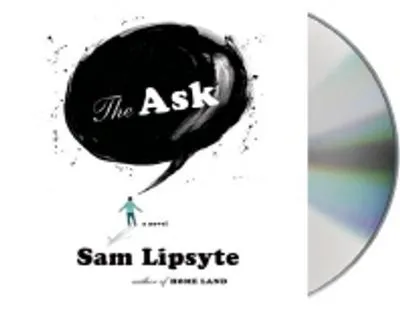
Sam Lipsyte's The Ask is not simply a story depicting the hardships of an unemployed man. It is a sharp report on a modern society where the logic of capital encroaches upon human dignity, and a lament for the individuals breaking apart within it.
The life of the protagonist, Milo Burke, is wretched, and his choices are sometimes loathsome, but that 모습 (sight) is profoundly human. This is because we are all, in our respective places, receiving some kind of 'request (The Ask)' every single day to survive, and we live by responding to them.
This book asks us: "How much are you prepared to pay to protect your dignity?"
What was the choice you faced in your life today? Are you perhaps struggling because of someone's unreasonable 'The Ask'?
I am curious to hear your thoughts. Please share your stories in the comments.
References
- The Ask - Wikipedia · en.wikipedia.org
- The Ask: A Novel: Lipsyte, Sam - Books - Amazon.com · amazon.com
- The Ask - Macmillan Publishers · us.macmillan.com
- The Ask by Sam Lipsyte | Goodreads · goodreads.com