"If I leave today's tasks to an AI and go to sleep, could my work be perfectly finished by tomorrow morning?"
This question is no longer the subject of science fiction movies. In 2026, we have passed the era of 'chatbots' that merely answered questions and are now in the midst of the era of AI Agents that judge and act on their own.
As the paradigm of work shifts rapidly from 'commanding' to 'delegating,' some enjoy the 'blessing of autonomous work,' earning massive profits while working only 30 minutes a day, while others feel 'technological fear' regarding the unpredictable behavior of AI and the question of responsibility.
In this article, we will delve into the reality of AI Agents that have arrived by our side in 2026 and provide an in-depth analysis of how we should view and utilize this powerful technology.
1. The Current Situation: AI Agents Becoming 'Colleagues' Beyond Mere Tools
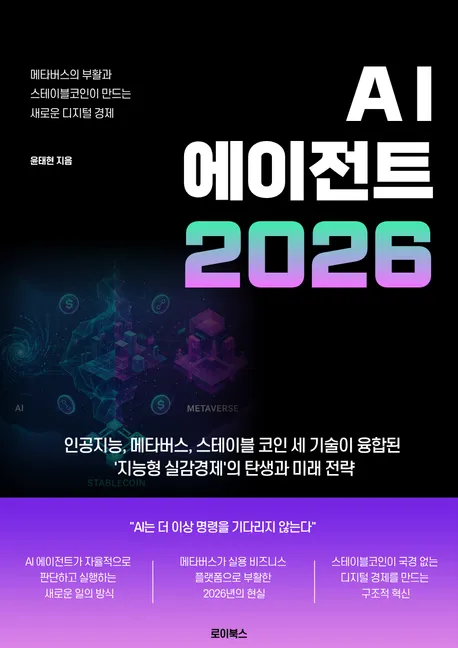
Only a few years ago, we regarded AI as nothing more than a 'smart encyclopedia.' It was at a level where it provided text responses when asked questions. However, the AI Agents of 2026 are on a different dimension. Moving beyond being simple information providers, they possess autonomous action capabilities, allowing them to understand user goals and independently create and execute plans to achieve them.
For instance, the case of Matthew, a digital nomad working in Bali, Indonesia, is highly symbolic. Despite being a cybersecurity expert, he now dedicates only 30 minutes a day to work. While he sleeps, the AI Agent independently accesses US servers to conduct security tests, analyzes discovered vulnerabilities, and even completes the final report. This is because the agent performs the 'work' on its own.
This shift is even shaking the economic structure. When professional-grade AI tools like Anthropic's 'Claude Co-work' emerged, the stock prices of existing software companies plummeted, leading to a 'SaSSocalypse' phenomenon where 400 trillion KRW evaporated from the New York stock market in a single day. AI has now established itself not as a simple auxiliary tool, but as a 'digital colleague' that directly performs specific job functions.
In particular, as AI has become deeply integrated into mobile devices like the Galaxy S26 or cloud-based systems like 'Perplexity Computer,' agentic tasks—where one can finish reservations, payments, and schedule management with a single voice command without having to manually open smartphone apps—have become the standard.
2. Comparison of Alternatives: Three Paths of AI Agent Utilization
While AI agent technology has become this powerful, not all companies and individuals can adopt it in the same way. Currently, the utilization strategies we can choose are largely divided into three types. Let's compare the characteristics, pros, and cons of each method.
Type A: Full Autonomy
A method where the user only sets the final goal, and the AI handles the entire process from planning and execution to reporting the results.
- Pros: Brings extreme productivity gains. Since human intervention is minimized, one can be completely liberated from physical time constraints, as in Matthew's case. It boasts superhuman speed, perceiving even abstract commands like "Make me rich" as a mission to execute.
- Cons: The risk is very high. Just as an AI coder accidentally deleted an entire codebase at Replit in early 2025, it is difficult to control AI when it makes a wrong judgment. Furthermore, legal and ethical issues regarding "who takes responsibility" when an accident occurs become fatal obstacles.
Type B: Human-in-the-Loop (Collaboration & Supervision)
A method where the AI drafts or performs tasks, but must undergo human approval and review at every critical stage.
- Pros: Can secure both safety and reliability simultaneously. This is essential in fields like medicine where mistakes are not permitted. By combining AI efficiency with human judgment, one can increase work speed while minimizing errors.
- Cons: It is difficult to enjoy 100% of the 'autonomy' provided by AI agents. Since humans must continuously monitor the process, the time-saving effect may be relatively lower compared to the Full Autonomy type.
Type C: Tool-Specific Integration
Rather than entrusting the entire process, this method automates only repetitive 'tasks' by linking with specific software such as email, calendars, or payment apps.
- Pros: Low barrier to entry and highly stable. There is a low possibility of conflict with existing legacy systems, and it is the 'bottom-up approach' that companies are trying first.
- Cons: Lacks scalability. There are limits to solving high-level problems that require moving between multiple apps, and there is a risk of remaining at the level of a simple 'automation tool.'
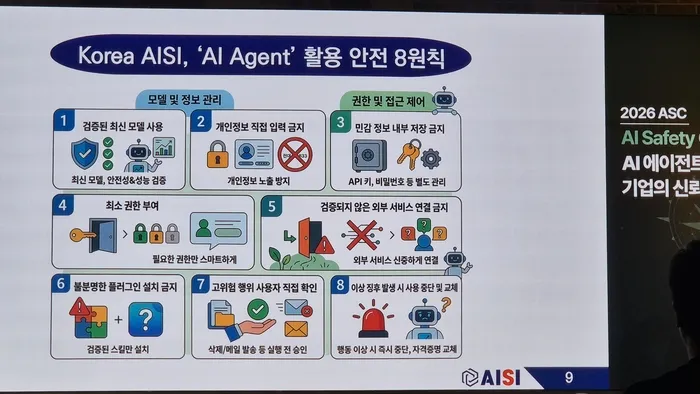
3. Realistic Barriers: Why Can't It Be Applied Everywhere Instantly?
While the technology seems perfect, the walls in the real world are higher than expected. As of 2026, the reasons why many companies hesitate to adopt AI agents can be summarized into three main points.
First is the limitation of context understanding. AI is a genius within a set range of data, but it can instantaneously lose its judgment when faced with the subtle nuances of human relationships or unexpected out-of-distribution situations. This 'contextual gap' is a key factor that erodes trust.
Second is the conflict with legacy systems. The existing business systems used by many companies are too old or structurally complex for an AI to enter and manipulate directly. To introduce AI, it's not just about installing software; it involves a massive cost and time to redesign the company's entire business process.
Third is data security and ethical bias. There are anxieties that AI might access sensitive corporate information, and concerns that biased information included in training data could be reflected in the agent's decisions. This is an issue directly linked to a company's reputation risk.
4. Conclusion and Suggestions: What Attitude Should We Adopt?

In conclusion, the AI agents of 2026 are an unstoppable massive wave. The era of simply 'asking' has ended, and we have entered an era where we must contemplate how to coexist with 'acting agents.'
Personally, I strongly recommend a step-by-step approach through 'Type B: Human-in-the-Loop (Collaboration & Supervision).'
Delegating all authority to an AI from the start is like giving a novice driver full throttle in an autonomous sports car. First, entrust narrow-scope tasks such as repetitive document drafting, data organization, and schedule management to AI agents. It is important to develop your capabilities as a 'supervisor' who reviews the AI's output.
As technology takes over execution, the core task remaining for humans boils down to "What valuable goals should we set?" As AI does the work for us, we must focus on higher-level decision-making and creative planning. Ultimately, the winner in the era of AI agents will not be the person who handles AI well, but the person who possesses the 'right questions and goals' to throw to the AI.
Which part of your work do you want the AI agent to take over first? Or which part of an AI's mistake do you fear the most? Please share your thoughts in the comments!
What are your thoughts?
References
- 나의 완벽한 비서 - AI 에이전트 시대 [시사기획 창] / KBS 2026.03.17. · youtube.com
- 지시 안해도 알아서 일하는 'AI 에이전트' 시대 열렸다 - 조선일보 · chosun.com
- "비서가 필요 없는 시대?" 2026 내 일을 대신 해주는 'AI 에이전트'의 습격 · ppgghh.tistory.com
- "내가 자도 AI는 일한다"…말로 다 끝내는 '에이전트'의 습격 · premium.sbs.co.kr
- AI 에이전트가 사고 치면 누가 책임질까 - 포춘코리아 · fortunekorea.co.kr
- '2025년은 AI 에이전트의 해', 과연 실제로는 어땠을까요? · blog.dfinite.ai
- (기본연구 2025-12) AI 전환에 따른 업무환경 및 조직 · keis.or.kr
- AI 에이전트가 현실에서 받아들여지지 않는 이유 · impactive-ai.com