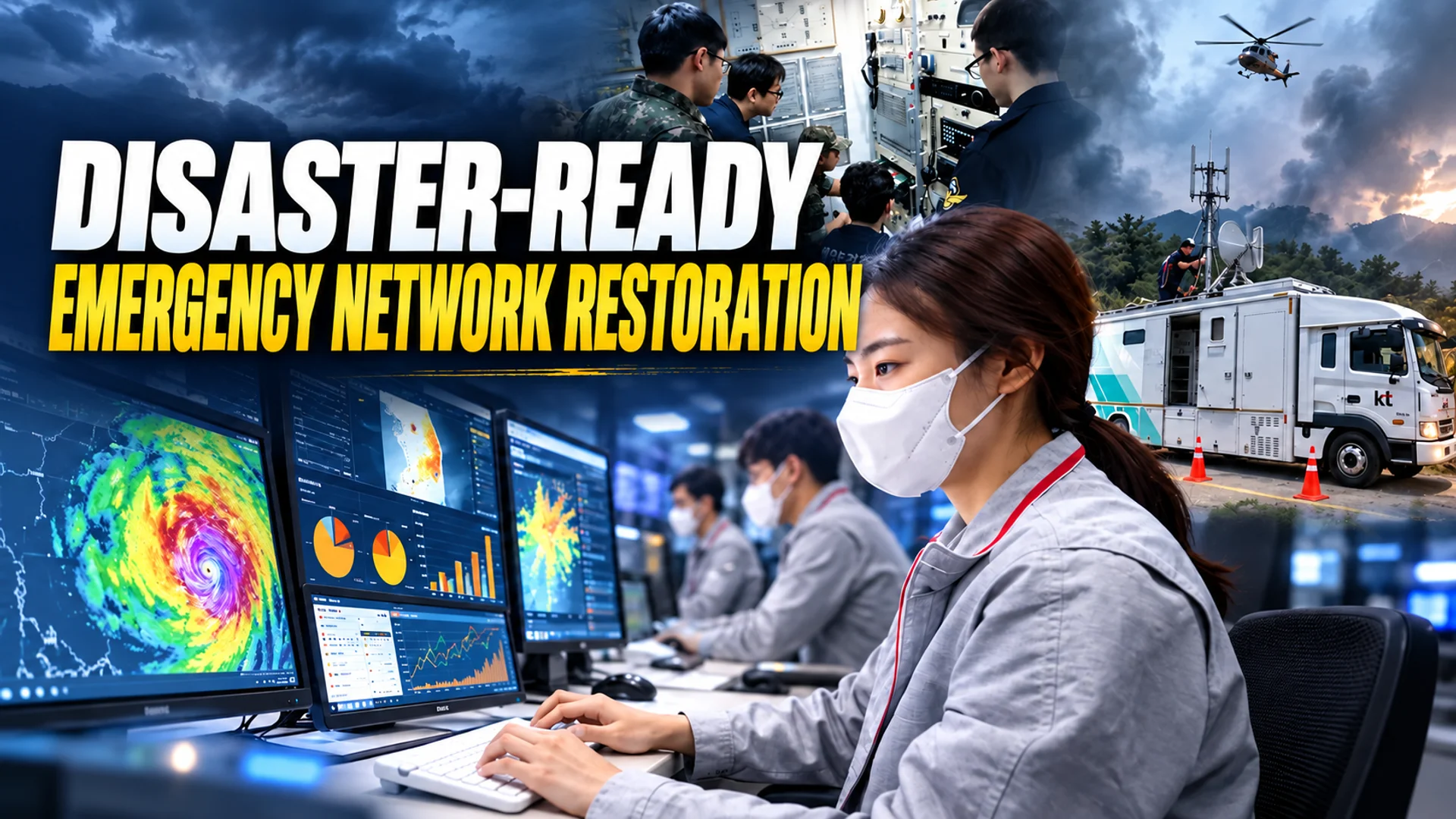
During periods when meteorological disasters such as summer torrential rains or typhoons coincide with large-scale holiday travel, communication demand surges while the risk of flooding or physical damage to communication facilities increases. To prepare for these compound disaster scenarios, KT intensively manages network quality during normal times and operates a recovery system that deploys personnel and equipment at a national scale during emergencies. Recently, KT activated a special management period in preparation for the summer peak season and subsequently conducted a joint drill with relevant agencies targeting island areas that are geographically difficult to access, verifying its actual recovery capabilities. Based on materials released by KT, this article examines the specific composition and inspection details of the emergency recovery system designed to ensure the continuity of communication services during compound disasters.
Operating a Period of Intensive Network Surveillance Spanning the Holiday and Rainy Seasons
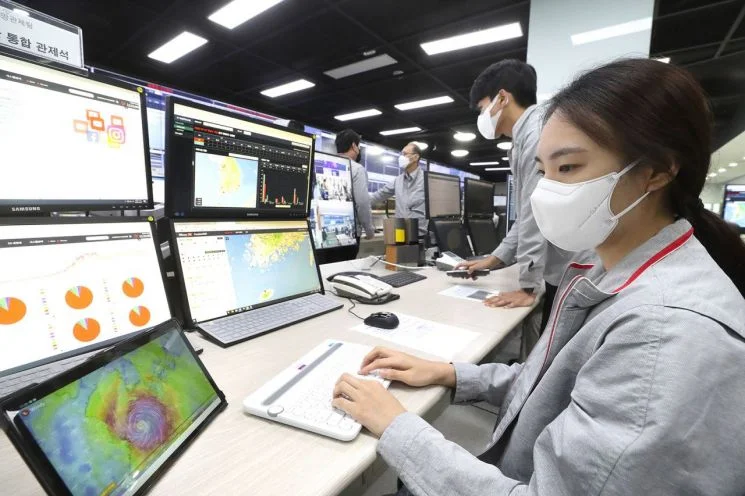
KT views the summer holiday season as a period that can place a significant burden on communication infrastructure and is strengthening preemptive management in preparation. On July 16, KT announced that it had designated the period from late July to the end of August 2026 as an intensive network quality management period and would strengthen its management system for major national hubs 123. This period sees an increase in travel by family groups and vacationers while also being prone to sudden meteorological disasters such as extreme rainfall.
During the intensive management period, KT manages both the 'demand side' and the 'supply side' of the network. On the demand side, it enhances real-time traffic monitoring at transportation hubs such as highways, airports, KTX stations, and terminals 23. This ensures that traffic does not become overloaded in specific sections. On the supply side, it performs work to optimize base station equipment in crowded areas such as major beaches, campgrounds, and resorts across the country 12. This involves adjusting the performance of the base stations themselves so that users can enjoy uninterrupted communication services even in crowded vacation spots.
| Category | Key Management Targets | Core Measures |
|---|---|---|
| Transportation Hubs | Airports, terminals, KTX stations, highways | Enhanced real-time traffic monitoring and early detection of anomalies |
| Crowded Areas | Beaches, campgrounds, resorts | Maintaining communication quality through base station equipment optimization |
| Disaster Facilities | Low-lying exchange buildings, communication ducts | Pre-inspection of flood-risk facilities and preparation for disruptions during the rainy season |
Pre-inspection of Flood-Risk Facilities and Operation of 'Field Recovery Teams'
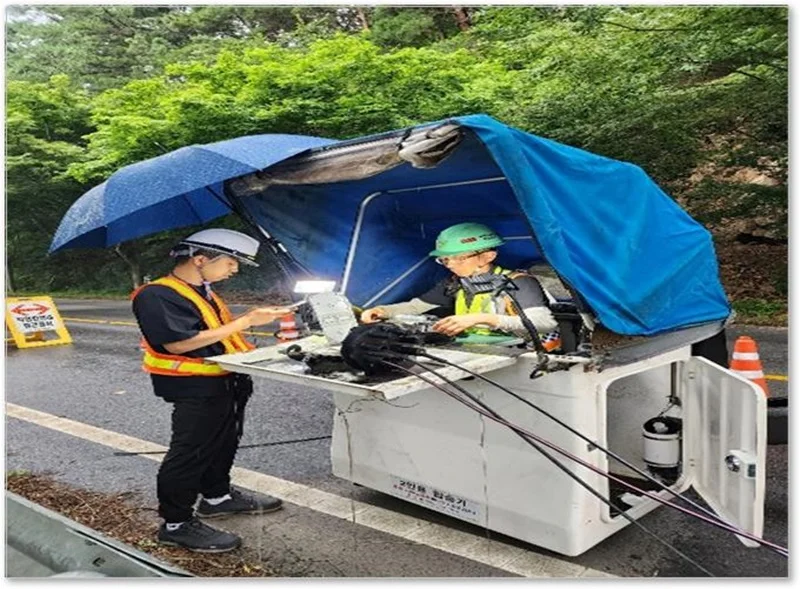
One of the main causes of communication network paralysis due to meteorological disasters is physical damage to facilities. Particularly, exchange buildings (buildings housing communication switches and equipment) or communication ducts located in low-lying areas are at high risk of flooding due to sudden heavy rains. KT has completed pre-inspections of major facilities deemed at risk of flooding in preparation for this type of disaster 123. Preventing damage to low-lying communication facilities serves as the starting point for reducing recovery time.
While prevention is possible through pre-inspections, faults that have already occurred must be swiftly resolved through the mobilization of personnel. KT operates an integrated response system with group affiliates and facility partners to form 'Field Recovery Teams' by regional headquarters across the country, maintaining a 24-hour emergency standby status 123. In recovery situations, the speed of situational assessment and personnel deployment is crucial. This integrated response system shares recovery status in real time and performs the role of deploying recovery personnel most efficiently 23.
Jeong Sun-il, Head of KT's Network Operations Division (Executive Vice President), explained that the background behind strengthening this field-oriented response system was a preemptive measure to ensure customers can use communication services with peace of mind anytime, anywhere 123. The goal is to normalize services centered on pre-prepared Field Recovery Teams, even if unexpected meteorological disasters occur.
Technological Alternative for Inaccessible Areas: 'Umbrella Cells'
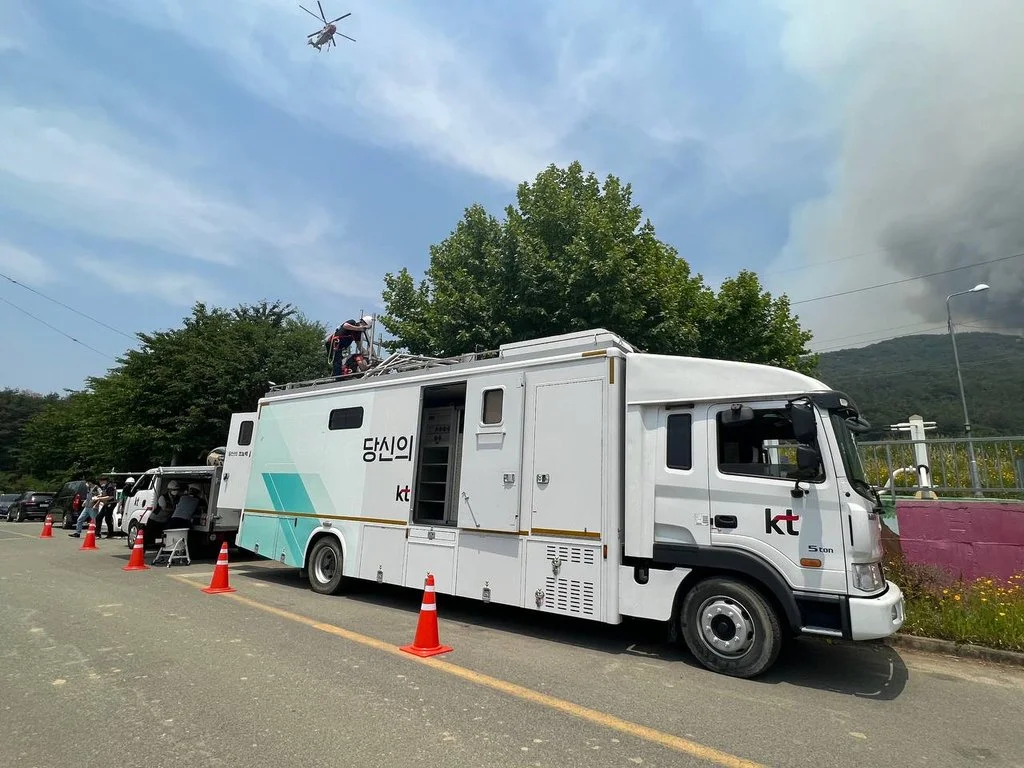
When compound disasters occur, access to the field by recovery personnel and equipment itself can become impossible. Typical scenarios include communication facilities in mountainous areas being damaged by falling rocks or landslides, or roads being washed away, blocking vehicle access. In such environments, traditional wired network recovery methods alone have limitations in providing communication services.
To bridge communication gaps in disaster scenes that are difficult to access, KT utilizes mobile base stations known as 'Umbrella Cells.' An Umbrella Cell is a mobile base station that forms temporary and provisional communication coverage in disaster-stricken areas 123. KT plans to expand the deployment of this equipment to create an environment where minimal communication services are available, even in disaster sites with poor accessibility such as mountainous regions, until recovery personnel can be deployed. Bridging the gap until fixed wired infrastructure is repaired with mobile base stations acts as a crucial buffer mechanism in communication disaster response systems.
Addressing Communication Paralysis in Island Areas through Joint Drills with Relevant Agencies
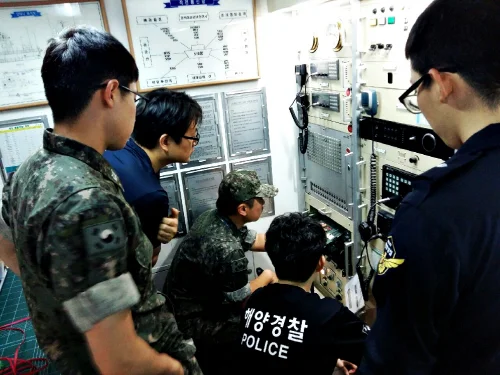
One way to verify disaster recovery capabilities is to conduct regular drills in environments similar to actual disaster scenarios. Particularly, geographically isolated island areas are slower to access recovery resources than the mainland, and the ripple effect of communication paralysis can be significant.
KT's Daegu-Gyeongbuk Regional Headquarters and the Navy's 118th Wing conducted an emergency recovery drill simulating a military communication disaster in the Ulleungdo and Dokdo areas on February 10, 2026 4. This drill was conducted as part of an operator-led simulation exercise for communication disaster preparedness involving the military, fire departments, and local governments, a procedure carried out regularly at least once every two years 4.
The training scenario assumed that communication faults would occur due to 'power supply unit damage to optical transmission equipment' within a military unit. Due to their geographical characteristics, such incidents in Ulleungdo and Dokdo can paralyze military communications in the area, making swift recovery response the core issue 4. KT, the Navy's 118th Wing, and facility partner KT Netcore participated in the drill 4. Participating agencies inspected the entire process, from identifying lines connected to faulty equipment to installing emergency recovery equipment and performing line reconfiguration tasks. The drill was conducted realistically, based on situational information shared remotely in real time 4.
| Drill Item | Details |
|---|---|
| Date and Location | February 10, 2026, Ulleungdo and Dokdo areas |
| Simulated Scenario | Power supply unit damage to optical transmission equipment within a military unit causing communication faults |
| Participating Agencies | KT (Daegu-Gyeongbuk Regional Headquarters), Navy 118th Wing, KT Netcore |
| Key Recovery Process | Identifying faulty lines → Installing emergency recovery equipment → Line reconfiguration |
The Meaning of a 'Perpetual Recovery System' Sustaining Network Continuity
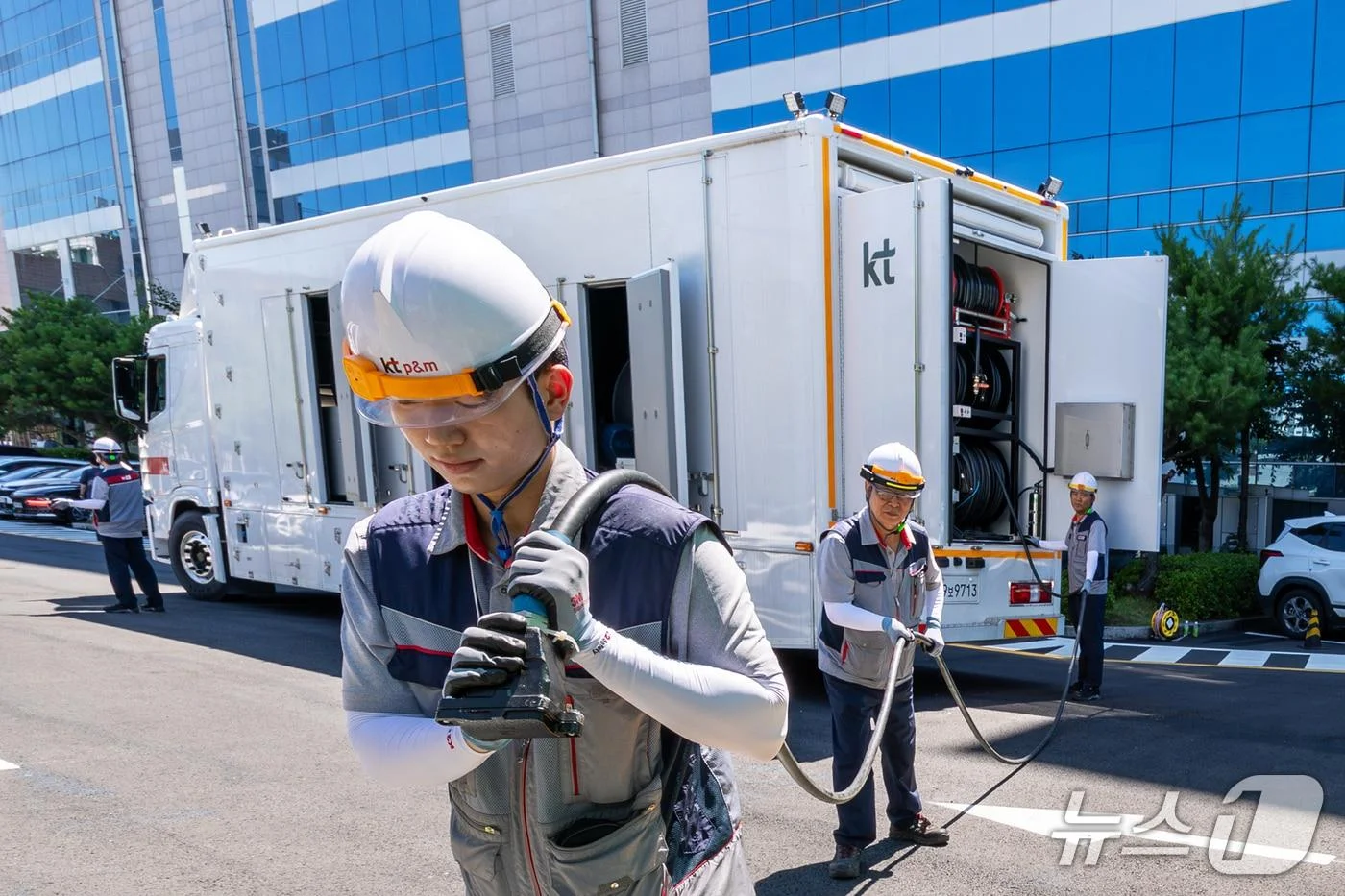
KT's preparedness system for compound disasters goes beyond simple post-disaster recovery; it consists of a perpetual recovery system connecting pre-inspections of facilities, operation of mobile base stations, and joint drills with relevant agencies.
Hwang Gyeong-hee, Head of KT's Daegu-Gyeongbuk Network Operations Division (Executive Vice President), who commanded the Ulleungdo and Dokdo drill, emphasized the strengthening of the perpetual recovery system, stating, "Inter-agency cooperation systems are paramount for the stable operation of critical communication exchange buildings in island areas" 4. While summer meteorological disaster preparedness on the mainland and military communication network drills in island areas may seem like separate issues, the core principle is the same. It is that 'emergency recovery equipment' prepared for physical damage to communication facilities, 'mobile base stations' for inaccessible areas, and 'integrated inter-agency response' during the recovery process are acting as critical elements defending against communication service interruptions even in compound disaster situations 1423.
References
- KT, 하계 휴가철 통신 품질 점검·신속 복구 체계 가동 · inthenews.co.kr↩
- KT, 하계 휴가철 통신 품질 관리…'신속 복구 체계' 가동 · youthdaily.co.kr↩
- KT, 휴가철 통신 안정성 강화…'현장복구반' 운영으로 재난 대응 체계... · koit.co.kr↩
- KT-해군, 울릉도·독도 군 통신망 긴급복구 훈련 성공 - 경북매일 · kbmaeil.com↩