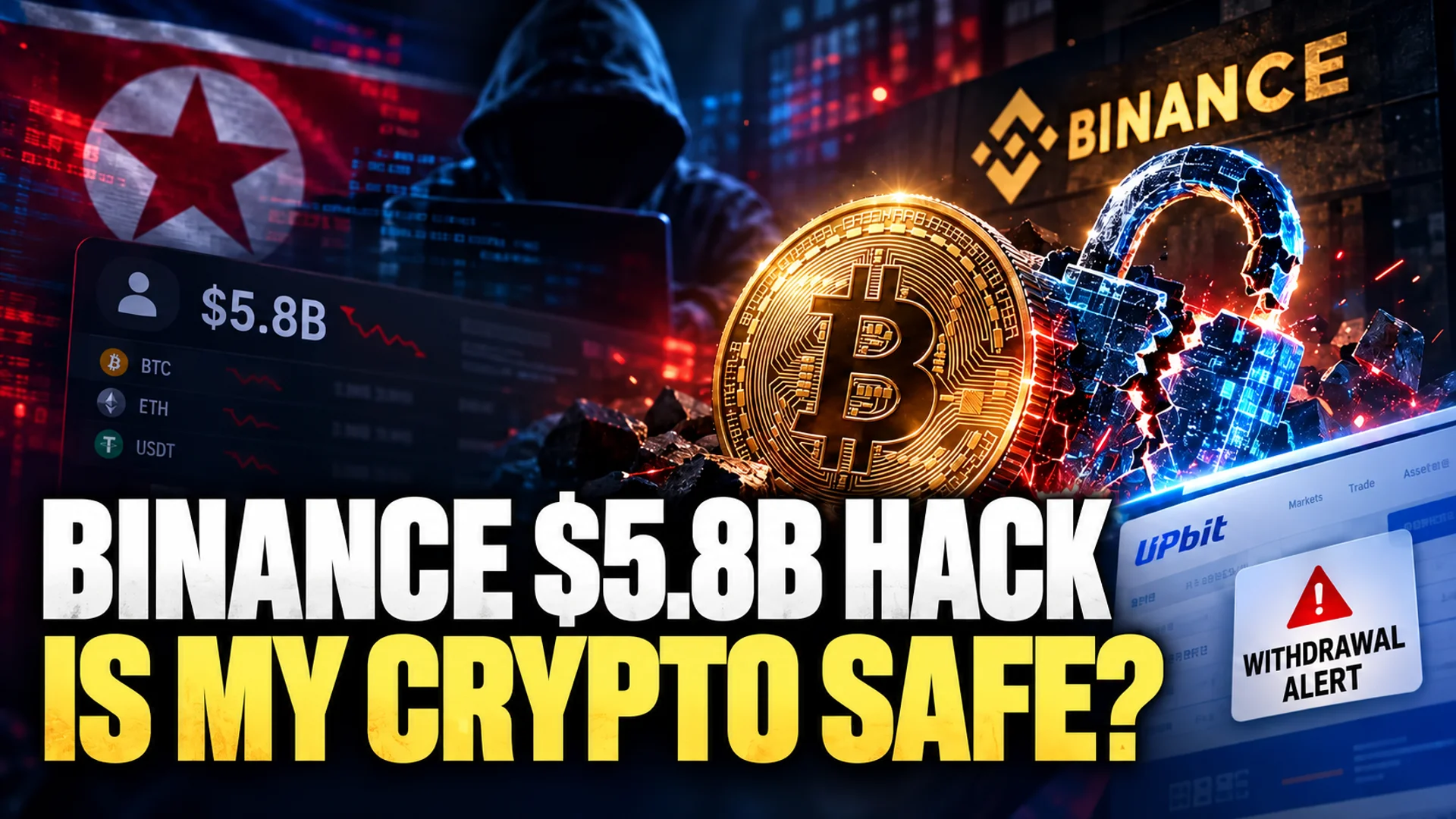
The world's largest cryptocurrency exchange, Binance, has suffered the largest hacking incident in its history, estimated at approximately 8.4 trillion won (about 1.5 billion in damages from the 2025 Bybit hack and has delivered a major shock to global confidence in the cryptocurrency market 1, 2, 3. Following the hack, the price of Bitcoin plunged by more than 4%, and major domestic won-based exchanges have immediately posted 'withdrawal caution' notices and remain on high alert 4, 5, 2, 6, 3.
From an investor's perspective, the primary concerns are inevitably, "Are the assets I am holding safe?" and "What do the exchanges' measures signify?" We will objectively examine the key facts of this incident, its impact on the overall market, and the responses taken by each exchange based on factual evidence.
How the massive $8.4 trillion incident occurred

Initially, the estimated damage reported to the media and industry was approximately 6.3 billion (around 8.4 trillion won) 7, 1. This represents the largest single incident in the history of the cryptocurrency industry 1, 3.
The circumstances of the hack also appeared different from previously known cases involving smart contract vulnerabilities or private key leaks. According to Binance's preliminary investigation, the attacker is believed to have breached the devices of internal IT staff rather than directly stealing wallet private keys. Binance suggested that a DevOps engineer's laptop was compromised, which may have allowed access to service containers and the execution of unauthorized withdrawal transactions 7, 3. It was also announced that direct evidence of wallet private key leakage has not yet been confirmed 7.
North Korean hacking groups are being pointed out as the suspects behind the attack. Blockchain intelligence firms TRM Labs and Chainalysis analyzed that this incident bears similarities to past hacks linked to North Korea, specifically identifying the 'TraderTraitor' group as the suspected perpetrator 2, 3. In response, Binance stated it would work closely with law enforcement to catch the culprits, while withholding direct confirmation of North Korean involvement 2.
The freezing of $3 billion and the meaning of the 'full restitution' pledge
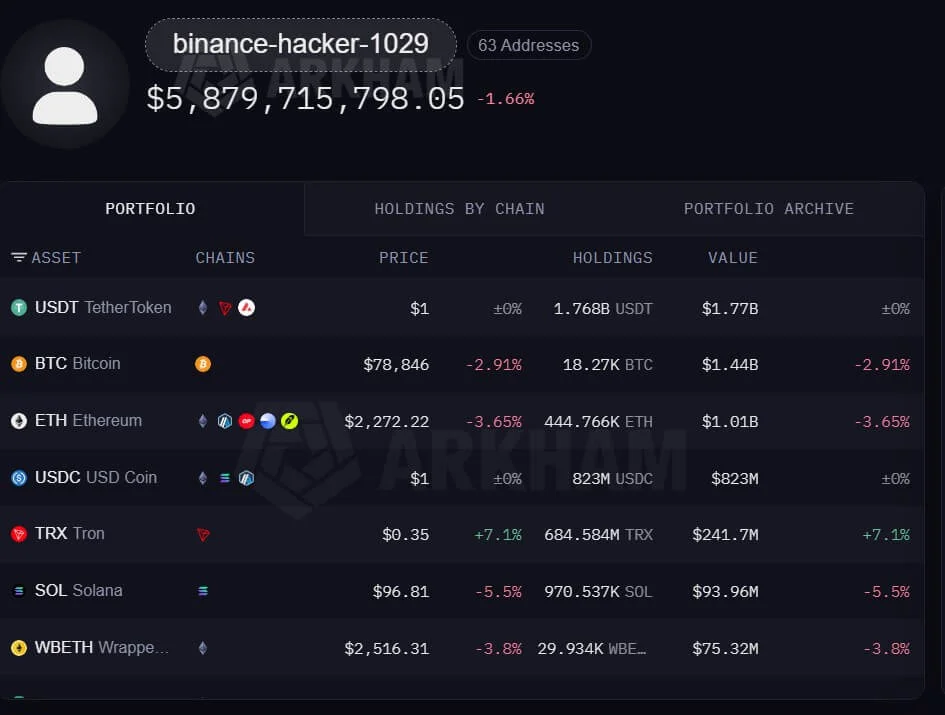
When a massive hack occurs, the 'speed' at which an exchange stops the outflow of funds is crucial. Immediately after the incident, Binance completely suspended all deposits and withdrawals 7, 1, 5, 2, 3. In this case in particular, the swift cooperation of global stablecoin issuers yielded important results.
Before the attacker could cash out and launder the stolen funds through indirect channels, major asset issuers forcibly stopped the flow of funds at the network level. Stablecoin issuers Tether and Circle quickly froze assets worth approximately 800 million, respectively 2, 3. World Liberty Financial, known to be associated with the Donald Trump family, also contributed to freezing the stolen funds by cooperating with its partners 2. Through these network-level freezes and collaborations with industry partners, Binance successfully froze (restricted the movement of) approximately 6.3 billion in damages 7, 1, 2, 6, 3.
Asset freezing does not mean 'complete recovery.' The actual return of frozen funds to the victim is a separate issue due to the nature of the networks and can take a considerable amount of time 1, 3. Nevertheless, emphasizing the safety of customer assets, Binance officially announced it would cover 100% of all losses using its own insurance fund, 'SAFU,' and company funds 7, 1, 2, 6, 3. It also previewed that it would release its 'Proof of Reserves' on November 2 to prove the transparency of its asset health 1.
Domestic exchanges' swift 'withdrawal caution' warnings
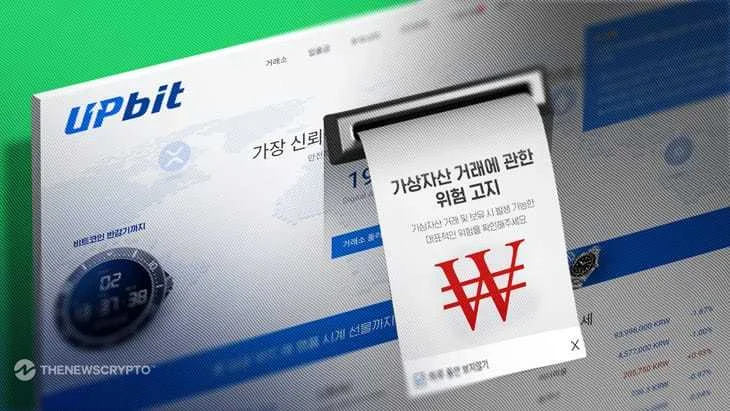
The aftermath of this incident quickly spilled over into the Korean market, where the ecosystem for won-based cryptocurrency exchanges is highly active. On October 30, major domestic exchanges simultaneously posted notices urging investors to increase their vigilance 4, 5, 6.
The response of domestic cryptocurrency exchanges to this incident can be summarized as follows:
| Exchange | Key Notice Content | Response and Cooperation Policy |
|---|---|---|
| Upbit | Posted a 'withdrawal caution guide' around 7:46 AM 4 | Urged extreme caution when withdrawing to Binance and noted that withdrawals may be restricted if necessary 4, 5 |
| Bithumb, Coinone, Dx | Posted sequential withdrawal caution notices 4, 5 | Distributed investor protection notices for risk management 4, 5 |
These withdrawal caution notices are not merely 'requests' but serve as an important defensive barrier for the trust network between exchanges. Each domestic exchange emphasized that it would actively carry out procedures upon receiving requests for cooperation, such as asset freezing 4, 5. Activating the authority to restrict customers from moving assets to Binance can be interpreted as a preemptive and defensive measure to protect customer assets within won-based exchanges in case the incident prolongs or further theft occurs.
Market shock and warnings regarding 'security infrastructure'
![Market shock and warnings regarding 'security infrastructure']](https://blog.inerit.dev/media/posts/db33c52e/section_4.webp)
Massive hacking incidents immediately impact asset prices themselves. Right after news of this incident broke, the price of Bitcoin plummeted by more than 4% in an instant, falling to 11 billion in large-scale options expiring imminently—further exploded market volatility 3.
In the cryptocurrency market, hacks are viewed as structural risks threatening the trust of the entire ecosystem rather than issues specific to a single company. According to Glassnode data, a total of 1.66 billion), Bitcoin (approx. 763 million) 3. This serves as clear evidence that, compared to the massive scale of capital in the crypto market, the maturity of security infrastructure and response systems is catching up at an insufficient pace 1, 3. Domestic cryptocurrency industry experts are also heavily concerned about the possibility that this incident will negatively impact confidence across the global market 4.
Practical points investors should check now
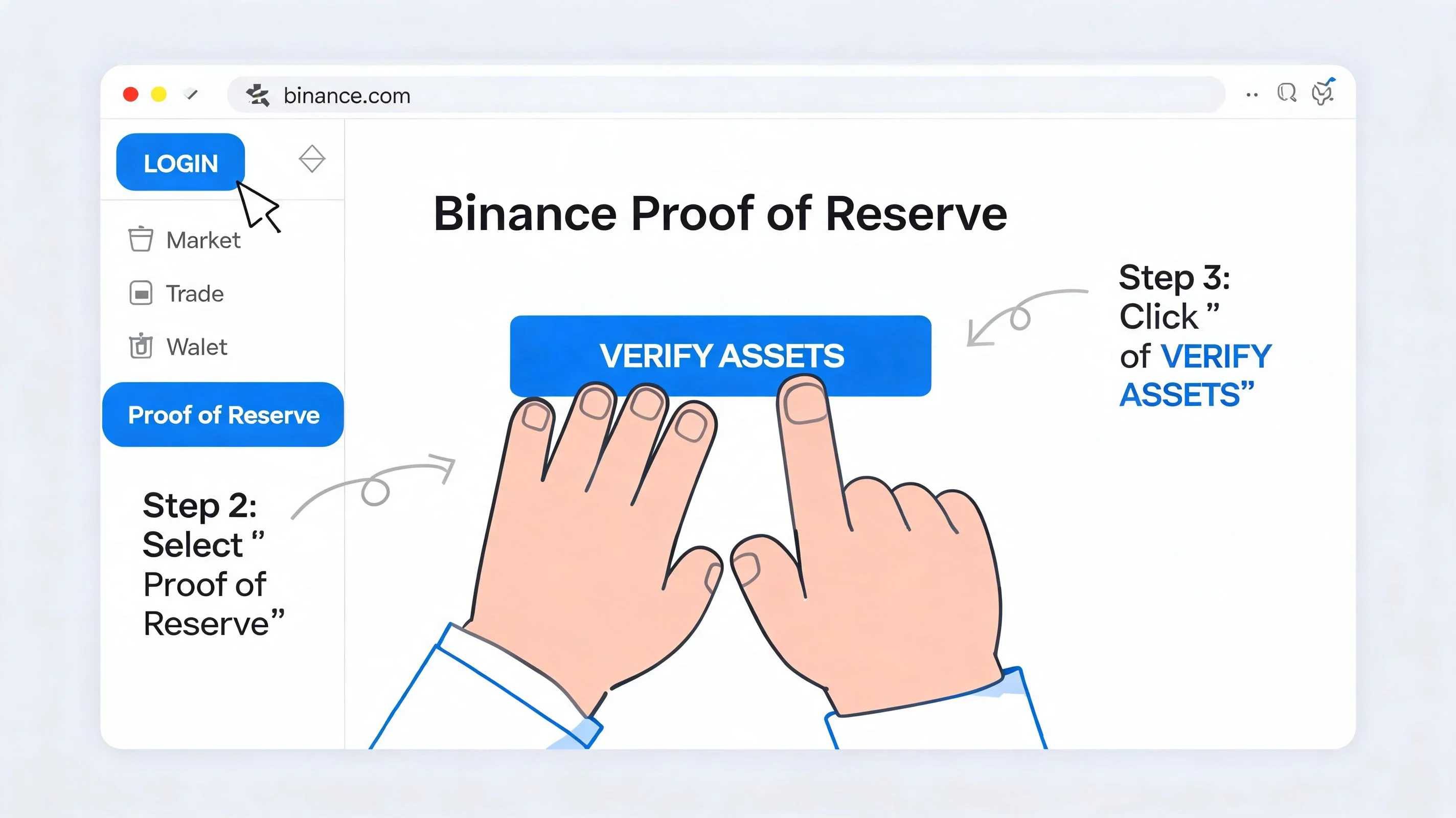
Regarding the fundamental question of "Is my coin also at risk?", currently, the full details of the incident and the level of Binance's financial soundness can only be gauged after the release of the promised proof of reserves (November 2) and the detailed investigation results (post-mortem) 7, 1, 3.
However, there are certainly several indicators and guidelines that investors can practically consider right now.
First, it is necessary to refrain from indiscriminate asset transfers (withdrawals). Cryptocurrency experts advise that until the final damage scale is fully confirmed, the best approach is to frequently check accurate information through official channels of each exchange and minimize unnecessary asset movements 4, 5.
Second, one must recognize the possibility of withdrawal restrictions. Domestic exchanges, including Upbit, have stated 'withdrawal restrictions to Binance if necessary' alongside the 'withdrawal caution' notice 4, 5. If an investor attempts to make large-scale withdrawals from a domestic exchange to Binance during a period of concern regarding further spread or chain reaction damages from the Binance hack, the transaction may be temporarily delayed or restricted due to the activation of the exchange's security policies.
This Binance hacking incident proves that even the world's largest exchange cannot escape vulnerabilities such as internal system infiltration. It is a time when investors are required to flexibly respond by placing security and asset safety as top priorities amidst excessive market volatility, while diligently checking transparency data provided by each exchange, such as notices and proof of reserves.
References
- 바이낸스, 8.4조 규모 해킹 당했다…가상자산 업계 역대 최대 - 뉴스1 · news1.kr↩
- ↩
- 바이낸스, 8.4조원 해킹 피해 추정…TRM랩스 "북한 배후..." | 연합뉴스 · yna.co.kr↩
- 세계 최대 코인거래소 바이낸스 해킹 여파…국내도 '출금 주의' | 연합뉴스 · yna.co.kr↩
- 바이낸스 대규모 해킹 의혹…업비트·빗썸 출금 주의 안내 | 뉴시스 · newsis.com↩
- ↩
- Binance Hack: As It Happened on October 29–30 | Bitcoin Insider · bitcoininsider.org↩